Loading...
Done
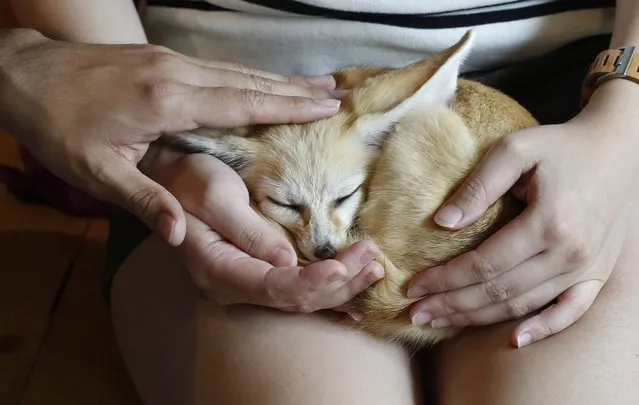
A picture made available on 07 March 2016 shows visitors petting and holding a Fennec fox, native to the Sahara, in the petting room at the Little Zoo Cafe, a business built to capitalize on Thais' love for exotic animals, and food, on the outskirts of Bangkok, Thailand, 05 March 2016. (Photo by Barbara Walton/EPA)

A picture made available on 07 March 2016 shows visitors petting and holding a Fennec fox, native to the Sahara, in the petting room at the Little Zoo Cafe, a business built to capitalize on Thais' love for exotic animals, and food, on the outskirts of Bangkok, Thailand, 05 March 2016. The cafe boasts Fennec foxes, Meerkat, native to parts of Africa, Silver Fox, Raccoon and Chinchillas, along with a menu of Thai food and Cheesecake, among other sweet deserts. Nature is a faraway fantasy in the bustling exhaust-filled cement city of Bangkok, fuelling a demand to own and be close to exotic pets. The trend to be near to a species that was once wild, in a city environment, far from the natural setting, has drawn criticism but continues to grow. (Photo by Barbara Walton/EPA)
Details
13 Mar 2016 09:38:00
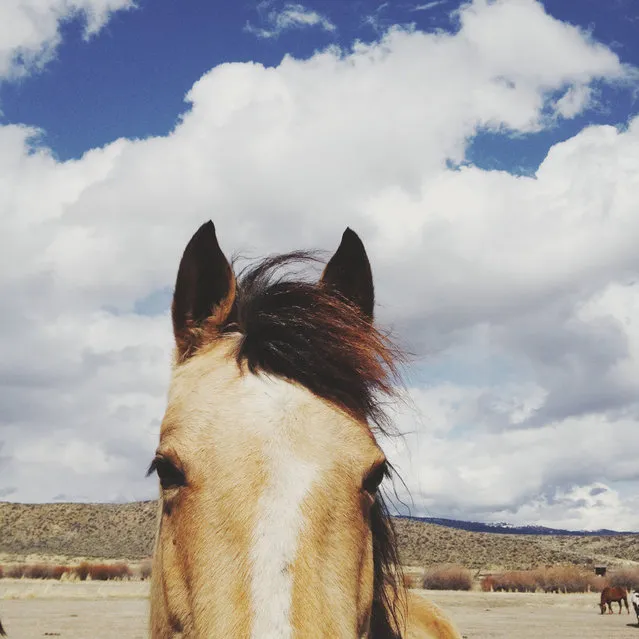
Professional iPhone Photographer Kevin Russ

Kevin Russ, a photographer & image moderator for iStockphoto, grew up in Arroyo Grande, California. In 2003, he made the move to Portland, planning to study at Multnomah Bible College. Finding the workload to be minimal, Kevin invested in a camera, filling his free time and finding himself instantly smitten with the craft. A year and a half later, photography had evolved into his full-time job. However, after 4 years of consistent portrait work, Kevin became burnt out and took a step back from photography altogether. Two years later, he picked up the camera again and now spends the majority of his time on the road, exploring & photographing the rustic landscapes & wildlife he encounters.
Details
04 Jun 2014 16:57:00
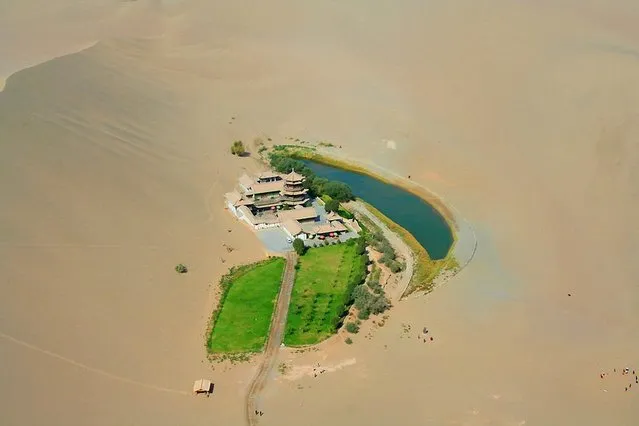
Crescent Lake In China

Yueyaquan is a crescent-shaped lake in an oasis, 6 km south of the city of Dunhuang in Gansu Province, China. It was named Yueyaquan in the Qing Dynasty. According to measurements made in 1960, the average depth of the lake was 4 to 5 meters, with a maximum depth of 7.5 metres In the following 40 years, the depth of the lake continually declined. In the early 1990s, its area had shrunk to only 5,500 m2 with an average depth of 0.9 meter (maximum 1.3 meter). In 2006, the local government with help of the central government started to fill the lake and restore its depth; its depth and size have been growing yearly since then. The lake and the surrounding deserts are very popular with tourists, who are offered camel and 4x4 rides.
Details
25 Jun 2013 10:29:00
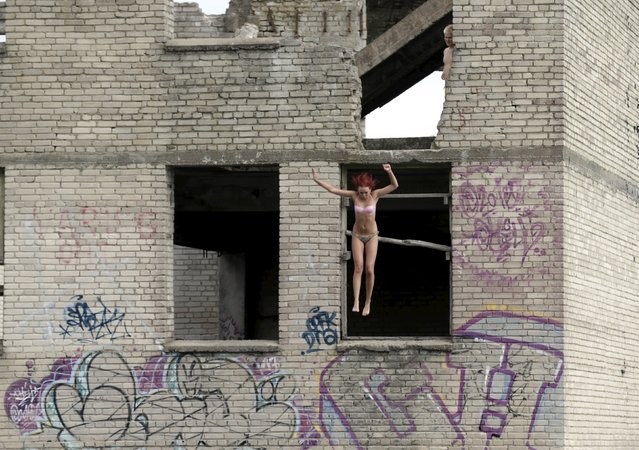
A woman jumps into water from the roof of Murru prison, an abandoned Soviet prison, in Rummu quarry, Estonia, during hot weather July 4, 2015. (Photo by Ints Kalnins/Reuters)

A woman jumps into water from the roof of Murru prison, an abandoned Soviet prison, in Rummu quarry, Estonia, during hot weather July 4, 2015. During the Soviet time, Rummu quarry was used as a mining site for Vasalemma marble and most of the workforce came from among the detainees of Murru prison. When the prison closed after 1991, pumps that once kept the quarry and the prison dry were shut down, causing water to fill the quarry. It has become an unofficial and unguarded swimming and diving spot, attracting locals and tourists. (Photo by Ints Kalnins/Reuters)
Details
05 Jul 2015 09:52:00
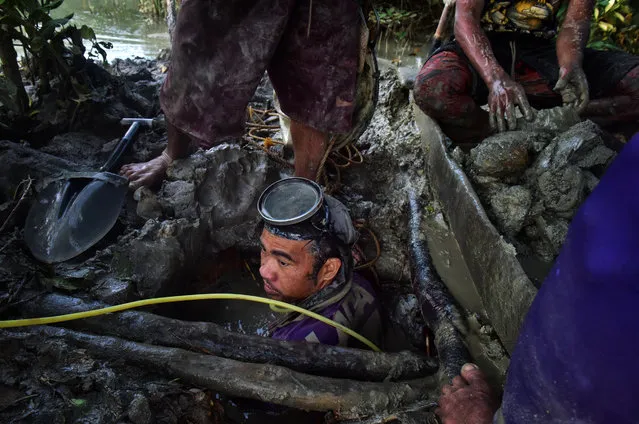
Christian Balderosdasco, 31, is being pulled up a mud pit after diving for 3 hours to look for gold on March 22, 2017 in Paracale, Philippines. (Photo by Jes Aznar/Getty Images)

Christian Balderosdasco, 31, is being pulled up a mud pit after diving for 3 hours to look for gold on March 22, 2017 in Paracale, Philippines. Apart from tunneling and sifting sand, locals dive down murky swamps with the aid of a compressor with air flowing in a small tube for breathing, as they blindly swim under the mud for up to four hours to look for tiny rocks containing gold particles. For decades, local residents at Paracale town work in hazardous conditions scavenging under the earth and diving into tunnels filled with mud using only makeshift tools to mine for gold, often placing their health and lives at risk. (Photo by Jes Aznar/Getty Images)
Details
06 Apr 2017 09:21:00
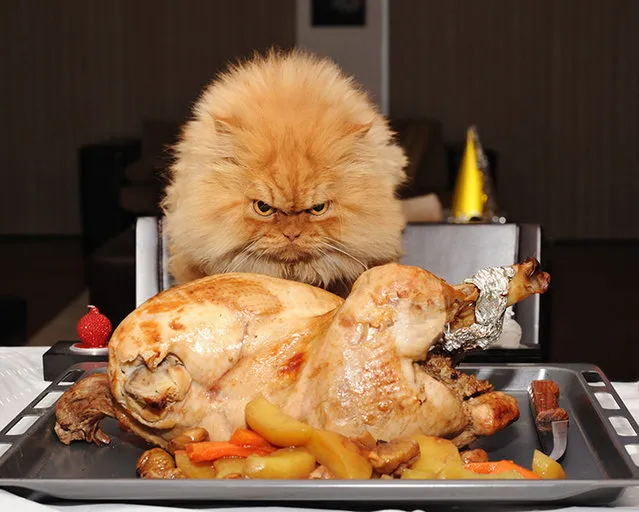
Meet Garfi, The Angriest Cat On The Internet

Internet is filled to the brim with cat pictures and cat videos. It seems that cats became the symbol of the internet. For some unknown reason, cat owners simply love taking pictures of their beloved kitty-cats and posting them on the internet for all to see. Everyone’s cat is special; however, some are more special than others. Take Garfi for example. As soon as you catch his menacing stare, you immediately realize the reason why this kitty became popular. The look he gives you would send shivers down anybody’s spine. Yeah, the look Garfi has is somewhat special, but nothing will compare to the “facial expression” of Tard – the Grumpy Cat! A look that screams – “All is lost! Life has no meaning…”. (Photo by Hulya Ozkok)
Details
22 Oct 2014 13:49:00
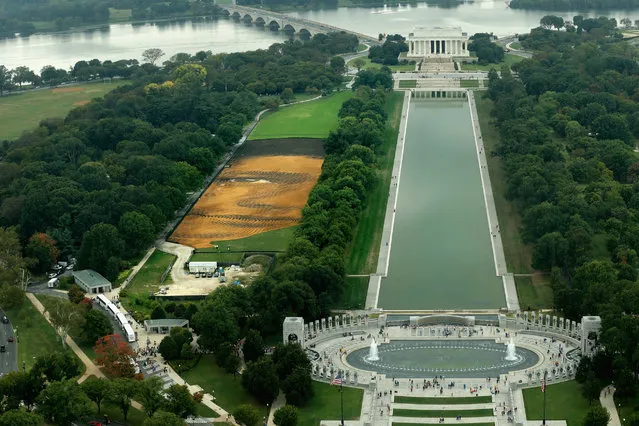
Cuban-American artist Jorge Rodriguez-Gerada's six-acre sand and soil “facescape” stretches across the JFK Hockey Field on the north side of the Reflecting Pool along the National Mall October 1, 2014 in Washington, DC. Titled “Out of Many, One” and composed of 2,500 tons of sand, 800 tons of top soil and eight miles of string, the piece is the artist's interpreative blending of 30 different men's faces. (Photo by Chip Somodevilla/Getty Images)

Cuban-American artist Jorge Rodriguez-Gerada's six-acre sand and soil “facescape” stretches across the JFK Hockey Field on the north side of the Reflecting Pool along the National Mall October 1, 2014 in Washington, DC. Titled “Out of Many, One” and composed of 2,500 tons of sand, 800 tons of top soil and eight miles of string, the piece is the artist's interpreative blending of 30 different men's faces. Rodriguez-Gereda used high-precision global positioning satellites to place 10,000 wood pegs as waypoints for the giant face. The piece will be open to the public beginning October 4 and will eventually be tilled back into the earth. (Photo by Chip Somodevilla/Getty Images)
Details
04 Oct 2014 11:39:00
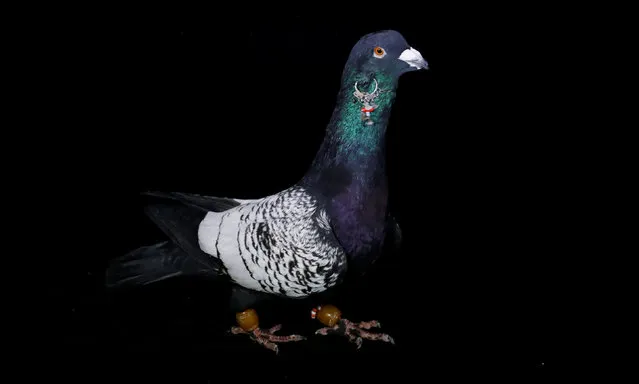
A pigeon, known as Siyah Kinifirli, with an approximate market value of 1000 Turkish Lira ($263), bred by 23-year-old Ismail Ozbek, is pictured in Sanliurfa, Turkey, December 23, 2016. As night-time approaches in Sanliurfa, southeastern Turkey, most of the alleyways of the city's old bazaar are emptying out of buyers and vendors, except for one. The bustle of daytime trading has died down, but on this little street, a stream of men carry cardboard boxes filled with pigeons to a cluster of three teahouses. Here, they sell the birds at Sanliurfa's famed auctions to a dedicated band of pigeon keepers and breeders, a pastime that has been thriving for hundreds of years across the region and over the nearby border into war-torn Syria. In a country where the minimum wage is about 1,400 Liras ($367) a month, enthusiasts regularly easily spend hundreds of dollars for one bird. “I once sold a pair of pigeons for 35,000 Turkish Lira”, says auctioneer Imam Dildas. “This is a passion, a hobby you cannot quit. I've been known to sell the fridge and my wife's gold bracelets to pay for pigeons”. (Photo by Umit Bektas/Reuters)

A pigeon, known as Siyah Kinifirli, with an approximate market value of 1000 Turkish Lira ($263), bred by 23-year-old Ismail Ozbek, is pictured in Sanliurfa, Turkey, December 23, 2016. As night-time approaches in Sanliurfa, southeastern Turkey, most of the alleyways of the city's old bazaar are emptying out of buyers and vendors, except for one. (Photo by Umit Bektas/Reuters)
Details
17 Jan 2017 12:05:00