Loading...
Done
Robot inventor Wu Yulu sits on a rickshaw driven by a robot which he invented in his village in rural Beijing's Tongzhou district, China, 17 November 2016. The 54-year-old Chinese farmer living in rural Beijing's Tongzhou district invented 63 robots in the past 30 years. Wu, who only received primary school education, plans to give up the agricultural work for his robot products. He regularly participates in exhibitions, transfers patent rights and teaches at the university to earn money. (Photo by Wu Hong/EPA)

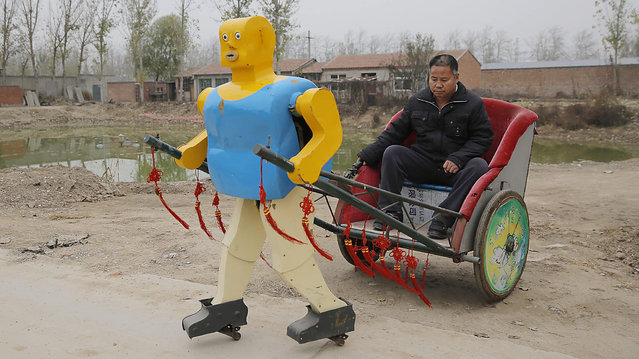
Robot inventor Wu Yulu sits on a rickshaw driven by a robot which he invented in his village in rural Beijing's Tongzhou district, China, 17 November 2016. The 54-year-old Chinese farmer living in rural Beijing's Tongzhou district invented 63 robots in the past 30 years. Wu, who only received primary school education, plans to give up the agricultural work for his robot products. He regularly participates in exhibitions, transfers patent rights and teaches at the university to earn money. (Photo by Wu Hong/EPA)
Details
21 Nov 2016 10:41:00
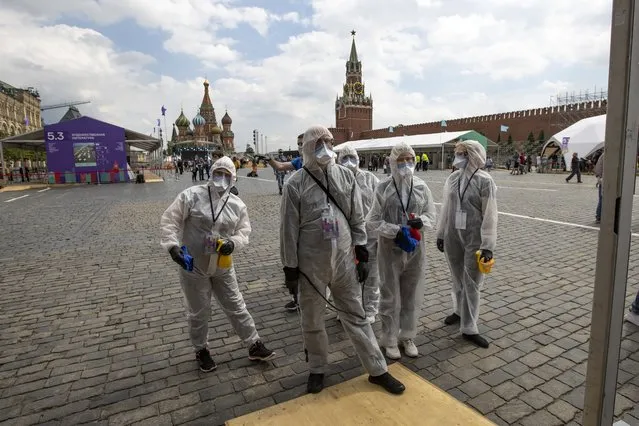
Volunteers wearing face masks, gloves and protective gear to protect against coronavirus, gather to clean an area of an outdoor book market set up at Red Square with GUM, State Department store, left, St. Basil's Cathedral, center, Spasskaya Tower, second with, and the Kremlin Wall, right, in Moscow, Russia, Saturday, June 6, 2020. Muscovites clad in face masks and gloves ventured into Red Square for an outdoor book market, a small sign of the Russian capital's gradual efforts to open up amid coronavirus concerns. (Photo by Alexander Zemlianichenko/AP Photo)

Volunteers wearing face masks, gloves and protective gear to protect against coronavirus, gather to clean an area of an outdoor book market set up at Red Square with GUM, State Department store, left, St. Basil's Cathedral, center, Spasskaya Tower, second with, and the Kremlin Wall, right, in Moscow, Russia, Saturday, June 6, 2020. Muscovites clad in face masks and gloves ventured into Red Square for an outdoor book market, a small sign of the Russian capital's gradual efforts to open up amid coronavirus concerns. (Photo by Alexander Zemlianichenko/AP Photo)
Details
08 Jun 2020 00:01:00
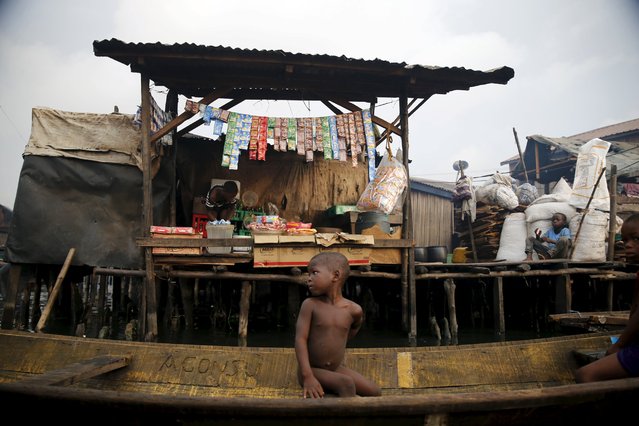
A boy sits in a canoe in front of a shed built on a raft in the Makoko fishing community on the Lagos Lagoon, Nigeria February 29, 2016. Makoko, a vast slum of houses on stilts in a Lagos lagoon, now boasts a new school – pyramid-shaped, floating and capable of withstanding the waterways' extreme weather, it is a beacon of hope for the nearly 100,000 Nigerians who live there.  (Photo by Akintunde Akinleye/Reuters)

A boy sits in a canoe in front of a shed built on a raft in the Makoko fishing community on the Lagos Lagoon, Nigeria February 29, 2016. In Makoko, a sprawling slum of Nigeria's megacity Lagos, a floating school capable of holding up to a hundred pupils has since November brought free education to the waterways known as the Venice of Lagos. It offers the chance of social mobility for youngsters who, like most of the city's 21 million inhabitants, lack a reliable electricity and water supply and whose water-based way of life is threatened by climate change as well as rapid urbanisation. (Photo by Akintunde Akinleye/Reuters)
Details
05 Mar 2016 12:01:00
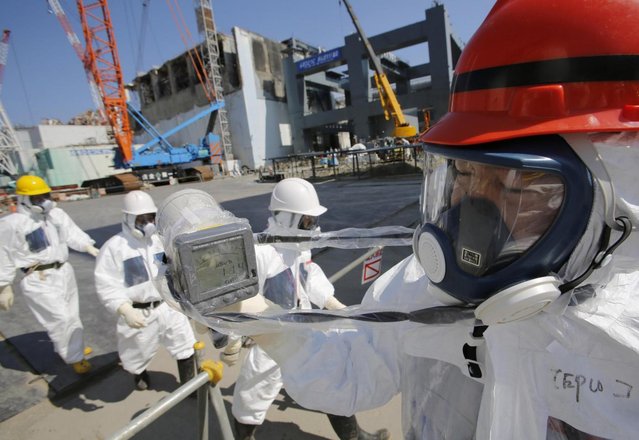
A radiation monitor indicates 114.00 microsieverts per hour near the building housing the plant's No. 4 reactor, center, and an under construction foundation, right, which will store the reactor's melted fuel rods at Tokyo Electric Power Co.'s tsunami-crippled Fukushima Dai-ichi nuclear power plant in Okuma, Fukushima prefecture, Wednesday, March 6, 2013, ahead of the second anniversary of the March 11, 2011 tsunami and earthquake. (Photo by Issei Kato/AP Photo/Pool)

A radiation monitor indicates 114.00 microsieverts per hour near the building housing the plant's No. 4 reactor, center, and an under construction foundation, right, which will store the reactor's melted fuel rods at Tokyo Electric Power Co.'s tsunami-crippled Fukushima Dai-ichi nuclear power plant in Okuma, Fukushima prefecture, Wednesday, March 6, 2013, ahead of the second anniversary of the March 11, 2011 tsunami and earthquake. Some 110,000 people living around the nuclear plant were evacuated after the massive March 11, 2011, earthquake and tsunami knocked out the plant's power and cooling systems, causing meltdowns in three reactors and spewing radiation into the surrounding air, soil and water. (Photo by Issei Kato/AP Photo/Pool)
Details
06 Mar 2013 13:19:00
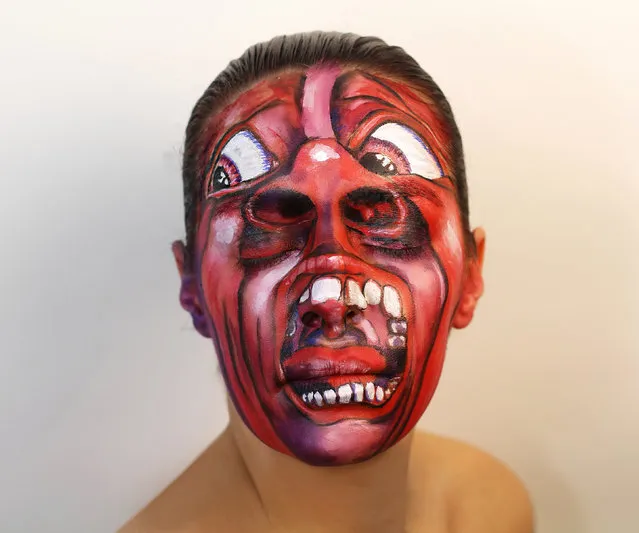
An artist has gone to incredible lengths to paint several iconic album covers on her own face. London-based artist Natalie Sharp wanted to celebrate Record Store Day in a unique way, and asked her Facebook friends for suggestions about which album covers to paint. She was overwhelmed with responses, and as a result painted 40 different album covers on her face, including Nirvana's “Nevermind”, King Crimson's “The Court of the Crimson King”, and “Melt” by Peter Gabriel. (Photo by Natalie Sharp/Caters News)

An artist has gone to incredible lengths to paint several iconic album covers on her own face. London-based artist Natalie Sharp wanted to celebrate Record Store Day in a unique way, and asked her Facebook friends for suggestions about which album covers to paint. She was overwhelmed with responses, and as a result painted 40 different album covers on her face, including Nirvana's “Nevermind”, King Crimson's “The Court of the Crimson King”, and “Melt” by Peter Gabriel. Here: King Crimson album. “In fact, I barely used by brushes for King Crimson; I would just keep smudging it with my fingers”. (Photo by Natalie Sharp/Caters News)
Details
29 Apr 2015 06:11:00
Children, wearing red neckerchiefs, a symbol of the Pioneer Organization, salute during a ceremony for the inauguration of 18 new members at a local school in the southern settlement of Kazminskoye in Stavropol region, Russia, November 19, 2015. Early pro-communist youth movements, which appeared in Russia after the 1917 Bolshevik revolution, were reformed into the Pioneer Organization of the Soviet Union. (Photo by Eduard Korniyenko/Reuters)

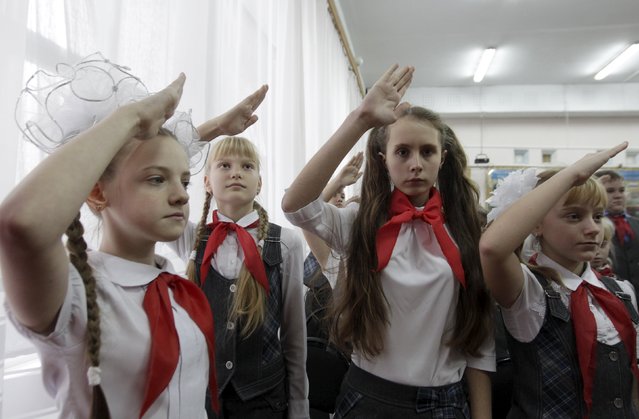
Children, wearing red neckerchiefs, a symbol of the Pioneer Organization, salute during a ceremony for the inauguration of 18 new members at a local school in the southern settlement of Kazminskoye in Stavropol region, Russia, November 19, 2015. Early pro-communist youth movements, which appeared in Russia after the 1917 Bolshevik revolution, were reformed into the Pioneer Organization of the Soviet Union. While the organization lost its dominance among students in post-Soviet Russia, some educational institutions and families still carry on this tradition. (Photo by Eduard Korniyenko/Reuters)
Details
22 Nov 2015 08:01:00
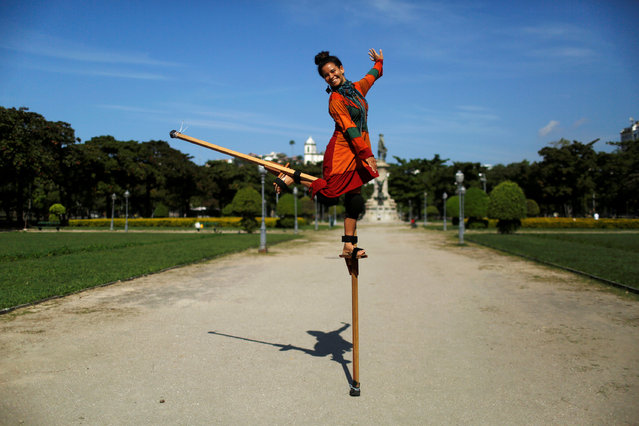
Raquel Poti, a 32-year-old street artist, poses at a park in Rio de Janeiro, Brazil, June 25, 2016. Raquel thinks the Olympics promotes a lifestyle that combines sports, culture and education. She is concerned about the large investment for the event while the population needs improvements in basic services. (Photo by Pilar Olivares/Reuters)

Just a week before Rio de Janeiro hosts South America's first Olympics, city residents expressed mixed feelings about the cost and security of the Games, while holding out hope they will bring joy to a nation facing economic and political crises. The conflicted thoughts mirror a recent survey by the Datafolha polling group showing that half of Brazilians were opposed to holding the Games, while 63 percent think the costs of hosting the event will outweigh benefits. (Photo by Pilar Olivares/Reuters)
Details
03 Aug 2016 11:51:00
A 20 metre high spiral staircase in a tower used as an emergency exit, is seen inside a Federal Reserve bank (Bundesbank) bunker, prior to the bunker's official opening to the public in Cochem, Germany, March 18, 2016. (Photo by Kai Pfaffenbach/Reuters)

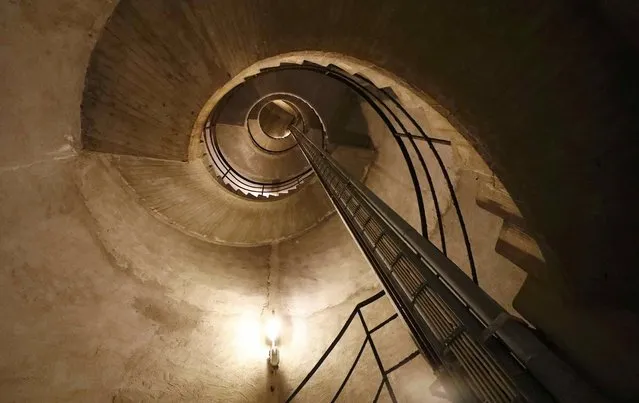
A 20 metre high spiral staircase in a tower used as an emergency exit, is seen inside a Federal Reserve bank (Bundesbank) bunker, prior to the bunker's official opening to the public in Cochem, Germany, March 18, 2016. West Germany's Central Bank (Deutsche Bundesbank) stored some 20 billion German marks of emergency notes in two underground bunkers, one in Frankfurt the other in Cochem, between 1964-1988 during the cold war. (Photo by Kai Pfaffenbach/Reuters)
Details
19 Mar 2016 12:36:00