Loading...
Done
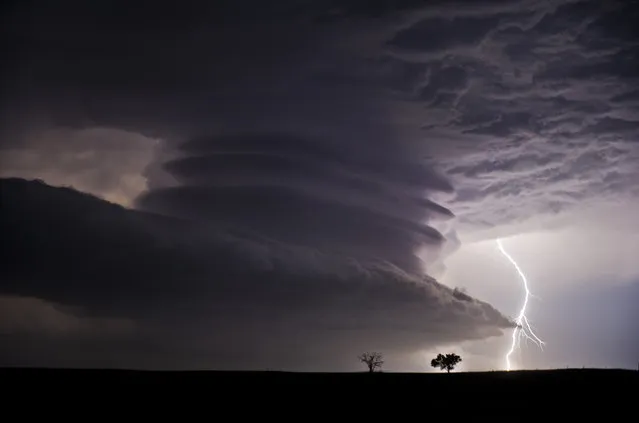
“Stacked Supercell with Lightning”. This huge mesocyclone supercell was near the Nebraska / Kansas border on the night of June 22nd, 2012. What a stunning structure! (Photo and caption by Jennifer Brindley/National Geographic Traveler Photo Contest)

“Stacked Supercell with Lightning”. This huge mesocyclone supercell was near the Nebraska / Kansas border on the night of June 22nd, 2012. What a stunning structure! (Photo and caption by Jennifer Brindley/National Geographic Traveler Photo Contest)

ATTENTION! All pictures are presented in high resolution. To see Hi-Res images – just TWICE click on any picture. In other words, click small picture – opens the BIG picture. Click BIG picture – opens VERY BIG picture.
Details
25 Jun 2013 13:12:00


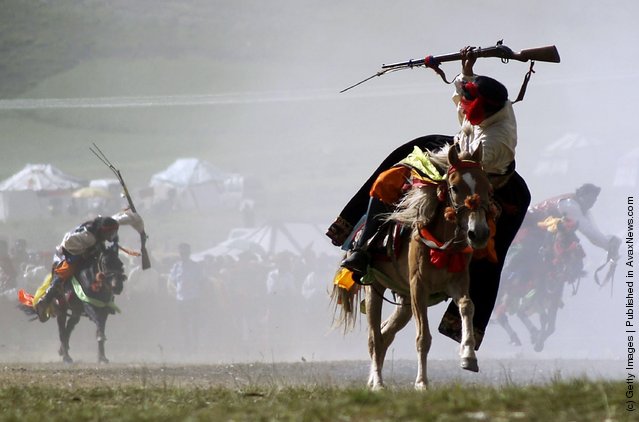
A Tibetan rider fires his weapon as he perfoms his riding skills at the Qinghai Yushu Horse Racing Festival on July 27, 2007 in Yushu County of Yushu Tibetan Autonomous Prefecture, Qinghai Province, northwest China. The Horse Racing Festival of Tibetan nomads in Yushu Prefecture falls in late July and early August on the Tibetan calendar. During the festival, various equestrian skills will be performed along with singing, dancing and costume shows. (Photo by China Photos/Getty Images)
Details
03 Apr 2011 12:33:00


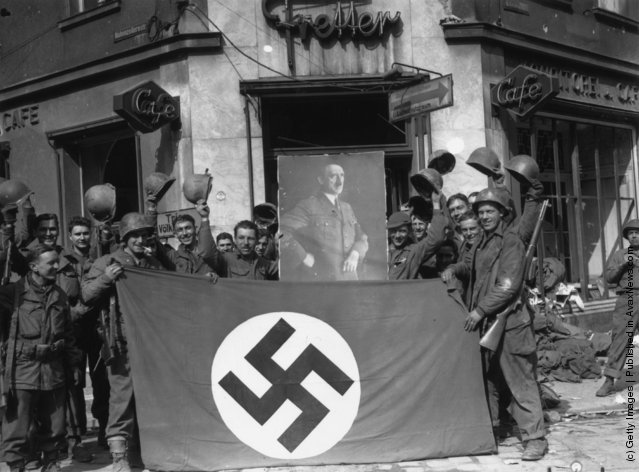
Soldiers of the 70th division of the American 7th Army hold up a Nazi flag and a portrait of Adolf Hitler, taken during the World War II capture of Saarbrucken. (Photo by Horace Abrahams/Keystone/Getty Images). 22nd March 1945
Details
08 May 2011 08:03:00
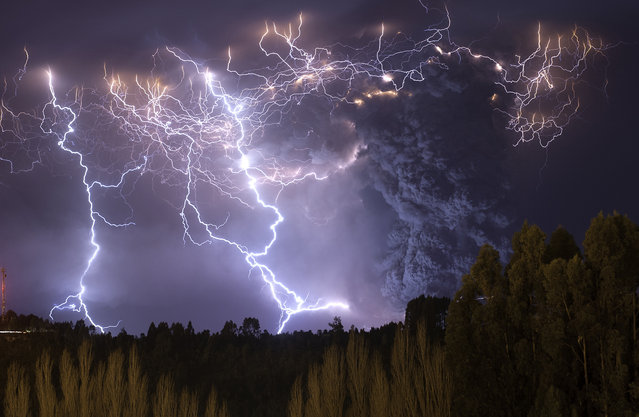
The eruption of Cordon Caulle began on June 4, 2011, located in the Region of Los Rios in Chile. For about 12 months, people and animals became accustomed to living with the daily fall of ash, which also caused problems in the air traffic in South America. The explosions and lightning during first days of the eruption could be seen from hundreds of miles around. This photograph was taken on the second night of eruption from the town of Lago Ranco. (Photo and caption by Francisco Negroni/National Geographic Traveler Photo Contest)

The eruption of Cordon Caulle began on June 4, 2011, located in the Region of Los Rios in Chile. For about 12 months, people and animals became accustomed to living with the daily fall of ash, which also caused problems in the air traffic in South America. The explosions and lightning during first days of the eruption could be seen from hundreds of miles around. This photograph was taken on the second night of eruption from the town of Lago Ranco. (Photo and caption by Francisco Negroni/National Geographic Traveler Photo Contest)

ATTENTION! All pictures are presented in high resolution. To see Hi-Res images – just TWICE click on any picture. In other words, click small picture – opens the BIG picture. Click BIG picture – opens VERY BIG picture.
Details
23 Jun 2013 11:24:00
Cheng Chen (R), a 27-year-old worker at a state-owned enterprise, poses for a photograph with his nephew who is wearing his home-made Iron Man armour, in Xuzhou, Jiangsu province April 13, 2015. (Photo by Reuters/Stringer)

Cheng Chen (R), a 27-year-old worker at a state-owned enterprise, poses for a photograph with his nephew who is wearing his home-made Iron Man armour, in Xuzhou, Jiangsu province April 13, 2015. It cost Cheng about 500 yuan ($81 USD) to make the armour, which weighs about 4 kilograms, with plastic boards and LED lights, local media reported. (Photo by Reuters/Stringer)
Details
18 Apr 2015 10:12:00
“Woman with Umbrella in Rain” by Raimund von Stillfried. Artist: Kusakabe Kimbei (Japanese, 1841–1934), 1870s. (Photo courtesy of The Metropolitan Museum of Art)

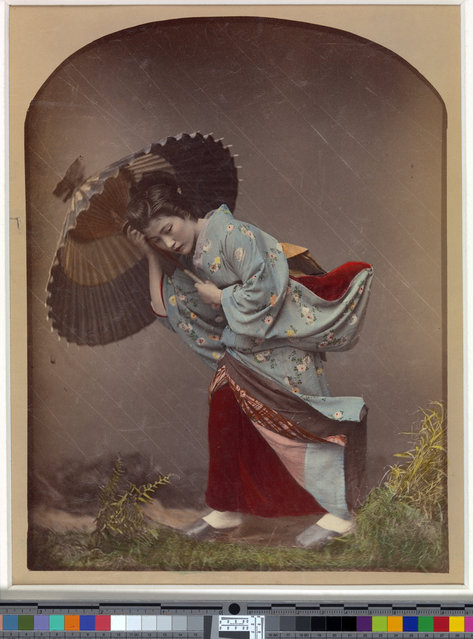
“Woman with Umbrella in Rain” by Raimund von Stillfried. Artist: Kusakabe Kimbei (Japanese, 1841–1934), 1870s. Commercial photography studios in Meiji-era Japan were renowned for the subtlety and refinement of their coloring techniques. This hand-tinted image of a young woman caught in a heavy rainstorm achieved its naturalistic effect by knitting together multiple strands of artifice: the greenery in the foreground was a studio prop; the flaps of the kimono were suspended by thin wires to create the impression of a strong wind; and long, diagonal marks were made on the negative to suggest streaks of rain. (Photo courtesy of The Metropolitan Museum of Art)
Details
12 May 2013 10:13:00
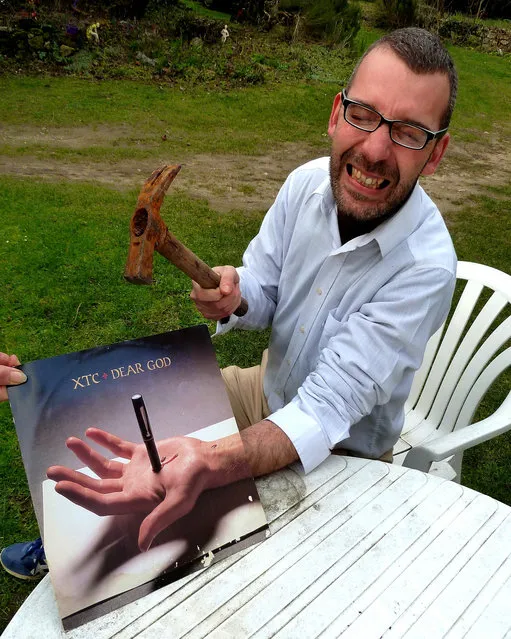
“XTC”. (Le Guit)

“XTC”. (Photo by Le Guit)
Details
28 May 2013 11:56:00
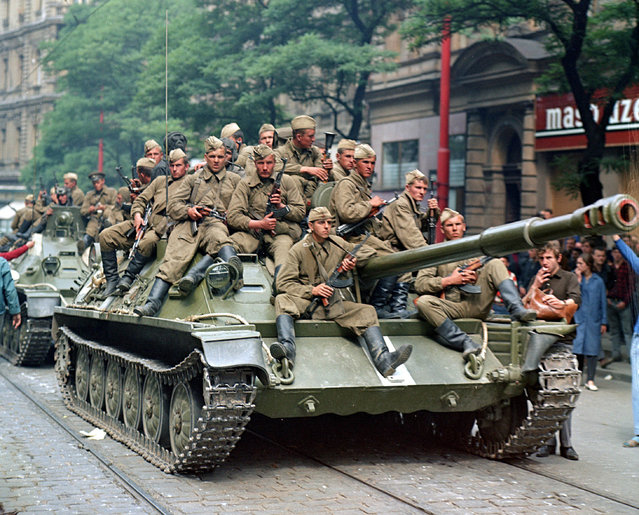
Soviet Army soldiers sit on their tanks in front of the Czechoslovak Radio station building in central Prague during the first day of Soviet-led invasion to then Czechoslovakia on August 21, 1968. (Photo by Libor Hajsky/Reuters)

Soviet Army soldiers sit on their tanks in front of the Czechoslovak Radio station building in central Prague during the first day of Soviet-led invasion to then Czechoslovakia on August 21, 1968. (Photo by Libor Hajsky/Reuters)
Details
16 Mar 2014 07:44:00