Loading...
Done
How Snakeskin Handbags Are Made

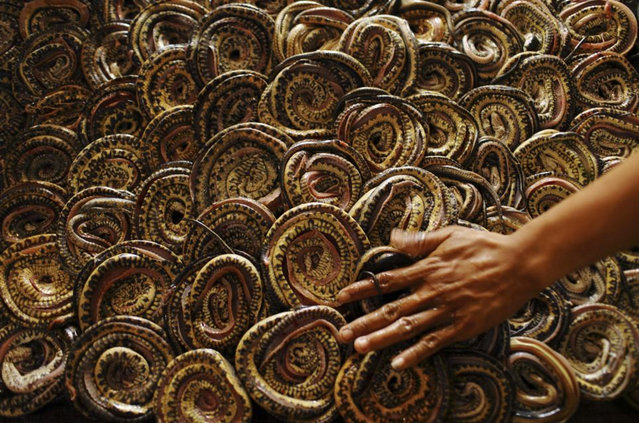
Images from a snake slaughterhouse at Kapetakan village in Indonesia’s West Java province. Wakira, who is known as “Boss Cobra”, owns the slaughterhouse that produces snake meat and skin. Snake meat is believed by some to be a remedy for skin diseases and asthma, as well as an aid to increase virility. The snake skins, measuring in the hundreds of metres, are sold to bag factories in the West and Central Java provinces on a monthly basis. The price of a bag made from snake skin costs between 150,000 rupiah ($ 15.60) and 300,000 rupiah ($31.20), depending on its size. That snakeskin handbag you’ll buy is costing a hell of a lot more.
Details
20 Feb 2013 12:00:00
Wang Zi Won’s Mechanical Buddhas

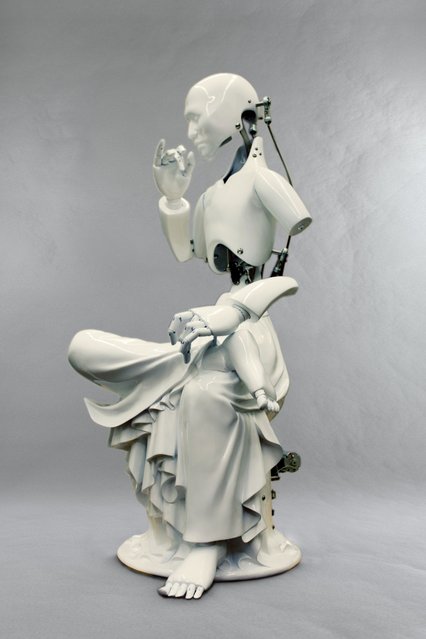
South Korean artist Wang Zi Won creates enlightened robots, including the Buddha and an idealized mechanical doll based upon himself, as a guidepost for a future in which technology lead to self-actualization.
Humans will evolve and adapt themselves to enhanced science and technology just as men and animals in the past evolved to adapt themselves to their natural circumstances. The artist sees this as our destiny, not as a negative, gloomy dystopia.
Details
22 Mar 2013 12:02:00
New Yorkers Celebrate At West Indian Day Parade

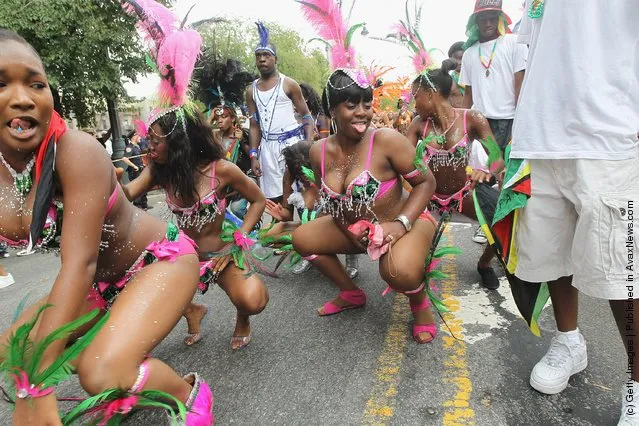
“The Labor Day Parade (or West Indian Carnival), is an annual celebration held on American Labor Day (the first Monday in September), in Crown Heights, Brooklyn, New York. Ms. Jessie Waddell and some of her West Indian friends started the Carnival in Harlem in the 1920s by staging costume parties in large enclosed places like the Savoy, Renaissance and Audubon Ballrooms due to the cold wintry weather of February. This is the usual time for the pre-Lenten celebrations held in most countries around the world. However, because of the very nature of Carnival, and the need to parade in costume to music, indoor confinement did not work well. The earliest known Carnival street parade was held on September 1, 1947. The Trinidad Carnival Pageant Committee was the founding force behind the parade, which was held in Harlem. The parade route was along Seventh Avenue, starting at 110th St.” – Wikipedia

Photo: A reveler looks on during the West Indian-American Day Parade September 5, 2011 in the Brooklyn borough of New York City. More than 2 million spectators were expected to attend the celebration of Caribbean culture. (Photo by Mario Tama/Getty Images)
Details
06 Sep 2011 11:18:00
Miss Venezuela Ivian Sarcos Miss World 2011

Miss Venezuela Ivian Sarcos receives her Miss World 2012 sash from Miss World 2011 by Miss World 2010, Alexandria Mills (R) in the Miss world 2011 World Final on November 6, 2011 in London, England. (Photo by Jeremy O'Donnell/Getty Images)
Details
07 Nov 2011 10:54:00
Pink Champagne Fox Miko

Meet this Miko, a 4-month fox color "pink champagne". Fox this color were first bred on the Canadian farm, one hundred years ago. They are so rare species that currently exist in the world only two such individuals: one lives in Ontario, and the other is Miko. Such foxes bred in captivity and contain only as pets in Canada.
Details
21 Mar 2014 12:49:00
Fun With Face Swaps Part 1

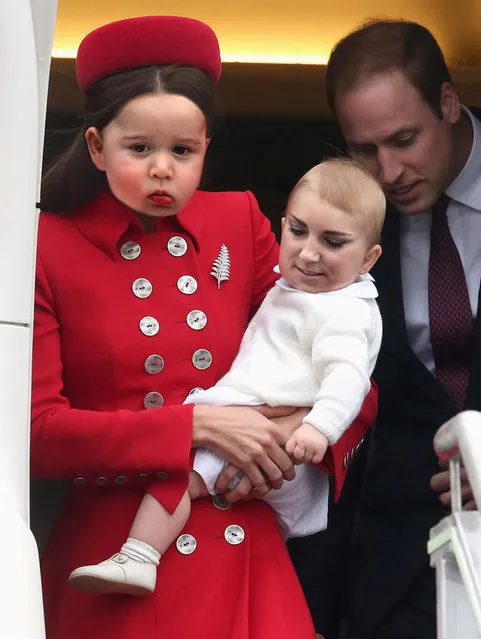
The internet has been awash with face swaps for years — here’s our contribution to the art of creating nightmares with Photoshop.
Details
01 Jun 2014 11:01:00
Snow Wall in Japan

The Tateyama Kurobe Alpine Route is an international mountain sightseeing route some 90 kilometers (56 miles) long. The route goes across the 3,000-meter-high North Alpine mountains, the so-called “roof of Japan,” and connects Toyama and Shinano Omachi. You can enjoy the panorama by taking a train, highland bus, trolley bus, cable car, and ropeway. Since the lines opened in June 1971, the Tateyama mountain area has been transformed from an isolated spot into one of the nation’s best sightseeing areas, where a million guests visit every year.
Details
27 Jul 2012 09:28:00
Under Water Photographers By Andrew Shpatak

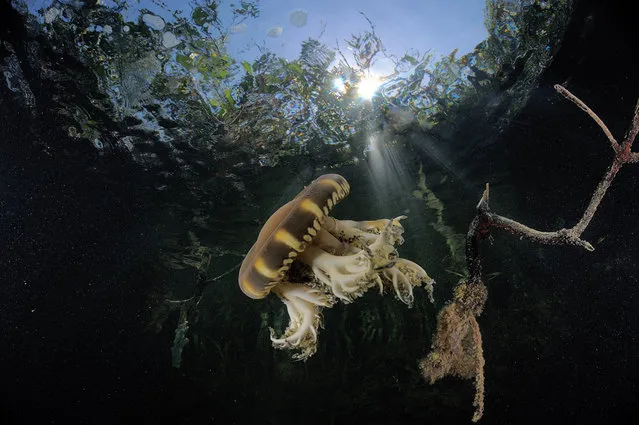
I'm born in Russia in a village on the coast of the Sea of ​​Japan. The sea itself that always catches the attention of divers and underwater photographers from all over the Soviet Union.

I started with underwater photography recently, in 1998, with a simple underwater "boom box" "Canon" and "Epic".
Then a "Nikonos-5", complete with wide-angle and close-up.
The first trip to the Red Sea, with colorful fish .. The first attempts to make the macro and the knowledge that this equipment was not good.
ANDREY SHPATAK
Details
18 Apr 2013 11:13:00