Loading...
Done
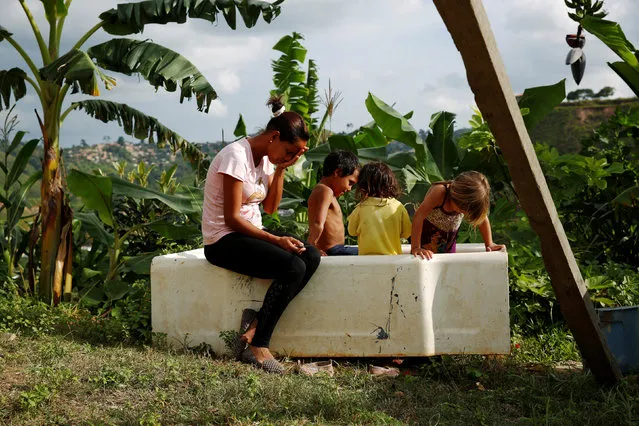
Lisibeht Martinez (L), 30, who was sterilized one year ago, sits next to her children while they play in a bathtub in the backyard of their house in Los Teques, Venezuela July 19, 2016. (Photo by Carlos Garcia Rawlins/Reuters)

Venezuela's food shortages, inflation and crumbling medical sector have become such a source of anguish that a growing number of young women are reluctantly opting for sterilizations rather than face the hardship of pregnancy and child-rearing. Traditional contraceptives like condoms or birth control pills have virtually vanished from store shelves, pushing women towards the hard-to-reverse surgery. While no recent national statistics on sterilizations are available, doctors and health workers say demand for the procedure is growing. (Photo by Carlos Garcia Rawlins/Reuters)
Details
04 Aug 2016 12:22:00
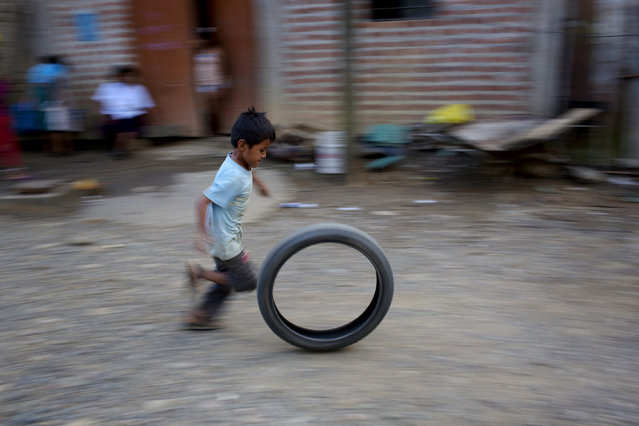
In this Saturday, June 20, 2015 photo, a boy runs while playing with a motorcycle wheel in Samugari, Ayacucho, Peru. (Photo by Rodrigo Abd/AP Photo)

In a simpler time all a child or an adult needed to enjoy the outdoors was a ball and a stick. Or maybe an old tire tied to a high branch to fashion a swing. And the only instruction given to children was to “be home before dark”. Now there are iPads and computers and television screens and shrinking safe public spaces. But despite the distractions and limitations of space, these images show the charm of kicking a ball or skipping rope endures. Sometimes with modifications as a nod to changing times. Here: in this Saturday, June 20, 2015 photo, a boy runs while playing with a motorcycle wheel in Samugari, Ayacucho, Peru. (Photo by Rodrigo Abd/AP Photo)
Details
20 Jul 2015 10:26:00
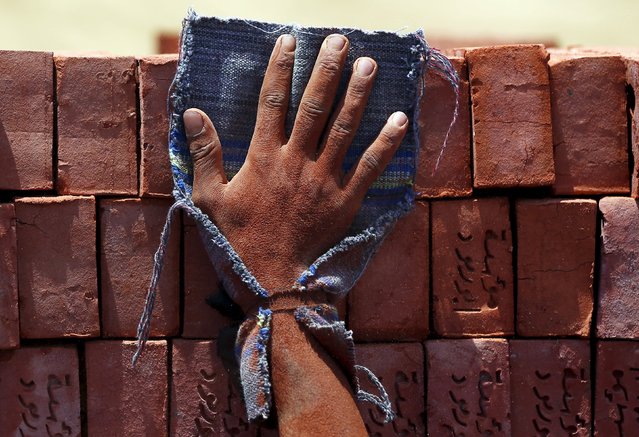
A hand of a labourer pushes bricks at a traditional brick factory in Arab Mesad district of Helwan, northeast of Cairo, May 14, 2015. (Photo by Amr Abdallah Dalsh/Reuters)

A hand of a labourer pushes bricks at a traditional brick factory in Arab Mesad district of Helwan, northeast of Cairo, May 14, 2015. About 45 labourers are employed at the brick factory and most work 10 hours a day. Adult workers earn a daily wage of 70 Egyptian pounds ($9) and child workers earn 40 Egyptian pounds ($5). The labourers, who are usually temporary or seasonally employed in Egypt's brick-making industry, experience unsafe work conditions, according to local media. (Photo by Amr Abdallah Dalsh/Reuters)
Details
19 May 2015 11:37:00
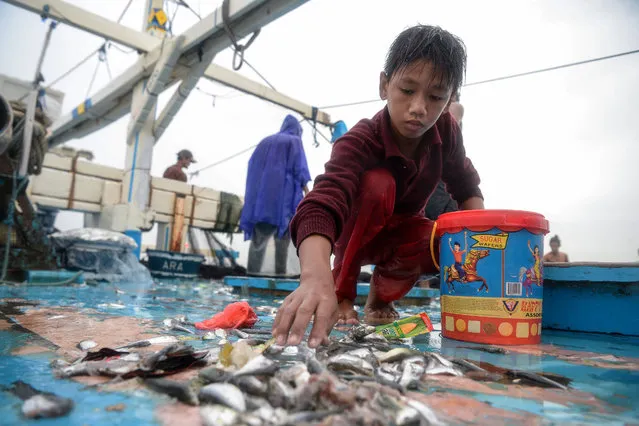
In this photo taken on March 16, 2019, 13-year-old Reymark Cavesirano collects left over herring onboard a fishing boat anchored at the mouth of Manila Bay off Navotas City in suburban Manila. (Photo by Ted Aljibe/AFP Photo)

In this photo taken on March 16, 2019, 13-year-old Reymark Cavesirano collects left over herring onboard a fishing boat anchored at the mouth of Manila Bay off Navotas City in suburban Manila. Cavesirano, a grade five student, paddles to the anchored fishing boats and helps crew clean their nets, and in exchange collects leftover herring still tangled in the nets. Across the Philippines, there are 5 million child labourers, aged between five and 17, many of them working in dangerous conditions. About 22 million people – a fifth of the population – live below the national poverty line. (Photo by Ted Aljibe/AFP Photo)
Details
12 Apr 2019 00:03:00
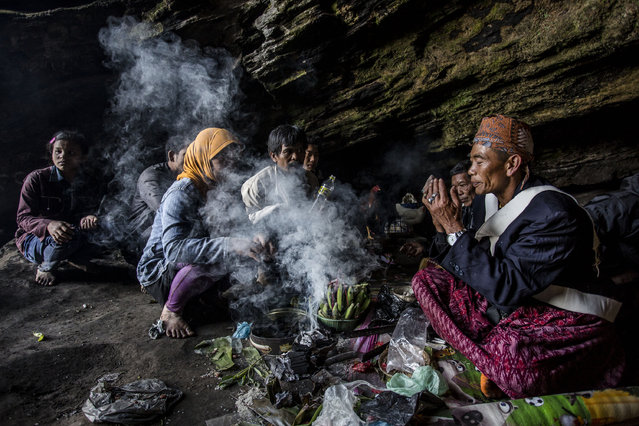
A Tenggerese shaman praying for worshippers at Widodaren cave during the Tenggerese Hindu Yadnya Kasada festival on July 31, 2015 in Probolinggo, East Java, Indonesia. The festival is the main festival of the Tenggerese people and lasts about a month. On the fourteenth day, the Tenggerese make the journey to Mount Bromo to make offerings of rice, fruits, vegetables, flowers and livestock to the mountain gods by throwing them into the volcano's caldera. (Photo by Ulet Ifansasti/Getty Images)

A Tenggerese shaman praying for worshippers at Widodaren cave during the Tenggerese Hindu Yadnya Kasada festival on July 31, 2015 in Probolinggo, East Java, Indonesia. The festival is the main festival of the Tenggerese people and lasts about a month. On the fourteenth day, the Tenggerese make the journey to Mount Bromo to make offerings of rice, fruits, vegetables, flowers and livestock to the mountain gods by throwing them into the volcano's caldera. The origin of the festival lies in the 15th century when a princess named Roro Anteng started the principality of Tengger with her husband Joko Seger, and the childless couple asked the mountain Gods for help in bearing children. The legend says the Gods granted them 24 children but on the provision that the 25th must be tossed into the volcano in sacrifice. The 25th child, Kesuma, was finally sacrificed in this way after initial refusal, and the tradition of throwing sacrifices into the caldera to appease the mountain Gods continues today. (Photo by Ulet Ifansasti/Getty Images)
Details
01 Aug 2015 12:07:00
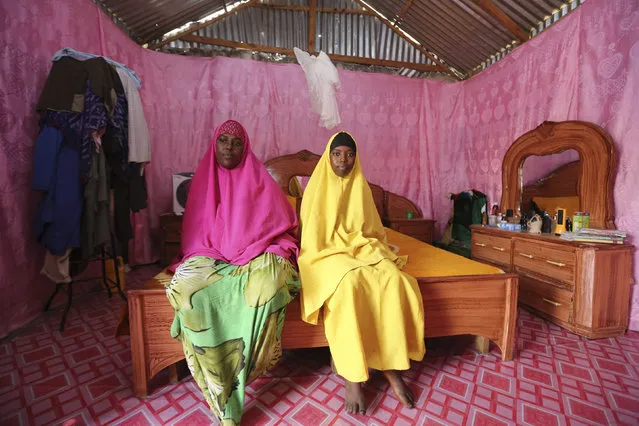
Saciido Sheik Yacquub, 34, poses for a picture with her daughter Faadumo Subeer Mohamed, 13, at their home in Hodan district IDP camp in Mogadishu February 11, 2014. Saciido, who runs a small business, wanted to be a business woman when she was a child. She studied until she was 20. She hopes that Faadumo will become a doctor. Faadumo will finish school in 2017 and hopes to be a doctor when she grows up. (Photo by Feisal Omar/Reuters)

“On March 8th activists celebrate International Women’s Day, which dates back to the early 20th century and has been observed by the United Nations since 1975. In the run-up to the event, Reuters photographers in countries around the globe took a series of portraits of women and their daughters. They asked each mother what her profession was, at what age she had finished education, and what she wanted her daughter to become when she grew up. They also asked each daughter at what age she would finish education and what she wanted to do in the future. The series of images offers an insight into the lives of women and girls around the world”. – Reuters. (Photo by Feisal Omar/Reuters)
Details
09 Mar 2014 04:33:00
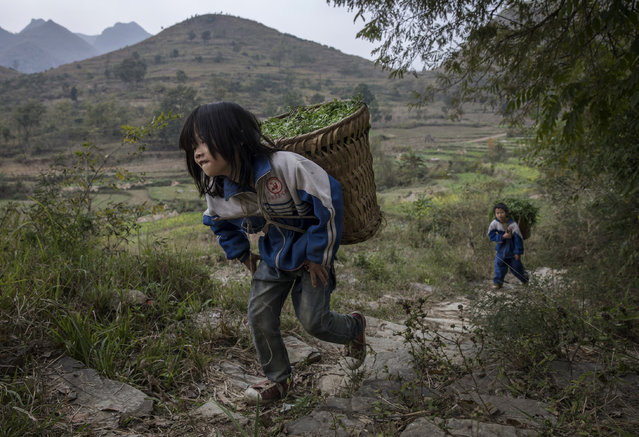
“Left behind” children Luo Hongni, 11 (L) and brother  Luo Gan,10, carry flowers to be used as feed while doing chores in the fields on December 18, 2016 in Anshun, China. (Photo by Kevin Frayer/Getty Images)

“Left behind” children Luo Hongni, 11 (L) and brother Luo Gan,10, carry flowers to be used as feed while doing chores in the fields on December 18, 2016 in Anshun, China. Like millions of Chinese children, the four Luo siblings are being raised by their grandparents in rural China as their parents left to find work in urban areas. (Photo by Kevin Frayer/Getty Images)
Details
18 Feb 2017 00:03:00
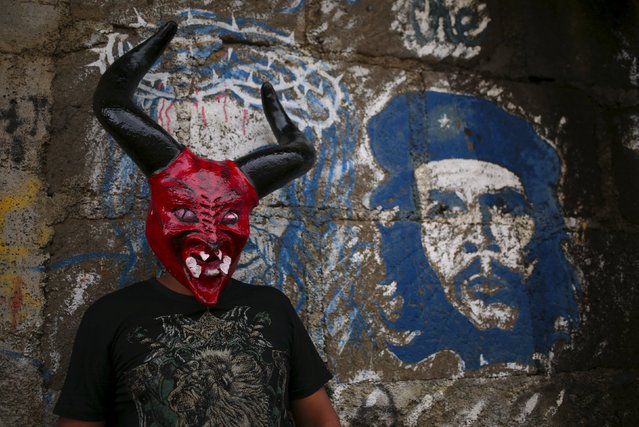
A man dressed as a devil poses next to a grafitti of late rebel hero Ernesto "Che" Guevara in the indigenous community of Monimbo in Masaya, Nicaragua, October 16, 2015. (Photo by Oswaldo Rivas/Reuters)

A man dressed as a devil poses next to a grafitti of late rebel hero Ernesto "Che" Guevara in the indigenous community of Monimbo in Masaya, Nicaragua, October 16, 2015. People prepare to participate in the popular annual festival called "The Aguizotes" held on the last Friday of October, where residents dress up as characters from legends and folklore mythology of Nicaragua. (Photo by Oswaldo Rivas/Reuters)
Details
20 Oct 2015 08:04:00