Loading...
Done
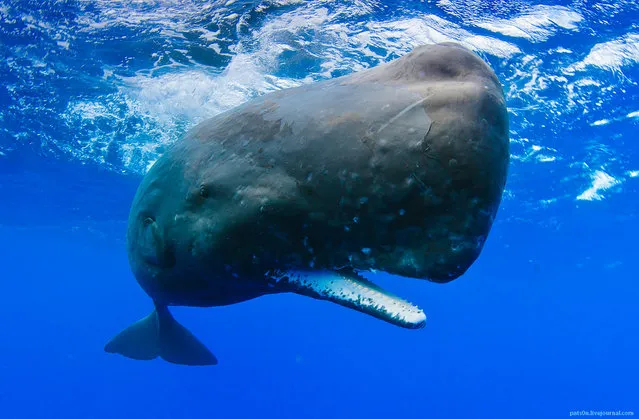
“Sperm whale opening it's huge mouth, Ogasawara Islands, Japan. Sperm whales are the biggest carnivorous animals on the planet. Each teeth in the mouth of adult specimen weights more than 1 kilogram. Interestingly enough that modern marine biologists believe that these teeth despite being fearsome play little role in capturing and eating giant squid – with their main function being mainly ritual aggression between males!”. (Alexander Safonov)

“Sperm whale opening it's huge mouth, Ogasawara Islands, Japan. Sperm whales are the biggest carnivorous animals on the planet. Each teeth in the mouth of adult specimen weights more than 1 kilogram. Interestingly enough that modern marine biologists believe that these teeth despite being fearsome play little role in capturing and eating giant squid – with their main function being mainly ritual aggression between males!”. (Photo by Alexander Safonov)
Details
30 Nov 2012 11:22:00
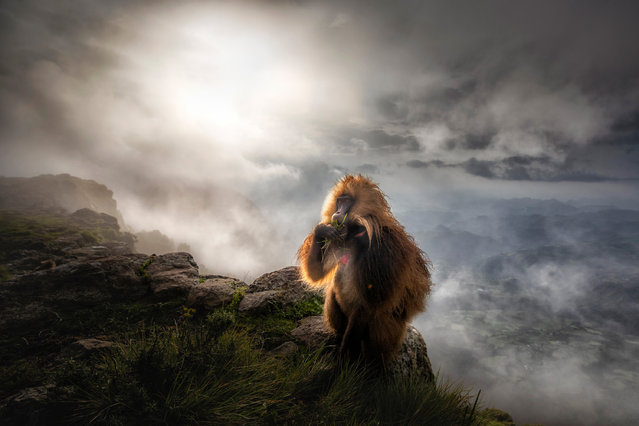
Highly commended, mammals: Gelada after the storm – Marco Gaiotti (Italy). “Gelada baboons are the only monkey species in the world that feed on grasses. They are native to the tableland of Ethiopia. Every morning large family groups wander from their sleeping places in the steep rock face, up to 1,000 metres high, to the feeding grounds at the tablelands. This image clearly depicts their feeding strategy: they pull out bunches of grass, sort the stalks and then lift them to their mouth. This shot was taken towards the end of the rainy season after a heavy storm”. (Photo by Marco Gaiotti/2019 GDT European Wildlife Photographer of the Year)

Highly commended, mammals: Gelada after the storm – Marco Gaiotti (Italy). “Gelada baboons are the only monkey species in the world that feed on grasses. They are native to the tableland of Ethiopia. Every morning large family groups wander from their sleeping places in the steep rock face, up to 1,000 metres high, to the feeding grounds at the tablelands. This image clearly depicts their feeding strategy: they pull out bunches of grass, sort the stalks and then lift them to their mouth. This shot was taken towards the end of the rainy season after a heavy storm”. (Photo by Marco Gaiotti/2019 GDT European Wildlife Photographer of the Year)
Details
31 Oct 2019 00:03:00
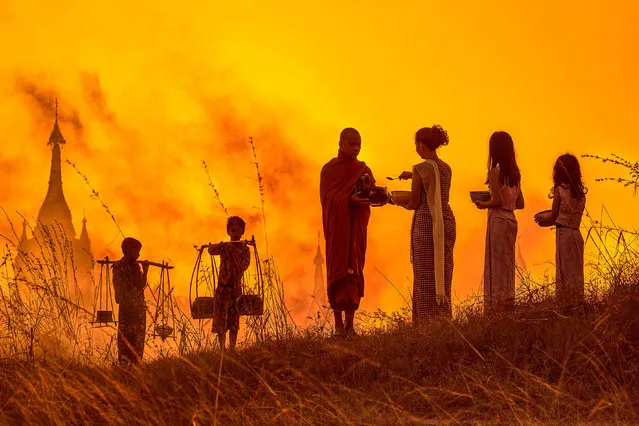
Family Donation by Si Thu Ye Myint (Myanmar, Winner). Myin Twin village in upper Myanmar. (Photo by Si Thu Ye Myint/Sony World Photography)

Family Donation by Si Thu Ye Myint (Myanmar, Winner). Myin Twin village in upper Myanmar. (Photo by Si Thu Ye Myint/Sony World Photography)
Details
28 Feb 2023 04:53:00
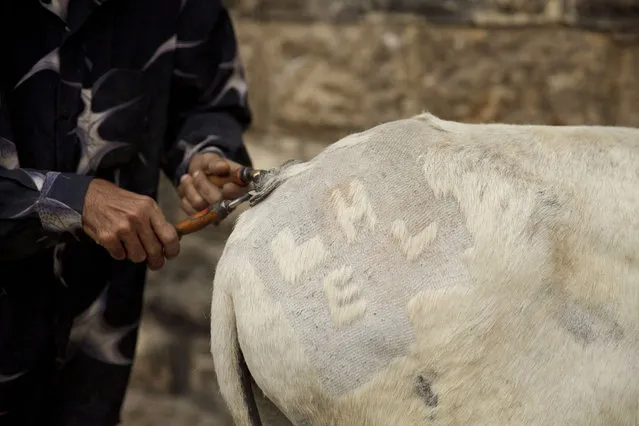
In this Sunday, March 2, 2014 photo, animal barber Mohamed Mahmoud shaves a customer's initials onto the rump of a donkey in Cairo, Egypt. Clients typically request for regular trims to keep animals cool in the summer, initials in English letters, and patterns – but sometimes they give Mahmoud full creative license. (Photo by Maya Alleruzzo/AP Photo)

In this Sunday, March 2, 2014 photo, animal barber Mohamed Mahmoud shaves a customer's initials onto the rump of a donkey in Cairo, Egypt. Clients typically request for regular trims to keep animals cool in the summer, initials in English letters, and patterns – but sometimes they give Mahmoud full creative license. (Photo by Maya Alleruzzo/AP Photo)
Details
03 Nov 2014 12:53:00
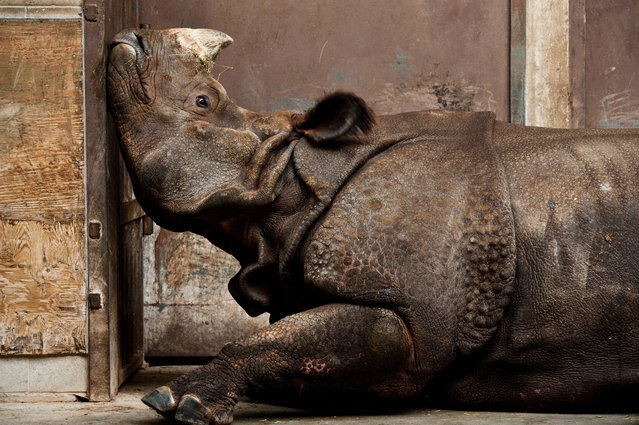
“Honorable Mention”. An Indian rhinoceros, far from home and stuck inside with late-winter blues at the Toronto zoo. Photo location: Toronto, Ontario, Canada. (Photo and caption by Stephen De Lisle/National Geographic Photo Contest)

“Honorable Mention”. An Indian rhinoceros, far from home and stuck inside with late-winter blues at the Toronto zoo. Photo location: Toronto, Ontario, Canada. (Photo and caption by Stephen De Lisle/National Geographic Photo Contest)
Details
20 Dec 2013 10:04:00
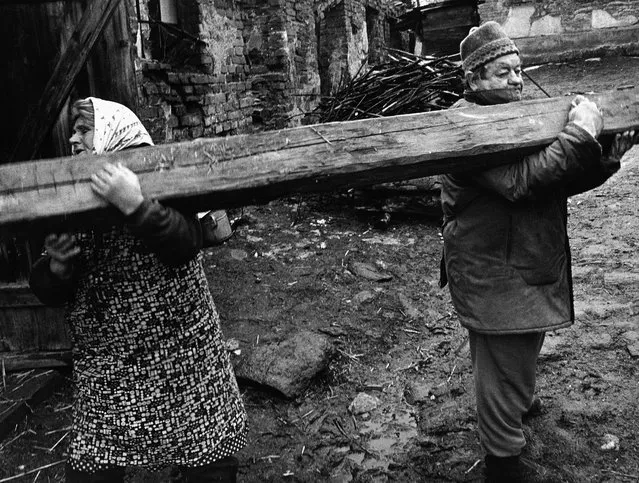
A love story with two log choppers. “In 1993, I was working on a project about life in the Olomouc region of Czechoslovakia. One day, I came to the village of Dlouhá Loučka-Křivá and went into a courtyard where I saw two old people, a husband and wife, sawing firewood for winter. They were working quietly, concentrating. I watched them fetch a beam from a wrecked barn, but they didn’t discuss how they planned to carry it to the saw. The woman faced one way, the man the other. When they realised, the woman eventually turned and followed her husband. The picture I took is the picture of many relationships – when each partner wants something different, but they have to come to an agreement, pull together eventually”. (Photo by Jindrich Streit)

A love story with two log choppers. “In 1993, I was working on a project about life in the Olomouc region of Czechoslovakia. One day, I came to the village of Dlouhá Loučka-Křivá and went into a courtyard where I saw two old people, a husband and wife, sawing firewood for winter. They were working quietly, concentrating. I watched them fetch a beam from a wrecked barn, but they didn’t discuss how they planned to carry it to the saw. The woman faced one way, the man the other. When they realised, the woman eventually turned and followed her husband. The picture I took is the picture of many relationships – when each partner wants something different, but they have to come to an agreement, pull together eventually”. (Photo by Jindrich Streit)
Details
04 Aug 2016 12:34:00
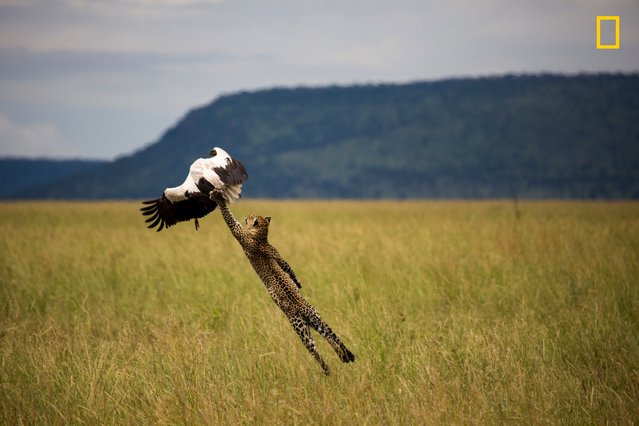
“Leopard Hunting a Stork”. “One-shot capture. I watched the leopard stalking the stork, I only had time to focus at 400mm, no time to change to high speed, I watched the stork, and as soon as it flapped its wings, I shot one shot”. (Photo by Paul Rifkin/National Geographic Travel Photographer of the Year Contest)

“Leopard Hunting a Stork”. “One-shot capture. I watched the leopard stalking the stork, I only had time to focus at 400mm, no time to change to high speed, I watched the stork, and as soon as it flapped its wings, I shot one shot”. (Photo by Paul Rifkin/National Geographic Travel Photographer of the Year Contest)
Details
04 Jun 2018 00:03:00
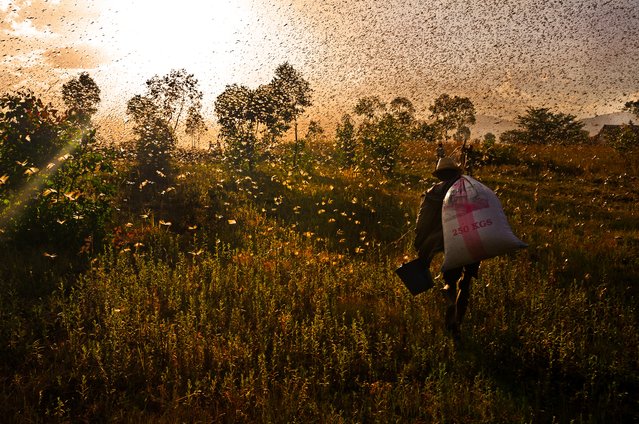
“Locusts & Men”. Oppression, interaction, collaboration. In the life cycle of nature nothing is lost, but the coexistence of different species is sometimes difficult. In Madagascar periodically returns the archaic antagonism between man and the migratory locust, in a circle of life where the two species are looking for space and food for their survival. Photo location: Madagascar, 2013. (Photo and caption by Michele Martinelli/National Geographic Photo Contest)

“Locusts & Men”. Oppression, interaction, collaboration. In the life cycle of nature nothing is lost, but the coexistence of different species is sometimes difficult. In Madagascar periodically returns the archaic antagonism between man and the migratory locust, in a circle of life where the two species are looking for space and food for their survival. At the end of the day a man walks home carrying on his shoulders the heavy bag which contains the locusts captured during the day. The insects provide nutritious meals for the man and his family. Photo location: Madagascar, 2013. (Photo and caption by Michele Martinelli/National Geographic Photo Contest)

ATTENTION! All pictures are presented in high resolution. To see Hi-Res images – just TWICE click on any picture. In other words, click small picture – opens the BIG picture. Click BIG picture – opens VERY BIG picture.
Details
03 Dec 2013 10:59:00