Student protestors, including one girl with a camera, struggle with soldiers from the Chinese Army, the PLA. Tiananmen Square, 1989. (Photo by Jeff Widener/Associated Press)
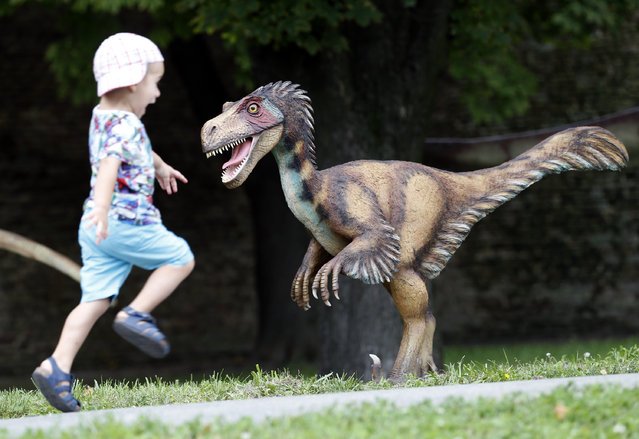
A boy runs past one of the exhibits during the Dinosaurs exhibition in Belgrade, Serbia, Thursday, August 21, 2014. “Dino Park” has opened at Belgrade's Kalemegdan Fortress. (Photo by Darko Vojinovic/AP Photo)
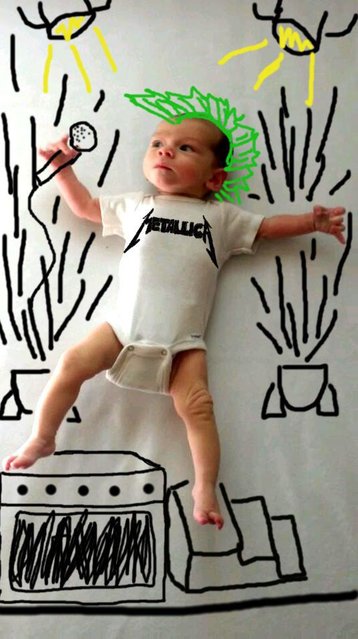
Artist Amber Wheeler of Minneapolis, Minn., has given her 2-month-old boy just that. All she used was some Photoshop and well-timed photos. Using simple black lines – much like the ones in this series of cat Instagram portraits – Wheeler transformed her son into an astronaut, a superhero, and a cowboy without spending one dollar on costumes.
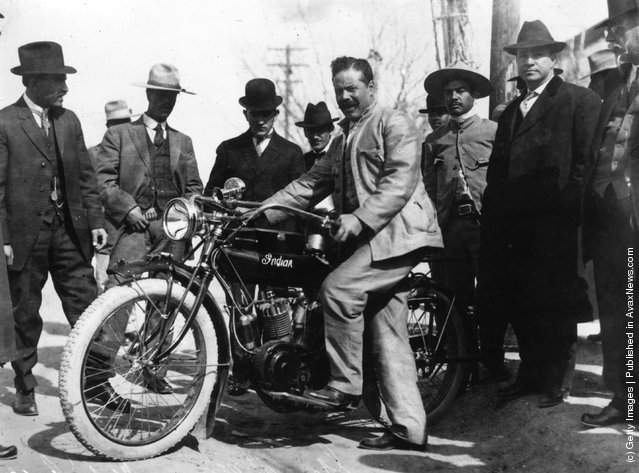
“José Doroteo Arango Arámbula (5 June 1878 – 20 July 1923) – better known by his pseudonym Francisco Villa or its hypocorism Pancho Villa – was one of the most prominent Mexican Revolutionary generals”. – Wikipedia
Photo: Mexican rebel leader Francisco “Pancho” Villa with one of the motorcycles used in the Battle of Torrero. (Photo by Topical Press Agency/Getty Images). August 1914
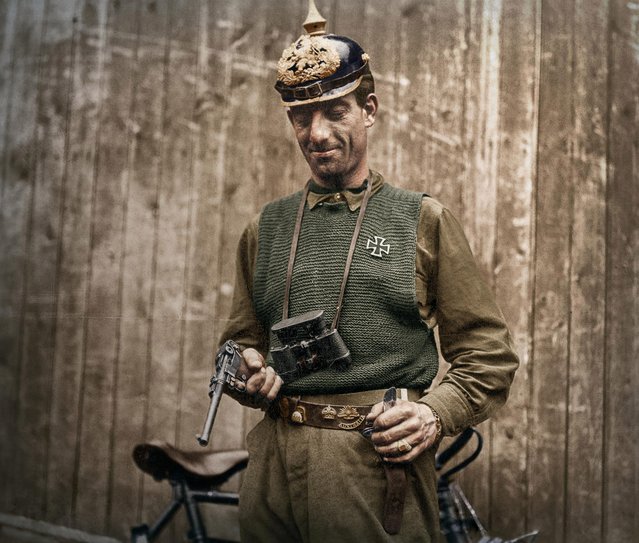
The faces of war have been brought back to life after a series of World War One photographs were expertly colourised. The black and white snaps were painstakingly restored and colourised by photographer Mario Unger (53) from Rotenturm, Austria. Here: One image shows an unidentified American soldier posing with a pistol, helmet, and Iron Cross medal taken from a German soldier, 1918. (Photo by Mario Unger/Mediadrumworld)
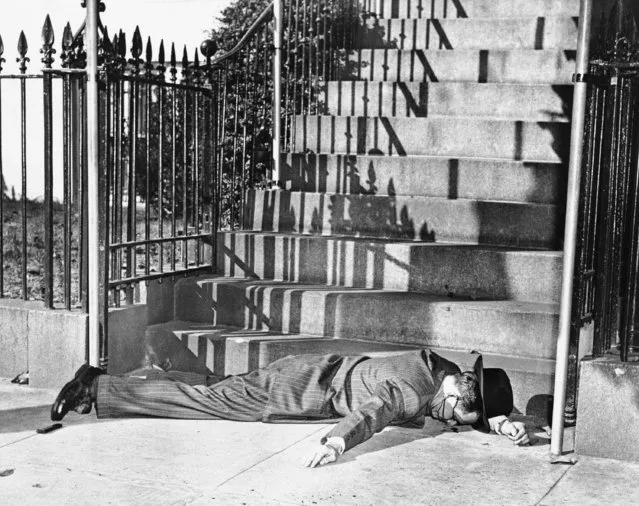
Gunfire was brought to the steps of President Truman's Washington home, Blair House, as two assassins tried to kill the chief executive, November 1, 1950. One of the gunmen, Oscar Collazzo of New York, lay wounded at the bottom of Blair House's front steps after the president's police guard had finished their work, at the cost of one guards' life, Dec. 9, 1950. The second gunman was killed. (Photo by Harvey Georges/AP Photo)
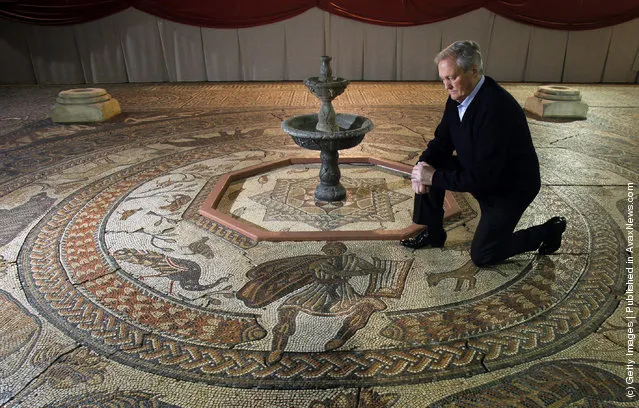
Bob Woodward looks at the reconstruction he built of the Orpheus Pavement at Prinknash Abbey on March 31, 2010 in Gloucester, England. The replica mosiac, made of more than one-and-a-half million pieces of stone is described as one of the most significant archaeological projects of recent times. (Photo by Matt Cardy/Getty Images)