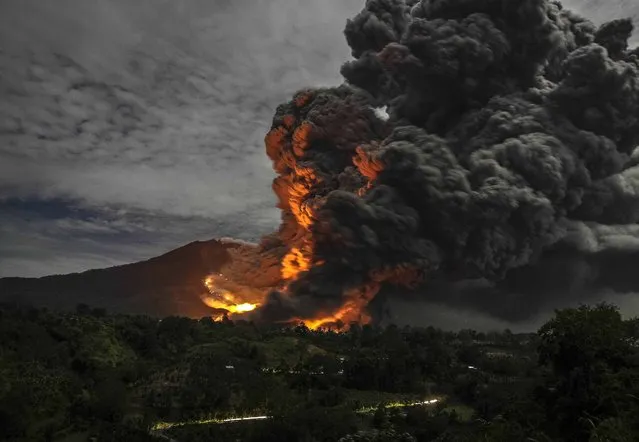
Mount Sinabung volcano erupts, as seen from Tiga Pancur village, Karo Regency in Indonesia's North Sumatra province October 8, 2014. (Photo by Y. T. Haryono/Reuters)
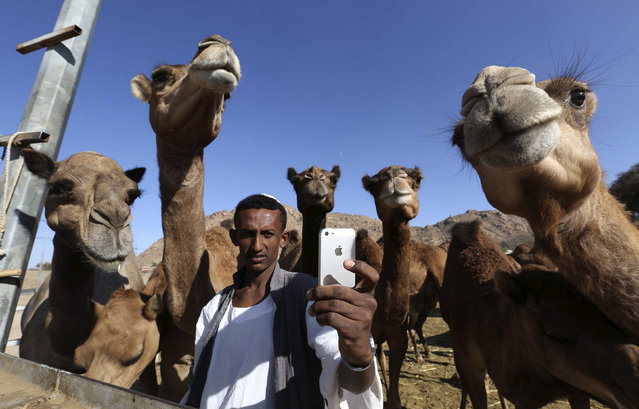
A man takes a “selfie” with camels at a farm in Taif November 1, 2014. Saudi Arabia said late on Wednesday it had detected six new cases of the deadly Middle East Respiratory Syndrome (MERS) in 24 hours, the biggest daily jump for months with officials blaming lax hospital procedures. Scientists are not sure of the origin of the virus, but several studies have linked it to camels and some experts think it is being passed to humans through close physical contact or through the consumption of camel meat or camel milk. (Photo by Mohamed Alhwaity/Reuters)
Gold bars from the vault of a bank and Swiss one franc coins are seen in this illustration picture taken in Zurich November 20, 2014. The “Save our Swiss gold” proposal, spearheaded by the right-wing Swiss People's Party (SVP), aims to ban the central bank from offloading its reserves and oblige it to hold at least 20 percent of its assets in gold. The referendum is scheduled for November 30. The SVP argues it would secure a stable Swiss franc. (Photo by Arnd Wiegmann/Reuters)
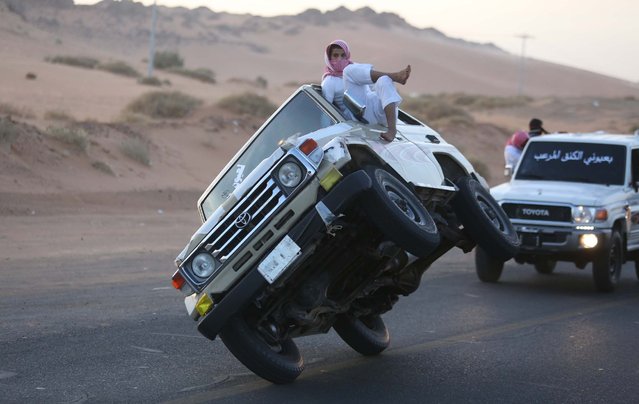
Saudi youths demonstrate a stunt known as “sidewall skiing” (driving on two wheels) in the northern city of Tabuk, in Saudi Arabia December 3, 2014. (Photo by Mohamed Al Hwaity/Reuters)
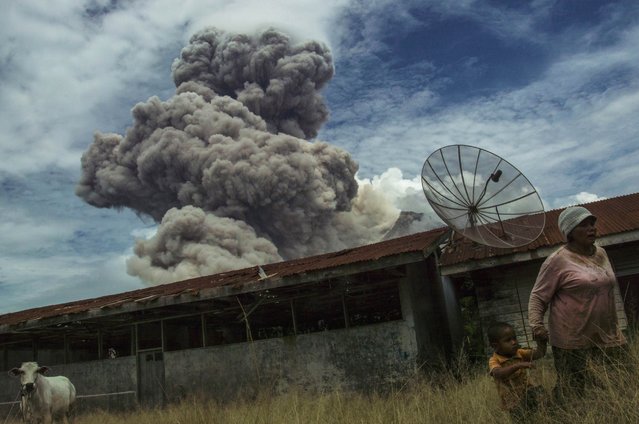
In this photograph taken on April 1, 2015, an Indonesian resident and child walk away from an abandoned school building as Mount Sinabung erupts in Karo district on the Indonesian island of Sumatra. According to authorities about 3,500 people were displaced after the February 2014 eruption of Mount Sinabung volcano and many are still living in evacuation centers as the volcano remains active. (Photo by Sutanta Aditya/AFP Photo)
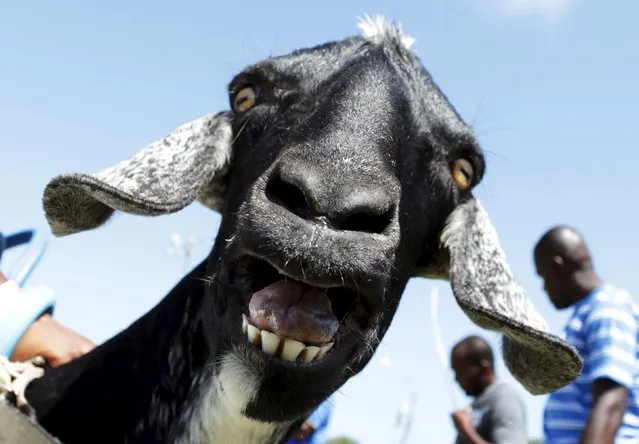
A goat named “White On The Right” bleats as it is paraded with other goats prior to a race during the annual Easter goat racing event at the Mount Pleasant recreation ground in Tobago April 6, 2015. (Photo by Andrea De Silva/Reuters)
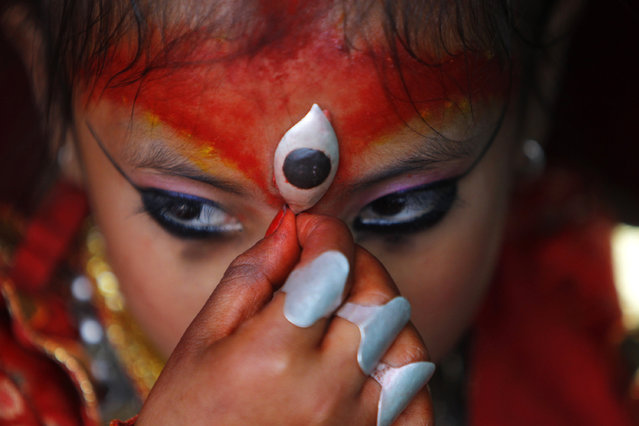
Nepal's Kumari, or living goddess, adjusts her ornament as she watches the Rato Machindranath chariot Festival in Lalitpur, Nepal, Friday, April 24, 2015. Nepal's living goddesses are young pre-pubescent girls considered by devotees to be incarnations of a Hindu goddess. Selected as toddlers, living goddesses usually keep their positions until they reach puberty. (Photo by Niranjan Shrestha/AP Photo)
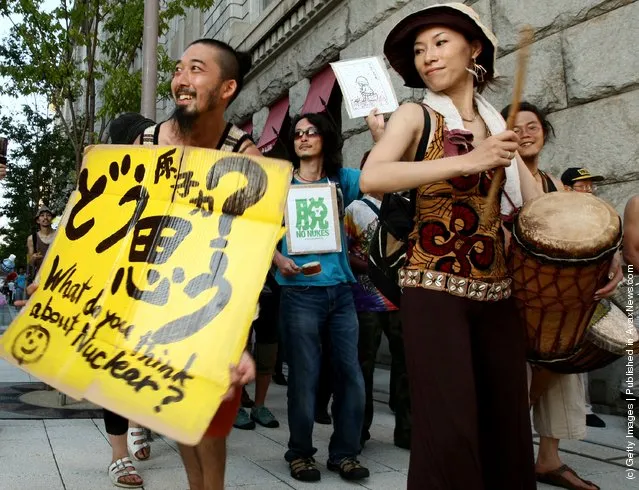
Anti-nuclear activists demonstrate during a “Say to Goodbye to Nuclear Energy” protest on September 11, 2011 in Kobe, Japan. Japan is marking sixth months since a magnitude 9.0 earthquake struck Japan offshore on March 11 at 2:46pm local time, triggering a tsunami wave of up to ten metres which engulfed large parts of north-eastern Japan and also damaged the Fukushima nuclear plant, causing the worst nuclear crisis in decades. The current number of dead and missing is reportedly estimated to be 22,900. (Photo by Buddhika Weerasinghe/Getty Images)