Loading...
Done
Motorhead fans. (Photo by James Mollison)

“Over three years I photographed fans outside different concerts. I was fascinated by the different tribes of people that attended them, and how people emulated celebrity to form their identity. As I photographed the project I began to see how the concerts became events for people to come together with surrogate “families”, a chance to relive their youth or try and be part of a scene that happened before they were born” – James Mollison.

Photo: Madonna fans. (Photo by James Mollison)
Details
25 Jun 2015 12:45:00
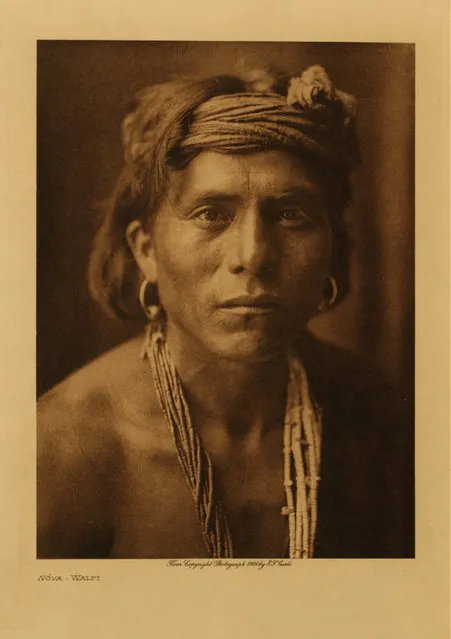
Nova, a Walpi, in 1906. (Photo by Edward S. Curtis)

At the beginning of the 20th century, Edward S. Curtis set out to document what he saw as a disappearing race: the Native American. From 1907 to 1930, Curtis took more than 2,000 photos of 80 tribes stretching from the Great Plains to the Pacific Northwest and Alaska. He then published and sold these photos, along with narrative text, in 20 volumes of work known as “The North American Indian”. It is one of the most significant collections of its kind, “probably the most important photographic document of its age and its topic,” said Jeffrey Garrett, associate university librarian for Special Libraries at Northwestern University. (Photo by Edward S. Curtis)
Details
07 Sep 2014 12:57:00
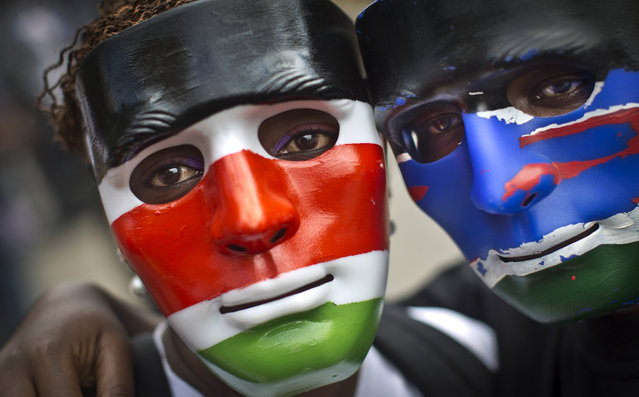
Protesters wear masks, the left in the colors of the Kenyan national flag, as they join others carrying mock coffins and red-painted crosses, symbolizing the blood of the 28 non-Muslims singled out and killed in the recent attack on a bus in Mandera by Somali militant group al-Shabab, outside government offices in downtown Nairobi, Kenya Tuesday, November 25, 2014. (Photo by Ben Curtis/AP Photo)

Protesters wear masks, the left in the colors of the Kenyan national flag, as they join others carrying mock coffins and red-painted crosses, symbolizing the blood of the 28 non-Muslims singled out and killed in the recent attack on a bus in Mandera by Somali militant group al-Shabab, outside government offices in downtown Nairobi, Kenya Tuesday, November 25, 2014. (Photo by Ben Curtis/AP Photo)
Details
06 Feb 2015 13:02:00
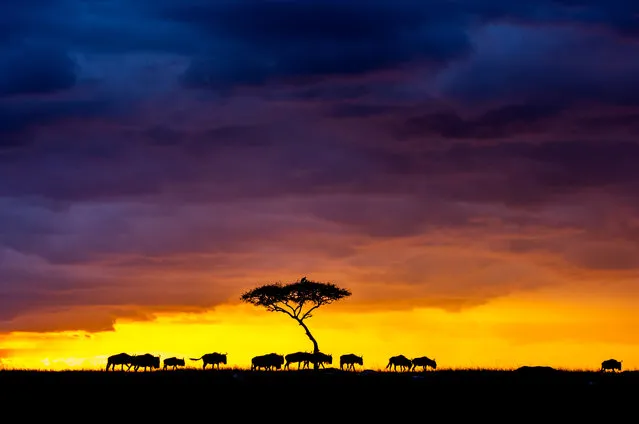
A herd of wildebeest cross the skyline against the fading light in Masai Mara, Kenya, 25 August 2017. Stunning sunset photos silhouette Africa’s wildlife against streaks of orange and red sky. In August, German photographer Ingo Gerlach was on safari in the Masai Mara when he convinced his safari guide to stop and take in the sunset. The wildlife photographer was rewarded with his patience by an eye-catching sunset, which cast Africa’s wildlife into dark shadows against the vibrant skies. (Photo by Ingo Gerlach/Barcroft Images)

A herd of wildebeest cross the skyline against the fading light in Masai Mara, Kenya, 25 August 2017. Stunning sunset photos silhouette Africa’s wildlife against streaks of orange and red sky. In August, German photographer Ingo Gerlach was on safari in the Masai Mara when he convinced his safari guide to stop and take in the sunset. The wildlife photographer was rewarded with his patience by an eye-catching sunset, which cast Africa’s wildlife into dark shadows against the vibrant skies. (Photo by Ingo Gerlach/Barcroft Images)
Details
14 Sep 2017 08:17:00
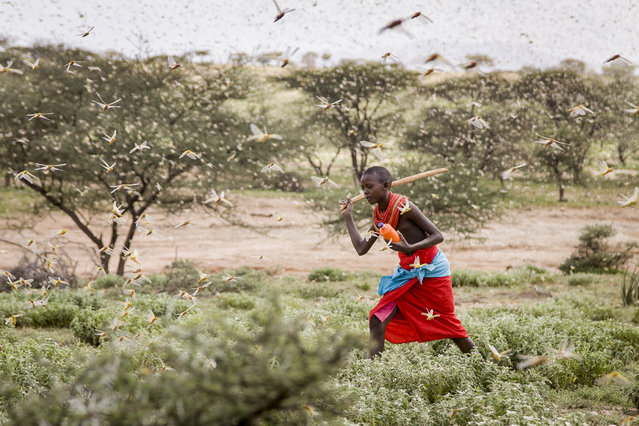
In this photo taken Thursday, January 16, 2020, a Samburu boy uses a wooden stick to try to swat a swarm of desert locusts filling the air, as he herds his camel near the village of Sissia, in Samburu county, Kenya. The most serious outbreak of desert locusts in 25 years is spreading across East Africa and posing an unprecedented threat to food security in some of the world's most vulnerable countries, authorities say, with unusual climate conditions partly to blame. (Photo by Patrick Ngugi/AP Photo)

In this photo taken Thursday, January 16, 2020, a Samburu boy uses a wooden stick to try to swat a swarm of desert locusts filling the air, as he herds his camel near the village of Sissia, in Samburu county, Kenya. The most serious outbreak of desert locusts in 25 years is spreading across East Africa and posing an unprecedented threat to food security in some of the world's most vulnerable countries, authorities say, with unusual climate conditions partly to blame. (Photo by Patrick Ngugi/AP Photo)
Details
19 Jan 2020 00:07:00
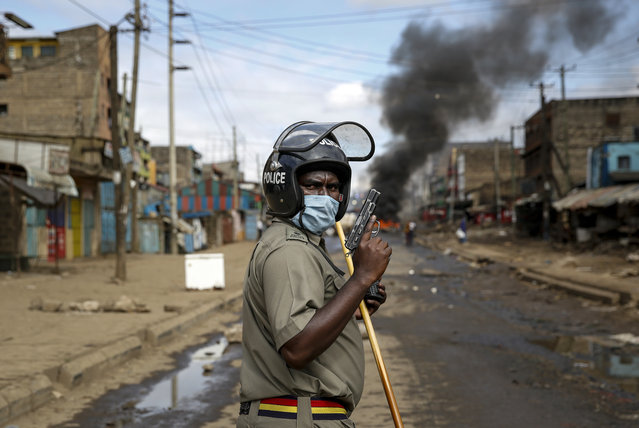
A police officer holds a pistol during clashes with protesters near a burning tyre barricade in the Kariobangi slum of Nairobi, Kenya Friday, May 8, 2020. Hundreds of protesters blocked one of the capital's major highways with burning tires to protest government demolitions of the homes of more than 7,000 people and the closure of a major food market, causing many to sleep out in the rain and cold because of restrictions on movement due to the coronavirus. (Photo by Brian Inganga/AP Photo)

A police officer holds a pistol during clashes with protesters near a burning tyre barricade in the Kariobangi slum of Nairobi, Kenya Friday, May 8, 2020. Hundreds of protesters blocked one of the capital's major highways with burning tires to protest government demolitions of the homes of more than 7,000 people and the closure of a major food market, causing many to sleep out in the rain and cold because of restrictions on movement due to the coronavirus. (Photo by Brian Inganga/AP Photo)
Details
15 May 2020 00:01:00
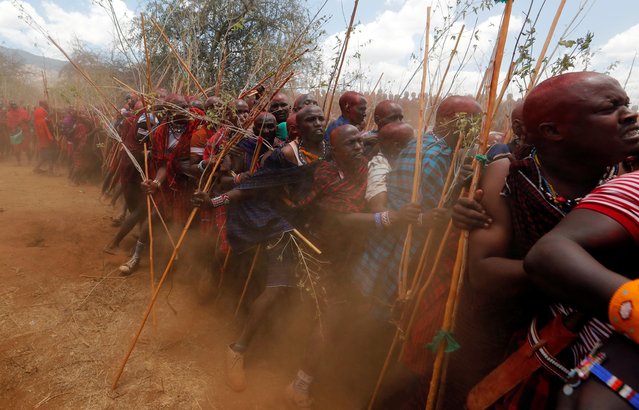
Maasai men of Matapato jostle to parade as they attend the Olng'esherr (meat-eating) passage ceremony to unite two age-sets; the older Ilpaamu and the younger Ilaitete into senior elderhood as the final rite of passage, in Maparasha hills of Kajiado, Kenya on September 23, 2020. Thousands of Maasai men clad in red and purple shawls and with their heads coated in red ochre gathered this week for a ceremony that transforms them from Moran (warriors) to Mzee (elders). (Photo by Thomas Mukoya/Reuters)

Maasai men of Matapato jostle to parade as they attend the Olng'esherr (meat-eating) passage ceremony to unite two age-sets; the older Ilpaamu and the younger Ilaitete into senior elderhood as the final rite of passage, in Maparasha hills of Kajiado, Kenya on September 23, 2020. Thousands of Maasai men clad in red and purple shawls and with their heads coated in red ochre gathered this week for a ceremony that transforms them from Moran (warriors) to Mzee (elders). (Photo by Thomas Mukoya/Reuters)
Details
29 Sep 2020 00:01:00
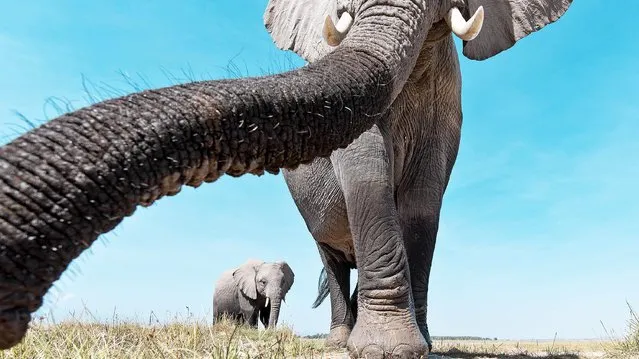
An elephant in Amboseli National Park in Kenya, June 2021. Gurcharan Roopra, 42, a Nairobi-born engineer-turned-wildlife photographer, has dedicated the past four years of his career to photographing these animals. He spends hours in his workshop camouflaging and encasing his equipment with protective gear before laying his camera in the path of lions, elephants, rhino, zebra and buffalo. (Photo by Gurcharan Roopra/Mercury Press)

An elephant in Amboseli National Park in Kenya, June 2021. Gurcharan Roopra, 42, a Nairobi-born engineer-turned-wildlife photographer, has dedicated the past four years of his career to photographing these animals. He spends hours in his workshop camouflaging and encasing his equipment with protective gear before laying his camera in the path of lions, elephants, rhino, zebra and buffalo. (Photo by Gurcharan Roopra/Mercury Press)
Details
24 Feb 2024 08:48:00