Loading...
Done
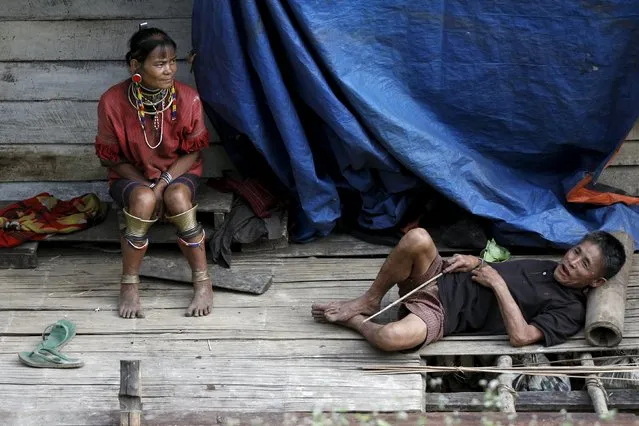
An ethnic Kayaw couple Mu Htoo and her husband Htaw Eili rest at their home at Htaykho village in the Kayah state, Myanmar September 12, 2015. (Photo by Soe Zeya Tun/Reuters)

An ethnic Kayaw couple Mu Htoo and her husband Htaw Eili rest at their home at Htaykho village in the Kayah state, Myanmar September 12, 2015. With about 30,000 members, the Kayaw are one of the smallest ethnic minorities among Myanmar's 135 groups. Their village has for decades been off-limits, as armed rebels fought the military before a recent ceasefire stopped the bloody conflict here. The rebels in the area have put down their guns and taken to the hills to grow rice and corn, but slash-and-burn cultivation methods mean they struggle to find new places to farm. (Photo by Soe Zeya Tun/Reuters)
Details
21 Oct 2015 08:03:00
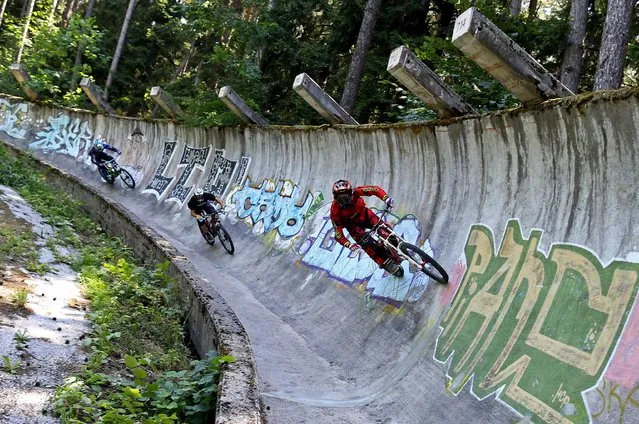
Downhill bikers Kemal Mulic (R-L), Tarik Hadzic and Kamer Kolar train on the disused bobsled track from the 1984 Sarajevo Winter Olympics on Trebevic mountain near Sarajevo, Bosnia and Herzegovina, August 8, 2015. (Photo by Dado Ruvic/Reuters)

Downhill bikers Kemal Mulic (R-L), Tarik Hadzic and Kamer Kolar train on the disused bobsled track from the 1984 Sarajevo Winter Olympics on Trebevic mountain near Sarajevo, Bosnia and Herzegovina, August 8, 2015. Abandoned and left to crumble into oblivion, most of the 1984 Winter Olympic venues in Bosnia's capital Sarajevo have been reduced to rubble by neglect as much as the 1990s conflict that tore apart the former Yugoslavia. (Photo by Dado Ruvic/Reuters)
Details
11 Aug 2015 13:39:00
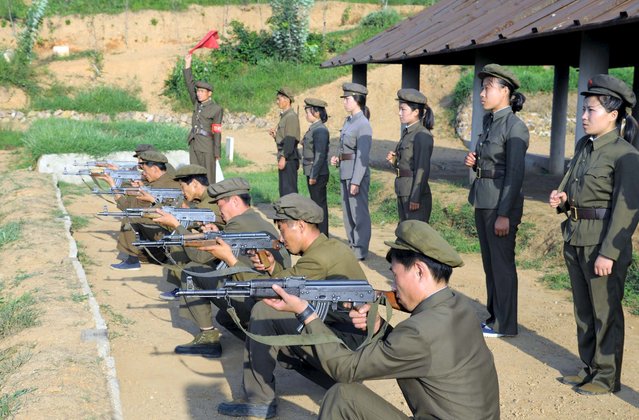
North Koreans who signed up to join the army train in the midst of political tension with South Korea, in this undated photo released by North Korea's Korean Central News Agency (KCNA) in Pyongyang August 23, 2015. (Photo by Reuters/KCNA)

North Koreans who signed up to join the army train in the midst of political tension with South Korea, in this undated photo released by North Korea's Korean Central News Agency (KCNA) in Pyongyang August 23, 2015. Top aides to the leaders of North and South Korea resumed talks on Sunday after negotiating through the night in a bid to ease tensions involving an exchange of artillery fire that brought the peninsula to the brink of armed conflict. (Photo by Reuters/KCNA)
Details
25 Aug 2015 10:08:00
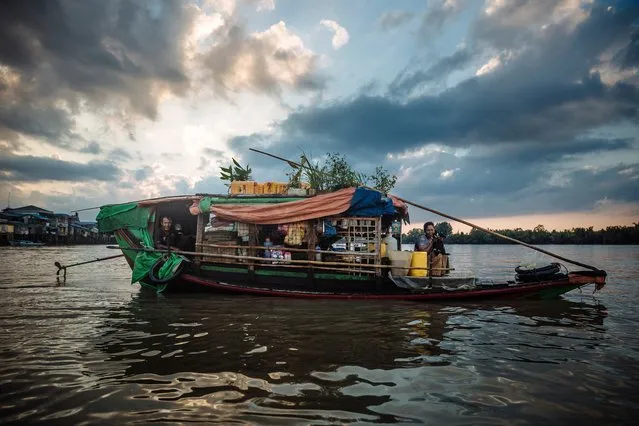
Tin and Naing win live on a small boat which they sail throughout the Delta region in Myanmar. The former gardeners once had a home on land but it was destroyed when a powerful cyclone ravaged the area in 2008. Since then, the couple have not been able to afford to rebuild their home, so they live on the boat from which they sell fish paste to make a living. (Photo by Muse Mohammed/IOM)

The ferocity of crises worldwide is forcing a record number of people to flee their homes, seeking some form of safety within their own country or across international borders. There are 65.3 million displaced people worldwide, including 21.3 million refugees. Most have lost their homes to armed conflict or natural disasters but other factors, such as extreme poverty and climate change, also drive displacement. The International Organisation for Migration commissioned photojournalist Muse Mohammed to document the plight of the displaced. (Photo by Muse Mohammed/IOM)
Details
02 Jan 2017 12:04:00
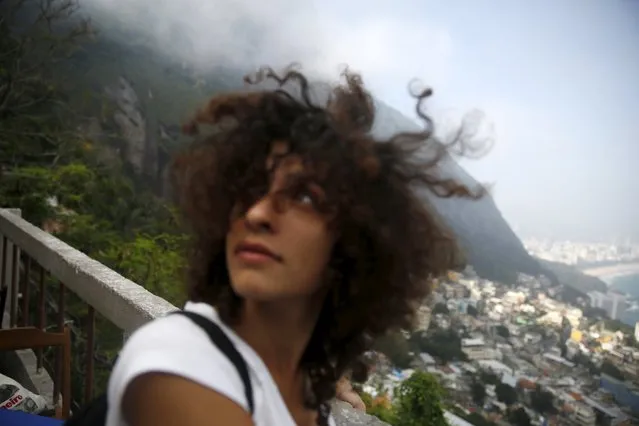
Syrian Tulin Hashemi waits for a job interview at a hotel in Vidigal slum in Rio de Janeiro, Brazil, September 22, 2015. Tulin, whose mother arrived two days ago, has been living in Brazil for two months. As she does not speak Portuguese, Tulin says it is difficult for her to find a job and therefore she is staying at the slum as it is one of the cheaper neighbourhoods to live in. (Photo by Pilar Olivares/Reuters)

Syrian Tulin Hashemi waits for a job interview at a hotel in Vidigal slum in Rio de Janeiro, Brazil, September 22, 2015. Tulin, whose mother arrived two days ago, has been living in Brazil for two months. As she does not speak Portuguese, Tulin says it is difficult for her to find a job and therefore she is staying at the slum as it is one of the cheaper neighbourhoods to live in. According to the National Committee for Refugees (CONARE), 2,077 people fleeing the Syrian civil war have settled in Brazil, whilst a quarter of the 8,400 refugees in the Latin American country come from Syria. (Photo by Pilar Olivares/Reuters)
Details
25 Sep 2015 08:05:00
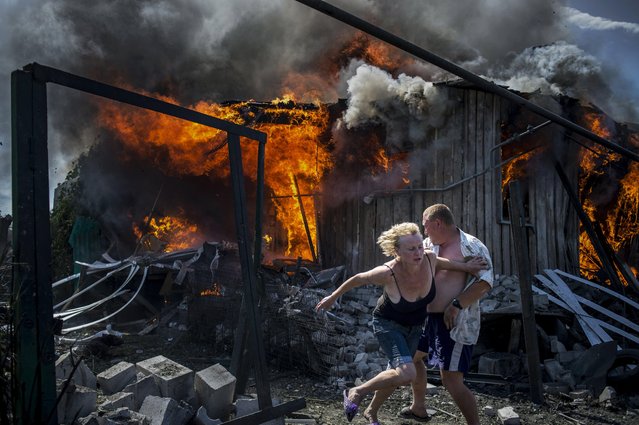
A handout photo made available by the World Press Photo (WPP) organization on 13 February 2017 shows a picture by Rossiya Segodnya photographer Valery Melnikov that won the Long-Term Projects – First Prize award of the 60th annual World Press Photo Contest, it was announced by the WPP Foundation in Amsterdam, The Netherlands on 13 February 2017. Caption: Civilians escape from a fire at a house destroyed by an air attack in the Luhanskaya village. Story: Ordinary people became victims of the conflict between self-proclaimed republics and the official Ukrainian authorities from 2014 onwards in the region of Donbass. Disaster came into their lives unexpectedly. These people were involved in the military confrontation against their will. They experienced the most terrible things: the death of their friends and relatives, destroyed homes and the ruined lives of thousands of people. (Photo by Valery Melnikov/EPA/Rossiya Segodnya/World Press Photo)

A handout photo made available by the World Press Photo (WPP) organization on 13 February 2017 shows a picture by Rossiya Segodnya photographer Valery Melnikov that won the Long-Term Projects – First Prize award of the 60th annual World Press Photo Contest, it was announced by the WPP Foundation in Amsterdam, The Netherlands on 13 February 2017. Caption: Civilians escape from a fire at a house destroyed by an air attack in the Luhanskaya village. (Photo by Valery Melnikov/EPA/Rossiya Segodnya/World Press Photo)
Details
15 Feb 2017 00:06:00
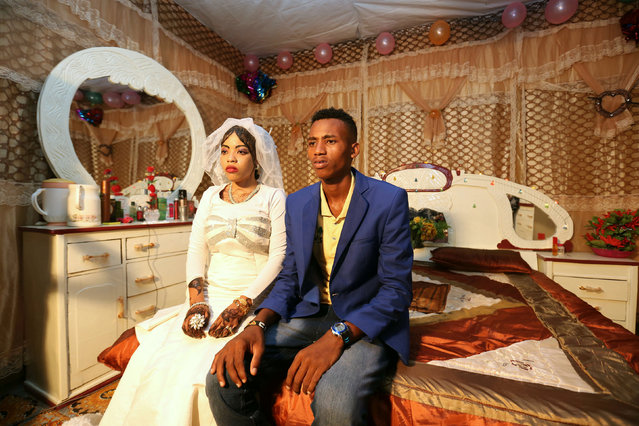
Somali couple Mohamed Noor (L) and Huda Omar pose for a photograph at their makeshift home during their wedding ceremony in Mogadishu's Rajo camp, Somalia August 17, 2016. Having met two years ago, the pair have just married at Rajo camp, where some 400 families live. Most, like Noor's parents, came here in the early 1990s to flee famine. They stayed on as years of conflict ravaged the Horn of Africa nation. As at any wedding, there is plenty of dancing and sweet treats for the young couple as they start married life in Noor's simple home, made of iron and plastic sheets. Noor works as a mason with his father. Others here are builders or sell sweets, nuts and stick toothbrushes to make money. Some beg around the seaside city, which like the rest of Somalia has been gripped by violence since the toppling of dictator Mohamed Siad Barre in 1991. (Photo by Feisal Omar/Reuters)

Somali couple Mohamed Noor (L) and Huda Omar pose for a photograph at their makeshift home during their wedding ceremony in Mogadishu's Rajo camp, Somalia August 17, 2016. Having met two years ago, the pair have just married at Rajo camp, where some 400 families live. Most, like Noor's parents, came here in the early 1990s to flee famine. (Photo by Feisal Omar/Reuters)
Details
14 Sep 2016 10:35:00


“Kumbh Mela is a mass Hindu pilgrimage in which Hindus gather at the Ganges river. The normal Kumbh Mela is celebrated every 3 years, the Ardh (half) Kumbh Mela is celebrated every six years at Haridwar and Prayag, the Purna (complete) Kumbh takes place every twelve years, at four places (Prayag (Allahabad), Haridwar, Ujjain, and Nashik). The Maha (great) Kumbh Mela which comes after 12 “Purna Kumbh Melas”, or 144 years, is held at Allahabad.

The last Ardh Kumbh Mela was held over a period of 45 days beginning in January 2007, more than 70 million Hindu pilgrims took part in the Ardh Kumbh Mela at Prayag, and on January 15, the most auspicious day of the festival of Makar Sankranti, more than 5 million participated. The previous Maha Kumbh Mela, held in 2001, was attended by around 60 million people, making it at the time the largest gathering anywhere in the world in recorded history”. – Wikipedia

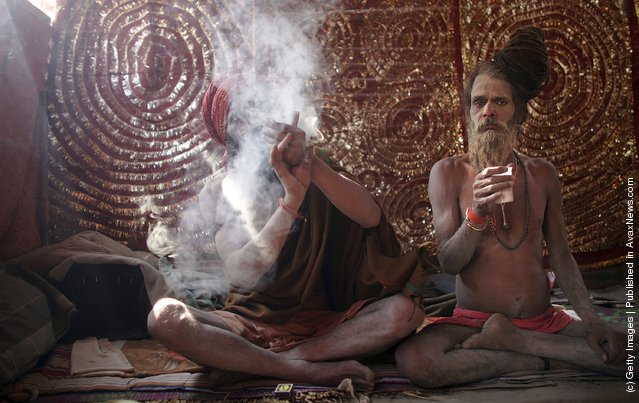
Photo: Sadhus (holy men) smoke at their camp near the ritual site at Sangam, the confluence of the Ganges, Yamuna and mythical Saraswati rivers during the Ardh Kumbh Mela festival (Half Pitcher festival) January 18, 2007 in Allahabad, India. Millions of Hindu pilgrims have flocked to the largest religious gathering in the world which lasts for 45 days in northern India. The festival commemorates the mythical conflict between gods and demons over a pitcher filled with the “nectar of immortality”. Devotees believe that taking a holy dip in the Ganges at this time washes away their sins and paves the path to salvation. (Photo by Mario Tama/Getty Images)

Details
30 Jun 2011 10:27:00