Loading...
Done
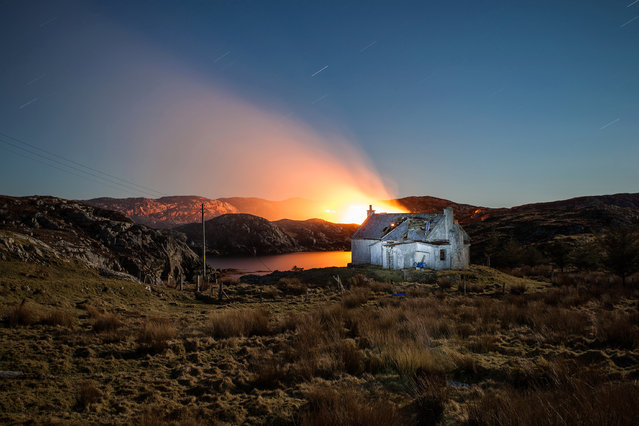
“Peat Fire”. Taken in March 2013 on the east coast of Harris. The fire is from muir-burning, when farmers burn off grasses and heather to improve grazing for their sheep. (Photo by John Maher/The Guardian)

Photographer John Maher, once the drummer with punk bank Buzzcocks, travelled to the Outer Hebrides to photograph abandoned crofters’ cottages – many of which, like this one, have seemingly been untouched since. Here: “Peat Fire”. Taken in March 2013 on the east coast of Harris. The fire is from muir-burning, when farmers burn off grasses and heather to improve grazing for their sheep. (Photo by John Maher/The Guardian)
Details
19 Aug 2016 11:39:00
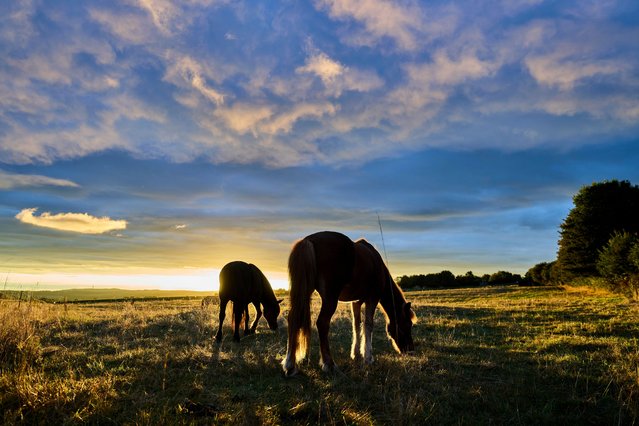
Icelandic horses graze on a meadow at a stud farm in Wehrheim near Frankfurt, Germany, Monday, September 1, 2025. (Photo by Michael Probst/AP Photo)

Icelandic horses graze on a meadow at a stud farm in Wehrheim near Frankfurt, Germany, Monday, September 1, 2025. (Photo by Michael Probst/AP Photo)
Details
30 Dec 2025 13:24:00
Better_With_A_Beard

Every man looks better with a beard. Here's proof.
Details
06 Dec 2013 11:34:00
Jessica, Milford, New Hampshire: “Sometimes life throws you in all sorts of directions. The most important part about life is to remember you are exactly where you need to be”. (Photo by Barbara Peacock/Recipient of the Getty Images Grant for Editorial Photography 2017)

Barbara Peacock is one of five recipients of the Getty Images annual Grants for Editorial Photography programme, which gives photojournalists an award of $10,000 as well as the agency’s support in pursuing projects of their choosing. American Bedroom is an ongoing series of portraits in which she explores the complexities and idiosyncrasies of contemporary American life. Here: Jessica, Milford, New Hampshire: “Sometimes life throws you in all sorts of directions. The most important part about life is to remember you are exactly where you need to be”. (Photo by Barbara Peacock/Recipient of the Getty Images Grant for Editorial Photography 2017)
Details
19 Sep 2017 07:44:00
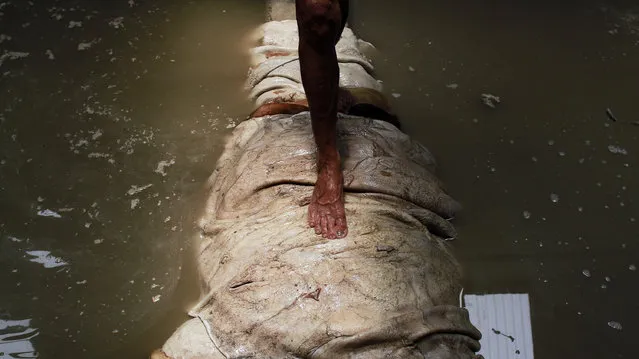
A man walks across a vat of water used to wash the hide. (Photo by Rezza Estily/JG Photo)

Sukaregang in Garut district, West Java, has long been a bustling center for Indonesia's leather trade, with some shops producing and selling various goods – including bags, shoes and jackets – since the 1940s. The industrial area is also a major supplier for high-end brands from across the globe, catering to the fashion, auto and motor-sports industry. Here: a man walks across a vat of water used to wash the hide. (Photo by Rezza Estily/JG Photo)
Details
31 Mar 2015 13:29:00
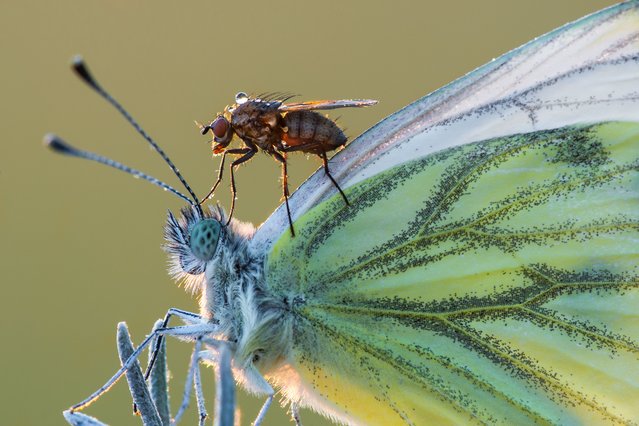
A fly rides a butterly, July 2016. (Photo by Petar Sabol Sharpeye/Rex Features/Shutterstock)

A fly rides a butterly, July 2016. (Photo by Petar Sabol Sharpeye/Rex Features/Shutterstock)
Details
15 Oct 2016 11:09:00
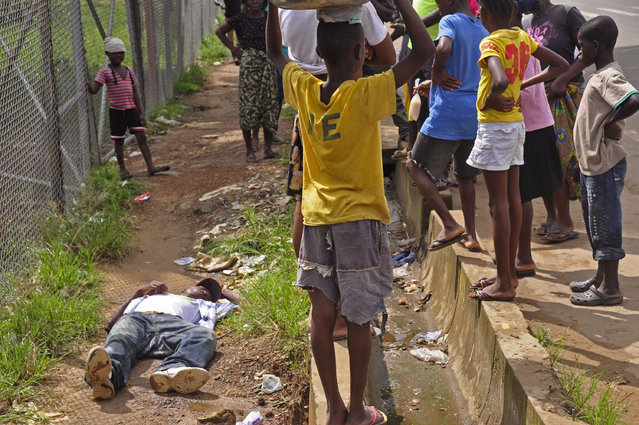
Children surround a man, left, that fell down while walking on a street suspected of having contracted the Ebola virus in the city of Monrovia, Liberia, Tuesday, August 19, 2014. The World Health Organization says the outbreak has killed more than 1,200 people, while authorities struggle to contain its spread and treat the sick. (Photo by Abbas Dulleh/AP Photo)

Children surround a man, left, that fell down while walking on a street suspected of having contracted the Ebola virus in the city of Monrovia, Liberia, Tuesday, August 19, 2014. The World Health Organization says the outbreak has killed more than 1,200 people, while authorities struggle to contain its spread and treat the sick. (Photo by Abbas Dulleh/AP Photo)
Details
21 Aug 2014 09:50:00
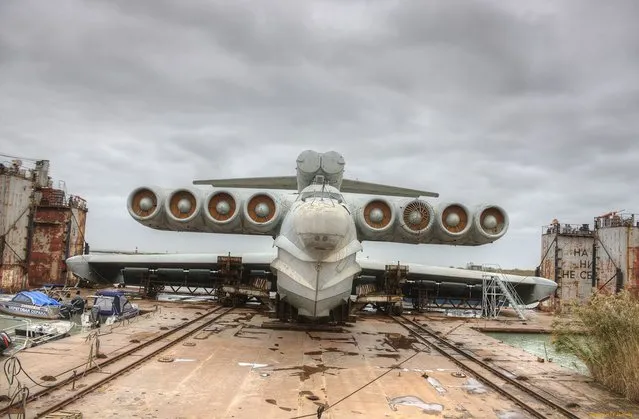
The Lun-class Ekranoplane was used by the Soviet Navy starting in 1987, and wasn't retired until the late 1990s, after the Soviet Union's fall. (Igor113)

“The Lun-class ekranoplan (NATO reporting name Duck) was a ground effect vehicle (GEV) designed by Rostislav Evgenievich Alexeev and used by the Soviet and Russian navies from 1987 until sometime in the late 1990s. It “flew” using the lift generated by the ground effect of its large wings when close to the surface of the water – about four metres or less. Although they might look similar and/or have related technical characteristics, ekranoplans like the Lun are not aircraft, seaplanes, hovercraft, or hydrofoils – ground effect is a separate technology altogether. The International Maritime Organization classifies these vehicles as maritime ships. The name Lun comes from the Russian for harrier”. – Wikipedia (Photo by Igor113)
Details
08 Aug 2014 10:51:00