Loading...
Done
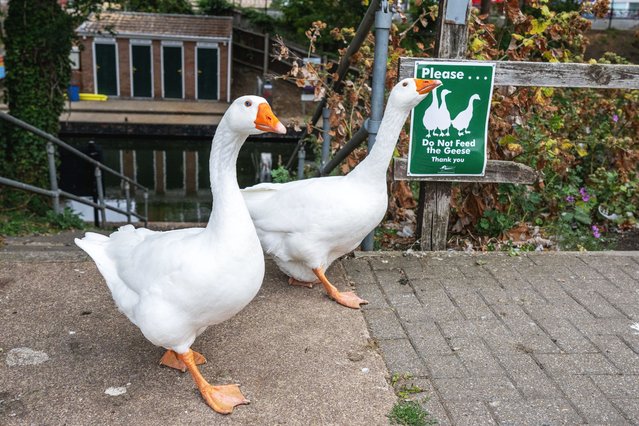
The geese in March, Cambs, UK on August 25, 2025. The family of around 20 white waterfowl have been a fixture in March, Cambs, for years and have made their mark by regularly waddling to the high street. (Photo by South West News Service)

The geese in March, Cambs, UK on August 25, 2025. The family of around 20 white waterfowl have been a fixture in March, Cambs, for years and have made their mark by regularly waddling to the high street. (Photo by South West News Service)
Details
07 Sep 2025 04:38:00
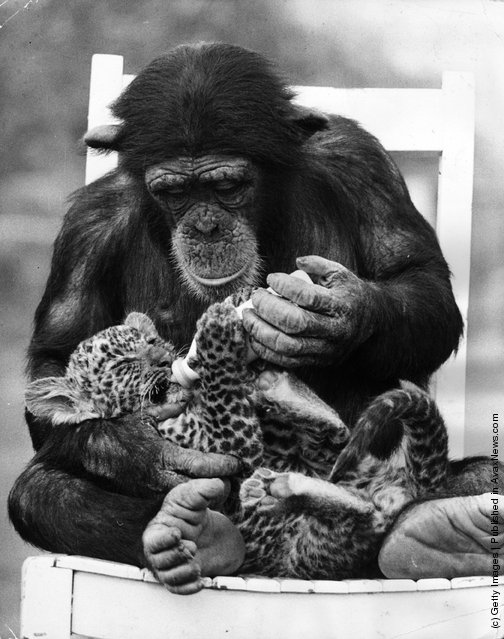
1971: A chimpanzee feeding a leopard cub at Southam Park Zoo, Warwickshire

A chimpanzee feeding a leopard cub at Southam Park Zoo, Warwickshire. (Photo by Ian Tyas/Keystone Features/Getty Images). 1971
Details
08 Sep 2011 14:32:00
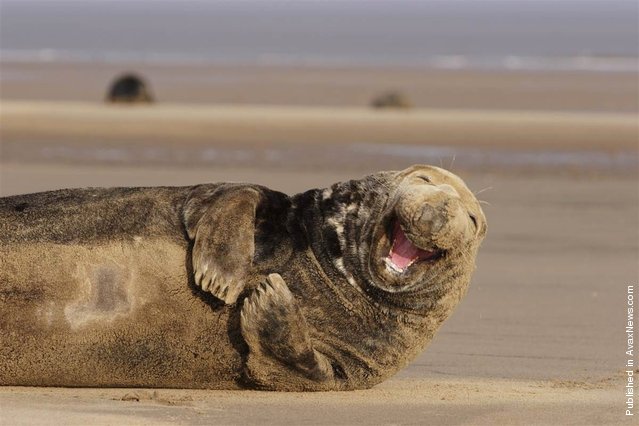
This grey adult male seal enjoys a good grin while lying on the beach

“This grey adult male seal enjoys a good grin while lying on the beach”. (Photo by Michael Hutch/SplashdownDirect via Rex USA)
Details
20 Apr 2012 13:30:00
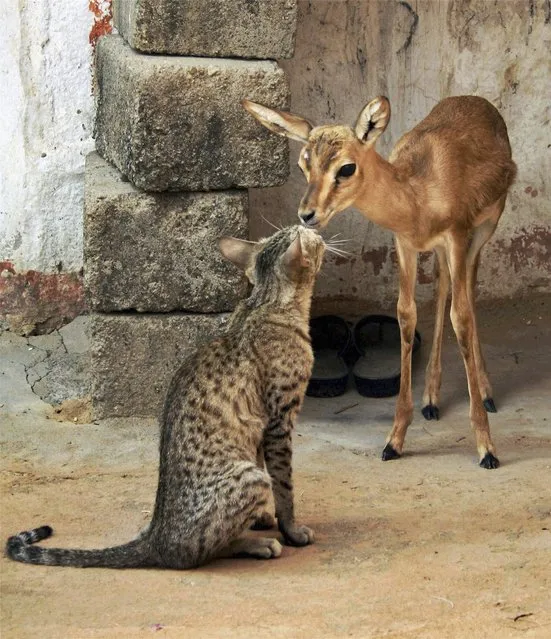
In this Wednesday, May 23, 2012 photograph, a young deer and a cat share a moment in Feench village near Jodhpur, Rajasthan state, India

In this Wednesday, May 23, 2012 photograph, a young deer and a cat share a moment in Feench village near Jodhpur, Rajasthan state, India. (Photo by AP Photo)
Details
16 Jun 2012 11:07:00
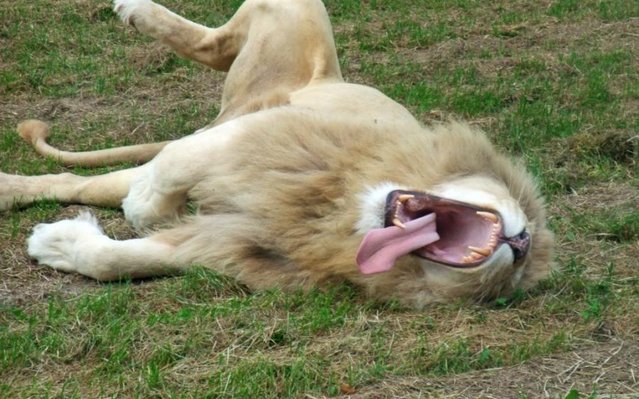
Animals Yawning

In animals, yawning can serve as a warning signal. For example, Charles Darwin, in his book The Expression of the Emotions in Man and Animals, mentioned that baboons yawn to threaten their enemies, possibly by displaying large canine teeth. Similarly, Siamese fighting fish yawn only when they see a conspecific (same species) or their own mirror-image, and their yawn often accompanies aggressive attack. Guinea pigs also yawn in a display of dominance or anger, displaying their impressive incisor teeth. This is often accompanied by teeth chattering, purring and scent marking.

Details
11 Aug 2012 09:12:00
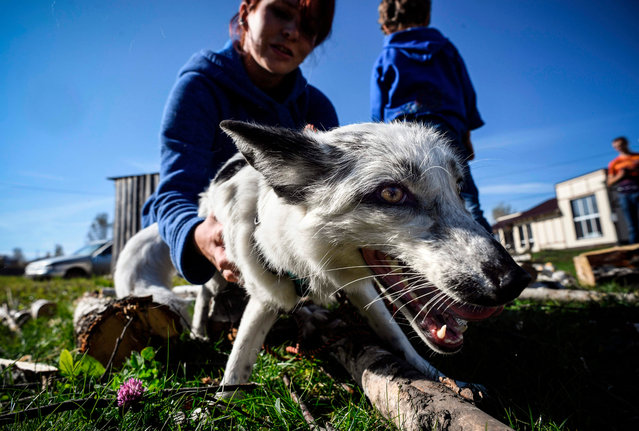
Tatyana Abramova, 33, plays with her home fox Plombir at her countryside house outside Siberian city of Novosibirsk on September 12, 2020. The official start of the Soviet experiment to better understand the domestication of animals by humans began in 1959, and was initiated by geneticists Dmitri Beliaiev and Lioudmila Trout on a farm in Akademgorodok, the scientific center of excellence in Siberia. Their primary objective was to domesticate foxes, to understand how the ancestor of wolves, another canine, evolved into a loyal and loving dog. And understand what this domestication tells us about the genetic evolution of species. (Photo by Alexander Nemenov/AFP Photo)

Tatyana Abramova, 33, plays with her home fox Plombir at her countryside house outside Siberian city of Novosibirsk on September 12, 2020. The official start of the Soviet experiment to better understand the domestication of animals by humans began in 1959, and was initiated by geneticists Dmitri Beliaiev and Lioudmila Trout on a farm in Akademgorodok, the scientific center of excellence in Siberia. Their primary objective was to domesticate foxes, to understand how the ancestor of wolves, another canine, evolved into a loyal and loving dog. And understand what this domestication tells us about the genetic evolution of species. (Photo by Alexander Nemenov/AFP Photo)
Details
25 Oct 2020 00:05:00
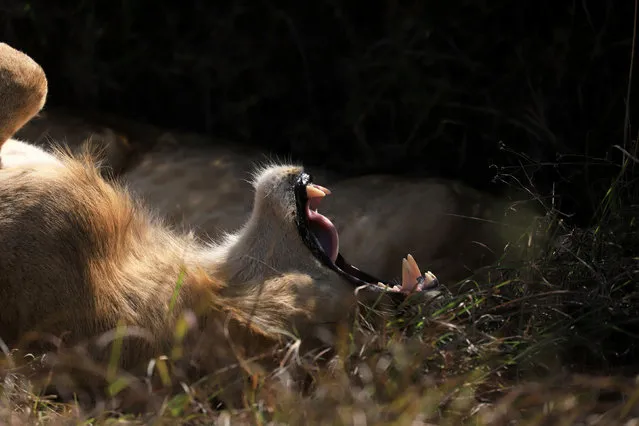
A lion rests in the Nairobi National Park, Kenya on January 6, 2021. (Photo by Tiksa Negeri/Reuters)

A lion rests in the Nairobi National Park, Kenya on January 6, 2021. (Photo by Tiksa Negeri/Reuters)
Details
18 Jan 2021 00:05:00
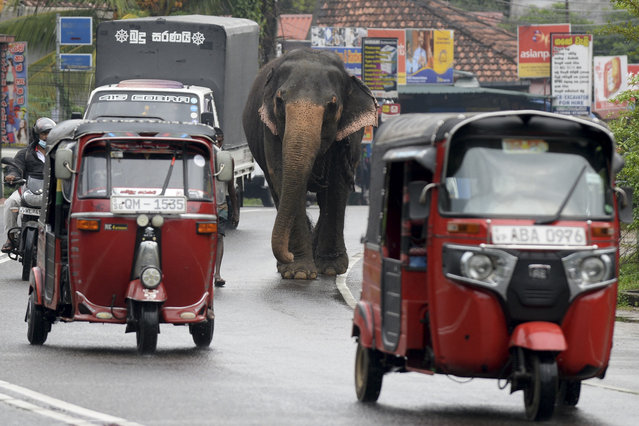
A mahout walks next to his elephant through a busy street in Horana, a suburb of Sri Lanka's capital Colombo on March 23, 2021. (Photo by Lakruwan Wanniarachchi/AFP Photo)

A mahout walks next to his elephant through a busy street in Horana, a suburb of Sri Lanka's capital Colombo on March 23, 2021. (Photo by Lakruwan Wanniarachchi/AFP Photo)
Details
04 Apr 2021 08:42:00