Loading...
Done
Visitors walk past the fully equipped dining table inside the “Crazy House”, which is completely built upside-down, in the village of Affoldern near the Edersee lake, May 7, 2014. Three friends came up with the idea to build the tourist attraction, which cost about 200,000 euros and took some six weeks to complete. (Photo by Kai Pfaffenbach/Reuters)

Visitors walk past the fully equipped dining table inside the “Crazy House”, which is completely built upside-down, in the village of Affoldern near the Edersee lake, May 7, 2014. Three friends came up with the idea to build the tourist attraction, which cost about 200,000 euros and took some six weeks to complete. (Photo by Kai Pfaffenbach/Reuters)
Details
11 May 2014 12:15:00
July 23, 2013 – Kampala, Uganda. Helene and Diana train daily more than 2.5 hours by Innocent Kapalata, a passionate and ambitious former boxer. Amidst the shanty homes a group of ambitious fighters are trying to reach for a better life. (Photo by Peter Bauza/ZUMA Press/VISUAL Press)

July 23, 2013 – Kampala, Uganda. Helene and Diana train daily more than 2.5 hours by Innocent Kapalata, a passionate and ambitious former boxer. Amidst the shanty homes a group of ambitious fighters are trying to reach for a better life. (Photo by Peter Bauza/ZUMA Press/VISUAL Press)
Details
30 Jul 2014 11:06:00
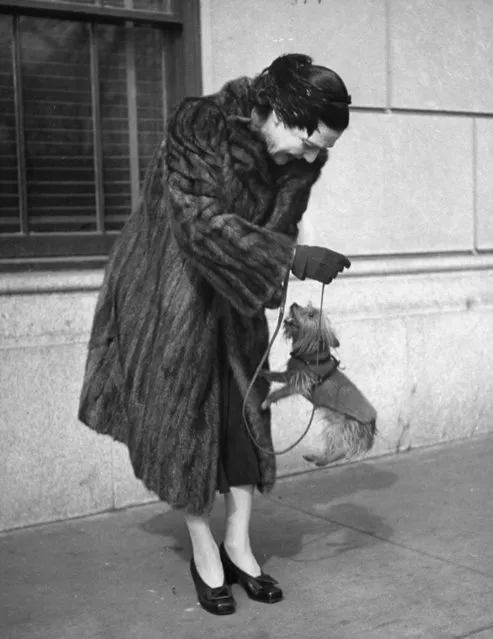
Author Fannie Hurst clad in mink coat, enjoying the jumping antics of her Yorkshire terrier Orphan Annie on the street. (Photo by Nina Leen/Pix Inc./The LIFE Picture Collection/Getty Images)

Nina Leen, one of the first female photographers to work for Life, took pictures for the magazine from 1940 to 1972. In the mid-1940s, her essay, “City Dogs”, featured actors and artists with their pets on the streets of New York City. In late-March, Daniel Cooney Fine Art in New York City, is opening a solo exhibition of Leen’s work that features images from that essay and others. Here: author Fannie Hurst clad in mink coat, enjoying the jumping antics of her Yorkshire terrier Orphan Annie on the street. (Photo by Nina Leen/Pix Inc./The LIFE Picture Collection/Getty Images)
Details
30 Mar 2015 12:48:00
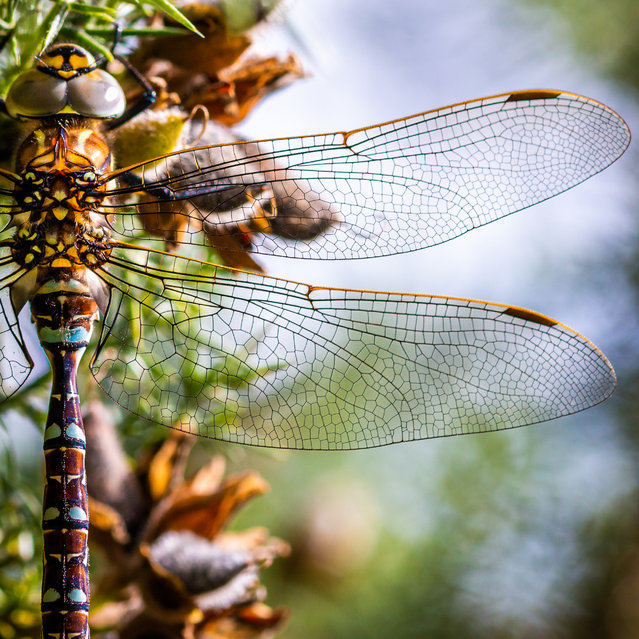
Shortlisted. Dragonfly, North York Moors national park, by Jonathan Green: “In June I was at May Beck with some colleagues when someone spotted this Hawker perched in a gorse bush. I love the detail on the wings, and it’s rare to be able to get so much of such a small subject in clear focus. Getting a few scratches was worth it”. (Photo by Jonathan Green/2020 UK National Parks Photography Competition)

Shortlisted. Dragonfly, North York Moors national park, by Jonathan Green: “In June I was at May Beck with some colleagues when someone spotted this Hawker perched in a gorse bush. I love the detail on the wings, and it’s rare to be able to get so much of such a small subject in clear focus. Getting a few scratches was worth it”. (Photo by Jonathan Green/2020 UK National Parks Photography Competition)
Details
14 Mar 2020 00:05:00
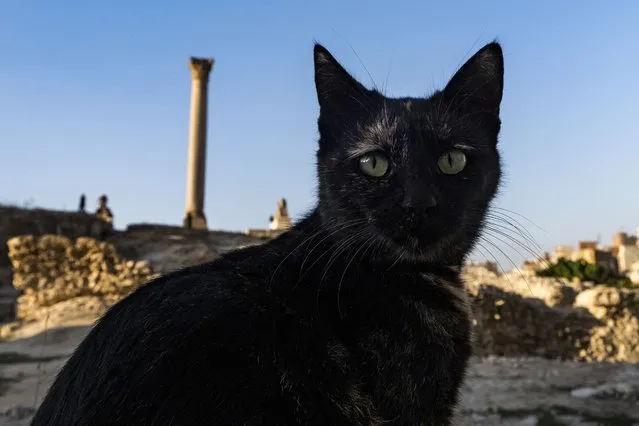
A cat looks on near the Victory Pillar at the ruins of the Serapeum of Alexandria, an ancient Greek temple dating to the Ptolemaic and Roman periods (246 BC – 391 AD) dedicated to the city's protector deity Serapis, in Egypt's northern coastal city of Alexandria on November 24, 2023. The giant Corinthian column, commonly misidentified as “Pompey's Pillar”, is a Roman triumphal column set up in honour of the Roman emperor Diocletian (298–302 AD), and originally supported a colossal porphyry statue of the emperor in armour. (Photo by Amir Makar/AFP Photo)

A cat looks on near the Victory Pillar at the ruins of the Serapeum of Alexandria, an ancient Greek temple dating to the Ptolemaic and Roman periods (246 BC – 391 AD) dedicated to the city's protector deity Serapis, in Egypt's northern coastal city of Alexandria on November 24, 2023. The giant Corinthian column, commonly misidentified as “Pompey's Pillar”, is a Roman triumphal column set up in honour of the Roman emperor Diocletian (298–302 AD), and originally supported a colossal porphyry statue of the emperor in armour. (Photo by Amir Makar/AFP Photo)
Details
13 Dec 2023 23:52:00
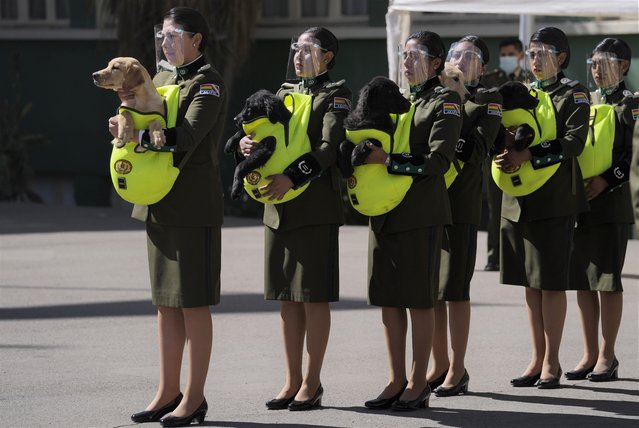
Police officers introduce a litter of golden retriever puppies to be trained as police dogs during a ceremony at the National Police Academy in La Paz, Bolivia, Monday, August 16, 2021, the date of the feast day for Saint Roch, considered the patron saint of dogs, among other things. (Photo by Juan Karita/AP Photo)

Police officers introduce a litter of golden retriever puppies to be trained as police dogs during a ceremony at the National Police Academy in La Paz, Bolivia, Monday, August 16, 2021, the date of the feast day for Saint Roch, considered the patron saint of dogs, among other things. (Photo by Juan Karita/AP Photo)
Details
21 Apr 2022 06:13:00
A female traffic police officer in the snow in February 2013, in Pyongyang, North Korea. (Photo by Andrew Macleod/Barcroft Media)

North Korea has closed its borders in fear of the spread of the Ebola virus. But at a time when the secretive state was still welcoming tourists, former aid worker Andrew Macleod made the journey to the repressive nation. Andrew's holiday snaps and camera footage provide a unique insight into the reclusive country, where he came across deserted motorways, metro stations plastered with propaganda and attractive border guards. Here: a female traffic police officer in the snow in February 2013, in Pyongyang, North Korea. (Photo by Andrew Macleod/Barcroft Media)
Details
06 Nov 2014 09:11:00
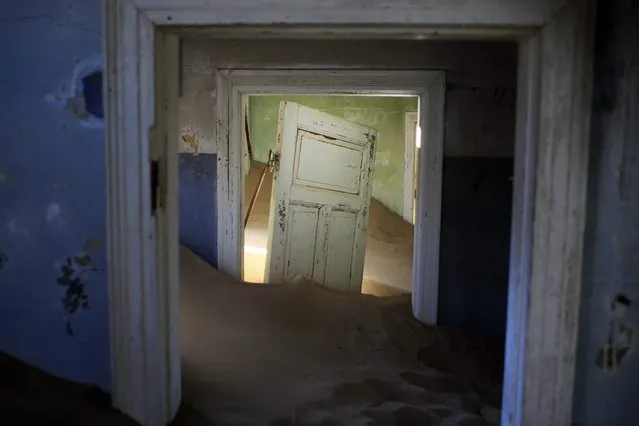
In this July 23, 2013 photo, sand fills an abandoned house in Kolmanskop, Namibia. Kolmanskop, was a diamond mining town south of Namibia, build in 1908 and deserted in 1956. SInce then, the desert slowly reclaims its territory, with sand invading the buildings where 350 German colonists and more than 800 local workers lived during its hay-days of the 1920s. (Photo by Jerome Delay/AP Photo)

In this July 23, 2013 photo, sand fills an abandoned house in Kolmanskop, Namibia. Kolmanskop, was a diamond mining town south of Namibia, build in 1908 and deserted in 1956. SInce then, the desert slowly reclaims its territory, with sand invading the buildings where 350 German colonists and more than 800 local workers lived during its hay-days of the 1920s. (Photo by Jerome Delay/AP Photo)
Details
14 Nov 2014 14:34:00