Loading...
Done
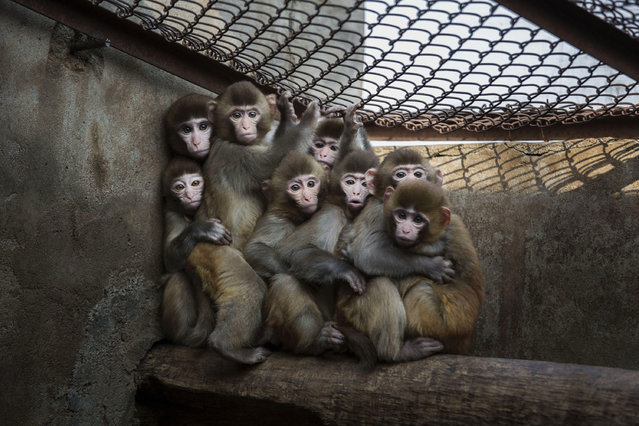
Macaque monkeys crowd together in their cage at a monkey farm on February 3, 2016 in Xinye county, Henan province, China. The area boasts a centuries-long and lucrative history of raising and training monkeys for performance. In Xinye, villagers are seeing an increase in business with the lunar calendar's “Year of the Monkey”. Farmers say most of the monkeys are bred and raised for domestic zoos, circuses, and performing groups, but add that some are also sold for medical research in China and the United States. Despite the popularity of the tradition, critics contend the training methods and conditions constitute animal cruelty. (Photo by Kevin Frayer/Getty Images)

Macaque monkeys crowd together in their cage at a monkey farm on February 3, 2016 in Xinye county, Henan province, China. The area boasts a centuries-long and lucrative history of raising and training monkeys for performance. In Xinye, villagers are seeing an increase in business with the lunar calendar's “Year of the Monkey”. Farmers say most of the monkeys are bred and raised for domestic zoos, circuses, and performing groups, but add that some are also sold for medical research in China and the United States. Despite the popularity of the tradition, critics contend the training methods and conditions constitute animal cruelty. (Photo by Kevin Frayer/Getty Images)
Details
31 Dec 2016 09:56:00
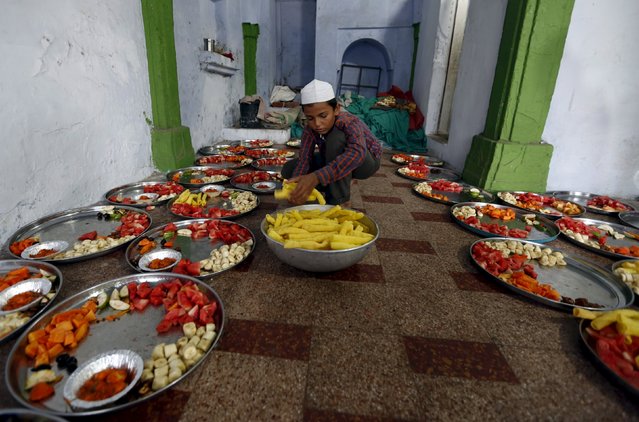
A Muslim boy prepares plates of food for an Iftar (breaking of fast) meal inside a mosque during the holy month of Ramadan in Ahmedabad, India, June 28, 2015. (Photo by Amit Dave/Reuters)

A Muslim boy prepares plates of food for an Iftar (breaking of fast) meal inside a mosque during the holy month of Ramadan in Ahmedabad, India, June 28, 2015. (Photo by Amit Dave/Reuters)
Details
29 Jun 2015 12:20:00
A man prays to mourn victims of the March 11, 2011, earthquake and tsunami in front of a ship brought ashore by the disaster in Kesennuma, Miyagi Prefecture, Japan.  (Photo by Kyodo via Reuters)

A man prays to mourn victims of the March 11, 2011, earthquake and tsunami in front of a ship brought ashore by the disaster in Kesennuma, Miyagi Prefecture, Japan. (Photo by Kyodo via Reuters)
Details
13 Mar 2013 12:30:00
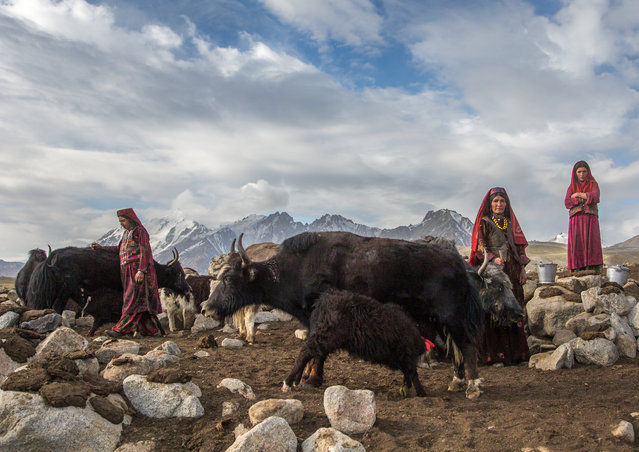
Wakhi nomad women milk yaks in Wakhan, Afghanistan. About 12,000 villagers live at an altitude of 4,500 metres in the harsh, desolate terrain. The Wakhi people live a simple, relaxed life with their livestock. (Photo by Eric Lafforgue/Barcroft Images)

Wakhi nomad women milk yaks in Wakhan, Afghanistan. About 12,000 villagers live at an altitude of 4,500 metres in the harsh, desolate terrain. The Wakhi people live a simple, relaxed life with their livestock. (Photo by Eric Lafforgue/Barcroft Images)
Details
12 Oct 2016 10:13:00


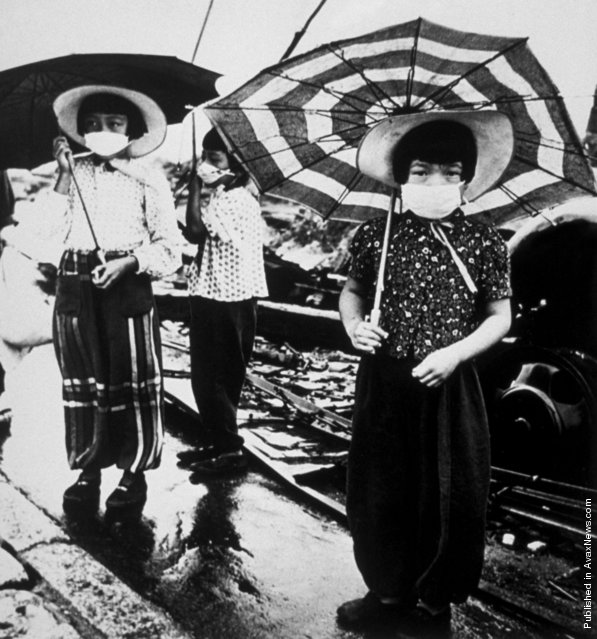
Children in Hiroshima, Japan, wearing masks to combat the odour of death after the city was destroyed by the first atom bomb. (Photo by Keystone/Getty Images). 1945
Details
16 Mar 2011 14:47:00
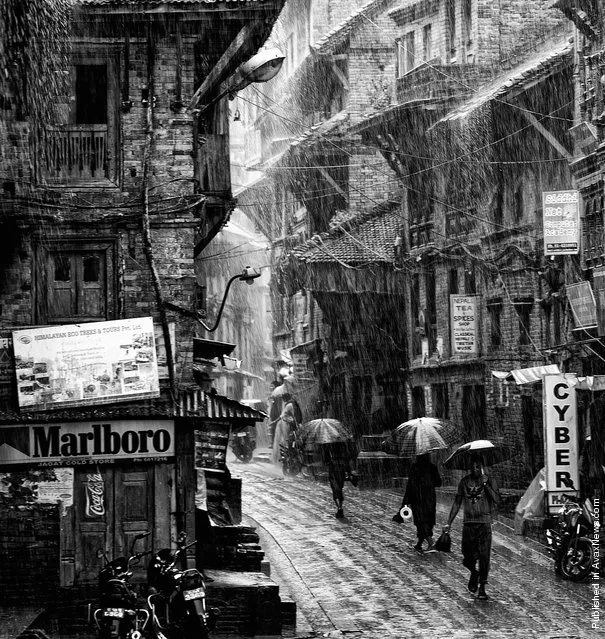
Cyber Monsoon

“Cyber Monsoon”, honorable mention in Places category. A torrential monsoon rain in Bhaktapur, Nepal. (© Anuar Patjane)
Details
07 Apr 2012 11:51:00
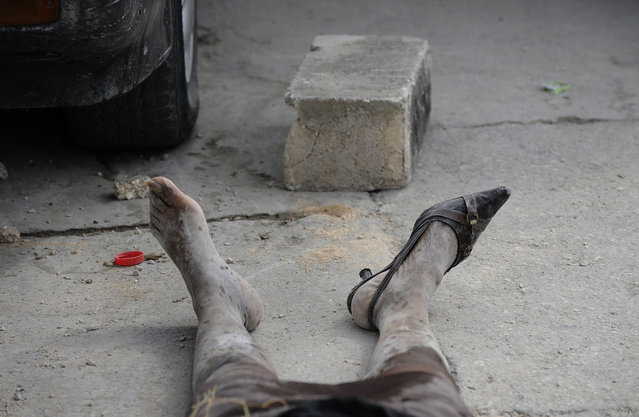
In this photo submitted by the Washington Post tilted “The Moment Time Stopped”, survivors piled bodies of the dead outside for weeks after earthquake on January 14, 2010 in Port-au-Prince, Haiti. The Washington Post has won a Pulitzer Prize for breaking news photography on Monday, April 18, 2011 for images taken in Haiti following the earthquake there.(Photo by Carol Guzy/AP Photo/The Washington Post)

In this photo submitted by the Washington Post tilted “The Moment Time Stopped”, survivors piled bodies of the dead outside for weeks after earthquake on January 14, 2010 in Port-au-Prince, Haiti. The 7.0 magnitude earthquake struck in 2010, and the Haitian government has said more than 300,000 people were killed. The exact toll is unknown because there was no systematic effort to count bodies among the chaos and destruction. (Photo by Carol Guzy/AP Photo/The Washington Post)
Details
13 Jan 2015 14:17:00
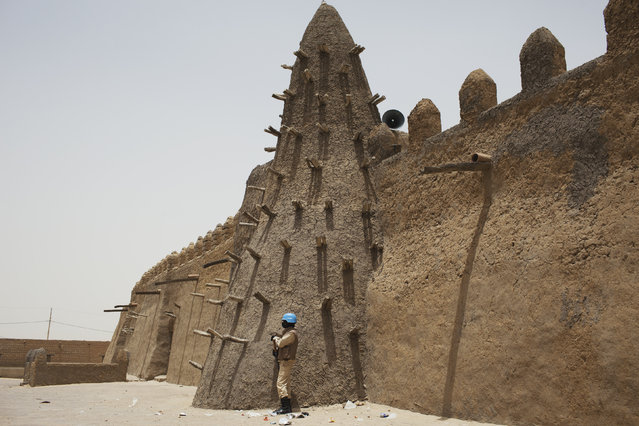
Timbuktu: A UN peacekeeper from Burkina Faso stands guard at the Djinguereber mosque, built in the 14th century, during a visit by a UN delegation on election day in Timbuktu, Mali, July 28, 2013. (Photo by Joe Penney/Reuters)

Timbuktu: A UN peacekeeper from Burkina Faso stands guard at the Djinguereber mosque, built in the 14th century, during a visit by a UN delegation on election day in Timbuktu, Mali, July 28, 2013. (Photo by Joe Penney/Reuters)
Details
08 Jul 2015 12:33:00