Loading...
Done
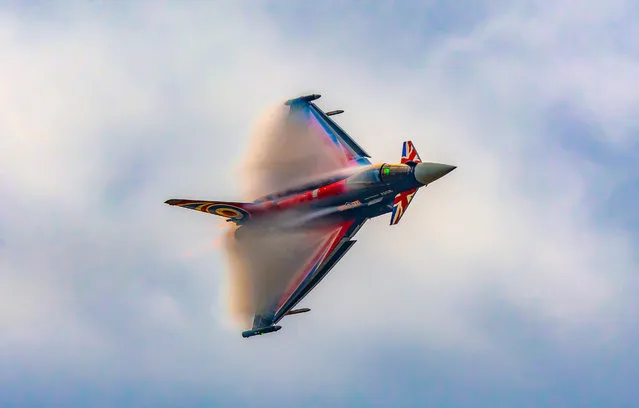
The picture dated July 8, 2023 shows the Typhoon performing at the RAF Waddington Families Day in Lincolnshire, UK. A number of iconic planes took to the skies in the action-packed day for service personnel and their friends and families. (Photo by Claire Hartley/Bav Media)

The picture dated July 8, 2023 shows the Typhoon performing at the RAF Waddington Families Day in Lincolnshire, UK. A number of iconic planes took to the skies in the action-packed day for service personnel and their friends and families. (Photo by Claire Hartley/Bav Media)
Details
30 Aug 2023 03:38:00
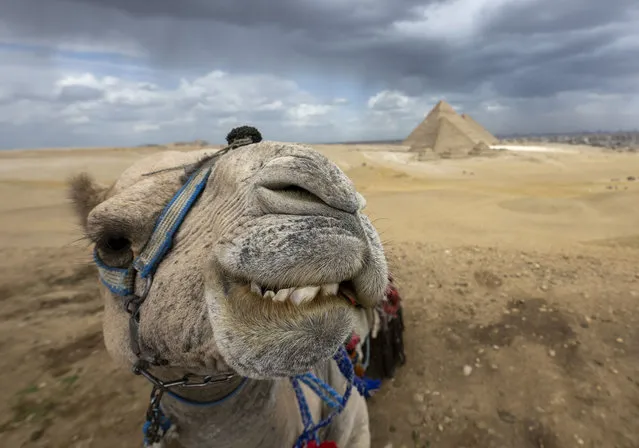
A camel is seen in front of the pyramids, which is one of the seven wonders of the world that was visited by 14.9 million tourists last year in Giza, Egypt on February 21, 2024. The pyramids were named after the tombs of fathers, sons and grandsons, including the largest pyramid Cheops (King Khufu), the middle pyramid Khafre (King Khafre) and the small pyramid Menkaure (King Menkaure). (Photo by Utku Ucrak/Anadolu via Getty Images)

A camel is seen in front of the pyramids, which is one of the seven wonders of the world that was visited by 14.9 million tourists last year in Giza, Egypt on February 21, 2024. The pyramids were named after the tombs of fathers, sons and grandsons, including the largest pyramid Cheops (King Khufu), the middle pyramid Khafre (King Khafre) and the small pyramid Menkaure (King Menkaure). (Photo by Utku Ucrak/Anadolu via Getty Images)
Details
12 Apr 2024 00:06:00
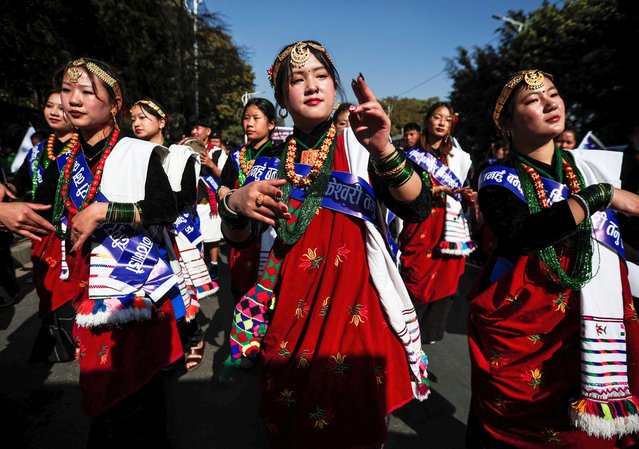
Participants take part in a parade in traditional attire to celebrate Tamu Lhosar, a New Year festival of the Gurung community in Kathmandu, Nepal on December 30, 2024. (Photo by Navesh Chitrakar/Reuters)

Participants take part in a parade in traditional attire to celebrate Tamu Lhosar, a New Year festival of the Gurung community in Kathmandu, Nepal on December 30, 2024. (Photo by Navesh Chitrakar/Reuters)
Details
11 Jan 2025 03:42:00
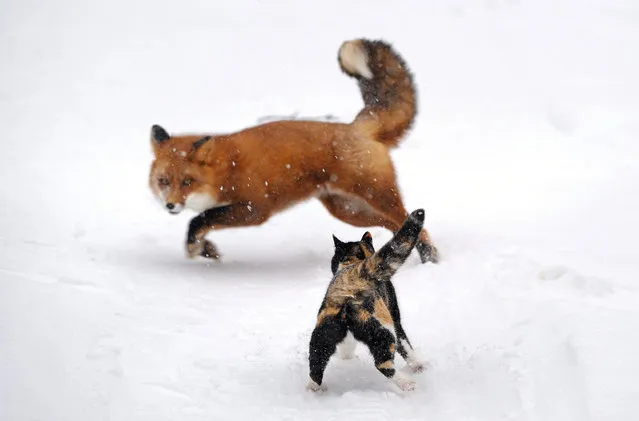
Respect, Kronotsky nature reserve, Russia. The photographer’s cat, Ryska – her name means little lynx in Russian – stands outside their cabin and with aggressive posturing warns off a fox. In winter, foxes would regularly visit the cabin searching for food. If one peered in at the window, possible when the snow was deep, Ryska would sit on the other side, fur raised, and growl. When outside, she would hold her ground. The foxes were not always frightened and so encounters could be a sort of dance. (Photo by Igor Shpilenok/Unforgettable Behaviour/NHM)

Respect, Kronotsky nature reserve, Russia. The photographer’s cat, Ryska – her name means little lynx in Russian – stands outside their cabin and with aggressive posturing warns off a fox. In winter, foxes would regularly visit the cabin searching for food. If one peered in at the window, possible when the snow was deep, Ryska would sit on the other side, fur raised, and growl. When outside, she would hold her ground. The foxes were not always frightened and so encounters could be a sort of dance. (Photo by Igor Shpilenok/Unforgettable Behaviour/NHM)
Details
08 Apr 2017 09:14:00
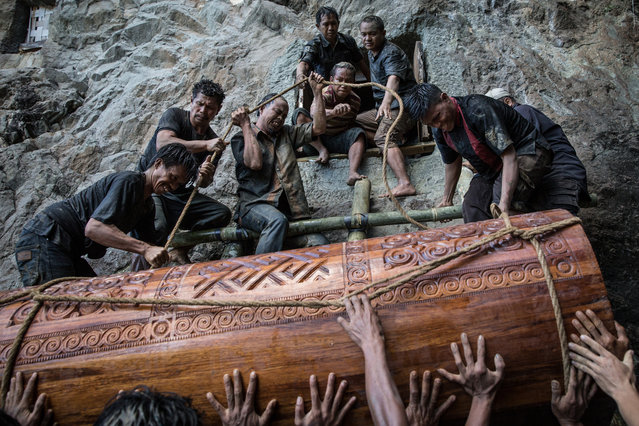
It is said that Torajans are people who “live to die”. For this Indonesian ethnic group, funerals are such extravagant events that they sometimes attract tourists. Families can postpone burials years (and the deceased are considered sick and hosted at home until the funeral) until the family can raise enough money and gather as many relatives as possible. And then it’s a jubilant multiday social event with a parade, dances and animal sacrifices. Agung Parameswara photographed these funerary practices when he traveled to South Sulawesi province, where the Torajans live. But often, their funeral isn’t the last time the dead are seen. In August, crypts are opened, coffins are slid back out and bodies delicately unsheathed. This tender ritual is known as Ma’Nene, which is customarily performed every few years. (Photo by Agung Parameswara/The Washington Post)

It is said that Torajans are people who “live to die”. For this Indonesian ethnic group, funerals are such extravagant events that they sometimes attract tourists. Families can postpone burials years (and the deceased are considered sick and hosted at home until the funeral) until the family can raise enough money and gather as many relatives as possible. And then it’s a jubilant multiday social event with a parade, dances and animal sacrifices. Agung Parameswara photographed these funerary practices when he traveled to South Sulawesi province, where the Torajans live. (Photo by Agung Parameswara/The Washington Post)
Details
06 Oct 2016 09:15:00
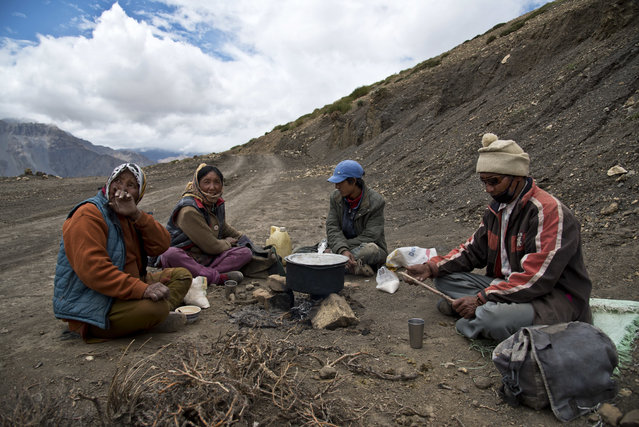
In this August 17, 2016, photo, from left to right, Chhering Chodom, 60, Tashi Yangzom, 50, Lobsang Chhering, 27, and Dorje Tandup, 58, drink milk tea on the side of the road. For centuries, the sleepy valley nestled in the Indian Himalayas remained a hidden Buddhist enclave forbidden to outsiders. Enduring the harsh year-round conditions of the high mountain desert, the people of Spiti Valley lived by a simple communal code – share the Earth's bounty, be hospitable to neighbors, and eschew greed and temptation at all turns. That's all starting to change, for better or worse. Since India began allowing its own citizens as well as outsiders to visit the valley in the early 1990s, tourism and trade have boomed. And the marks of modernization, such as solar panels, asphalt roads and concrete buildings, have begun to appear around some of the villages that dot the remote landscape at altitudes above 4,000 meters (13,000 feet). (Photo by Thomas Cytrynowicz/AP Photo)

In this August 17, 2016, photo, from left to right, Chhering Chodom, 60, Tashi Yangzom, 50, Lobsang Chhering, 27, and Dorje Tandup, 58, drink milk tea on the side of the road. For centuries, the sleepy valley nestled in the Indian Himalayas remained a hidden Buddhist enclave forbidden to outsiders. Enduring the harsh year-round conditions of the high mountain desert, the people of Spiti Valley lived by a simple communal code – share the Earth's bounty, be hospitable to neighbors, and eschew greed and temptation at all turns. That's all starting to change, for better or worse. (Photo by Thomas Cytrynowicz/AP Photo)
Details
15 Sep 2016 09:22:00
A dog poses in traditional Chinese dress on Yaowarat Road in Chinatown on the eve of Lunar New Year on January 20, 2023 in Bangkok, Thailand. The Chinese diaspora of Southeast Asia is celebrating a lively Lunar New Year as COVID-19 restrictions have been removed. It is traditionally a time for people to meet their relatives and take part in celebrations with families. In Thailand, which has a sizeable population of Chinese lineage, people gather with family and celebrate with feasts and visits to temples. (Photo by Lauren DeCicca/Getty Images)

A dog poses in traditional Chinese dress on Yaowarat Road in Chinatown on the eve of Lunar New Year on January 20, 2023 in Bangkok, Thailand. The Chinese diaspora of Southeast Asia is celebrating a lively Lunar New Year as COVID-19 restrictions have been removed. It is traditionally a time for people to meet their relatives and take part in celebrations with families. In Thailand, which has a sizeable population of Chinese lineage, people gather with family and celebrate with feasts and visits to temples. (Photo by Lauren DeCicca/Getty Images)
Details
09 Feb 2023 05:04:00
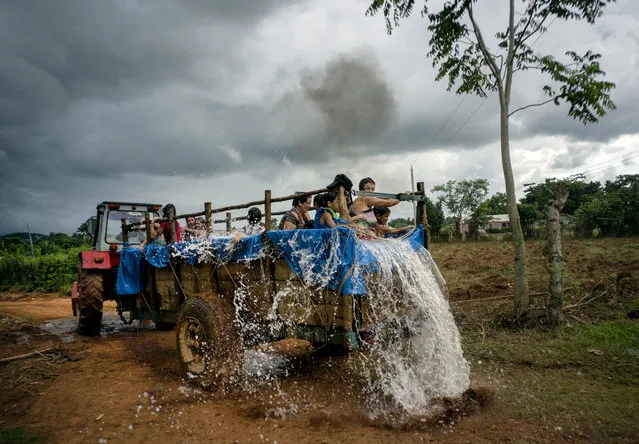
In this August 24, 2019 photo, a tractor pulls a trailer that was converted into a swimming pool as it drives along the roads of El Infernal neighborhood in San Andres in the province of Pinar del Río, Cuba. The idea for the mobile tractor-pool was hatched by local parents, to make their kids happy and fight the harsh Caribbean heat. (Photo by Ramon Espinosa/AP Photo)

In this August 24, 2019 photo, a tractor pulls a trailer that was converted into a swimming pool as it drives along the roads of El Infernal neighborhood in San Andres in the province of Pinar del Río, Cuba. The idea for the mobile tractor-pool was hatched by local parents, to make their kids happy and fight the harsh Caribbean heat. (Photo by Ramon Espinosa/AP Photo)
Details
10 Sep 2019 00:01:00