Loading...
Done
Female bodybuilders compete in the annual Muscle Beach Championship bodybuilding and bikini competition at Venice Beach, California on September 7, 2015. (Photo by Mark Ralston/AFP Photo)

Female bodybuilders compete in the annual Muscle Beach Championship bodybuilding and bikini competition at Venice Beach, California on September 7, 2015. Muscle beach Venice is one of two historic bodybuilding locations and took over as the most famous spot when the nearby Santa Monica Muscle beach was shutdown due to overcrowding. California Governor and actor Arnold Schwarzenegger used to be a regular amongst the many famous bodybuilders and actors who have trained there and still makes an occasional appearance. (Photo by Mark Ralston/AFP Photo)
Details
09 Sep 2015 13:15:00
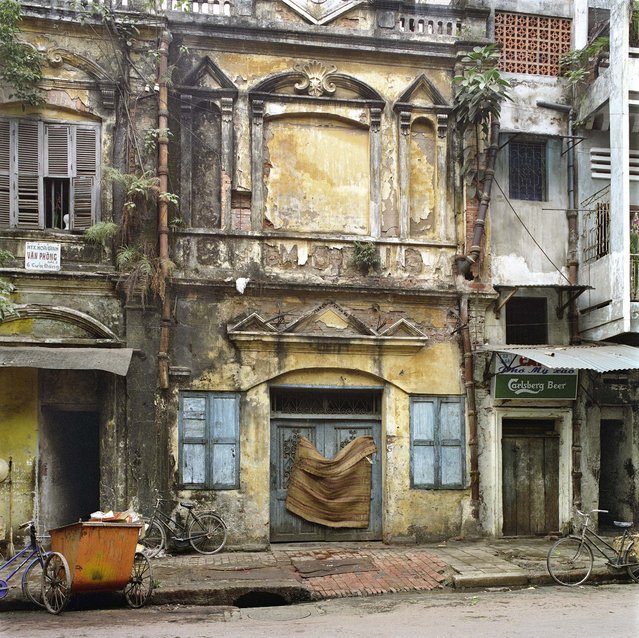
54 Hàng Ga (Chicken Street), 1994. (Photo by  William E. Crawford from the book “Hanoi Streets 1985-2015: In the Years of Forgetting”)

Documentary photographer William E. Crawford was one of the first Western photographers to gain access to North Vietnam after the war ended. He has photographed the capital, Hanoi, at regular intervals since 1985, concentrating on the colonial and indigenous architecture, urban details, landscapes and intimate portraits of people in their home settings, street scenes and the city’s surrounding countryside. Here: 54 Hàng Ga (Chicken Street), 1994. (Photo by William E. Crawford from the book “Hanoi Streets 1985-2015: In the Years of Forgetting”)
Details
27 Jun 2018 00:01:00


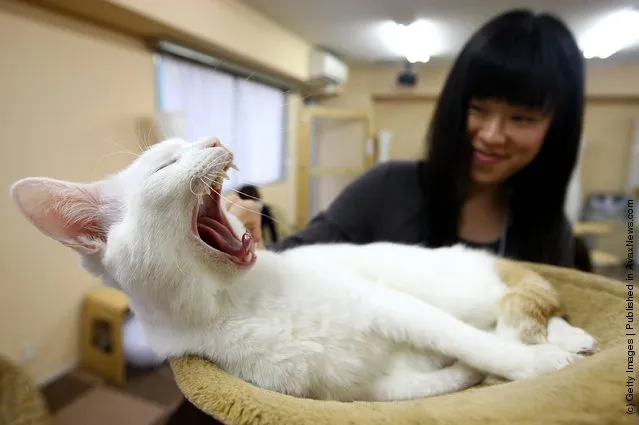
A cat yawns at Nekorobi cat cafe on January 20, 2009 in Tokyo, Japan. Cat cafes, where people can spend time with their favorite cat for about 10 US dollars an hour, are now getting more popular with people living in urban areas. The regular customers are mainly in their 20's to 30's and seaking healing by cats, or people who cannot afford to have pets full time. Some visiters come to the cat cafe three times a week. (Photo by Junko Kimura/Getty Images)
Details
05 Jun 2011 11:00:00
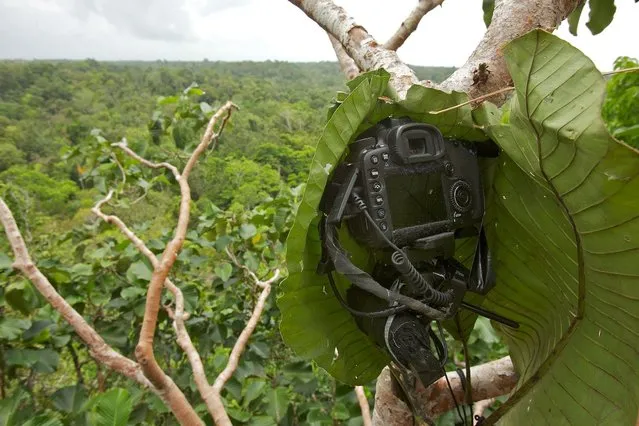
Tim Laman - Wildlife Photojournalist

Tim Laman is a field biologist and wildlife photojournalist. His pioneering research in the rain forest canopy in Borneo led to a PhD from Harvard and his first National Geographic article in 1997. Since then, he has pursued his passion for exploring wild places and documenting little-known and endangered wildlife by becoming a regular contributor to National Geographic. He has eighteen articles to his credit to date, all of which have had a conservation message. Some have focused on endangered species such as Orangutans or Hornbills, while others, such as a series of articles on Conservation International’s Biodiversity Hotspots, have highlighted regions under intense pressure.
Details
14 Sep 2013 10:13:00
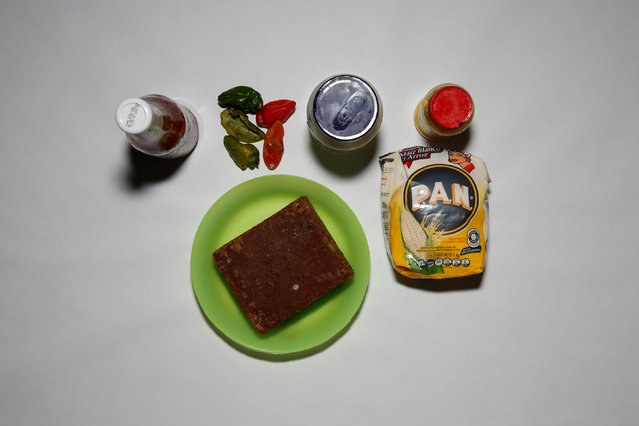
All the food available in the house of Antonia Torres and her family, is pictured at their home in Caracas, Venezuela April 22, 2016. (Photo by Carlos Garcia Rawlins/Reuters)

The combination of Venezuela's sky-rocketing prices and chronic product shortages have left many struggling to put regular food on their tables and maintain a balanced diet. According to one recent study, 87 percent of Venezuelans say their income is now insufficient to purchase their food needs. Here: All the food available in the house of Antonia Torres and her family, is pictured at their home in Caracas, Venezuela April 22, 2016. (Photo by Carlos Garcia Rawlins/Reuters)
Details
28 Apr 2016 12:30:00
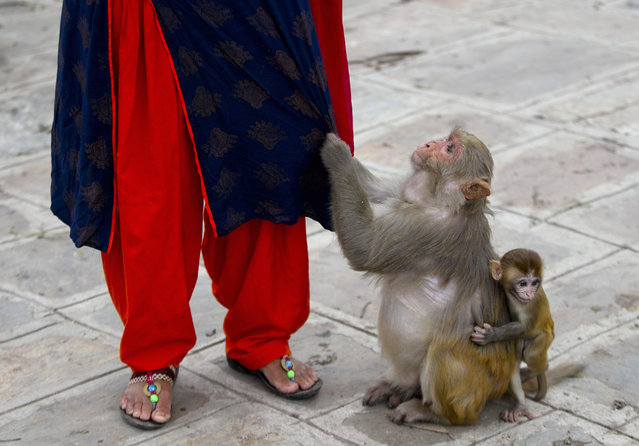
In this July 8, 2019, photo, a monkey pulls on the clothes of Saraswati Dangol as she arrives to feed monkeys in the forest near Pashupatinath temple in Kathmandu, Nepal. For the past four years, Dangol has been bringing the bread every day to feed the monkeys. As soon as they see her with her white sack, they gather around her, some patiently waiting for their turn while others less patiently snatching the bread from her hands. Many of Dangol's regulars are elderly, or are mother or baby monkeys who are unable to fight for their share of food in the wild. (Photo by Niranjan Shrestha/AP Photo)

In this July 8, 2019, photo, a monkey pulls on the clothes of Saraswati Dangol as she arrives to feed monkeys in the forest near Pashupatinath temple in Kathmandu, Nepal. For the past four years, Dangol has been bringing the bread every day to feed the monkeys. As soon as they see her with her white sack, they gather around her, some patiently waiting for their turn while others less patiently snatching the bread from her hands. Many of Dangol's regulars are elderly, or are mother or baby monkeys who are unable to fight for their share of food in the wild. (Photo by Niranjan Shrestha/AP Photo)
Details
26 Jul 2019 00:03:00
Camila Hormazabal, a 24-year-old sеx worker, meets with a virtual customer in Concepcion, Chile on April 7, 2020. Hormazabal now offers sеxual services online after the nightclub where she had worked was closed due to the outbreak. With no way to pay her bills, Hormazabal switched to video calls conducted from her high-rise apartment bedroom, and asked her regulars to meet her online. She is one of the thousands of sеx workers worldwide left in a precarious position after the very intimacy that defines their work was thwarted by social distancing measures. (Photo by Juan Gonzalez/Reuters)

Camila Hormazabal, a 24-year-old sеx worker, meets with a virtual customer in Concepcion, Chile on April 7, 2020. Hormazabal now offers sеxual services online after the nightclub where she had worked was closed due to the outbreak. With no way to pay her bills, Hormazabal switched to video calls conducted from her high-rise apartment bedroom, and asked her regulars to meet her online. She is one of the thousands of sеx workers worldwide left in a precarious position after the very intimacy that defines their work was thwarted by social distancing measures. (Photo by Juan Gonzalez/Reuters)
Details
08 May 2020 00:07:00
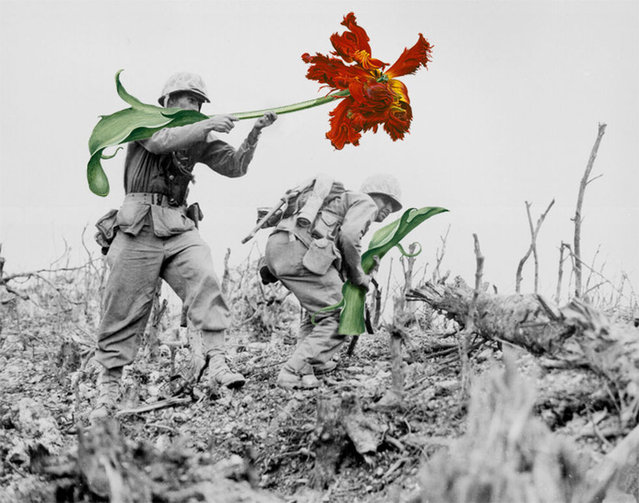
Flowers Of War By Mister Blick

It would have been so much better if the pictures created by Mister Blick were real. How wonderful it would be if these men were actually holding flowers, and none of these wars happened. Regretfully, all these wars have left their mark on the history of mankind. Wars are always bad. They bring nothing but destruction and terror to the regular people, while the big players make huge profits off of the suffering of the common folk. However, establishing dominance is an integral part of the human nature, and the desire to wage wars is simply an extension of this trait. Strong countries always suppress the weaker ones to gain even more power. Unfortunately, this is as inevitable as the sunrise or sunset. (Photo by Mister Blick)
Details
23 Nov 2014 11:58:00