A woman, her hands decorated with traditional henna, prays during Eid al-Fitr prayer at historical Badshahi mosque in Lahore, Pakistan, Sunday, May 24, 2020. (Photo by K.M. Chaudary/AP Photo)
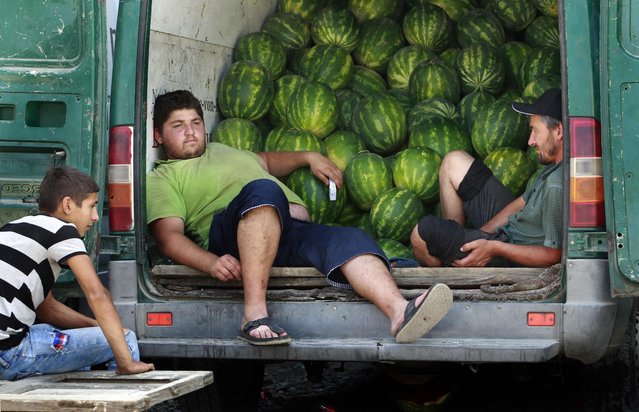
Georgian men take a break from selling fruit and vegetable at a street market in Tbilisi, Georgia, Wednesday, July 20, 2016. (Photo by Shakh Aivazov/AP Photo)
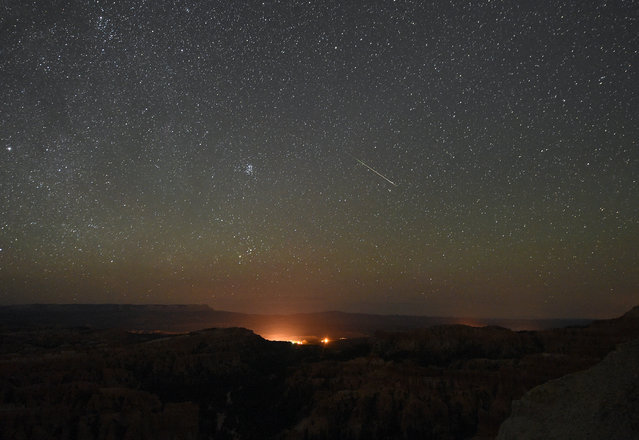
A Perseid meteor streaks across the sky above Inspiration Point early on August 12, 2016 in Bryce Canyon National Park, Utah. The annual display, known as the Perseid shower because the meteors appear to radiate from the constellation Perseus in the northeastern sky, is a result of Earth's orbit passing through debris from the comet Swift-Tuttle. (Photo by Ethan Miller/Getty Images)
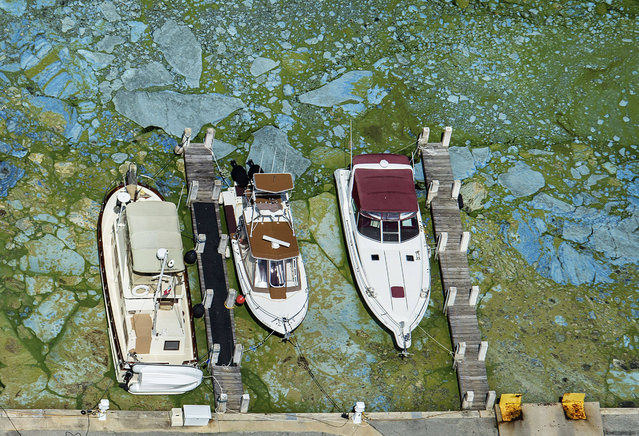
In this June 29, 2016 file photo, boats docked at Central Marine in Stuart, Fla., are surrounded by blue green algae. The 153-mile-long Indian River Lagoon has been plagued by harmful algae blooms. Water quality testing data analyzed by the AP showed the average phosphorous level – a byproduct of fertilizers and human waste that algae thrive on, rose nearly 75 percent between 2000 and 2016. (Photo by Greg Lovett/The Palm Beach Post via AP Photo)
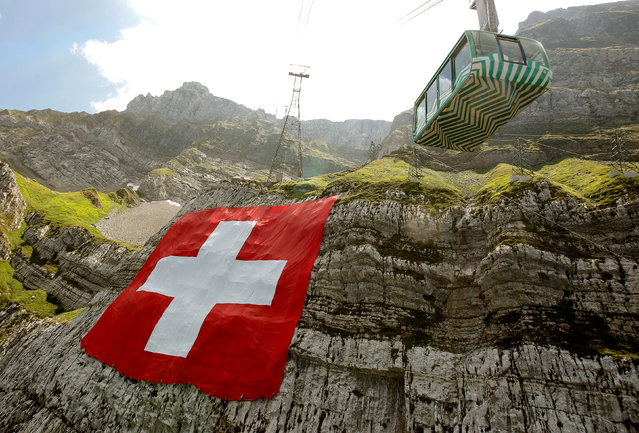
Climbers place a huge 80x80 metres (262x262 feet) Swiss national flag on the western face of the north-eastern Swiss landmark Mount Saentis, Switzerland on July 31, 2018. (Photo by Arnd Wiegmann/Reuters)
This undated image provided by World View shows World View capsule and balloon spacecraft that will rise to 100,000 feet above Earth for passengers to see the curvature of the planet and the blackness of space. Space tourism companies are employing designs including winged vehicles, vertical rockets with capsules and high-altitude balloons. While developers envision ultimately taking people to orbiting habitats, the moon or beyond, the immediate future involves short flights into or near the lowest reaches of space without going into orbit. (Photo by World View via AP Photo)