Loading...
Done
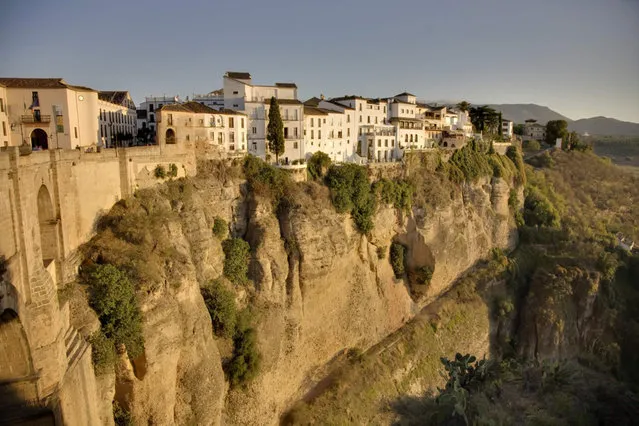
The Amazing Rock City In Spain

Ronda is a small Spanish town that it well known by many people around the world. It became a popular tourist destination due to its peculiar location. Some of its buildings are standing right next to the large cliff drop, making for a very scary sight, especially if you were to look down through one of their windows unaware of what kind of sight awaits you. If you ever find yourself looking for this ancient town, you can travel to it from Costa del Sol or Malaga. In the past, this town played a major strategic role due to its high elevation, which made defending it from invaders a lot easier.
Details
03 Mar 2015 11:40:00
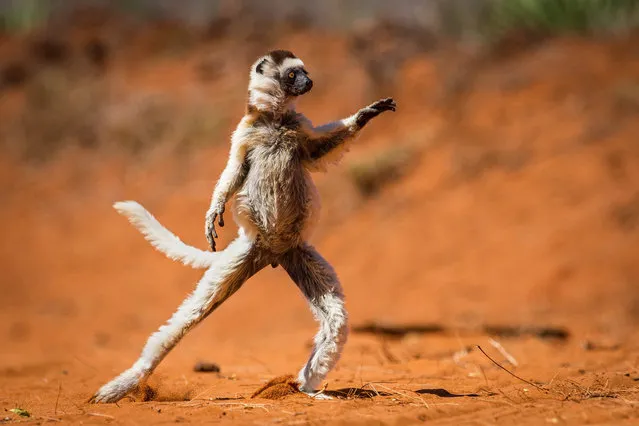
'Dancing sifaka'. (Photo by Alison Buttigieg/Comedy Wildlife Photography Awards/Mercury Press)

More than 1,500 snappers submitted their most hilarious pictures of all creatures great and small, and now 45 have made the cut. From drunken-eyed owls to embarrassed chipmunks and laughing goats – the finalists in the Comedy Wildlife Photography Awards are guaranteed to raise a smile. Here: 'Dancing sifaka'. (Photo by Alison Buttigieg/Comedy Wildlife Photography Awards/Mercury Press)
Details
12 Oct 2015 08:06:00


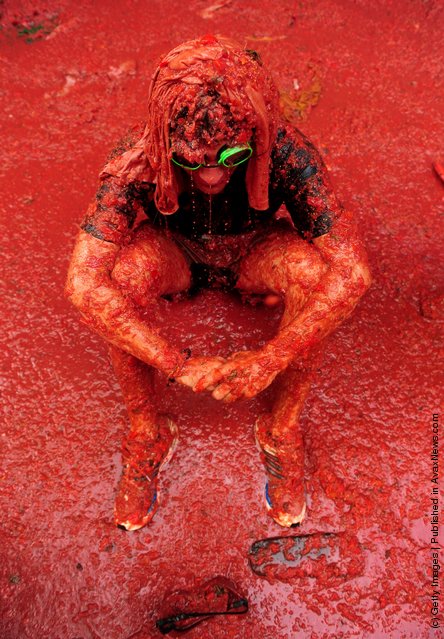
“La Tomatina is a festival that is held in the Valencian town of Buñol, in which participants throw tomatoes at each other”. – Wikipedia

Photo: A man sits in tomato pulp at the end of the world's biggest tomato fight at La Tomatina festival on August 26, 2009 in Bunol, Spain. More than 45000 people from all over the world descended on the small Valencian town to participate La Tomatina festival, with the local town hall estimating that over 100 tons of rotten and over-ripe tomatoes were thrown. (Photo by Jasper Juinen/Getty Images)
Details
24 May 2011 09:27:00
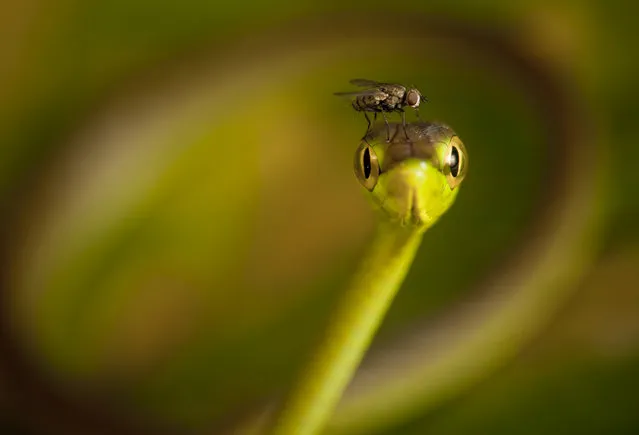
“Fly cap for a vine snake”. A fly lands on the head of a vine snake in the Choco of Colombia. (Photo and caption by Robin Moore/National Geographic Traveler Photo Contest)

“Fly cap for a vine snake”. A fly lands on the head of a vine snake in the Choco of Colombia. (Photo and caption by Robin Moore/National Geographic Traveler Photo Contest)

ATTENTION! All pictures are presented in high resolution. To see Hi-Res images – just TWICE click on any picture. In other words, click small picture – opens the BIG picture. Click BIG picture – opens VERY BIG picture.
Details
24 Jun 2013 11:36:00
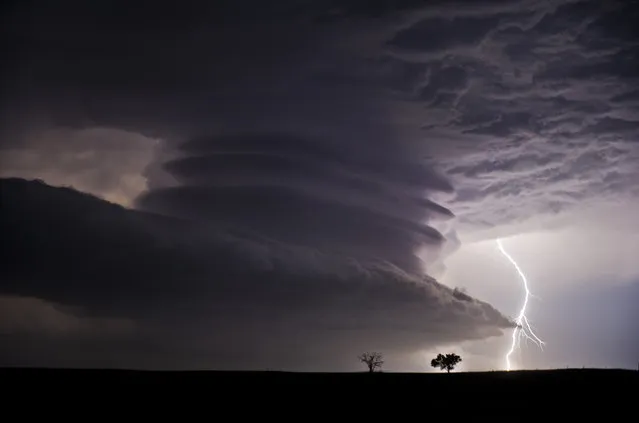
“Stacked Supercell with Lightning”. This huge mesocyclone supercell was near the Nebraska / Kansas border on the night of June 22nd, 2012. What a stunning structure! (Photo and caption by Jennifer Brindley/National Geographic Traveler Photo Contest)

“Stacked Supercell with Lightning”. This huge mesocyclone supercell was near the Nebraska / Kansas border on the night of June 22nd, 2012. What a stunning structure! (Photo and caption by Jennifer Brindley/National Geographic Traveler Photo Contest)

ATTENTION! All pictures are presented in high resolution. To see Hi-Res images – just TWICE click on any picture. In other words, click small picture – opens the BIG picture. Click BIG picture – opens VERY BIG picture.
Details
25 Jun 2013 13:12:00
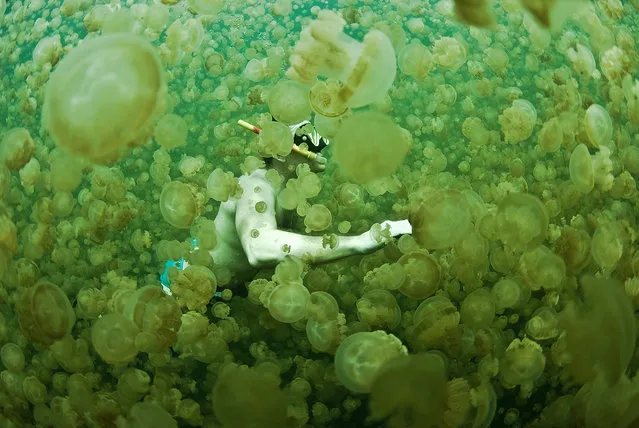
Jellyfish Lake

Jellyfish Lake (Palauan: Ongeim'l Tketau, “Fifth Lake”) is a marine lake located on Eil Malk island in Palau. Eil Malk is part of the Rock Islands, a group of small, rocky, mostly uninhabited islands in Palau's Southern Lagoon, between Koror and Peleliu. There are about 70 other marine lakes located throughout the Rock Islands. Jellyfish Lake is one of Palau's most famous dive (snorkeling only) sites. It is notable for the millions of golden jellyfish which migrate horizontally across the lake daily.
Details
02 Feb 2014 12:23:00
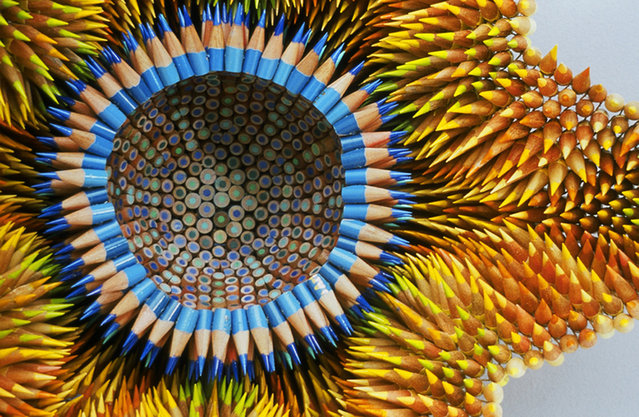
Pencil Sculptures - by Jennifer Maestre

Jennifer Maestre (born 1959 in Johannesburg, South Africa) is a Massachusetts-based artist, internationally known for her unique pencil sculptures.
She derives most of her inspiration from the form and texture of the sea urchin. To make the pencil sculptures, Jennifer makes use of a variety pencils, nails and stitching. She takes hundreds of pencils, cuts them into small 1-inch sections, drills a hole in each section, sharpens them all and sews them together.
Details
22 Aug 2012 13:16:00
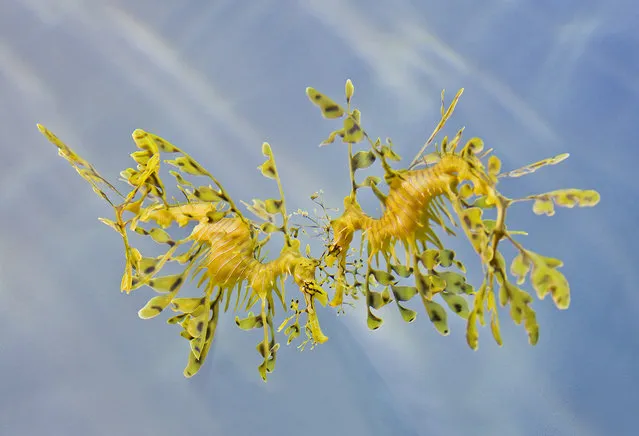
Leafy sea dragon

The leafy seadragon or Glauert's seadragon, Phycodurus eques, is a marine fish in the family Syngnathidae, which also includes the seahorses. It is the only member of the genus Phycodurus. It is found along the southern and western coasts of Australia. The name is derived from the appearance, with long leaf-like protrusions coming from all over the body. These protrusions are not used for propulsion; they serve only as camouflage. The leafy seadragon propels itself by means of a pectoral fin on the ridge of its neck and a dorsal fin on its back closer to the tail end. These small fins are almost completely transparent and difficult to see as they undulate minutely to move the creature sedately through the water, completing the illusion of floating seaweed.
Details
05 Sep 2012 08:51:00