Loading...
Done
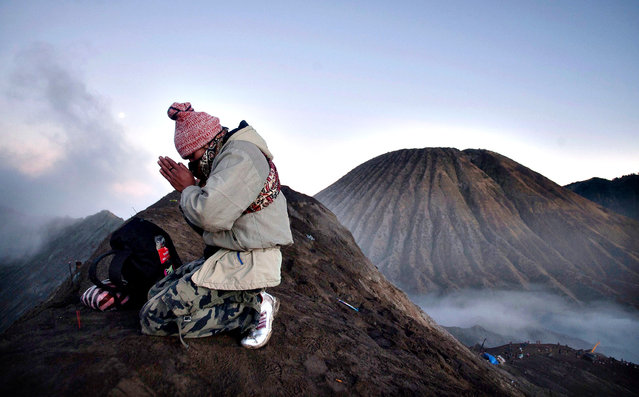
A Tengger tribesman prays at Mount Bromo during the annual Kasada ceremony in East Java on August 12, 2014. The Kasada ceremony is a festival held every 14th day of the Kasada month in the traditional Hindu lunar calender to honour Sang Hyang Widhi (God Almighty) and is based on the legend of Roro Anteng and Joko Seger from the Majapahit Kingdom, from which their Tengger tribe name originates. (Photo by Juni Kriswanto/AFP Photo)

A Tengger tribesman prays at Mount Bromo during the annual Kasada ceremony in East Java on August 12, 2014. The Kasada ceremony is a festival held every 14th day of the Kasada month in the traditional Hindu lunar calender to honour Sang Hyang Widhi (God Almighty) and is based on the legend of Roro Anteng and Joko Seger from the Majapahit Kingdom, from which their Tengger tribe name originates. Hundreds of worshippers from the Tengger tribe offer food and livestock as a symbolic sacrifice which they throw into the crater for the blessings of safety and prosperity to their familyies and community. (Photo by Juni Kriswanto/AFP Photo)
Details
16 Aug 2014 11:19:00
A model wears a creation from the Triya summer collection during Fashion Rio in Rio de Janeiro, Brazil, Friday, April 19, 2013. (Photo by Felipe Dana/AP Photo)

Felipe Dana discovered photography at age 15 when he started working as an assistant for event and commercial photographers. At the close of 2009, he decided to focus his career solely on photojournalism. Dana has focused his work on documenting the consequences of social changes in slums due to upcoming major sports events scheduled for 2014 and 2016 in Rio de Janeiro, where he currently lives and works as a staff photographer for The Associated Press. Photo: A model wears a creation from the Triya summer collection during Fashion Rio in Rio de Janeiro, Brazil, Friday, April 19, 2013. (Photo by Felipe Dana/AP Photo)
Details
15 May 2014 07:29:00
A U.S. soccer fan pretends that Uruguay's soccer striker Luis Suarez is biting him as he takes a selfie next to an Adidas advertisement featuring Suarez near Copacabana beach in Rio de Janeiro, Brazil, Thursday, June 26, 2014. FIFA banned Suarez from all football activities for four months on Thursday for biting an opponent at the World Cup, a punishment that rules him out of the rest of the tournament. (Photo by Matt Dunham/AP Photo)

A U.S. soccer fan pretends that Uruguay's soccer striker Luis Suarez is biting him as he takes a selfie next to an Adidas advertisement featuring Suarez near Copacabana beach in Rio de Janeiro, Brazil, Thursday, June 26, 2014. FIFA banned Suarez from all football activities for four months on Thursday for biting an opponent at the World Cup, a punishment that rules him out of the rest of the tournament. (Photo by Matt Dunham/AP Photo)
Details
28 Jun 2014 13:52:00
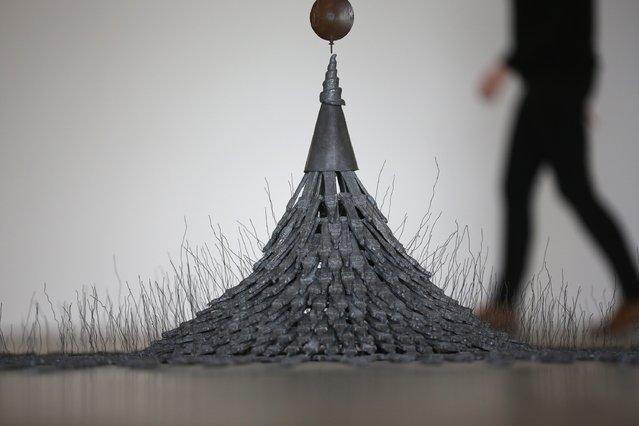
A gallery staff member walks past Fleeting Monument (1985)  by artist Cornelia Parker, one of the works on display at Yorkshire Sculpture Parks Longside Gallery as part of the “Making It: Sculpture in Britain 1977-1986” exhibition on March 27, 2015 in Barnsley, England. (Photo by Christopher Furlong/Getty Images)

A gallery staff member walks past Fleeting Monument (1985) by artist Cornelia Parker, one of the works on display at Yorkshire Sculpture Parks Longside Gallery as part of the “Making It: Sculpture in Britain 1977-1986” exhibition on March 27, 2015 in Barnsley, England. (Photo by Christopher Furlong/Getty Images)
Details
28 Mar 2015 11:04:00
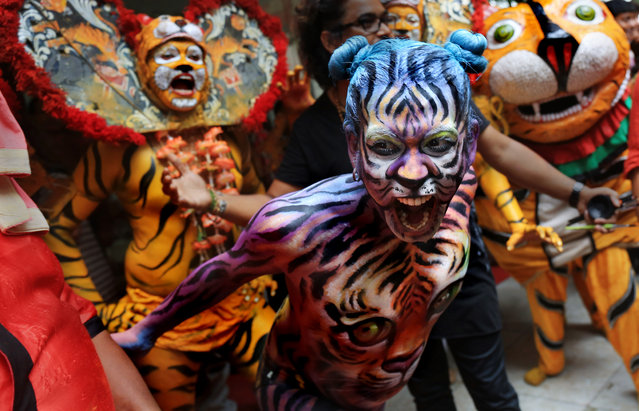
Indian dancers paint their body like tigers as they perform a Tiger dance during the International day of the Tiger in Calcutta, India, July 29, 2015. Students of Calcutta are taking part in an awareness campaign aiming to draw attention to the threats that tigers face due to habitat loss and poaching. (Photo by Piyal Adhikary/EPA)

Indian dancers paint their body like tigers as they perform a Tiger dance during the International day of the Tiger in Calcutta, India, July 29, 2015. Students of Calcutta are taking part in an awareness campaign aiming to draw attention to the threats that tigers face due to habitat loss and poaching. (Photo by Piyal Adhikary/EPA)
Details
30 Jul 2015 12:47:00
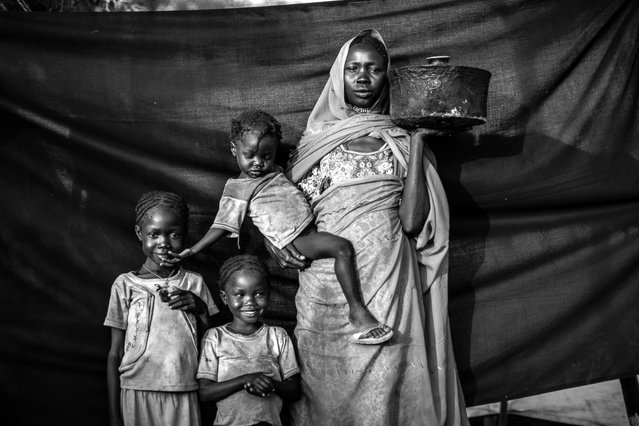
Magbola Alhadi, 20, and her three children pose for a portrait in Jamam refugee camp in Maban County, South Sudan on August 11th, 2012. Magboola and her family weathered aerial bombing raids for several months, but decided it was time to leave their village of Bofe the night that soldiers arrived and opened fire. (Photo by Brian Sokol/Panos Pictures)

Magbola Alhadi, 20, and her three children pose for a portrait in Jamam refugee camp in Maban County, South Sudan on August 11th, 2012. Magboola and her family weathered aerial bombing raids for several months, but decided it was time to leave their village of Bofe the night that soldiers arrived and opened fire. With her three children, she travelled for 12 days from Bofe to the town of El Fudj, on the South Sudanese border. The most important thing that Magboola was able to bring with her is the saucepan she holds in this photograph. It wasn't the largest pot that she had in Bofe, but it was small enough she could travel with it, yet big enough to cook sorghum for herself and her three daughters (from left: Aduna Omar, 6, Halima Omar, 4, and Arfa Omar, 2) during their journey. (Photo by Brian Sokol/Panos Pictures)
Details
18 Sep 2015 15:04:00
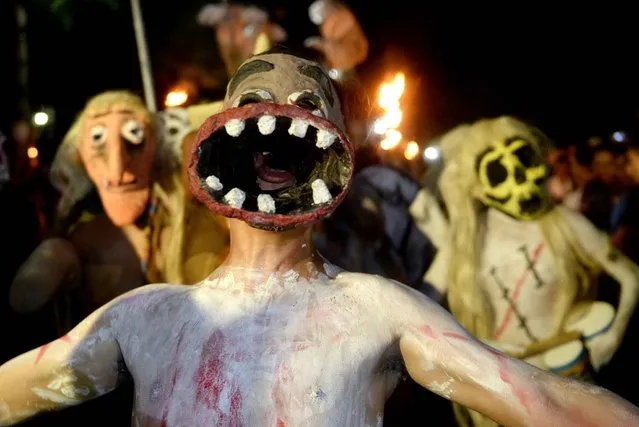
Young revelers take part in a parade called "La Calabiuza" on November 1, 2015, on the eve of the Day of the Dead in Tonacatepeque, 20 kms (13 miles) north of San Salvador. During the celebration, the residents of Tonacatepeque, originally an indigenous community, recall the characters from the mythology of Cuscatlan – pre-Columbian west and central regions of El Salvador – and their dead relatives. (Photo by Marvin Recinos/AFP Photo)

Young revelers take part in a parade called "La Calabiuza" on November 1, 2015, on the eve of the Day of the Dead in Tonacatepeque, 20 kms (13 miles) north of San Salvador. During the celebration, the residents of Tonacatepeque, originally an indigenous community, recall the characters from the mythology of Cuscatlan – pre-Columbian west and central regions of El Salvador – and their dead relatives. (Photo by Marvin Recinos/AFP Photo)
Details
04 Nov 2015 11:50:00
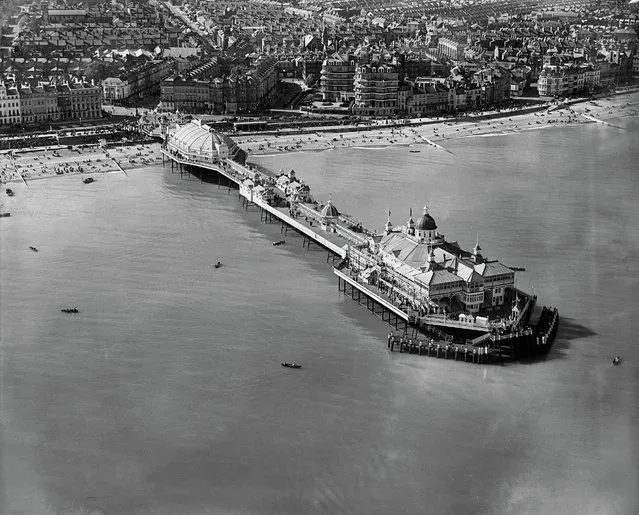
While the lido was described as bringing “modernism to the masses” on the British coast it was just the latest example of a trend that had been developing since Victorian times – transforming seaside towns into resorts for leisure and entertainment. In the latter half of the nineteenth century, the fashion was for local authorities to build great piers stretching from the promenade out into the sea

While the lido was described as bringing “modernism to the masses” on the British coast it was just the latest example of a trend that had been developing since Victorian times – transforming seaside towns into resorts for leisure and entertainment. In the latter half of the nineteenth century, the fashion was for local authorities to build great piers stretching from the promenade out into the sea. The Eastbourne Pier, pictured here in May 1931, was erected between 1866 and 1870 to an ingenious design by Eugenius Birch, which saw the structure sitting on special cups allowing the supporting struts to “move” in bad weather. Arranged on the pier's 1,000-foot length were kiosks, a theatre, a ballroom and a camera obscura. 1931. (Photo by Aerofilms Collection via “A History of Britain From Above”)
Details
25 Feb 2014 12:59:00