Loading...
Done
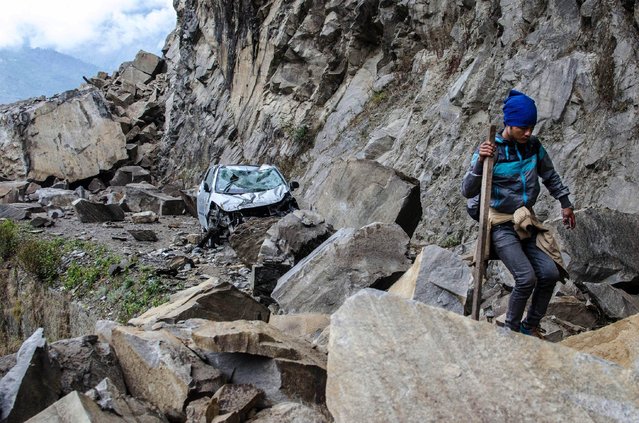
In this Monday, April 27, 2015 photo, a Nepalese man walks over fallen rocks and past a crushed car on the way to Dhunche, Nepal, a village in Langtang National Park, two days after a 7.8-magnatude earthquake hit the region. (Photo by Joe Sieder via AP Photo)

In this Monday, April 27, 2015 photo, a Nepalese man walks over fallen rocks and past a crushed car on the way to Dhunche, Nepal, a village in Langtang National Park, two days after a 7.8-magnatude earthquake hit the region. The photographer, Joe Sieder, said the man was part of a group of Nepalese workers and trekkers who left Syabrubesi earlier that day and hiked about 30 km (19 miles) for 13 hours, mostly over boulder-strewn roads with some small landslides along the way to make their way to a passable road. (Photo by Joe Sieder via AP Photo)
Details
30 Apr 2015 10:54:00
Takeoka Chisaka, Hiroshima, Japan. “One morning in August 1945, I was walking home from the night shift at a factory in Hiroshima. As I reached my door, there was a huge explosion. When I came to, my head was bleeding and I had been blasted 30m away”. (Photo and caption by Sasha Maslov)

Takeoka Chisaka, Hiroshima, Japan. “One morning in August 1945, I was walking home from the night shift at a factory in Hiroshima. As I reached my door, there was a huge explosion. When I came to, my head was bleeding and I had been blasted 30m away. The atomic bomb had detonated. When I found my mother, her eyes were badly burned. A doctor said they had to come out, but he didn’t have the proper tools so used a knife instead. It was hellish. I became a peace-worker after the war. In the 1960s, at a meeting at the UN, I met one of the people who created the atomic bomb. He apologised”. (Photo and caption by Sasha Maslov)
Details
11 May 2015 11:56:00
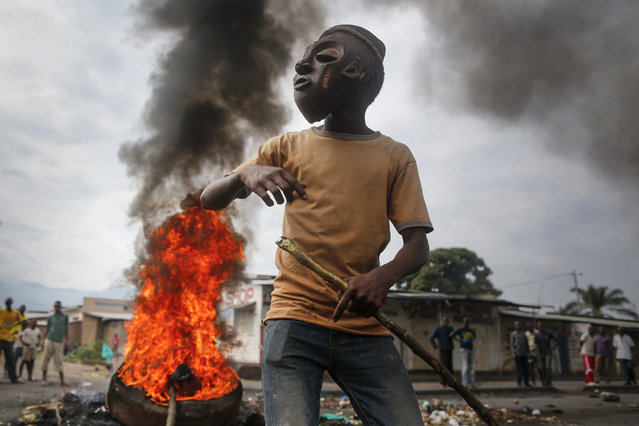
A masked Burundian protester faces soldiers in front of a burning barricade during an anti-government demonstration against President Pierre Nkurunziza's bid for a third term in the capital Bujumbura, Burundi, 25 May 2015. (Photo by Dai Kurokawa/EPA)

A masked Burundian protester faces soldiers in front of a burning barricade during an anti-government demonstration against President Pierre Nkurunziza's bid for a third term in the capital Bujumbura, Burundi, 25 May 2015. Street protests continued on 25 May as the United Nations Secretary-General Ban Ki-moon condemned the killing of the leader of the oppsition party Union for Peace and Development (UPD) Zedi Feruzi who opposed Nkurunziza's bid. (Photo by Dai Kurokawa/EPA)
Details
26 May 2015 11:10:00
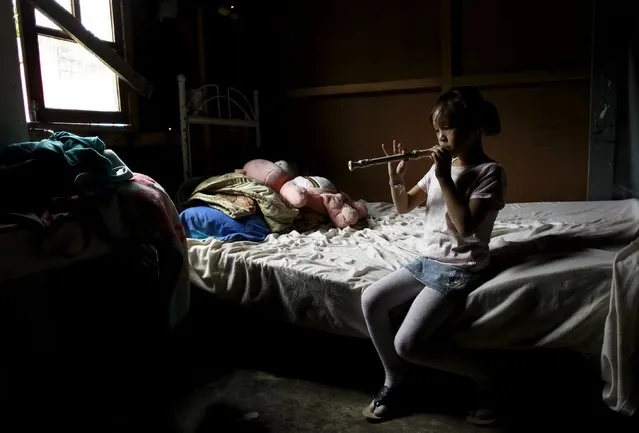
Lisandra Perez, 7, practices in his house before his flute lesson at the Integral System of Artistic Education for Social Inclusion (SIFAIS) center in the poor neighborhood of La Carpio, Costa Rica October 8, 2015. (Photo by Juan Carlos Ulate/Reuters)

Lisandra Perez, 7, practices in his house before his flute lesson at the Integral System of Artistic Education for Social Inclusion (SIFAIS) center in the poor neighborhood of La Carpio, Costa Rica October 8, 2015. SIFAIS center is developing a social program with the help of 156 volunteers who teach art, music, sports and education, for children and youth living in La Carpio, known for being the home to gangs, violence, drugs and social vulnerability, according to the centre. (Photo by Juan Carlos Ulate/Reuters)
Details
15 Oct 2015 08:02:00
Portal To Hell

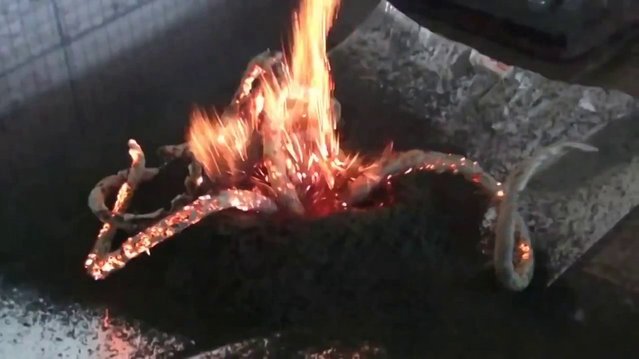
If we were to burn NH4Cr2O7 with HgSCN in the Dark Ages in Europe and show it to anyone, it is us who would be burning next on a fiery cross of Inquisition. And it’s no wonder, since this experiment produces a truly marvelous result. At first, as you ignite the mixture of NH4Cr2O7 and HgSCN, all you can see is that it is slowly burning with a reddish flame. After a while, however, a crater is formed in the middle of the burning pile, and then, suddenly, tentacle-like appendages start sprouting from the burning mixture. And you can almost hear the scream of the mad occultist – “Come forth, Kraken! Come forth!” But of course, this is simply a chemical reaction that is called the "Pharoah's Serpent". It was also often sold in firework stores until people realized that it was toxic.
Details
01 Dec 2014 13:51:00
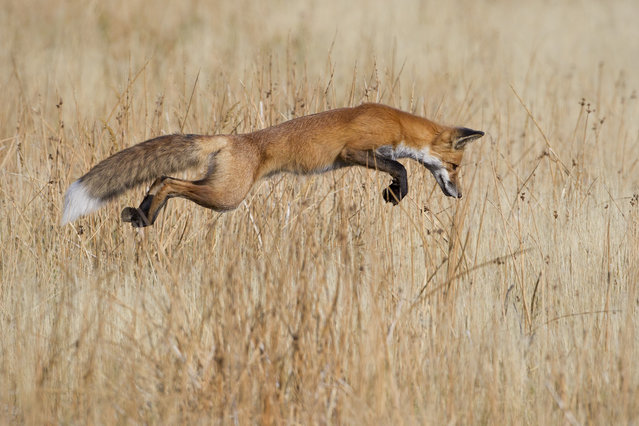
Canada: “Lucky pounce”. (Photo by Connor Stefanison/Wildlife Photographer of the Year 2013)

The winners of The London’s Natural History Museum's prestigious Wildlife Photographer of the Year for 2013 have finally been unveiled. Selected from almost 43,000 entries from 96 countries, the winners offer a glimpse of the stunning array of natural beauty on our planet. Photo: Canada: “Lucky pounce”. “Anticipating the pounce – that was the hardest part”, says Connor, who had come to Yellowstone National Park, Wyoming, USA, in search of wildlife as much as the spectacular landscape. He had found this fox, his first ever, on his last day in the park. It was so absorbed in hunting that Connor had plenty of time to get out of the car and settle behind a rock. It quartered the grassland, back and forth, and then started staring intently at a patch of ground, giving Connor just enough warning of the action to come. When it sprung up, Connor got his shot. And when it landed, the fox got his mouse. (Photo by Connor Stefanison/Wildlife Photographer of the Year 2013)
Details
17 Oct 2013 08:12:00
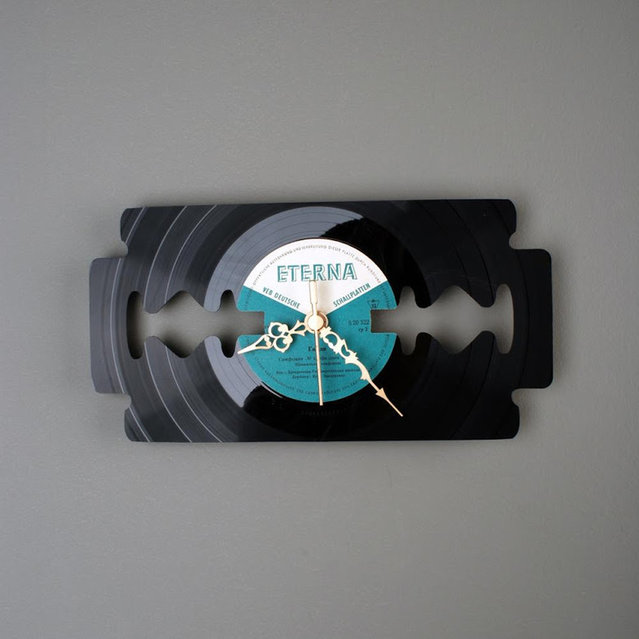
Vinyl Clock By Pavel Sidorenko Part 1

Pavel Sidorenko is an award winning Estonian designer who was born in 1980 in Tallinn and studied product design at Estonian Academy of Arts and Graduated in 2006. Not only does he incorporate pragmatic necessity, but also transmits an emotional qualities within the everyday environment. His fantastic collection of Re Vinyl designs are a result of upcycling a product fashioned from old vinyl records. Beautifully crafted and working with a range of themes from scenography to animal creatures, there is sure to be something for everyone with these stylish selection of recycled vinyl clocks!


See also:Part 2
Details
28 Feb 2014 08:55:00
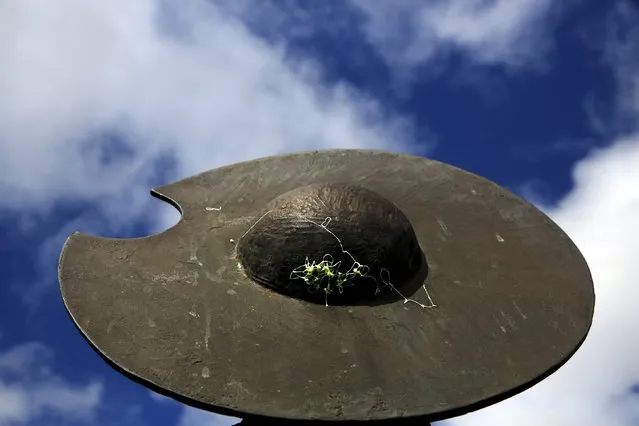
A sculpture of Don Quixote shows him wearing the basin he mistook for the enchanted helmet of the fictional Moorish king Mambrino in Alcazar de San Juan, Spain, April 5, 2016. (Photo by Susana Vera/Reuters)

A sculpture of Don Quixote shows him wearing the basin he mistook for the enchanted helmet of the fictional Moorish king Mambrino in Alcazar de San Juan, Spain, April 5, 2016. The arid central Spanish region of La Mancha is the setting for “Don Quixote”, the seventeenth-century novel by Miguel de Cervantes. Four hundred years after his death, references to the characters of Don Quixote, his loyal squire Sancho Panza and his beautiful lady Dulcinea abound in the surrounding villages from sweet treats to theatre productions involving livestock. Cervantes did not give away the name of the birthplace of Don Quixote, a middle-aged gentleman who becomes obsessed with chivalrous ideals. But many identify the village of Argamasilla de Alba as his hometown. The anniversary of Cervantes’ death is marked on the 23 April. (Photo by Susana Vera/Reuters)
Details
21 Apr 2016 12:32:00