Loading...
Done
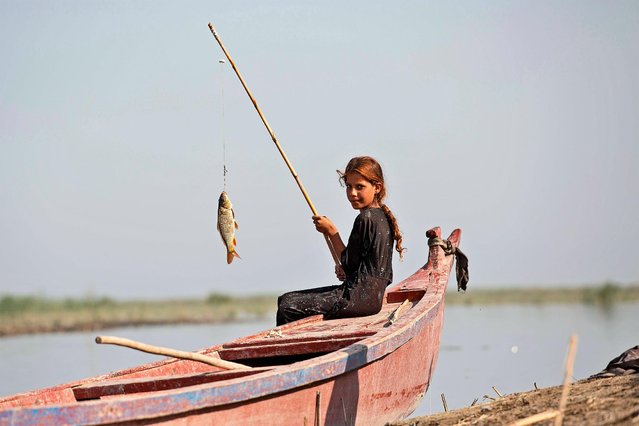
A girl catches a fish in the marshes of the southern district of Chibayish in Dhi Qar province, about 120 kilometres northwest of the southern city of Basra, on September 23, 2020. Iraq's southern marshes are blossoming thanks to a wave of ecotourists picnicking and paddling down their replenished river bends. (Photo by Hussein Faleh/AFP Photo)

A girl catches a fish in the marshes of the southern district of Chibayish in Dhi Qar province, about 120 kilometres northwest of the southern city of Basra, on September 23, 2020. Iraq's southern marshes are blossoming thanks to a wave of ecotourists picnicking and paddling down their replenished river bends. (Photo by Hussein Faleh/AFP Photo)
Details
18 Oct 2020 00:01:00
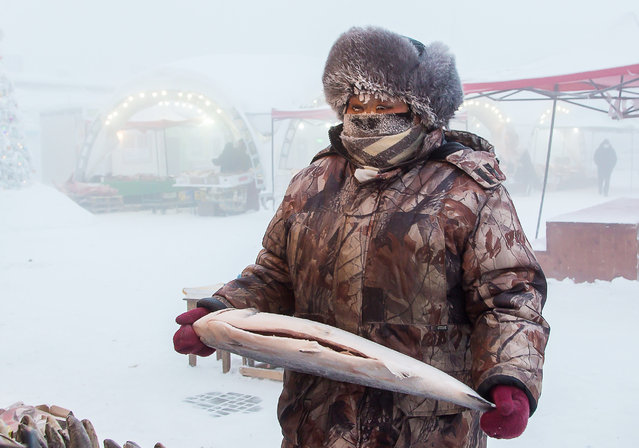
A vendor sells fish at Central Market in freezing conditions of minus 43 degrees Celsius in the city of Yakutsk, Sakha (Yakutia), Russia on December 13, 2020. The winters in Yakutsk are extremely cold and long and the summers short and warm, with temperatures sometimes rising above 30C. (Photo by Yevgeny Sofroneyev/TASS)

A vendor sells fish at Central Market in freezing conditions of minus 43 degrees Celsius in the city of Yakutsk, Sakha (Yakutia), Russia on December 13, 2020. The winters in Yakutsk are extremely cold and long and the summers short and warm, with temperatures sometimes rising above 30C. (Photo by Yevgeny Sofroneyev/TASS)
Details
30 Dec 2020 00:01:00
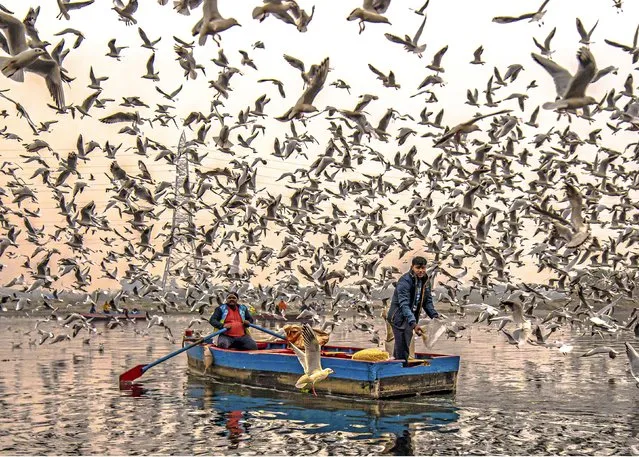
Flocks of seagulls swarm small fishing boats in the first decade of January 2024 like a scene from Alfred Hitchcock’s The Birds. Colonies of Heuglin’s gulls can be seen almost every morning on the Yamuna River in Delhi, India. (Photo by Raghav Rai Ralhan/Solent News)

Flocks of seagulls swarm small fishing boats in the first decade of January 2024 like a scene from Alfred Hitchcock’s The Birds. Colonies of Heuglin’s gulls can be seen almost every morning on the Yamuna River in Delhi, India. (Photo by Raghav Rai Ralhan/Solent News)
Details
20 Jan 2024 09:18:00
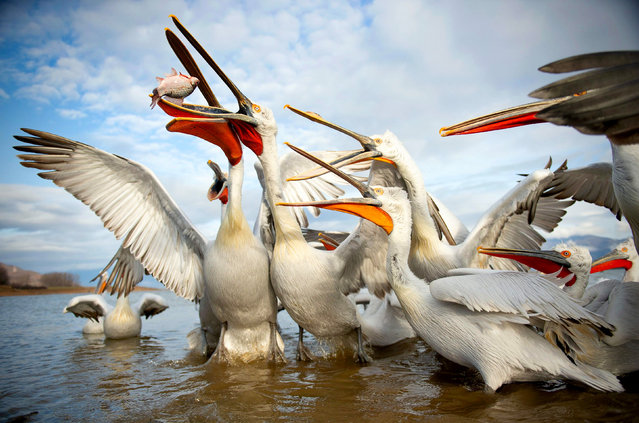
Dalmatian pelicans jostle over a fish meal on September 9, 2021. Every year about 100 of the birds fly to feast at Lake Kerkini, central Macedonia, Greece. (Photo by Peter Bradley/Solent News & Photo Agency/Solent News)

Dalmatian pelicans jostle over a fish meal on September 9, 2021. Every year about 100 of the birds fly to feast at Lake Kerkini, central Macedonia, Greece. (Photo by Peter Bradley/Solent News & Photo Agency/Solent News)
Details
03 Jul 2025 02:41:00
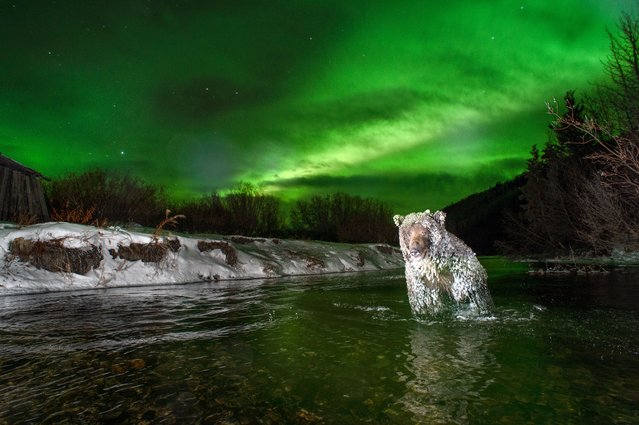
A grizzly bear fishes for salmon under the Northern Lights in Klukshu, Yukon, in the north of Canada on March 3, 2025. The bear makes use of the darkness because the salmon can't see well enough to swim away. (Photo by Peter Mather/Solent News & Photo Agency)

A grizzly bear fishes for salmon under the Northern Lights in Klukshu, Yukon, in the north of Canada on March 3, 2025. The bear makes use of the darkness because the salmon can't see well enough to swim away. (Photo by Peter Mather/Solent News & Photo Agency)
Details
19 Nov 2025 04:56:00
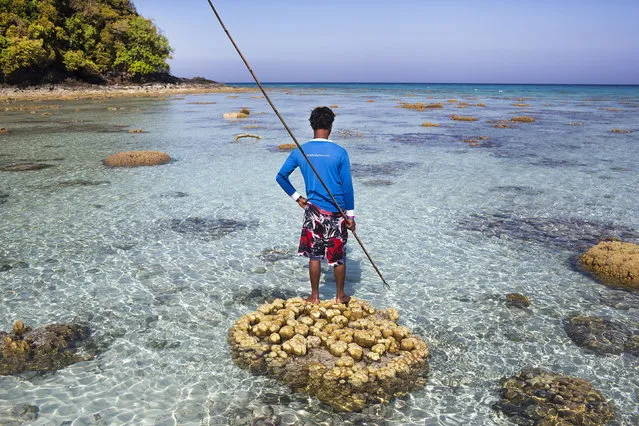
Hook, an indigenous Moken man, holds a three-pronged throwing spear and searches for fish in the waters of Ko Surin National Park. March 1, 2013 – Ko Surin, Thailand. (Photo by Taylor Weidman/zReportage via ZUMA Press)

“For centuries, the Moken sea nomads have traveled the islands between Thailand and Myanmar fishing and foraging for food on the sea floor. Throughout the Mergui Archipelago, Moken migrate in flotillas of Kabangs (traditional boat of the Moken people), stopping at different islands and beaches. Expert freedivers, the Moken have adapted physically to an aquatic life, developing unique characteristics that let them see better and hold their breath longer while underwater”. – Taylor Weidman. Photo: Hook, an indigenous Moken man, holds a three-pronged throwing spear and searches for fish in the waters of Ko Surin National Park. March 1, 2013 – Ko Surin, Thailand. (Photo by Taylor Weidman/zReportage via ZUMA Press)
Details
24 Mar 2014 06:45:00
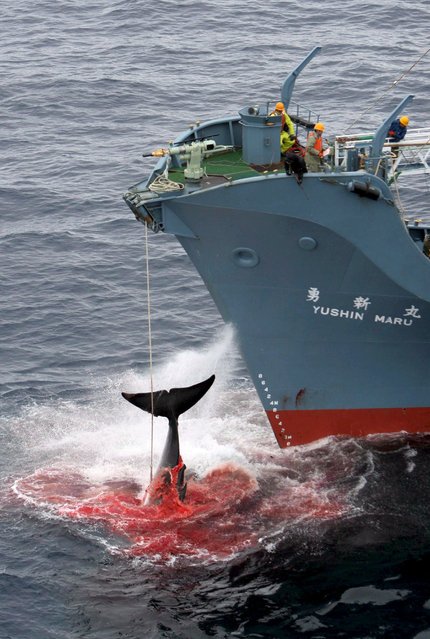
A file photograph dated 07 January 2006 and released by Greenpeace, showing the Yushin Maru, a factory ship in a Japanese whaling fleet, injuring a whale with it's first harpoon attempt. A UN court in The Hague on 31 March 2014 halted Japan's much-criticized whaling programme, ruling that it contravenes a 1986 moratorium on whale hunting. Japan must end its 'research whaling' programme, the International Court of Justice (ICJ) said. (Photo by Kate Davison/EPA)

A file photograph dated 07 January 2006 and released by Greenpeace, showing the Yushin Maru, a factory ship in a Japanese whaling fleet, injuring a whale with it's first harpoon attempt. A UN court in The Hague on 31 March 2014 halted Japan's much-criticized whaling programme, ruling that it contravenes a 1986 moratorium on whale hunting. Japan must end its 'research whaling' programme, the International Court of Justice (ICJ) said. Japan said the programme was for scientific research and permitted under international conventions. Australia had brought the case to the ICJ in 2010, charging that Japan was breaching international law by killing hundreds of whales every year for commercial purposes. Japan was “deeply disappointed” by the ruling, an unnamed government official was quoted by the Kyodo News agency as saying. But the official said Japan would stand by the ruling. (Photo by Kate Davison/EPA)
Details
01 Apr 2014 08:38:00
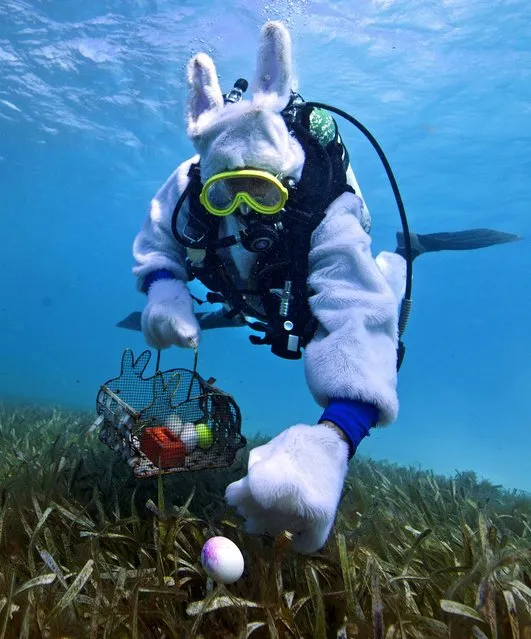
Spencer Slate, costumed as a scuba-diving Easter bunny, is shown in this handout photo provided by the Florida Keys News Bureau as he hides eggs amid eel grass, in the Florida Keys National Marine Sanctuary off Key Largo, Florida March 31, 2013. About 80 adults and children participated in an Underwater Easter Egg Hunt, seeking real hard-boiled eggs painted with non-toxic food coloring to avoid adverse effects on the marine ecosystem. (Photo by Bob Care/Reuters/Florida Keys News Bureau)

Spencer Slate, costumed as a scuba-diving Easter bunny, is shown in this handout photo provided by the Florida Keys News Bureau as he hides eggs amid eel grass, in the Florida Keys National Marine Sanctuary off Key Largo, Florida March 31, 2013. About 80 adults and children participated in an Underwater Easter Egg Hunt, seeking real hard-boiled eggs painted with non-toxic food coloring to avoid adverse effects on the marine ecosystem. (Photo by Bob Care/Reuters/Florida Keys News Bureau)
Details
02 Apr 2013 12:33:00