Loading...
Done
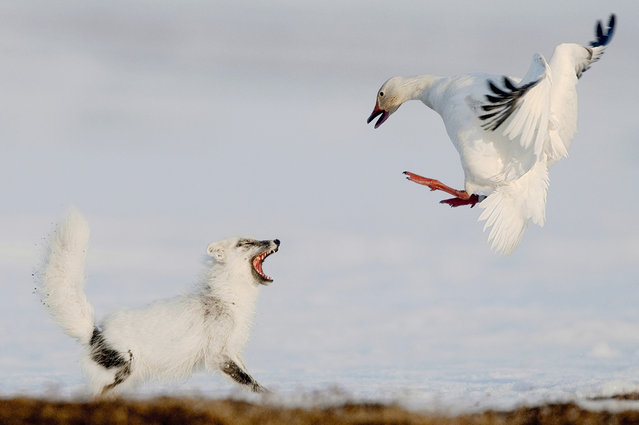
Commended. In late May, about a quarter of a million snow geese arrive from North America to nest on Wrangel Island, in northeastern Russia. They form the world's largest breeding colony of snow geese. Photographer Sergey Gorshkov spent two months on the remote island photographing the unfolding dramas. (Photo by Sergey Gorshkov/Veolia Environnement Wildlife Photographer)

Commended. In late May, about a quarter of a million snow geese arrive from North America to nest on Wrangel Island, in northeastern Russia. They form the world's largest breeding colony of snow geese. Photographer Sergey Gorshkov spent two months on the remote island photographing the unfolding dramas. Arctic foxes take advantage of the abundance of eggs, caching surplus eggs for leaner times. But a goose (here the gander) is easily a match for a fox, which must rely on speed and guile to steal eggs. “The battles were fairly equal”, notes Sergey, “and I only saw a fox succeed in grabbing an egg on a couple of occasions, despite many attempts”. Surprisingly, “the geese lacked any sense of community spirit”, he adds, “and never reacted when a fox harassed a neighboring pair nesting close by”. (Photo by Sergey Gorshkov/Veolia Environnement Wildlife Photographer)
Details
16 Jun 2015 12:30:00
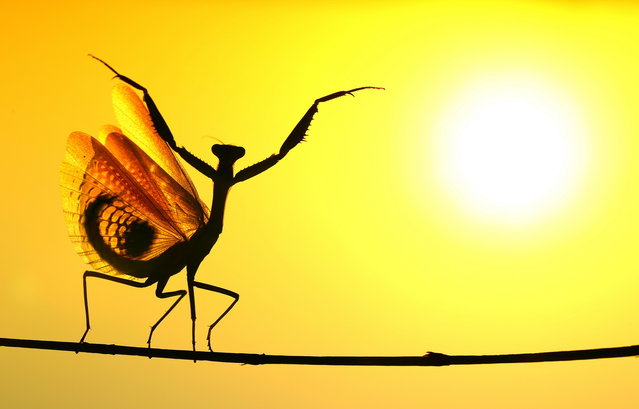
“Sunward”. When the Mediterrenean Mantis opened its wings, It seemed very impressive at the sunshine... Photo location: Nicosia, Cyprus. (Photo and caption by Hasan Baglar/National Geographic Photo Contest)

“Sunward”. When the Mediterrenean Mantis opened its wings, It seemed very impressive at the sunshine... Photo location: Nicosia, Cyprus. (Photo and caption by Hasan Baglar/National Geographic Photo Contest)
Details
01 Oct 2014 10:34:00
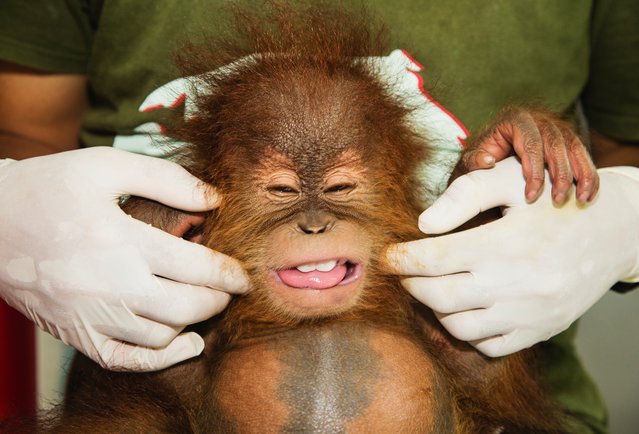
Enjoying a tickle from her keeper, an orphaned orangutan at the SOCP Quarantine Centre in Sumatra, Indonesia on March 20, 2016. The island’s orangutan population has been devastated in recent years as the forest areas are destroyed to make way for palm oil plantations. (Photo by Jami Tarris/Barcroft Media)

Enjoying a tickle from her keeper, an orphaned orangutan at the SOCP Quarantine Centre in Sumatra, Indonesia on March 20, 2016. The island’s orangutan population has been devastated in recent years as the forest areas are destroyed to make way for palm oil plantations. (Photo by Jami Tarris/Barcroft Media)
Details
27 Mar 2016 11:30:00
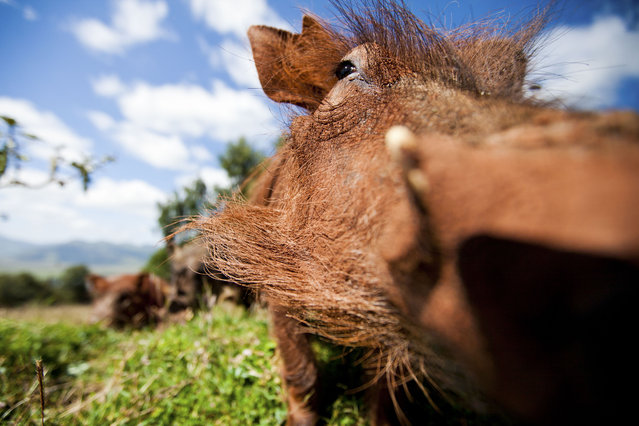
This family of warthogs regularly visited our campsite in the Ethiopian highlands so I set up a remote camera with a wide-angle lens to photograph them as they rummaged around for food. They just had a mud bath. (Photo by Will Burrard-Lucas/Caters News Agency)

This family of warthogs regularly visited our campsite in the Ethiopian highlands so I set up a remote camera with a wide-angle lens to photograph them as they rummaged around for food. They just had a mud bath. (Photo by Will Burrard-Lucas/Caters News Agency)
Details
22 Sep 2019 00:03:00
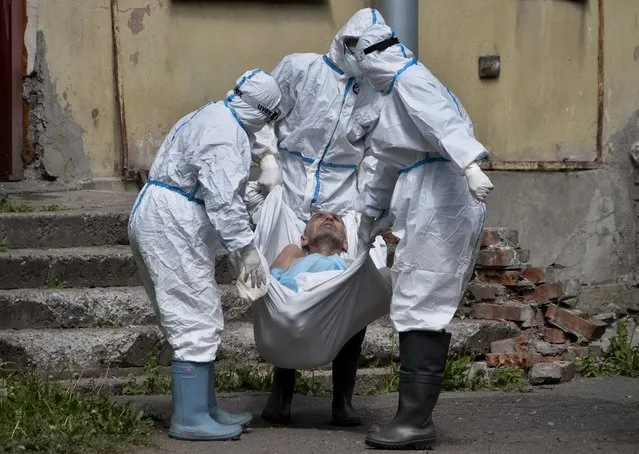
Medical workers wearing protective gear to protect against coronavirus infection, carry a patient at infectious diseases hospital where patients with coronavirus are treated in St.Petersburg, Russia, Wednesday, June 3, 2020. (Photo by Dmitri Lovetsky/AP Photo)

Medical workers wearing protective gear to protect against coronavirus infection, carry a patient at infectious diseases hospital where patients with coronavirus are treated in St.Petersburg, Russia, Wednesday, June 3, 2020. (Photo by Dmitri Lovetsky/AP Photo)
Details
10 Jun 2020 00:03:00
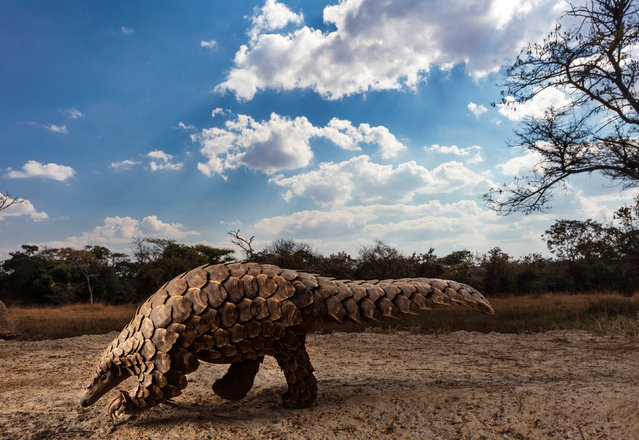
Pangolins in Crisis: Brent Stirton, South Africa; 1st place, Natural world and wildlife. “Pangolins are the world’s most illegally trafficked mammals, with an estimated one million trafficked to Asia in the last 10 years. Their scales are used in traditional Chinese and Vietnamese medicine, and their meat is sold as a high-priced delicacy. As a result, pangolins are listed as critically endangered and anyone who trades or consumes them is breaking the law. This body of work exposes the trade, while exploring aspects of illegality and celebrating the people who are trying to save these animals”. (Photo by Brent Stirton/Sony World Photography Awards 2020)

Pangolins in Crisis: Brent Stirton, South Africa; 1st place, Natural world and wildlife. “Pangolins are the world’s most illegally trafficked mammals, with an estimated one million trafficked to Asia in the last 10 years. Their scales are used in traditional Chinese and Vietnamese medicine, and their meat is sold as a high-priced delicacy. As a result, pangolins are listed as critically endangered and anyone who trades or consumes them is breaking the law. This body of work exposes the trade, while exploring aspects of illegality and celebrating the people who are trying to save these animals”. (Photo by Brent Stirton/Sony World Photography Awards 2020)
Details
11 Jun 2020 00:05:00
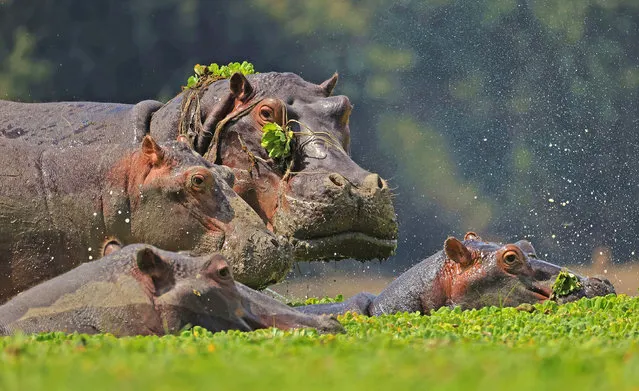
While many of us would pay good money for a spa mud bath, these fortunate hippos in South Luangwa National Park, Zambia, have nature to thank as they take a plunge in a lagoon in the second decade of February 2024. (Photo by Dimitar Nedelchev/Solent News)

While many of us would pay good money for a spa mud bath, these fortunate hippos in South Luangwa National Park, Zambia, have nature to thank as they take a plunge in a lagoon in the second decade of February 2024. (Photo by Dimitar Nedelchev/Solent News)
Details
10 Mar 2024 07:40:00
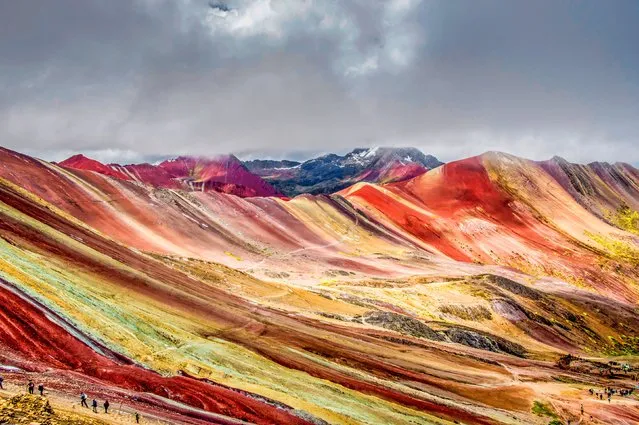
An array of colours dwarf visitors to the Rainbow Mountains in the Andes Cordillera in Peru in January 2023, which owes its colours to the minerals contained in the soil. The sulfur offers the yellow colour, iron oxide gives the red and copper sulfate is green. In total, it is made up of 14 different minerals. It was probably caused by weather and volcanic activity. (Photo by Guillaume Astruc/Naturagency/Solent News & Photo Agenc)

An array of colours dwarf visitors to the Rainbow Mountains in the Andes Cordillera in Peru in January 2023, which owes its colours to the minerals contained in the soil. The sulfur offers the yellow colour, iron oxide gives the red and copper sulfate is green. In total, it is made up of 14 different minerals. It was probably caused by weather and volcanic activity. (Photo by Guillaume Astruc/Naturagency/Solent News & Photo Agenc)
Details
15 Apr 2024 04:02:00