Loading...
Done


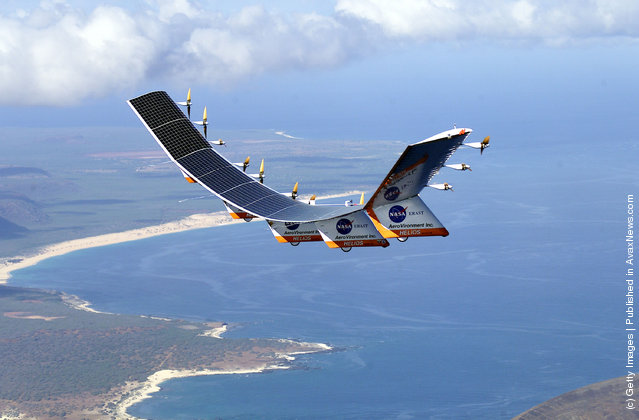
“NASA's Pathfinder, Pathfinder Plus, Centurion and Helios Prototype were an evolutionary series of solar- and fuel-cell-system-powered unmanned aerial vehicles. AeroVironment, Inc. developed the vehicles under NASA's Environmental Research Aircraft and Sensor Technology (ERAST) program. They were built to develop the technologies that would allow long-term, high-altitude aircraft to serve as “atmospheric satellites”, to perform atmospheric research tasks as well as serve as communications platforms”. – Wikipedia

Photo: The solar-electric Helios Prototype flying wing is flies over the Hawaiian islands of Niihau and Lehua during the first solar-powered test flight July 14, 2001 from the U.S. Navy's Pacific Missile Range Facility on Kauai, HI. The 18-hour flight was a functional checkout of the aircraft's systems and performance in preparation for an attempt to reach sustained flight at 100,000 feet altitude later in the summer. (Photo Courtesy of NASA/Getty Images)
Details
14 Jul 2011 09:24:00
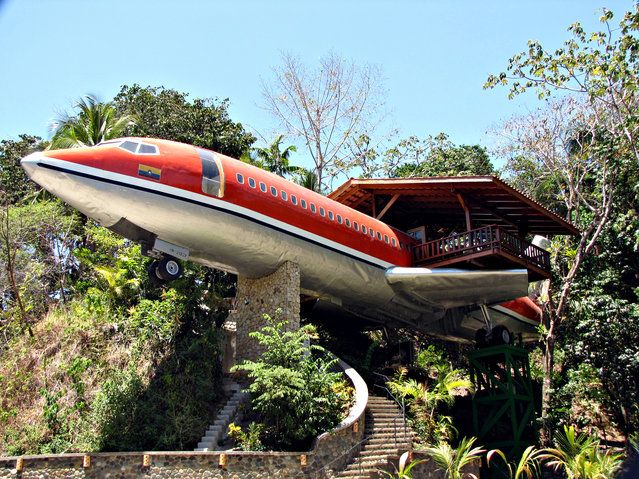
Boeing 727 Airplane Converted In Hotel - Costa Rica

The Costa Verde hotel. It is a fully outfitted two bedroom, Boeing 727 suite in Costa Rica. Located within tropical rainforest, Hotel Costa Verde’s rather unusual fuselage suite consists of a refurbished vintage 1965 Boeing 727 airframe. The aircraft was part of South-Africa Air in her previous life. Sitting atop a 50-foot pedestal just beyond a majestic national park, the remodelled jumbo jet’s interior is entirely Costa Rican teak panelling with Indonesian teak furniture and also features a private entrance up a river rock.
Details
29 Jun 2015 12:05:00
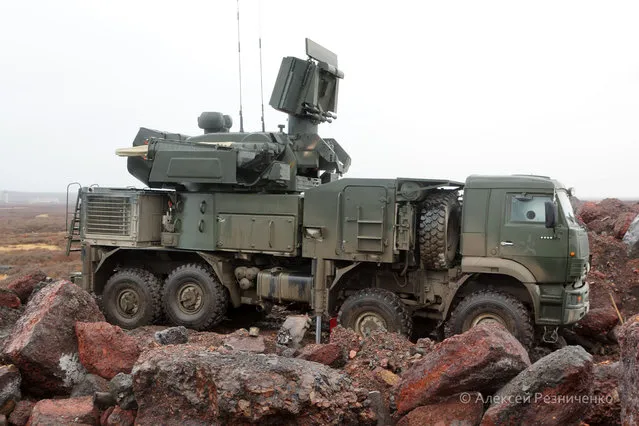
Test of the surface-to-air missile Pantsir-S rocket and gun system

“Pantsir-S1 (NATO reporting name SA-22 Greyhound) is a combined short to medium range surface-to-air missile and anti-aircraft artillery weapon system produced by KBP of Tula, Russia. The system is a further development of SA-19/SA-N-11 and represents the latest air defence technology by using phased-array radars for both target acquisition and tracking”. – Wikipedia

Photo: Test of the surface-to-air missile Pantsir-S rocket and gun system in the conditions of the Polar region on the range “Pemba” near Vorkuta, approximately on October 20 2012. According to the statement of military, during doctrines five cruise missiles from five were destroyed. (Photo by Alexey Reznichenko)

Details
28 Oct 2012 11:27:00
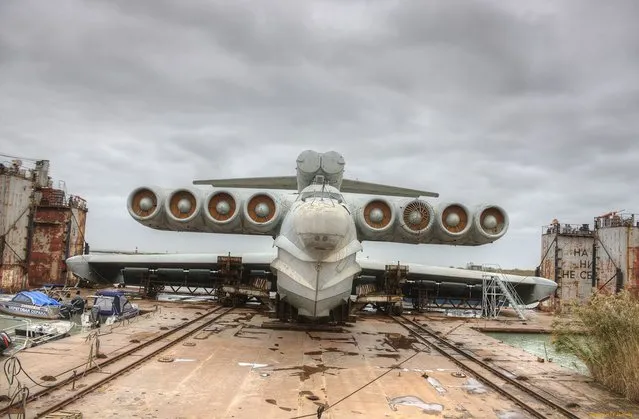
The Lun-class Ekranoplane was used by the Soviet Navy starting in 1987, and wasn't retired until the late 1990s, after the Soviet Union's fall. (Igor113)

“The Lun-class ekranoplan (NATO reporting name Duck) was a ground effect vehicle (GEV) designed by Rostislav Evgenievich Alexeev and used by the Soviet and Russian navies from 1987 until sometime in the late 1990s. It “flew” using the lift generated by the ground effect of its large wings when close to the surface of the water – about four metres or less. Although they might look similar and/or have related technical characteristics, ekranoplans like the Lun are not aircraft, seaplanes, hovercraft, or hydrofoils – ground effect is a separate technology altogether. The International Maritime Organization classifies these vehicles as maritime ships. The name Lun comes from the Russian for harrier”. – Wikipedia (Photo by Igor113)
Details
08 Aug 2014 10:51:00
“The sustainable development goals cannot be met unless waste management is addressed as a priority”, says UK waste management charity Waste Aid. “E-waste is one of the fastest growing categories of the 7-10bn tonnes of waste produced globally every year”, adds director Mike Webster. “In our view, decent waste management is a basic right and we want governments around the world take this issue much more seriously – in 2012 only 0.2% of international aid went on improving solid waste management – it’s just not enough”. (Photo by Kai Loeffelbein/laif Agentur)

Sustainable development goal target 12.5 is to reduce waste. But with a planet increasingly dependent on technology, is that even possible? As of today, over 30m tonnes of electronic waste has been thrown out so far this year, according to the World Counts. Most e-waste is sent to landfills in Asia and Africa where it is recycled by hand, exposing the people who do it to environmental hazards. Kai Loeffelbein’s photographs of e-waste recycling in Guiyu, southern China show what happens to discarded computers. (Photo by Kai Loeffelbein/laif Agentur)
Details
19 Oct 2016 12:14:00
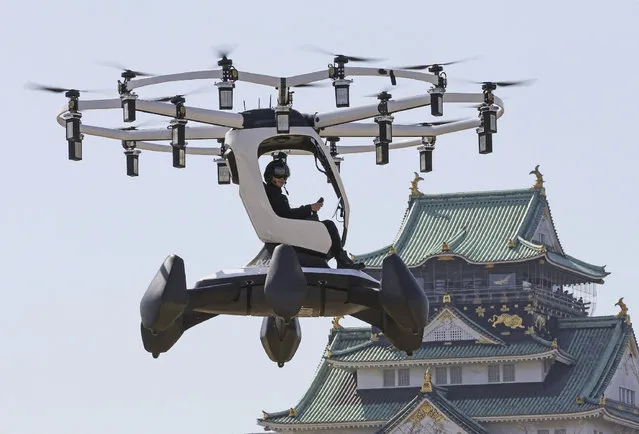
A pilot demonstrates an aircraft manufactured by US-based LIFT Aircraft in front of Osaka Castle in Osaka on March 14, 2023. (Photo by JIJI Press/AFP Phoot)

A pilot demonstrates an aircraft manufactured by US-based LIFT Aircraft in front of Osaka Castle in Osaka on March 14, 2023. (Photo by JIJI Press/AFP Phoot)
Details
28 Mar 2023 03:37:00
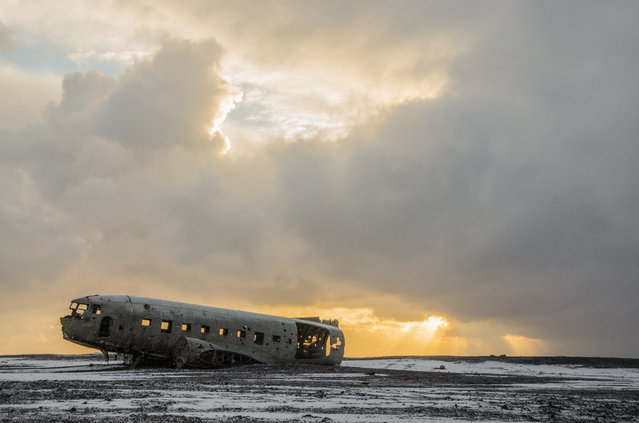
Shortlisted: Sólheimasandur aircraft crash site, Iceland by Ollie Conway. (Photo by Ollie Conway/Historic Photographer of the Year Awards 2019/The Guardian)

Shortlisted: Sólheimasandur aircraft crash site, Iceland by Ollie Conway. (Photo by Ollie Conway/Historic Photographer of the Year Awards 2019/The Guardian)
Details
27 Nov 2019 00:01:00


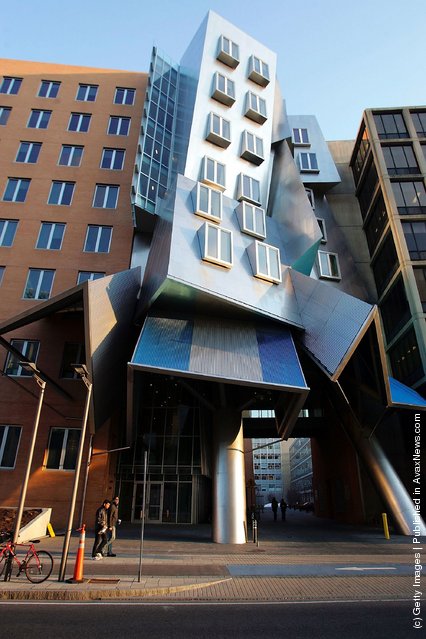
The Ray and Maria Stata Center is shown on the campus of the Massachusetts Institute of Technology February 22, 2006 in Cambridge, Massachusetts. The Institute admitted its first students in 1865 and continues with the mission to advance knowledge and educate students in science, technology, and other areas of scholarship. (Photo by Joe Raedle/Getty Images)
Details
05 Apr 2011 08:54:00