Loading...
Done
Fake Food Hatanaka

Japanese manufacturer Fake Food Hatanaka had the idea to combine the two to create a line of fashion accessories, strange and twisted! From the Fries/Ketchup hairclip to the Pizza bread necklace through the Cheeseburger pendant, the bacon & eggs headbands or even spaghetti bolognaise earrings and necklace sausages, here is some ultra-realistic and WTF Japanese gadgets to turn Fake Food / Fast Food into fashion accessory!
Details
15 Aug 2013 11:01:00
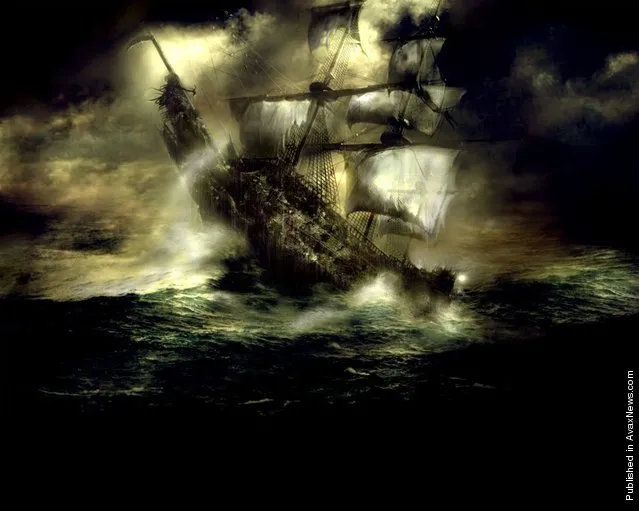
Ocean voyage

Do you think that history is a science? Well, not exactly. First, and foremost, history is the state's “legend of wars”, it’s official regalia. Of course, public historians are not interested in scientific truth – quite the opposite. In this respect, any attempt to present a state’s history as altruistic and benevolent as possible is welcomed and encouraged – as opposed to any revisionism attempts that may be more accurate. In this matter, Chinese have surpassed us all – they revised in highly creative manner (but rather shamelessly) the technology already invented by Europeans, a process that resulted in oldest state on the planet. Here is an interesting paradox: ask any sinologist about the Middle Kingdom during second century B.C., and he will describe it to you in such a vivid manner as if he has been living there all his life – but as soon as you will ask him to describe Chinese history in the 19-20th centuries… let's say, his eagerness will be greatly diminished. However, we will discuss China in a different article, and in the meantime we will try to understand how exactly historic “legend of wars” is formed and functions – based on a specific and well-known example. A great example is Ferdinand Magellan's first voyage around the world.

Details
14 Nov 2011 09:11:00
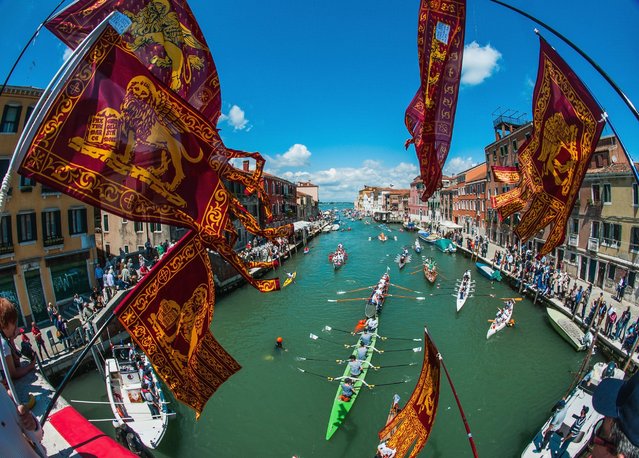
Rowers enter in Canaregio river during the 42nd Venice Vogalonga on May 15, 2016 in Venice, Italy. 42 years ago a group of Venetians, both amateur and professional rowers, came up with an idea of non-competitive race in which any kind of rowing boat can take part. The first Vogalonga began with the message to protest against the growing use of powerboats in Venice and the swell damage they do to the historic city. (Photo by Awakening/Getty Images)

Rowers enter in Canaregio river during the 42nd Venice Vogalonga on May 15, 2016 in Venice, Italy. 42 years ago a group of Venetians, both amateur and professional rowers, came up with an idea of non-competitive race in which any kind of rowing boat can take part. The first Vogalonga began with the message to protest against the growing use of powerboats in Venice and the swell damage they do to the historic city. (Photo by Awakening/Getty Images)
Details
18 May 2016 14:41:00
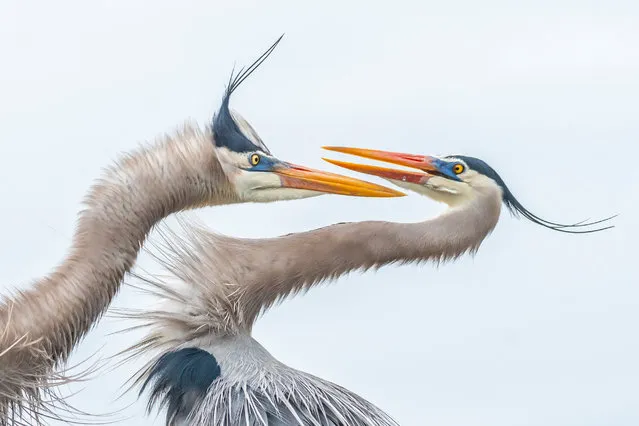
Melissa Rowell, amateur honourable mention. Wakodahatchee wetlands, Delray Beach, Florida, US. Equipped with sinewy necks and spear-like bills, great blue herons can lunge with fearsome speed to strike their aquatic prey. Adults will also employ rapid stabbing motions as one aspect of their complex courtship displays; they’re seemingly dangerous moves, but fitting to the intensity of mating season. (Photo by Melissa Rowell/Audubon photography awards)

Wakodahatchee wetlands, Delray Beach, Florida, US. Equipped with sinewy necks and spear-like bills, great blue herons can lunge with fearsome speed to strike their aquatic prey. Adults will also employ rapid stabbing motions as one aspect of their complex courtship displays; they’re seemingly dangerous moves, but fitting to the intensity of mating season. (Photo by Melissa Rowell/Audubon Photography Awards)
Details
17 Jul 2019 00:03:00
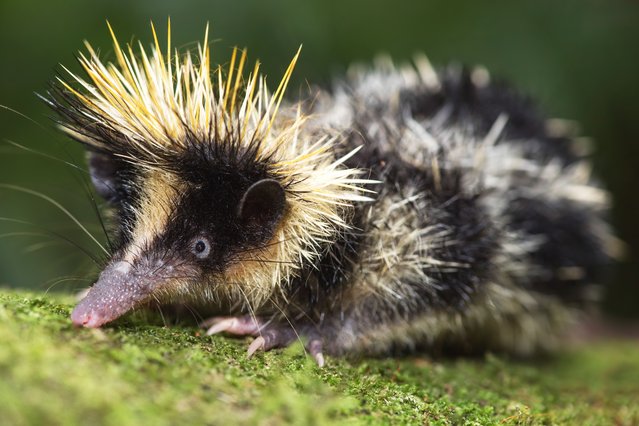
This spiky tenrec was spotted in Madagascar’s Mantadia National Park in the last decade of September 2025. Mostly nocturnal and rarely seen, it puffs out its spines when threatened. Spiky tenrecs are excellent swimmers — unlike most spiny mammals, some species of tenrec can forage in streams and rivers, using their spines for protection while hunting aquatic insects and small prey. (Photo by Dale Morris/Solent News & Photo Agency)

This spiky tenrec was spotted in Madagascar’s Mantadia National Park in the last decade of September 2025. Mostly nocturnal and rarely seen, it puffs out its spines when threatened. Spiky tenrecs are excellent swimmers — unlike most spiny mammals, some species of tenrec can forage in streams and rivers, using their spines for protection while hunting aquatic insects and small prey. (Photo by Dale Morris/Solent News & Photo Agency)
Details
05 Oct 2025 04:02:00
Astronomy Photographer Of The Year 2013 Part2

The Royal Observatory just announced its Astronomy Photographer Of The Year 2013 winners. Australian photographer Mark Gee was chosen among a thousand amateur and professional photographers around the globe to win the top title. His work is part of an exhibition of the winning photographers, which opened on Sept. 19 at the Royal Observatory Greenwich. The Royal Observatory shared with us the winners and notable mentions of the competition. Their descriptions of the prizewinners can be found below the images.
Details
05 Oct 2013 12:23:00
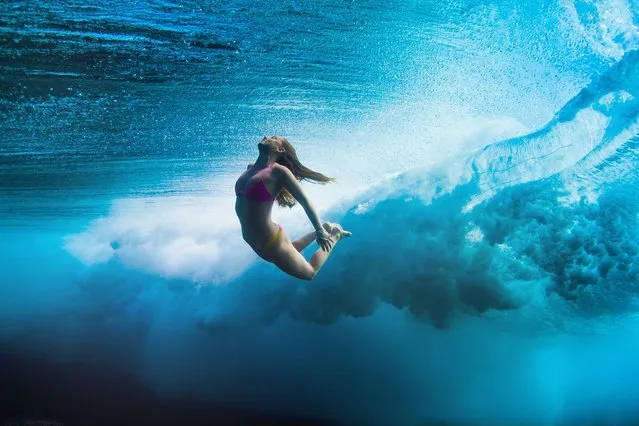
A surfer comes free from her surfboard. (Photo by Sarah Lee/Caters News)

Underwater photographer Sarah Lee uses a technique known as “duck diving” to capture these stunning photos of surfers in Hawaii. Surfers “duck dive” under the water to avoid incoming waves so they can get further out to sea. Photo: A surfer comes free from her surfboard. (Photo by Sarah Lee/Caters News)
Details
24 Jun 2013 12:37:00
Dan surrounded by seven days of her own rubbish in Pasadena, California. (Photo by Gregg Segal/Barcroft Media)

Dan surrounded by seven days of her own rubbish in Pasadena, California. If you've never thought about how much rubbish you throw away an honest photographic series will open your eyes. Men, women, couples and families with young children have been photographed lying on their backs surrounded by a week's worth of their own rubbish – from old cartons of milk, used nappies and even tampons. The startling series “Seven Days of Garbage” by Californian photographer Gregg Segal is an unforgettable reminder of the amount of waste a human collects in just seven days. (Photo by Gregg Segal/Barcroft Media)
Details
16 Jul 2014 14:41:00