Loading...
Done
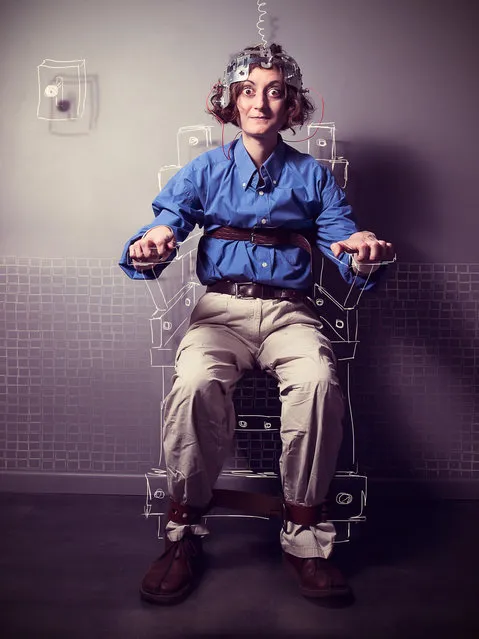
Short circuit

“Throughout those last months photography has grown in me. It has become a part of my life and I wouldn’t have it any other way. Flickr is my small theater, hope you'll enjoy the show”. – ShmilebliK

Photo: Short circuit, 2012 (Photo by ShmilebliK)
Details
07 Jun 2012 10:29:00
Road Trip! (Photo by Thad Lawrence)

Interesting photos which can't be united in a certain series quite often come across to me. Therefore I publish simply a small group of separate pictures – enjoy, if it's interesting to you. Photo: “Road Trip!” (Photo by Thad Lawrence)

Details
05 Oct 2012 09:58:00
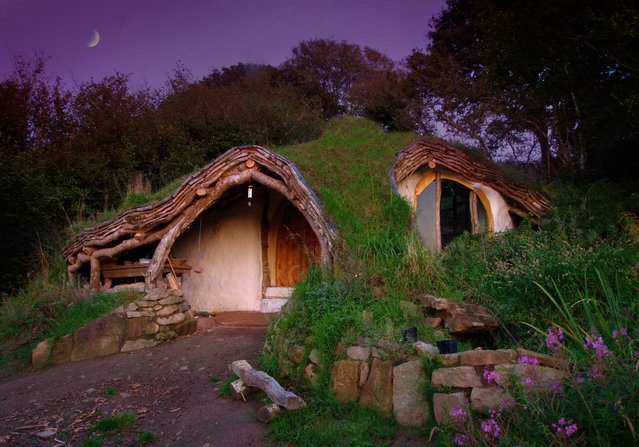
Hobbit house by Simon Dale

You are looking at pictures of a house I built for our family in Wales. It was built by myself and my father in law with help from passers by and visiting friends. 4 months after starting we were moved in and cosy. I estimate 1000-1500 man hours and £3000 put in to this point. Not really so much in house buying terms (roughly £60/sq m excluding labour).
Details
13 Nov 2012 12:48:00
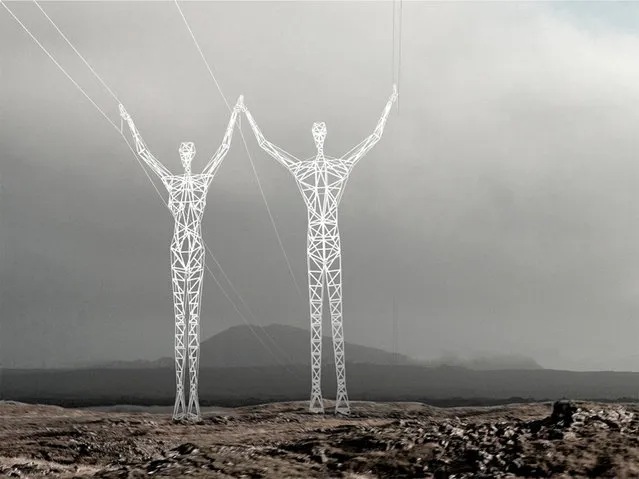
The Land Of Giants By Choi + Shine Architects

Power to the people! Giant transmission tower people that is… We can all agree that transmission towers (that’s an electricity pylon or ironman for you European and Aussie folk) are very necessary yet completely unsightly. These suspension towers dot our landscapes, typically soaring 15-55 meters (49 – 180 ft) high.
Details
07 Jun 2015 09:27:00
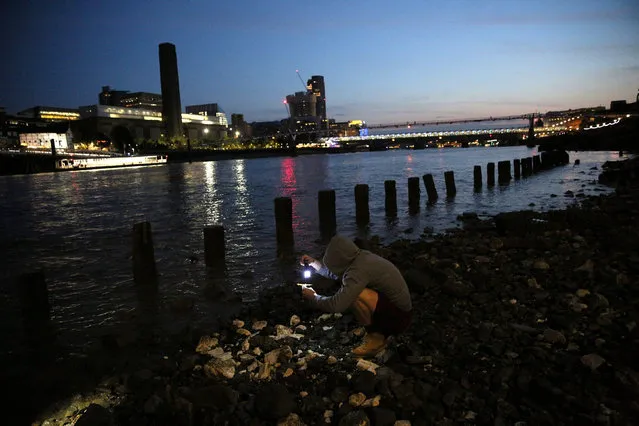
A mudlark uses a torch to look for items on the bank of the River Thames in London, Britain June 06, 2016. Mudlarking is believed to trace its origins to the 18th and 19th century, when scavengers searched the Thames' shores for items to sell. These days, history and archaeology fans are the ones hoping to find old relics such as coins, ceramics, artifacts or everyday items from across centuries. They wait for the low tide and then scour specific areas of exposed shores. "If you're in a field you could be out all day long, with the river you're restricted to about two or three hours," mudlark Nick Stevens said. While many just use the naked eye for their searches, others rely on metal detectors for which a permit from the Port of London Authority is needed. Digging also requires consent. (Photo by Neil Hall/Reuters)

A mudlark uses a torch to look for items on the bank of the River Thames in London, Britain June 06, 2016. Mudlarking is believed to trace its origins to the 18th and 19th century, when scavengers searched the Thames' shores for items to sell. These days, history and archaeology fans are the ones hoping to find old relics such as coins, ceramics, artifacts or everyday items from across centuries. their finds with the Portable Antiquities Scheme. Any item over 300 years old must be recorded. (Photo by Neil Hall/Reuters)
Details
27 Aug 2016 10:43:00
Church Altars By Cyril Porchet

Young Swiss photographer Cyril Porchet’s final year show included this awesome series of the most opulent Baroque church altars he could find in Spain, Austria and Germany. His intention was to explore the seductive power of display. What is extraordinary is how much you lose all sense of perspective and depth, such is the overabundance of detail. I like how the odd feature confuses all the more; like the red rope of the ornamental light in the image below for instance which neatly splices the image in half. I could pore over these for hours and hours.
Details
04 Jul 2014 12:46:00
Christophe Huet – The Master of Retouching. Part1

French retoucher Christophe Huet is a true photoshop Master! His work is fascinating. He is the one who creates the famous advertising for Playstation, but also some for Nike, Motorola, Surfrider Foundation…. I spend an hour on his site looking all of his work, and the Best of all is that he has few working progress slideshows where you can see the process of each image, Like the one above… Its really interesting and inspiring.
Details
21 May 2013 12:29:00
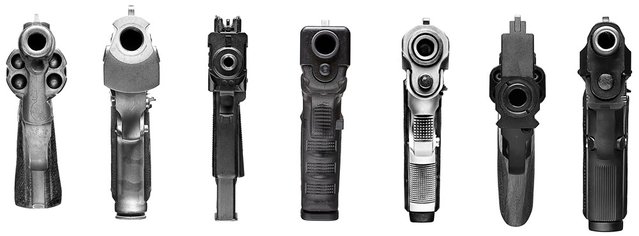
“Point Blank” – Gun Series by Peter Andrew. (Photo by Peter Andrew)

“Guns have a massive amount of power associated with them. They are designed to kill. We decided to photograph portraits of them in a similar way you might photograph a powerful person. Like powerful people, pistols have this “perfect” quality that we wanted to explore. As we started shooting them, we could see flaws in their design. Metal burring around the barrels, scratches in the metal. This imperfection and detail were very interesting to us; connecting us back to these images as portraits”. – Peter Andrew. (Photo by Peter Andrew/Simon Duffy/Derek Blais)
Details
26 Aug 2013 10:03:00