Loading...
Done
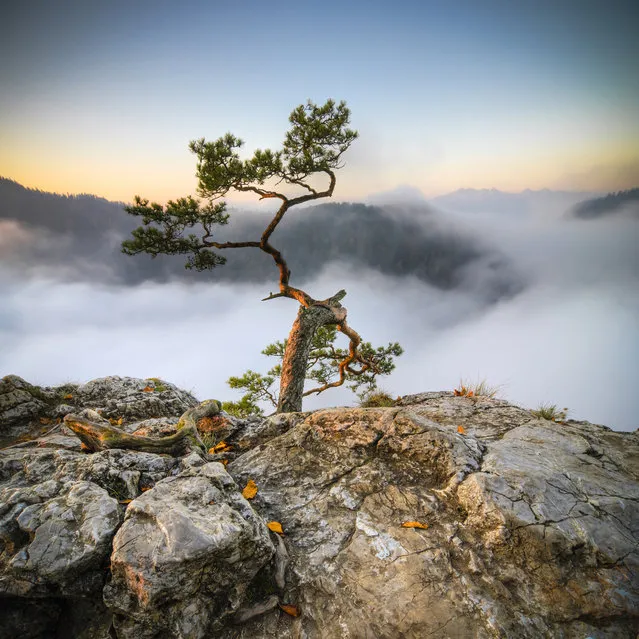
“Sokolica”. Sokolica, Poland. (Photo and caption by Marcin Kęsek/National Geographic Traveler Photo Contest)

“Sokolica”. Sokolica, Poland. (Photo and caption by Marcin Kęsek/National Geographic Traveler Photo Contest)

ATTENTION! All pictures are presented in high resolution. To see Hi-Res images – just TWICE click on any picture. In other words, click small picture – opens the BIG picture. Click BIG picture – opens VERY BIG picture.
Details
25 Jun 2013 09:13:00
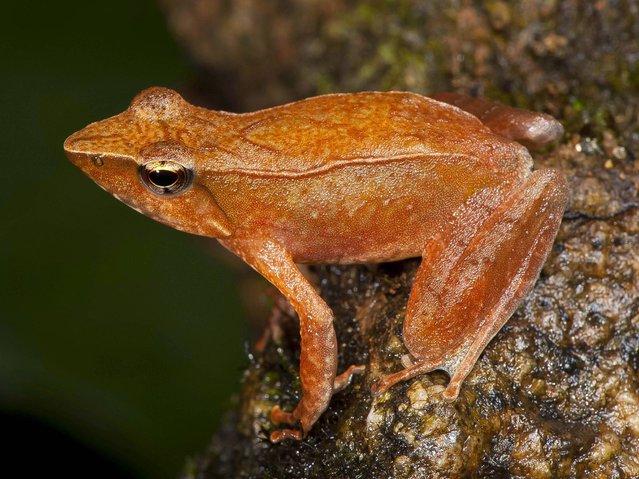
Orange dancing frog discovered by a team headed by University of Delhi professor Sathyabhama Das Biju in the jungle mountains of southern India. (Photo by Satyabhama Das Biju/AP Photo)

This undated photograph shows one of the 14 new species of so-called dancing frogs discovered by a team headed by University of Delhi professor Sathyabhama Das Biju in the jungle mountains of southern India. The study listing the new species brings the number of known Indian dancing frogs to 24 and attempts the first near-complete taxonomic sampling of the single-genus family found exclusively in southern India's lush mountain range called the Western Ghats, which stretches 1,600 kilometers (990 miles) from the west state of Maharashtra down to the country's southern tip. (Photo by Satyabhama Das Biju/AP Photo)
Details
09 May 2014 08:50:00
Totems By Vincent Roche

Vicent Roche, an art director and freelance illustrator from Paris, created five designs in which he presents totems with an artistic perspective.
Details
06 Sep 2014 10:19:00
Lv Mengmeng, who was born in 1995, poses for a photograph in Shanghai August 22, 2014. When asked if she would like siblings, Mengmeng said: “Maybe brothers, because I think they could protect me”. (Photo by Carlos Barria/Reuters)

Reuters Photographer Carlos Barria photographed a person born in each year China's one child policy has been in existence; from a man born in 1979, to a baby born in 2014, and asked them if they would have like to have siblings. Here: Lv Mengmeng, who was born in 1995, poses for a photograph in Shanghai August 22, 2014. When asked if she would like siblings, Mengmeng said: “Maybe brothers, because I think they could protect me”. (Photo by Carlos Barria/Reuters)
Details
06 Oct 2014 08:20:00
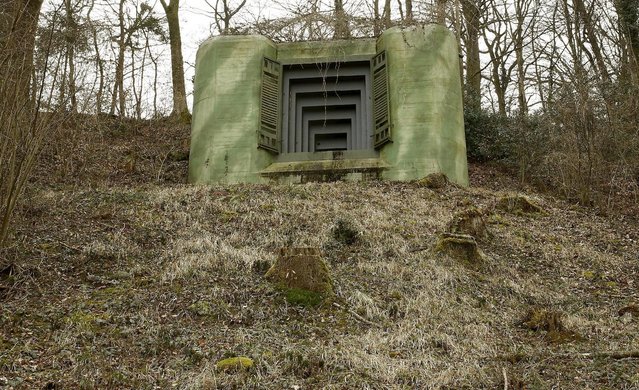
A bunker at aformer Swiss artillery fortress called Heldsberg stands near the town of St. Margareten, Switzerland March 22, 2015. Heldsberg fortress, located on the Swiss-Austrian border near the River Rhine and Lake Constance was built from 1938 to 1940 and remained in military use until 1992. Since 1993 it is open to the public as Fortress Museum Heldsberg. (Photo by Arnd Wiegmann/Reuters)

A bunker at aformer Swiss artillery fortress called Heldsberg stands near the town of St. Margareten, Switzerland March 22, 2015. Heldsberg fortress, located on the Swiss-Austrian border near the River Rhine and Lake Constance was built from 1938 to 1940 and remained in military use until 1992. Since 1993 it is open to the public as Fortress Museum Heldsberg. (Photo by Arnd Wiegmann/Reuters)
Details
09 Jan 2016 08:03:00
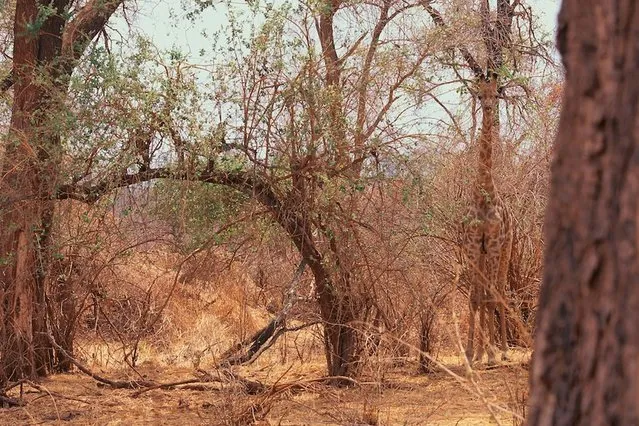
Tall story: Can you spot the giraffe? (Photo by Caters News)

These snaps show a series of crafty critters camouflaged out of view. Many adventurous animals love to stand out from a crowd, but there are times when they need to blend in a bit more too. Photo: Tall story – can you spot the giraffe? (Photo by Caters News)
Details
04 Apr 2014 09:53:00
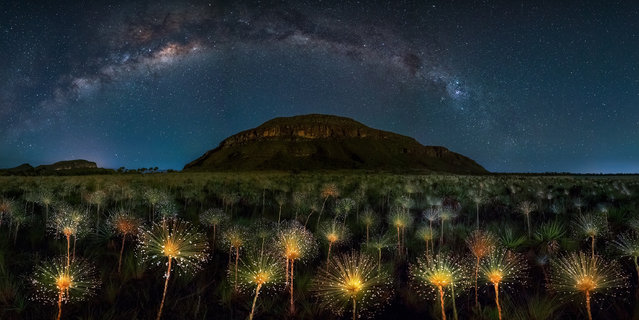
“Paepalanthus at Moonlight” Veadeiros Tablelands, Brazil. (Photo by Marcio Cabral/Epson International Pano Awards 2017)

The Epson International Pano awards showcase the work of the best panoramic photographers from around the world. Here: “Paepalanthus at Moonlight” Veadeiros Tablelands, Brazil. (Photo by Marcio Cabral/Epson International Pano Awards 2017)
Details
24 Nov 2017 05:04:00
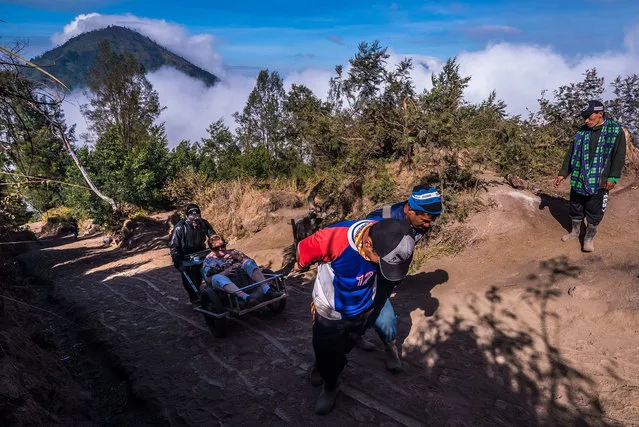
Miners pulling up lazy tourists to the rim of Kawah Ijen (Ijen Volcano), East Java, Indonesia on September 21, 2017. They will earn as much as they would bring down a load of sulfur. Nomadic Explorer, Cultural Lifestyle Photographer Claudio Sieber captured striking images of miners working at Ijen volcanic range in East Java, Indonesia. The sulphur miners risk their lives daily as they climb the active volcano carrying heavy loads, which they sell to sugar refineries. Shortly after midnight curious tourists are flocking in hundreds through the gate of Ijen's foothills to be right on time, driven by the images others took before them. Kawah Ijen is the one of the world's largest acidic volcanic crater lake; famous for its turquoise color as well as the unreal atmosphere it offers during darkness. A dusty path zigzags 3 kilometers up to the crater rim. This doesn't mean anything challenging; in particular, special sights have to be deserved anyway. The irritating smell of sulfur announces the near of the crater's existence. Arriving on the crater's rim the reward for the torture becomes visible. Blue fire darts its tongues through the fumes of sulfur dioxide. Somehow, the spectacle isn't as romantic as expected, since it is also the rough working space of approx. 150 sulfur miners who start their shift at 1 am. Lately, harvesting the abundance of devil's gold received international attention. This did obviously not really improve a miner's lifestyle; neither did it contribute to a better wage. (Photo by Claudio Sieber/Barcroft Images)

Miners pulling up lazy tourists to the rim of Kawah Ijen (Ijen Volcano), East Java, Indonesia on September 21, 2017. They will earn as much as they would bring down a load of sulfur. Nomadic Explorer, Cultural Lifestyle Photographer Claudio Sieber captured striking images of miners working at Ijen volcanic range in East Java, Indonesia. The sulphur miners risk their lives daily as they climb the active volcano carrying heavy loads, which they sell to sugar refineries. (Photo by Claudio Sieber/Barcroft Images)
Details
02 Oct 2017 08:31:00