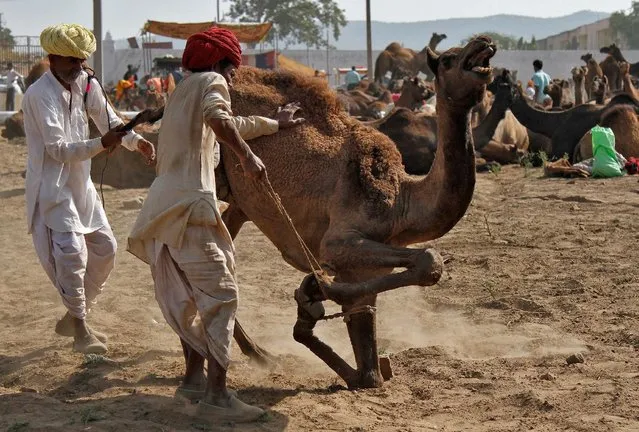
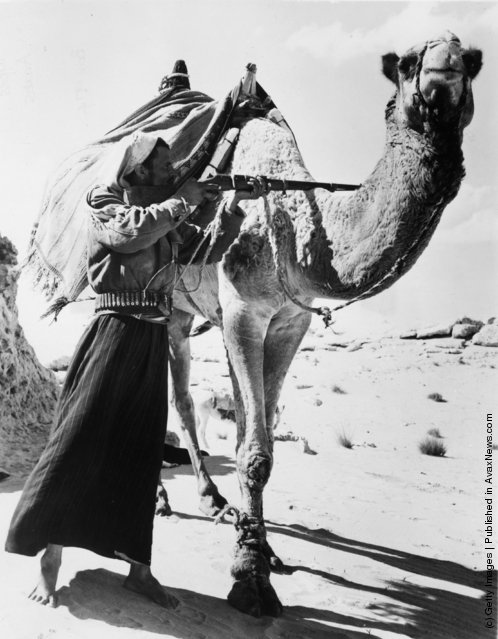
Traders try to control a camel at Pushkar Fair where animals, mainly camels, are brought to be sold and traded in the desert Indian state of Rajasthan November 6, 2016. (Photo by Himanshu Sharma/Reuters)
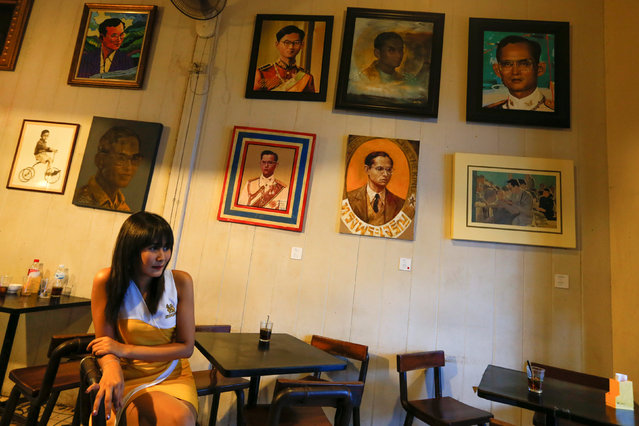
A hostess sits at a restaurant with paintings depicting Thailand's King Bhumibol Adulyadej hanging on a wall in Bangkok, Thailand, June 6, 2016. (Photo by Athit Perawongmetha/Reuters)
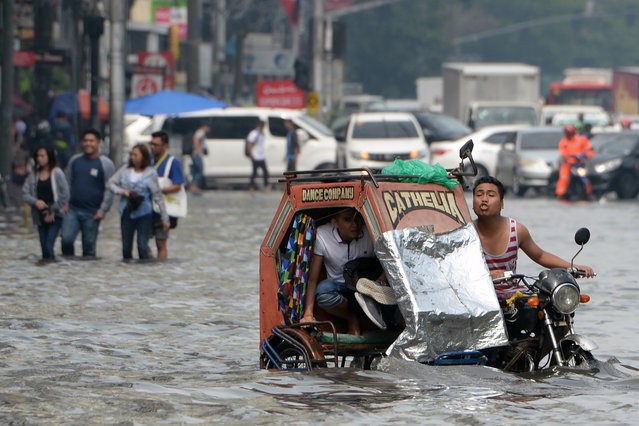
A commuter holding his shoes rides on a tricyle through a flooded street, caused by a heavy downpour brought about by the southwest moonson, in Manila, Philippines on August 2, 2019. (Photo by Ted Aljibe/AFP Photo)
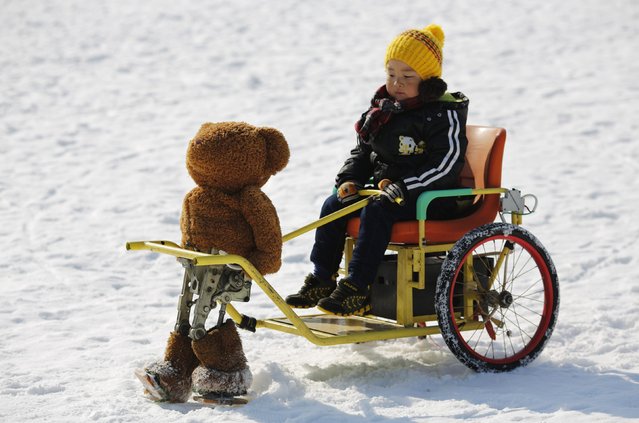
A boy rides on a snow wagon towed by a robot dressed as a Teddy bear, which only moves forward by moving its legs, during the Ice and snow carnival at Taoranting park in Beijing February 9, 2015. (Photo by Kim Kyung-Hoon/Reuters)
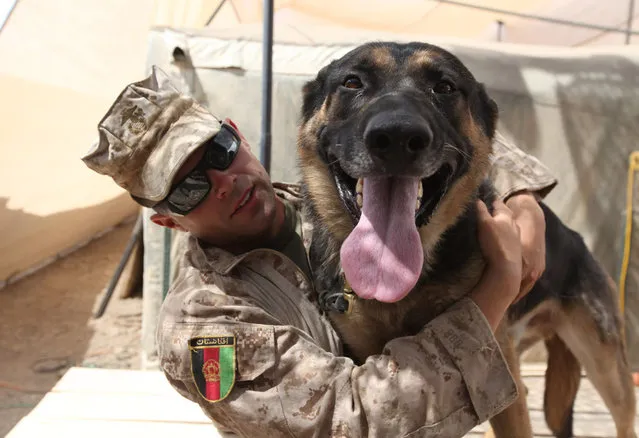
Throughout the course of the long war in Afghanistan, Coalition troops have relied on thousands of military working dogs to help keep them safe, and make their jobs easier. The dogs are trained to detect explosives, to find illegal drugs, to search for missing comrades, or target enemy combatants. Not only are they active on the front lines, but behind the lines they serve as therapy dogs, service dogs, and loyal companions. They also share the same risks as the ground troops, suffering injuries and sometimes death on the battlefields. Gathered here are images of these dogs and their handlers in Afghanistan and back home, from over the past several years, part of the ongoing series here on Afghanistan.
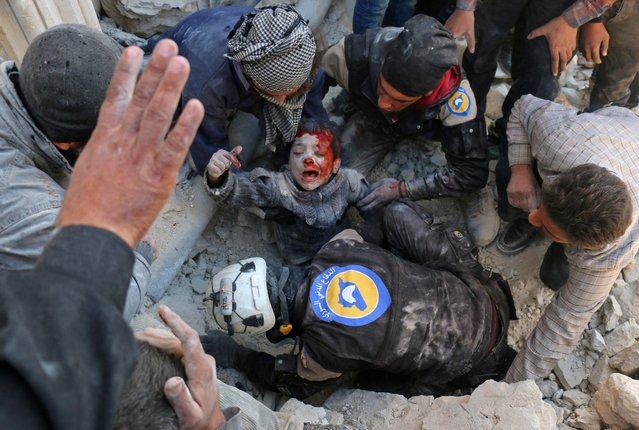
Syrian civil defence volunteers, known as the White Helmets, rescue a boy from the rubble following a reported barrel bomb attack on the Bab al- Nairab neighbourhood of the northern Syrian city of Aleppo on November 24, 2016. (Photo by Ameer Alhalbi/AFP Photo)