Loading...
Done
Magical Contamination By Antoine Bridier-Nahmias

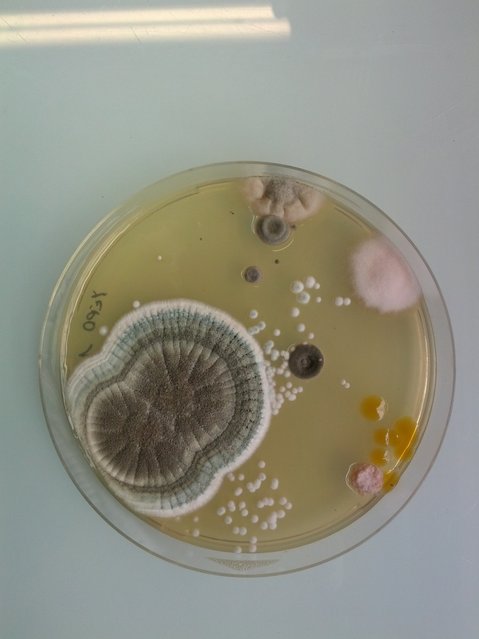
Modern art is truly fascinating. Not in a way that it produces some novel things that will fascinate future generations for decades and even centuries to come. No, that is very far from the truth. On the contrary, modern art is essentially anything (yes, any little thing) that is a bit unusual and was created by a famous person. Let’s take the creation of Antoine Bridier-Nahmias for example. His brainchild is a set of pictures of petri dishes that were contaminated by various cultures of fungi. If this is art, I missed my chance of becoming famous when I accidentally left a piece of bread in a bag in a cupboard for about six months, and didn’t take a picture of the rather shocking results that awaited me when I finally discovered it. (Photo by Antoine Bridier-Nahmias)
Details
12 Dec 2014 13:03:00
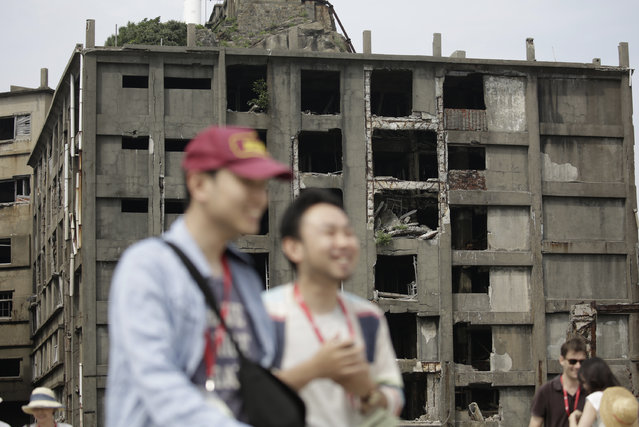
In this June 29, 2015 photo, forlorn buildings are seen at Hashima Island, commonly known as Gunkanjima, which means “Battleship Island”, off Nagasaki, Nagasaki Prefecture, southern Japan. (Photo by Eugene Hoshiko/AP Photo)

In this June 29, 2015 photo, forlorn buildings are seen at Hashima Island, commonly known as Gunkanjima, which means “Battleship Island”, off Nagasaki, Nagasaki Prefecture, southern Japan. The island is one of 23 old industrial facilities seeking UNESCO's recognition as world heritage “Sites of Japan's Meiji Industrial Revolution” meant to illustrate Japan's rapid transformation from a feudal farming society into an industrial power at the end of the 19th century. UNESCO's World Heritage Committee is expected to approve the proposal during a meeting being held in Bonn, Germany, through July 9. (Photo by Eugene Hoshiko/AP Photo)
Details
01 Jul 2015 13:41:00
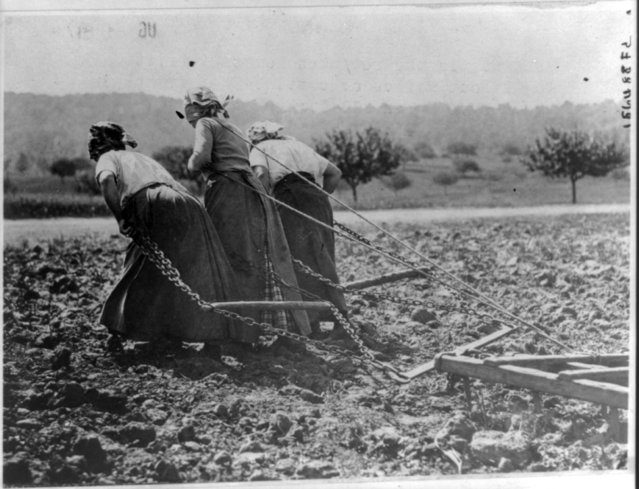
Peasants in the re-taken Somme District work in the fields, circa 1916- 1917, in this Library of Congress handout photo. (Photo by Reuters/Bain Collection/Library of Congress)

Peasants in the re-taken Somme District work in the fields, circa 1916- 1917, in this Library of Congress handout photo. For women 100 years ago, opportunities to work beyond the home and take part in political life were very limited. As the 20th century progressed, hard-won progress included gradually improved voting rights, while the upheaval of war pushed doors ajar as women worked as part of the war effort. U.S. Library of Congress archive photos show women's workplaces ranging from a flour mill in England to a coal mine in Belgium or Lincoln Motor Co.'s welding department in Detroit. International Women's Day is celebrated on March 8. (Photo by Reuters/Bain Collection/Library of Congress)
Details
03 Mar 2016 11:39:00
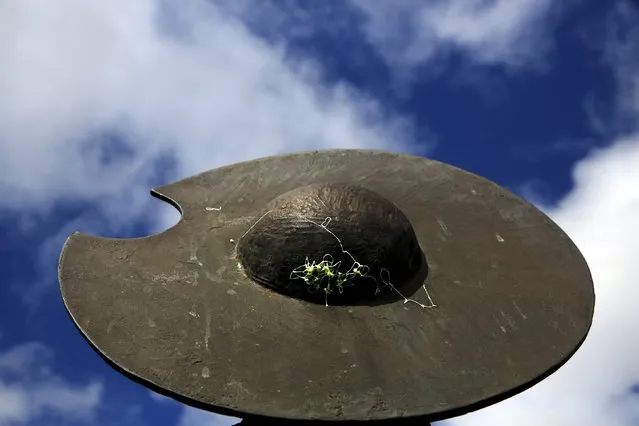
A sculpture of Don Quixote shows him wearing the basin he mistook for the enchanted helmet of the fictional Moorish king Mambrino in Alcazar de San Juan, Spain, April 5, 2016. (Photo by Susana Vera/Reuters)

A sculpture of Don Quixote shows him wearing the basin he mistook for the enchanted helmet of the fictional Moorish king Mambrino in Alcazar de San Juan, Spain, April 5, 2016. The arid central Spanish region of La Mancha is the setting for “Don Quixote”, the seventeenth-century novel by Miguel de Cervantes. Four hundred years after his death, references to the characters of Don Quixote, his loyal squire Sancho Panza and his beautiful lady Dulcinea abound in the surrounding villages from sweet treats to theatre productions involving livestock. Cervantes did not give away the name of the birthplace of Don Quixote, a middle-aged gentleman who becomes obsessed with chivalrous ideals. But many identify the village of Argamasilla de Alba as his hometown. The anniversary of Cervantes’ death is marked on the 23 April. (Photo by Susana Vera/Reuters)
Details
21 Apr 2016 12:32:00
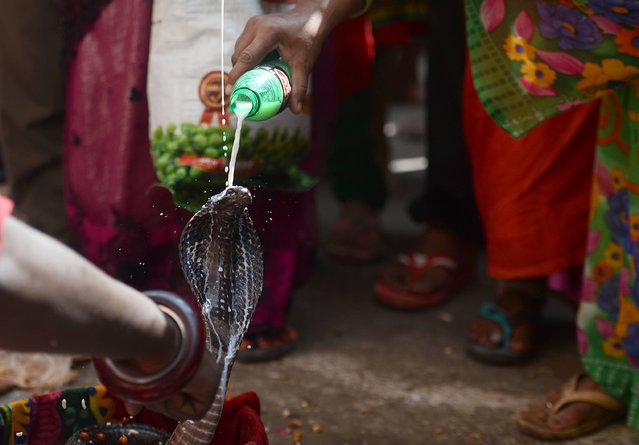
An Indian Hindu devotee pours milk on a snake as an offering during the annual Nag Panchami festival, dedicated to the worship of snakes outside the Nagvasuki temple, in Allahabad, on July 28, 2017. (Photo by Sanjay Kanojia/AFP Photo)

An Indian Hindu devotee pours milk on a snake as an offering during the annual Nag Panchami festival, dedicated to the worship of snakes outside the Nagvasuki temple, in Allahabad, on July 28, 2017. Officially the snake charmers' profession is banned in India, but many in the country offered prayers and milk blessings to cobras and other deadly serpents on July 28 in an annual tribute. The 800,000 charmers and their young apprentices come to the fore for the Nag Panchami festival which dates back several centuries. (Photo by Sanjay Kanojia/AFP Photo)
Details
31 Jul 2017 09:17:00
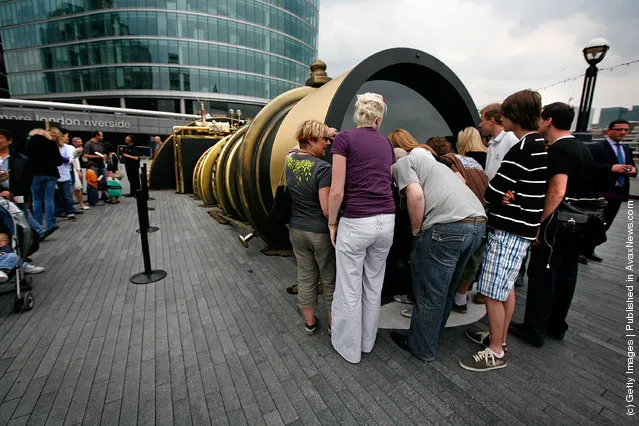
Telectroscope

“The telectroscope (also referred to as “electroscope”) was the first non-working prototype (i.e. conceptual model) of a television or videophone system. The term was used in the 19th century to describe science-based systems of distant seeing. The name and its concept came into being not long after the telephone was patented in 1876, and its original concept evolved from that of remote facsimile reproductions onto paper, into the live viewing of remote images”. – Wikipedia

Photo: Visitors to London wave to people they can see in New York as they peer through the Telectroscope situated by Tower Bridge on May 23, 2008 in London, England. The device named the Telectroscope provides a live visual link up between London and New York, to another Telectroscope by Brooklyn Bridge. (Photo by Cate Gillon/Getty Images)
Details
16 Sep 2011 12:19:00


“Dover Castle is a medieval castle in the town of the same name in the English county of Kent. It was founded in the 12th century and has been described as the “Key to England” due to its defensive significance throughout history. It is the largest castle in England.

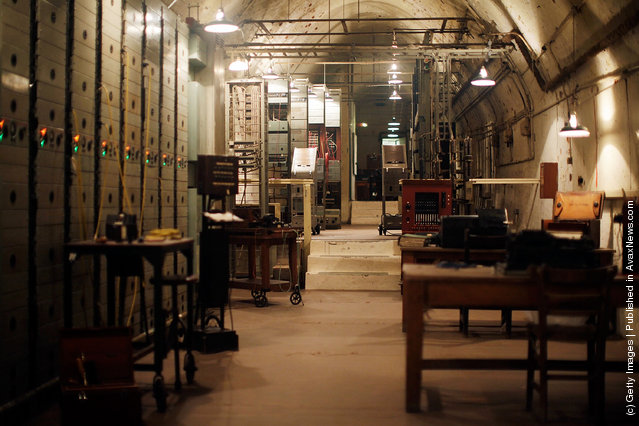
The outbreak of the Second World War in 1939 saw the tunnels converted first into an air-raid shelter and then later into a military command centre and underground hospital. In May 1940, Admiral Sir Bertram Ramsey directed the evacuation of French and British soldiers from Dunkirk, code-named Operation Dynamo, from his headquarters in the cliff tunnels”. – Wikipedia

Photo: The Repeater Station in the subterranean tunnels underneath Dover Castle, which has been restored by English Heritage for a public exhibition on June 3, 2011 in Dover, England. The evacuation of allied soldiers from Dunkirk was masterminded and co-ordinated from the secret command and control centre in the tunnels deep below the castle. (Photo by Matthew Lloyd/Getty Images)
Details
07 Jun 2011 09:26:00
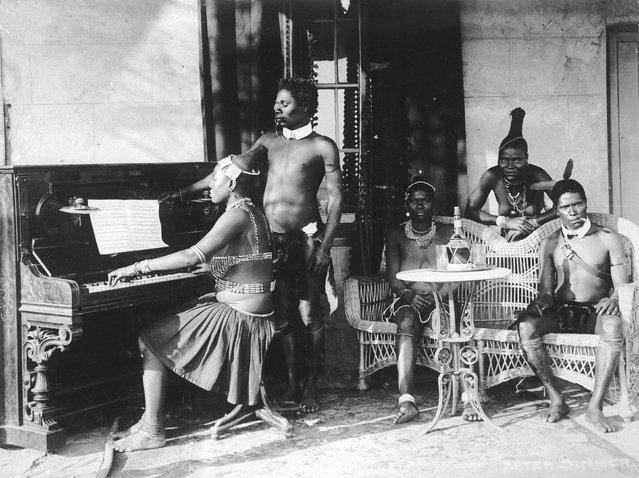
circa 1925:  A Zulu woman playing the piano while a group of others sit and listen.  (Photo by General Photographic Agency/Getty Images)

“The Zulu are the largest South African ethnic group, with an estimated 10–11 million people living mainly in the province of KwaZulu-Natal. Small numbers also live in Zimbabwe, Zambia, and Mozambique. Their language, Zulu, is a Bantu language; more specifically, part of the Nguni subgroup. The Zulu Kingdom played a major role in South African history during the 19th and 20th centuries. Under apartheid, Zulu people were classed as third-class citizens and suffered from state-sanctioned discrimination. They remain today the most numerous ethnic group in South Africa, and now have equal rights along with all other citizens”. – Wikipedia.

Photo: A Zulu woman playing the piano while a group of others sit and listen (to put it briefly, Englishmen scoff over Zulu). South Africa, circa 1925. (Photo by General Photographic Agency)

Details
03 Feb 2014 09:40:00