Loading...
Done
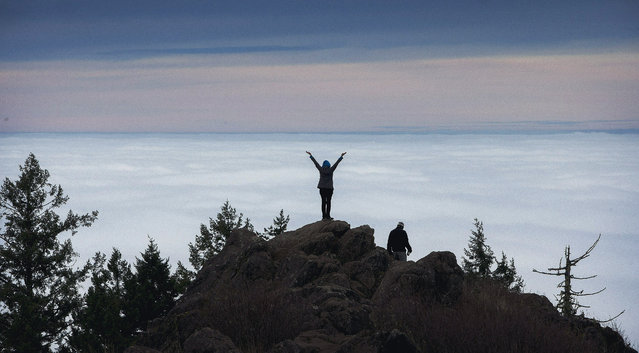
It might have been foggy in the Willamette Valley, but Cerridwen Martin was able to revel in a view of the top of the clouds from the summit of Spencer Butte in Eugene, Ore., on Tuesday, December 16, 2014. (Photo by Andy Nelson/AP Photo/The Register-Guard)

It might have been foggy in the Willamette Valley, but Cerridwen Martin was able to revel in a view of the top of the clouds from the summit of Spencer Butte in Eugene, Ore., on Tuesday, December 16, 2014. Martin was joined by Joe Martinson, right, for the 1.1 mile trek. Fog shrouded much of the city for most of the day. (Photo by Andy Nelson/AP Photo/The Register-Guard)
Details
20 May 2015 09:26:00
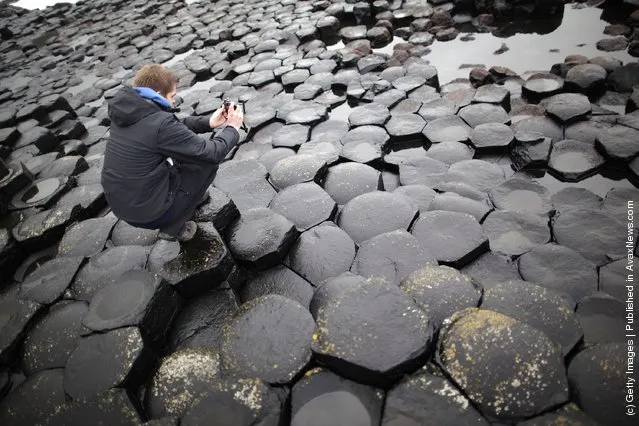
Visitors walk on the Giant's Causway in Portrush, Northern Ireland

“The Giant's Causeway is an area of about 40,000 interlocking basalt columns, the result of an ancient volcanic eruption. It is located in County Antrim on the northeast coast of Northern Ireland, about three miles (4.8 km) northeast of the town of Bushmills. It was declared a World Heritage Site by UNESCO in 1986, and a National Nature Reserve in 1987 by the Department of the Environment for Northern Ireland”. – Wikipedia

Photo: Visitors walk on the Giant's Causway on March 14, 2012 in Portrush, Northern Ireland. (Photo by Peter Macdiarmid/Getty Images)
Details
17 Mar 2012 11:10:00
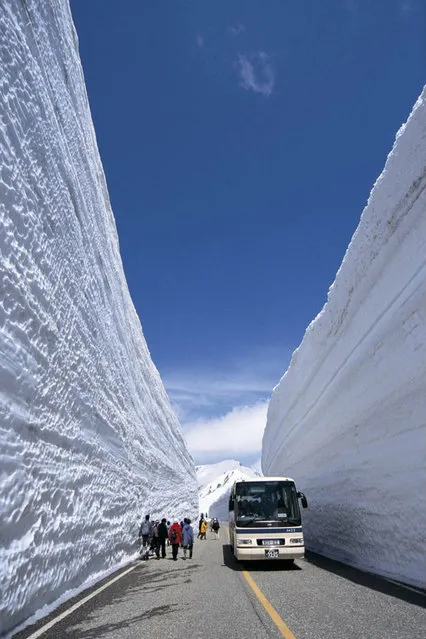
Snow Wall in Japan

The Tateyama Kurobe Alpine Route is an international mountain sightseeing route some 90 kilometers (56 miles) long. The route goes across the 3,000-meter-high North Alpine mountains, the so-called “roof of Japan,” and connects Toyama and Shinano Omachi. You can enjoy the panorama by taking a train, highland bus, trolley bus, cable car, and ropeway. Since the lines opened in June 1971, the Tateyama mountain area has been transformed from an isolated spot into one of the nation’s best sightseeing areas, where a million guests visit every year.
Details
27 Jul 2012 09:28:00
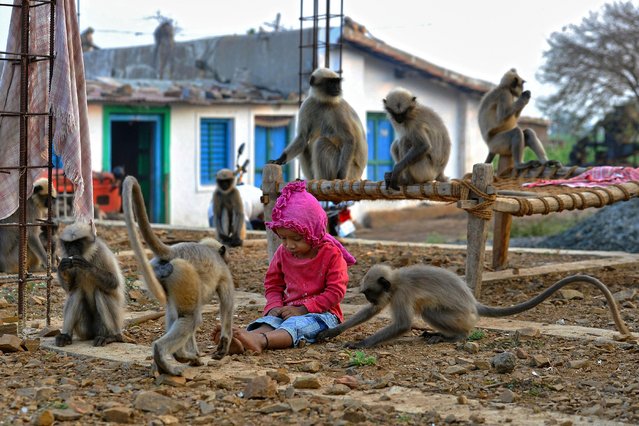
In this photograph taken on December 8, 2017, Indian child Samarth Bangari, 2, plays with langur monkeys at his home in Allapur in India' s southwest Karnataka state. (Photo by Manjunath Kiran/AFP Photo)

In this photograph taken on December 8, 2017, Indian child Samarth Bangari, 2, plays with langur monkeys at his home in Allapur in India' s southwest Karnataka state, 250 miles from Bangalore. He is still too young to talk, but a 2- year- old Indian boy has become a subject of local intrigue after befriending a gang of langur monkeys. (Photo by Manjunath Kiran/AFP Photo)
Details
25 Dec 2017 06:03:00
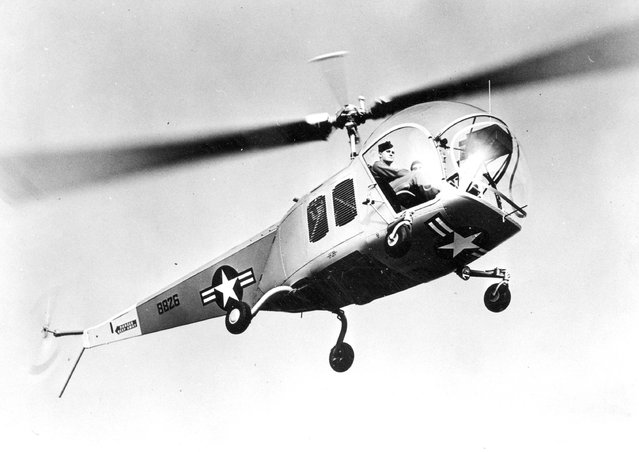
Number 10. BELL H-13 SIOUX was a two-bladed, single engine, light helicopter built by Bell Helicopter. Westland Aircraft manufactured the Sioux under license for the British military as the Sioux AH.1 and HT. (Photo by AP Photo)

Number 10. BELL H-13 SIOUX was a two-bladed, single engine, light helicopter built by Bell Helicopter. Westland Aircraft manufactured the Sioux under license for the British military as the Sioux AH.1 and HT. In 1947, the United States Air Force ordered the improved Bell Model 47A. Most were designated YR-13 and three winterized versions were designated YR-13A. The United States Army first ordered Bell 47s in 1948 under the designation H-13. These would later receive the name Sioux. The Bell-built H-13 B is seen airborne in this April 29, 1951 photo. The helicopter is equipped with a 173 horsepower engine, cruises at 85 miles per hour, climbs 900 feet in a minute and has a service ceiling of 11,500 feet. (Photo by AP Photo)
Details
08 Aug 2014 11:59:00


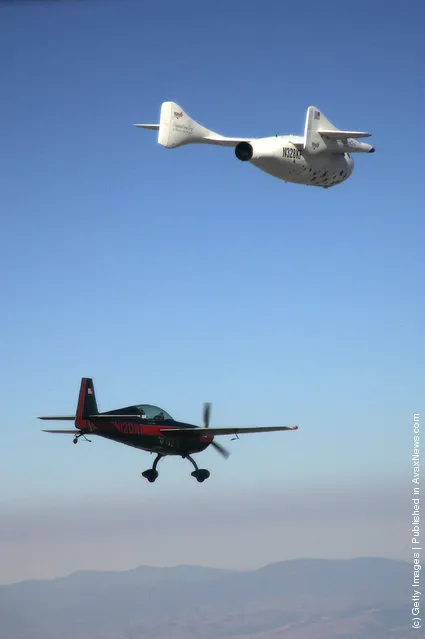
“SpaceShipOne was a suborbital air-launched spaceplane that completed the first manned private spaceflight in 2004. That same year, it won the US$10 million Ansari X Prize and was immediately retired from active service. Its mothership was named “White Knight”. Both craft were developed and flown by Mojave Aerospace Ventures, which was a joint venture between Paul Allen and Scaled Composites, Burt Rutan's aviation company. Allen provided the funding of approximately US$25 million”. – Wikipedia

Photo: A chase plane follows SpaceShipOne after it reached a height of 62 miles in the first non-governmental flight to leave the Earth's atmosphere on June 21, 2004 in Mojave, California. SpaceShipOne spacecraft was carried to a height of 50,000 by the twin-turbojet high-altitude research aircraft, “White Knight”, where it was launched for its final climb. The space effort was funded by Microsoft co-founder Paul Allen and headed by aerospace engineer Burt Rutan. (Photo by Jim Campbell-Pool/Getty Images)
Details
26 Jun 2011 09:56:00
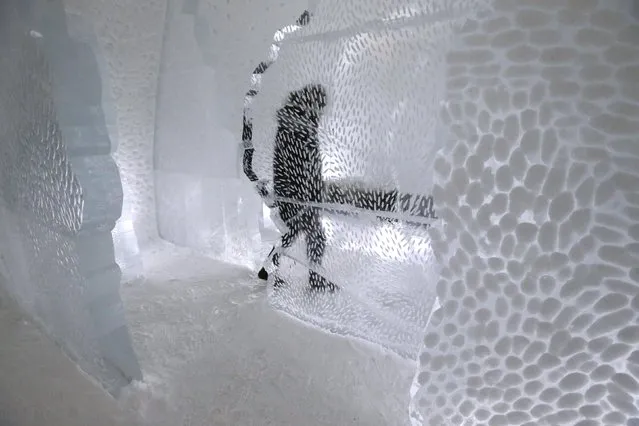
A man walks into a room in the Ice hotel in Jukkasjarvi, Sweden, December 16, 2015. (Photo by Ints Kalnins/Reuters)

In Jukkasjärvi, a village a few miles east of Kiruna, the proprietors of one hotel begin planning for a winter ice festival in March. That’s when they begin collecting some 5,000 tons of ice from the River Torne in order to prepare the Icehotel, the world’s coolest place to stay. Options for overnight stay include snow rooms, ice rooms, art suites, and the Northern Lights room, all of which range from about $300 to $900 per night. But the deluxe suite’s the only way to go. These rooms come with a critical amenity: heated ensuite bathrooms and saunas. Here: A man walks into a room in the Ice hotel in Jukkasjarvi, Sweden, December 16, 2015. (Photo by Ints Kalnins/Reuters)
Details
18 Dec 2015 08:02:00
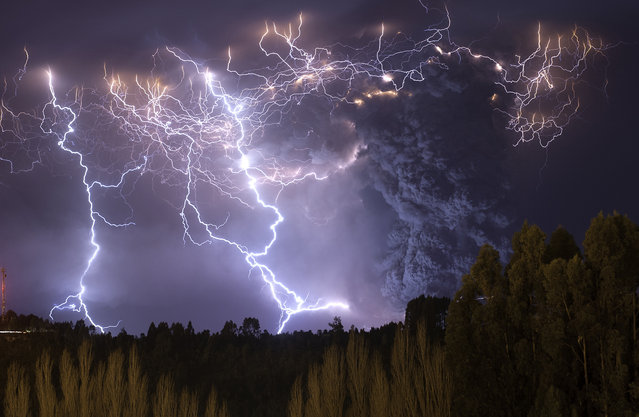
The eruption of Cordon Caulle began on June 4, 2011, located in the Region of Los Rios in Chile. For about 12 months, people and animals became accustomed to living with the daily fall of ash, which also caused problems in the air traffic in South America. The explosions and lightning during first days of the eruption could be seen from hundreds of miles around. This photograph was taken on the second night of eruption from the town of Lago Ranco. (Photo and caption by Francisco Negroni/National Geographic Traveler Photo Contest)

The eruption of Cordon Caulle began on June 4, 2011, located in the Region of Los Rios in Chile. For about 12 months, people and animals became accustomed to living with the daily fall of ash, which also caused problems in the air traffic in South America. The explosions and lightning during first days of the eruption could be seen from hundreds of miles around. This photograph was taken on the second night of eruption from the town of Lago Ranco. (Photo and caption by Francisco Negroni/National Geographic Traveler Photo Contest)

ATTENTION! All pictures are presented in high resolution. To see Hi-Res images – just TWICE click on any picture. In other words, click small picture – opens the BIG picture. Click BIG picture – opens VERY BIG picture.
Details
23 Jun 2013 11:24:00