Loading...
Done
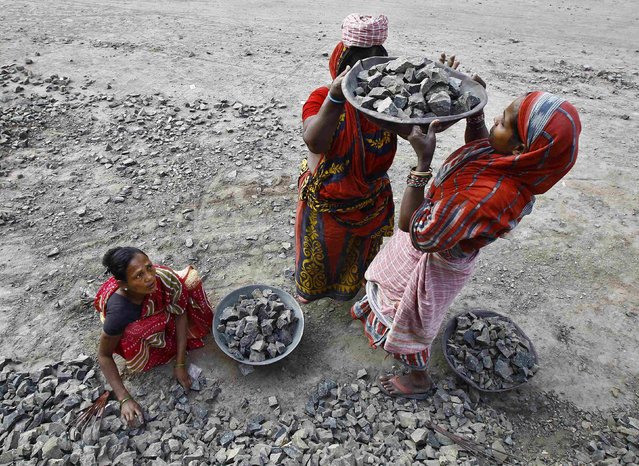
Women labourers work at the construction site of a road in Kolkata January 8, 2015. Across towns and cities in India, it is not uncommon to see women cleaning building sites, carrying bricks and or shoveling gravel - helping construct the infrastructure necessary for the country's economic and social development. (Photo by Rupak De Chowdhuri/Reuters)

Women labourers work at the construction site of a road in Kolkata January 8, 2015. Across towns and cities in India, it is not uncommon to see women cleaning building sites, carrying bricks and or shoveling gravel – helping construct the infrastructure necessary for the country's economic and social development. They help build roads, railway tracks, airports, and offices. They lay pipes for clean water supplies, cables for telecommunications, and dig the drains for sewage systems. But although women make up at least 20 percent of India's 40 million construction workers, they are less recognized than male workers with lower pay and often prone to safety hazards and sexual harassment. They are often unaware of their rights or scared to complain, say activists now trying to campaign for better treatment of women in the construction industry. (Photo by Rupak De Chowdhuri/Reuters)
Details
15 Jan 2015 13:47:00
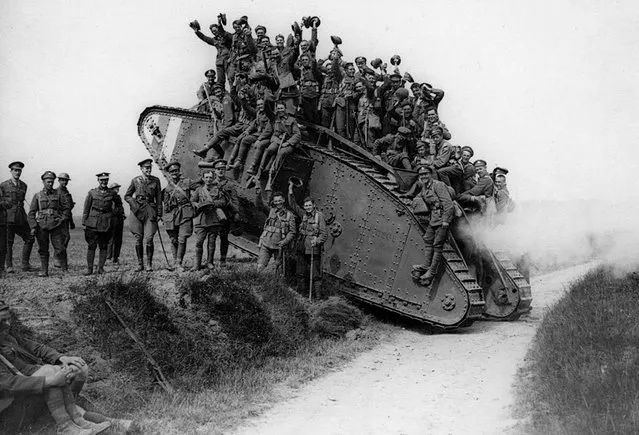
These black-and-white photos are taken from the new book “Armoured Warfare in the First World War 1916 – 1918” by Anthony Tucker-Jones and published by Pen & Sword Military. “Interestingly the British, French and Germans took completely different approaches with varying results”. The British military produced “Little Willie” in Autumn 1915 weighing 18 tonnes, which had a crew of two plus four gunners. “Inspired by a tracked artillery tractor “Little Willie” was referred to as a water tank – hence the name tank – to ensure secrecy”, said Anthony. “This led to the strange looking Mark I with its peculiar rhomboid shape, designed to cross trenches with guns in sponsons on either side. The Germans saw the tank as unchivalrous and were slow to grasp its utility. They favoured the Stormtrooper (specialist soldiers used to infiltrate enemy trenches) and artillery, not the tank”, said Anthony. “However, they didn’t hesitate to make use of captured British tanks. Although the tank helped secure victory and German soldiers dubbed it “Germany’s Downfall” the country was ultimately brought to its knees by the Allies blockade”. Here: British troops hitch a ride on a Mark IV after the massed tank fleet spearheading attack at Cambrai on November 20, 1917. (Photo by Anthony Tucker-Jones/Mediadrumworld.com)

These black-and-white photos are taken from the new book “Armoured Warfare in the First World War 1916 – 1918” by Anthony Tucker-Jones and published by Pen & Sword Military. Here: British troops hitch a ride on a Mark IV after the massed tank fleet spearheading attack at Cambrai on November 20, 1917. (Photo by Anthony Tucker-Jones/Mediadrumworld.com)
Details
23 Feb 2017 00:02:00
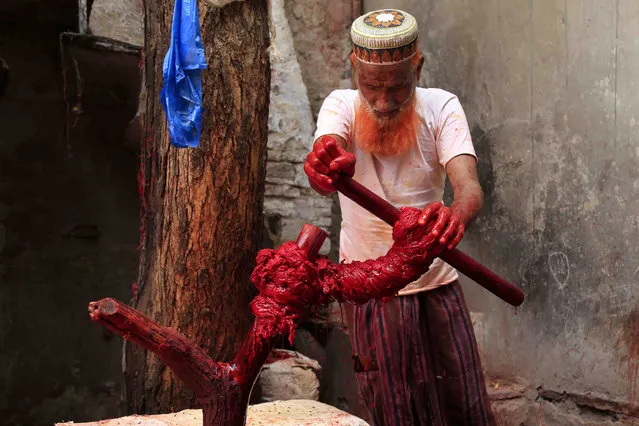
An Indian Muslim worker applies colors on Kalavas (sacred threads) in Ajmer in the Indian state of Rajasthan on May 24, 2018. (Photo by Himanshu Sharma/AFP Photo)

An Indian Muslim worker applies colors on Kalavas (sacred threads) in Ajmer in the Indian state of Rajasthan on May 24, 2018. (Photo by Himanshu Sharma/AFP Photo)
Details
30 May 2018 00:01:00
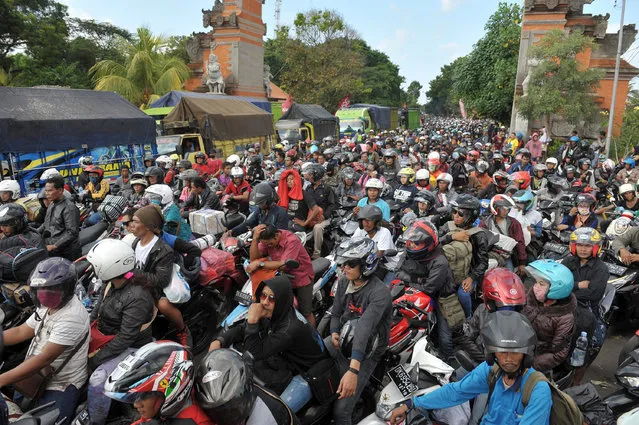
Thousands of travellers heading to their hometowns to celebrate Eid al-Fitr, the Muslim holiday to mark the end of Ramadan, wait in a traffic jam to board a ferry at the entrance to Gilimanuk port on Bali, Indonesia July 3, 2016 in this photo taken by Antara Foto. (Photo by Nyoman Budhiana/Reuters/Antara Foto)

Thousands of travellers heading to their hometowns to celebrate Eid al-Fitr, the Muslim holiday to mark the end of Ramadan, wait in a traffic jam to board a ferry at the entrance to Gilimanuk port on Bali, Indonesia July 3, 2016 in this photo taken by Antara Foto. (Photo by Nyoman Budhiana/Reuters/Antara Foto)
Details
12 Jul 2016 12:18:00
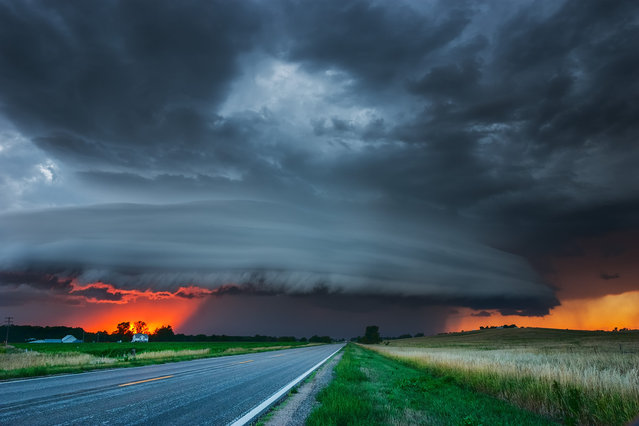
Vivid sunset under severe storm in central Nebraska August 17, 2005. (Photo by Mike Hollingshead)

Storm chasing photographer Mike Hollingshead makes a living following the worst storms in America, from snarling tornadoes chewing up the Kansas farmland to supercell thunderstorms massing over the Dakotas. His style is to get right in the path of the storm. While he says it’s less scary than you think – because most of the storm consists of heavy rain – it’s still extremely stressful. Photo: Vivid sunset under severe storm in central Nebraska August 17, 2005. (Photo by Mike Hollingshead)
Details
13 Aug 2014 11:25:00
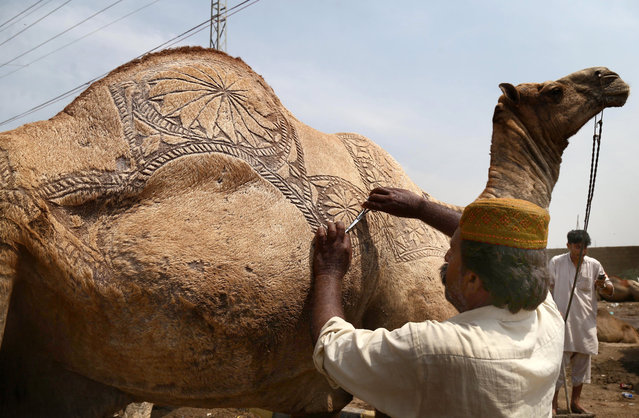
A vendor decorates a sacrificial camel ahead of the Eid al-Adha festival, in Karachi, Pakistan, 23 August 2016. Eid al-Adha is the holiest of the two Muslims holidays celebrated each year, with this year will be celebrated on 02nd September. Eid al-Adha marks the yearly Muslim pilgrimage (Hajj) to visit Mecca, the holiest place in Islam. Muslims slaughter a sacrificial animal and split the meat into three parts, one for the family, one for friends and relatives, and one for the poor and needy. (Photo by Rehan Khan/EPA)

A vendor decorates a sacrificial camel ahead of the Eid al-Adha festival, in Karachi, Pakistan, 23 August 2016. Eid al-Adha is the holiest of the two Muslims holidays celebrated each year, with this year will be celebrated on 02nd September. Eid al-Adha marks the yearly Muslim pilgrimage (Hajj) to visit Mecca, the holiest place in Islam. Muslims slaughter a sacrificial animal and split the meat into three parts, one for the family, one for friends and relatives, and one for the poor and needy. (Photo by Rehan Khan/EPA)
Details
28 Aug 2017 12:03:00
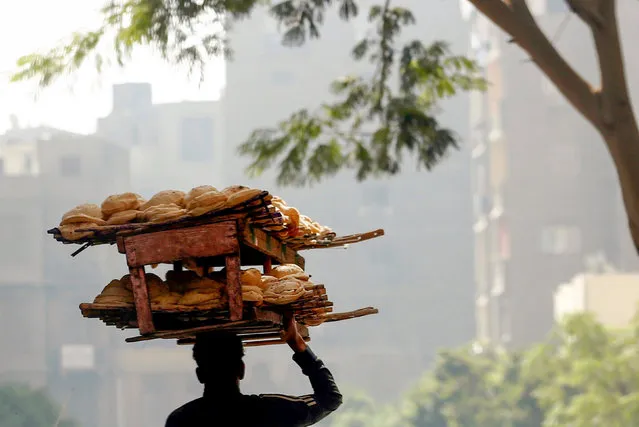
A bakery worker carries fresh bread in Cairo, Egypt on August 1, 2021. (Photo by Amr Abdallah Dalsh/Reuters)

A bakery worker carries fresh bread in Cairo, Egypt on August 1, 2021. (Photo by Amr Abdallah Dalsh/Reuters)
Details
11 Aug 2021 10:19:00
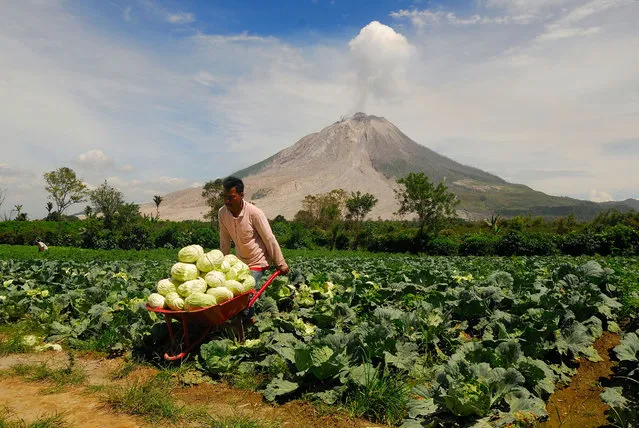
A farmer seen harvesting his crops while Mount Sinabung spewing out volcanic ash on July 4, 2017 in North Sumatera, Indonesia. The increased volume of lava dome that reaches one million eight hundred cubic meters, said volcanologist, through radio communications, do not dampen the activities of the people around sinabung, such as farming, harvesting their crops, picking up objects that are still left behind, or just take a picture while walking around near mount Sinabung. (Photo by Sabirin Manurung/Pacific Press/Barcroft Images)

A farmer seen harvesting his crops while Mount Sinabung spewing out volcanic ash on July 4, 2017 in North Sumatera, Indonesia. The increased volume of lava dome that reaches one million eight hundred cubic meters, said volcanologist, through radio communications, do not dampen the activities of the people around sinabung, such as farming, harvesting their crops, picking up objects that are still left behind, or just take a picture while walking around near mount Sinabung. (Photo by Sabirin Manurung/Pacific Press/Barcroft Images)
Details
06 Aug 2017 07:50:00