Loading...
Done
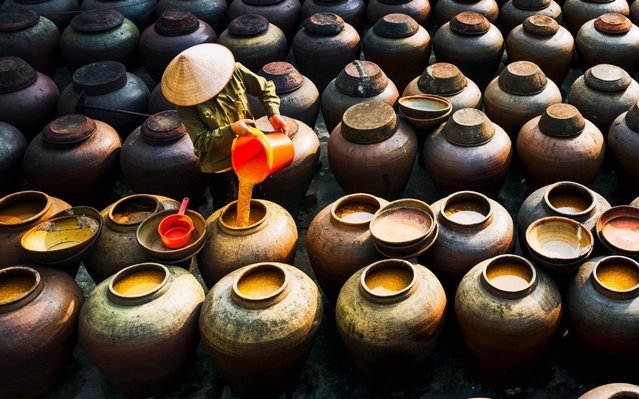
Workers stir hundreds of large ceramic pots as they spend months making a traditional soy sauce on October 14, 2020. Arranged in rows, the containers can hold up to 50 litres of Ban Soy sauce. During the drawn out process the sauce is stirred every two days for two to six months. Ban Yen Nhan village in the Hung Yen Province of Vietnam is famous for its traditional and distinctive method of making the sauce. (Photo by Nguyen Quy/Solent News)

Workers stir hundreds of large ceramic pots as they spend months making a traditional soy sauce on October 14, 2020. Arranged in rows, the containers can hold up to 50 litres of Ban Soy sauce. During the drawn out process the sauce is stirred every two days for two to six months. Ban Yen Nhan village in the Hung Yen Province of Vietnam is famous for its traditional and distinctive method of making the sauce. (Photo by Nguyen Quy/Solent News)
Details
30 Oct 2020 00:05:00
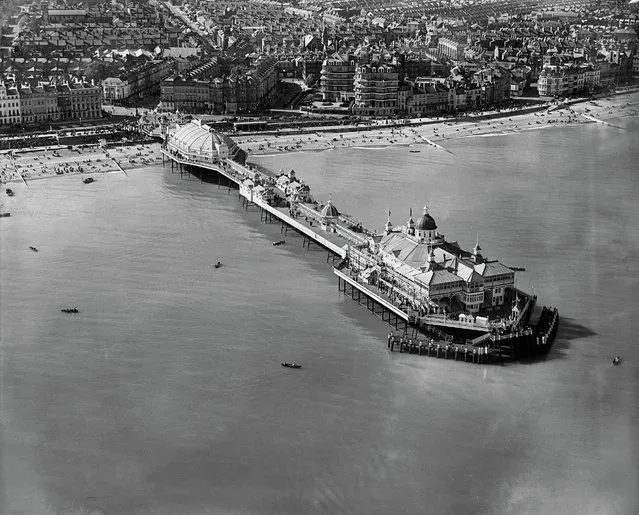
While the lido was described as bringing “modernism to the masses” on the British coast it was just the latest example of a trend that had been developing since Victorian times – transforming seaside towns into resorts for leisure and entertainment. In the latter half of the nineteenth century, the fashion was for local authorities to build great piers stretching from the promenade out into the sea

While the lido was described as bringing “modernism to the masses” on the British coast it was just the latest example of a trend that had been developing since Victorian times – transforming seaside towns into resorts for leisure and entertainment. In the latter half of the nineteenth century, the fashion was for local authorities to build great piers stretching from the promenade out into the sea. The Eastbourne Pier, pictured here in May 1931, was erected between 1866 and 1870 to an ingenious design by Eugenius Birch, which saw the structure sitting on special cups allowing the supporting struts to “move” in bad weather. Arranged on the pier's 1,000-foot length were kiosks, a theatre, a ballroom and a camera obscura. 1931. (Photo by Aerofilms Collection via “A History of Britain From Above”)
Details
25 Feb 2014 12:59:00
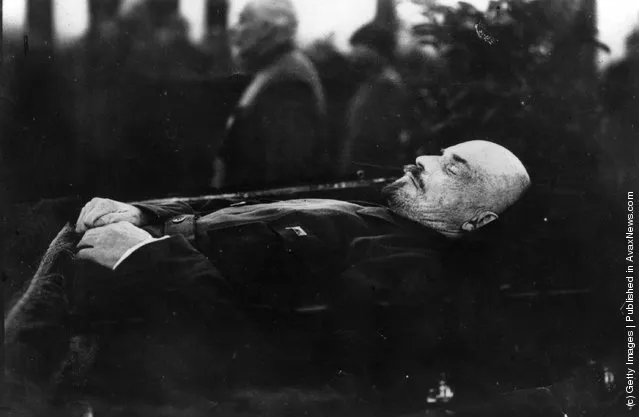
1924:  Vladimir Ilyich Lenin lying in state in the Kremlin

Photo: Vladimir Ilyich Lenin (1870 – 1924) lying in state in the Kremlin. (Photo by Hulton Archive/Getty Images). 1924

Important! For the same article in Russian language click here.

Something quite intriguing is happening within Russian-speaking internet during the last few – should you type a fully academic inquiry (at least, according to Russian academic requirements) in national search engines for "Lenin's mausoleum" – the first thing you get (even in top 10 searches) is website pages talking about black magic and occult. Website authors view this construction differently, but unconditionally agree on one thing: the mausoleum of the "leader of the world proletariat” – the essence of a magical artifact, a sort of “energy vampire”. It was built with a certain purpose: to drain the energy out of miserable Soviet citizens on one hand; and to poison the anthroposphere of one-sixth part of the earth with its vibes (the exact territory that was occupied by the former Soviet Union), depriving the Russian people of will to resist on the other hand. Complete nonsense? No doubt. Nevertheless, an intriguing one. Well, probably because some oddities do exist in mausoleum's history. These oddities are the thing we are going to discuss this time. First, let me refresh you memory on the subject.
Details
16 Oct 2011 11:27:00
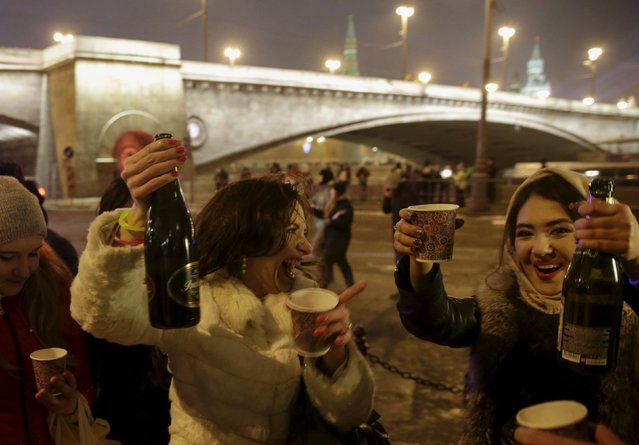
Revellers celebrate New Year's Day in central Moscow, Russia, January 1, 2016. (Photo by Tatyana Makeyeva/Reuters)

Revellers celebrate New Year's Day in central Moscow, Russia, January 1, 2016. (Photo by Tatyana Makeyeva/Reuters)
Details
02 Jan 2016 08:06:00
Police officers detain a demonstrator as people protest to defy a ban and march on Taksim Square to celebrate May Day in Istanbul, Turkey on May 1, 2023. (Photo by Dilara Senkaya/Reuters)

Police officers detain a demonstrator as people protest to defy a ban and march on Taksim Square to celebrate May Day in Istanbul, Turkey on May 1, 2023. (Photo by Dilara Senkaya/Reuters)
Details
19 May 2023 04:21:00
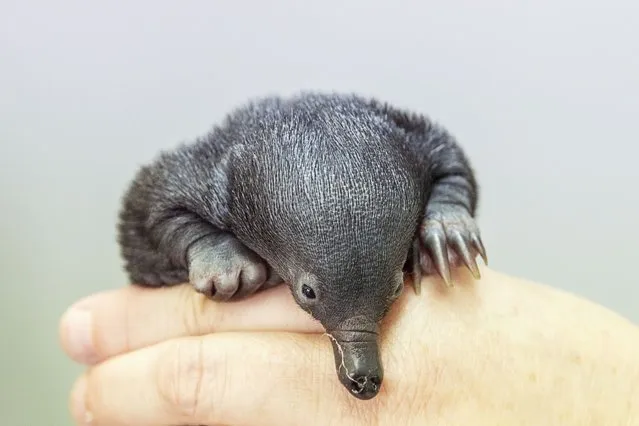
“Smudge” an orphaned echidna puggle is held by Veterinary nurse Sarah Male ahead of its feeding on November 07, 2022 in Sydney, Australia. Echidnas, sometimes known as spiny anteaters, are native to Australia. A baby echidna was found orphaned by the side of the road and is being cared for at Sydney's Taronga Zoo hospital. The care is intensive with several feedings per day, and the echidna is housed in temperature-controlled environment to aid its recovery and growth. (Photo by Jenny Evans/Getty Images)

“Smudge” an orphaned echidna puggle is held by Veterinary nurse Sarah Male ahead of its feeding on November 07, 2022 in Sydney, Australia. Echidnas, sometimes known as spiny anteaters, are native to Australia. A baby echidna was found orphaned by the side of the road and is being cared for at Sydney's Taronga Zoo hospital. The care is intensive with several feedings per day, and the echidna is housed in temperature-controlled environment to aid its recovery and growth. (Photo by Jenny Evans/Getty Images)
Details
04 Jan 2024 19:37:00
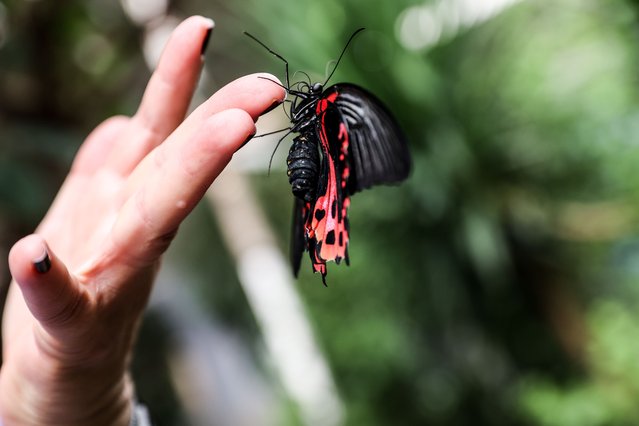
A butterfly is seen at a farm in Beykoz disrtict of Istanbul, Turkey on October 26, 2021. Cigdem Unlu runs a farm where 800 butterflies live and being presented to the visitors as the environment exclusively weathered for butterflies. (Photo by Elif Ozturk Ozgoncu/Anadolu Agency via Getty Images)

A butterfly is seen at a farm in Beykoz disrtict of Istanbul, Turkey on October 26, 2021. Cigdem Unlu runs a farm where 800 butterflies live and being presented to the visitors as the environment exclusively weathered for butterflies. (Photo by Elif Ozturk Ozgoncu/Anadolu Agency via Getty Images)
Details
29 Nov 2021 07:10:00
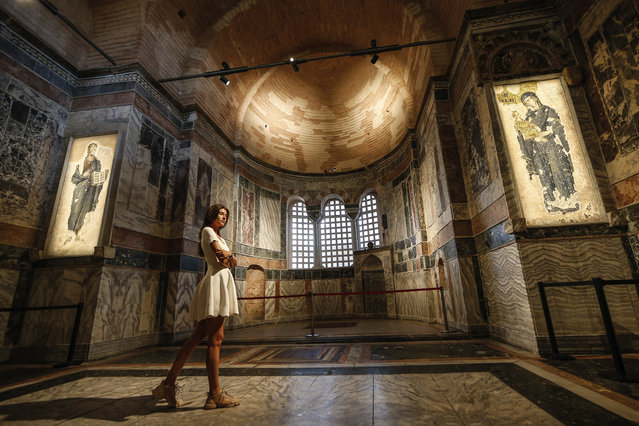
A woman visits St Savior in Chora church, known as Kariye in Turkish, in Istanbul, Friday, August 21, 2020. Turkey on Friday formally converted former Byzantine church, St Savior in Chora, into a mosque, a month after it similarly turned Istanbul's landmark Hagia Sophia into a Muslim house of prayer, drawing international rebuke. (Photo by Emrah Gurel/AP Photo)

A woman visits St Savior in Chora church, known as Kariye in Turkish, in Istanbul, Friday, August 21, 2020. Turkey on Friday formally converted former Byzantine church, St Savior in Chora, into a mosque, a month after it similarly turned Istanbul's landmark Hagia Sophia into a Muslim house of prayer, drawing international rebuke. (Photo by Emrah Gurel/AP Photo)
Details
09 Sep 2020 00:05:00