Loading...
Done
“Kasia Haupt's sandwich monsters: Love Bunnies”. (Photo by Kasia Haupt/Caters News)

From sandwich-saurus to a scary leprechaun the sometimes terrifying and often hilarious foodstuffs are the creation of New York artist Kasia Haupt. The 29-year-old advertising art director has even had her work commissioned as prints making her a real-life Salvador DELI. Photo: “Kasia Haupt's sandwich monsters: Love Bunnies”. (Photo by Kasia Haupt/Caters News)
Details
04 Nov 2013 10:38:00
In this picture taken on October 28, 2017, former Japanese p*rn star Mana Izumi checks her new tattoo at a tattoo studio in Tsurugashima, Saitama prefecture. (Photo by Behrouz Mehri/AFP Photo)

In this picture taken on October 28, 2017, former Japanese p*rn star Mana Izumi checks her new tattoo at a tattoo studio in Tsurugashima, Saitama prefecture. Tattoos still provoke deep-rooted suspicion in Japan as the country prepares to host the 2020 Tokyo Olympics. People with body ink are refused entry to public swimming pools, bathing spots, beaches and often gyms, while visible body art can be harmful to job prospects. (Photo by Behrouz Mehri/AFP Photo)
Details
10 Jan 2019 00:05:00
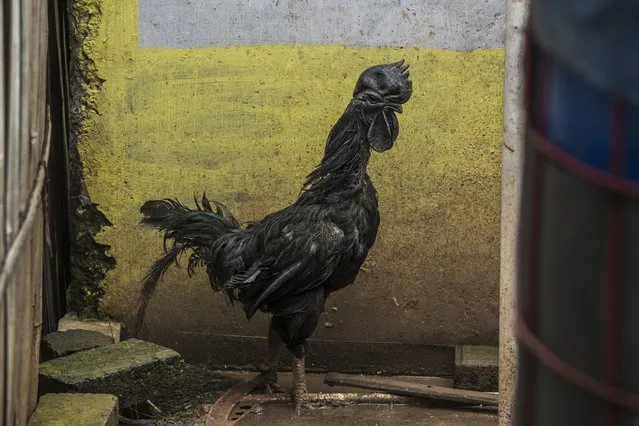
A rooster bred for its all black appearance walks through the yard of a small backyard farm on February 3, 2017 on the outskirts of Jakarta, Indonesia. (Photo by Ed Wray/Getty Images)

A rooster bred for its all black appearance walks through the yard of a small backyard farm on February 3, 2017 on the outskirts of Jakarta, Indonesia. The roosters, called Ayam Cemani, are completely black including their bones and meat and are often sold for use in rituals. (Photo by Ed Wray/Getty Images)
Details
06 Feb 2017 01:06:00
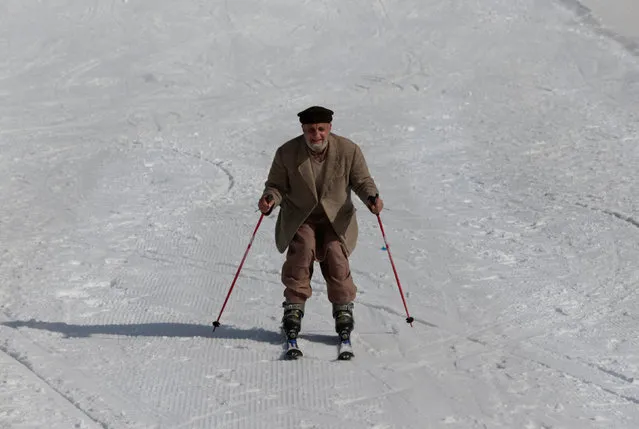
Retired Malam Jabba engineer Akbar Ali skis down the piste at the ski resort in Malam Jabba, Pakistan February 7, 2017. (Photo by Caren Firouz/Reuters)

Retired Malam Jabba engineer Akbar Ali skis down the piste at the ski resort in Malam Jabba, Pakistan February 7, 2017. Atop the piste of Malam Jabba in Pakistan's once dangerous Swat Valley skiers schuss downhill, a new Chinese-built chairlift ferries tourists to the peak, and a luxury hotel is under construction to replace one torched by the Taliban. (Photo by Caren Firouz/Reuters)
Details
23 Feb 2017 00:05:00
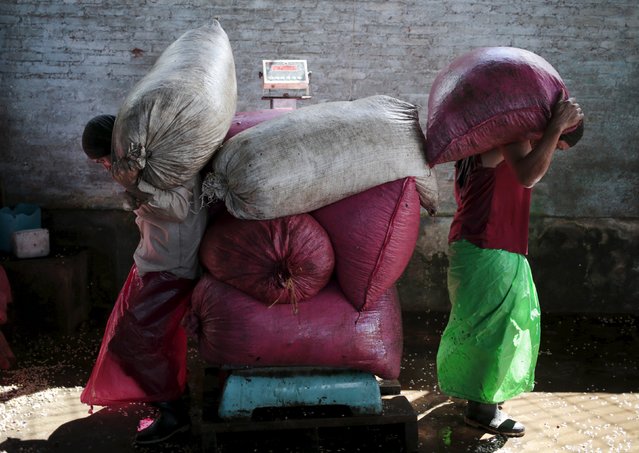
Workers carry sacks of coffee beans at a warehouse at the Nogales farm in Jinotega, Nicaragua January 7, 2016. (Photo by Oswaldo Rivas/Reuters)

Workers carry sacks of coffee beans at a warehouse at the Nogales farm in Jinotega, Nicaragua January 7, 2016. Soaring temperatures in Central America due to climate change are forcing farmers to pull up coffee trees and replace them with cocoa, spurring a revival in the cultivation of a crop once so essential to the region's economy. (Photo by Oswaldo Rivas/Reuters)
Details
20 Jan 2016 08:00:00
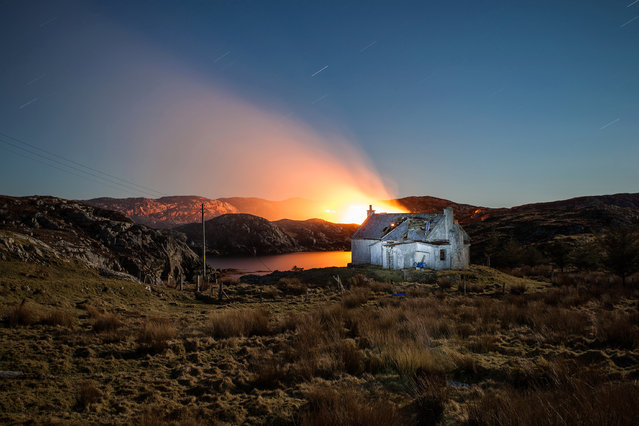
“Peat Fire”. Taken in March 2013 on the east coast of Harris. The fire is from muir-burning, when farmers burn off grasses and heather to improve grazing for their sheep. (Photo by John Maher/The Guardian)

Photographer John Maher, once the drummer with punk bank Buzzcocks, travelled to the Outer Hebrides to photograph abandoned crofters’ cottages – many of which, like this one, have seemingly been untouched since. Here: “Peat Fire”. Taken in March 2013 on the east coast of Harris. The fire is from muir-burning, when farmers burn off grasses and heather to improve grazing for their sheep. (Photo by John Maher/The Guardian)
Details
19 Aug 2016 11:39:00
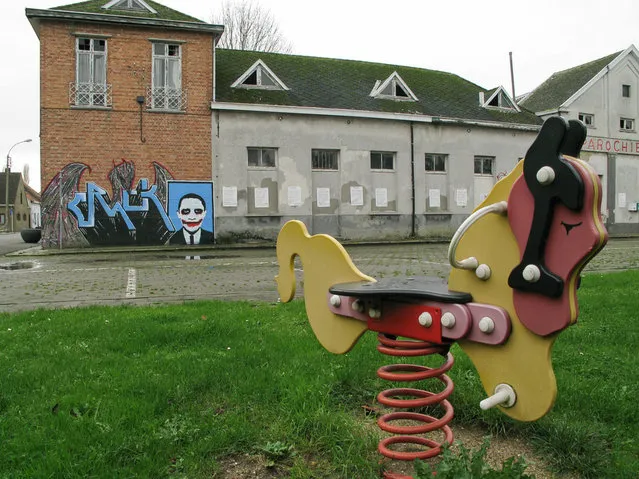
Abandon Village: Doel, Belgium

Doel is a 700 year old village on the river Scheldt in Belgium. Near to the local nuclear power plant, with its two giant cooling towers, it became the target for demolition not once but twice in order to make way for the ever expanding harbor. The successful protest groups of the seventies could not compete in the 90's and as residents began to leave, the government refused to rent out the properties again and instead let them fall into disrepair. On the 23rd of March 2007, the government decided that the village would be demolished by 2009 and in June 2008, residents received a letter informing them that they were to vacate their homes by the 1st of September 2009.
Details
20 Mar 2013 11:33:00
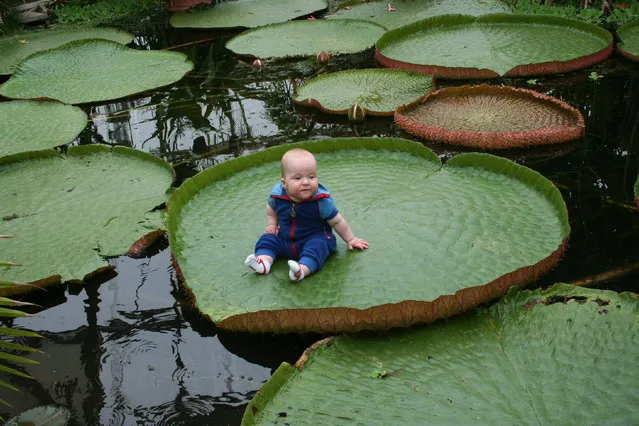
Victoria amazonica

The species has very large leaves, up to 3 m in diameter, that float on the water's surface on a submerged stalk, 7–8 m in length. The species was once called Victoria regia after Queen Victoria, but the name was superseded. V. amazonica is native to the shallow waters of the Amazon River basin, such as oxbow lakes and bayous. It is depicted in the Guyanese coat of arms. The flowers are white the first night they are open and become pink the second night. They are up to 40 cm in diameter, and are pollinated by beetles.
Details
03 Sep 2012 06:58:00