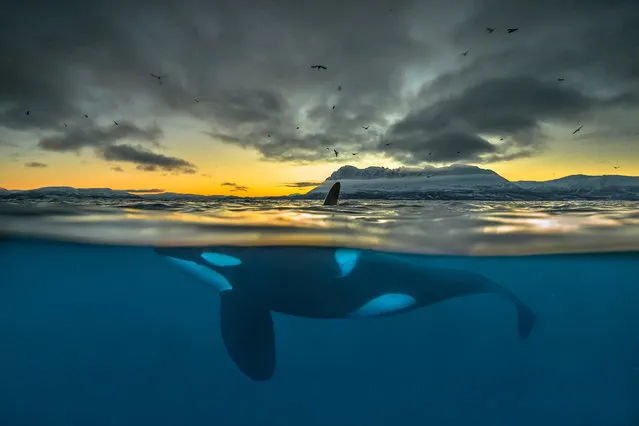
Split-view of a killer whale at sunrise off the coast of Northern Norway. At least half of the world’s killer whale populations are doomed to extinction due to pollution of the oceans, a new study says. (Photo by Audun Rikardsen/Science)
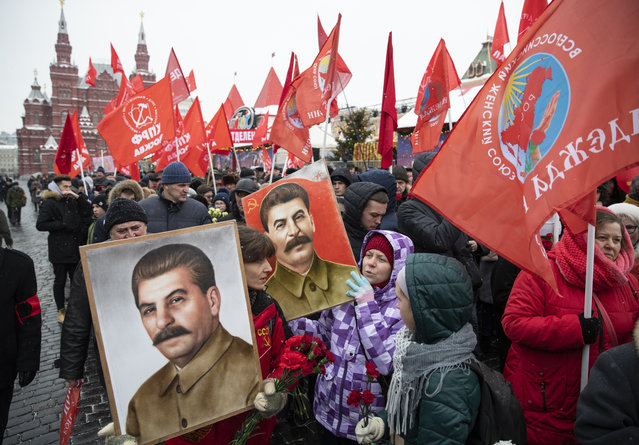
Communist supporters hold portraits of Soviet leader Josef Stalin as they queue to lay flowers at the grave of Stalin to mark the 139th anniversary of his birth, in Moscow's Red Square, Russia, Friday, December 21, 2018. (Photo by Pavel Golovkin/AP Photo)
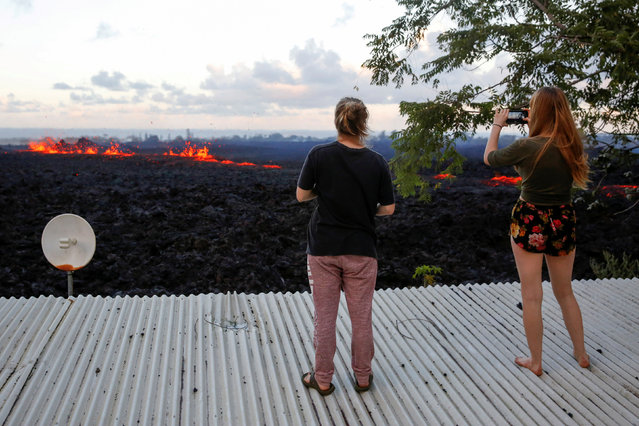
Jolon Clinton, 15, (L), and her sister, Halcy, 17, take photos of a fissure near their home on the outskirts of Pahoa during ongoing eruptions of the Kilauea Volcano in Hawaii, U.S., May 14, 2018. (Photo by Terray Sylvester/Reuters)
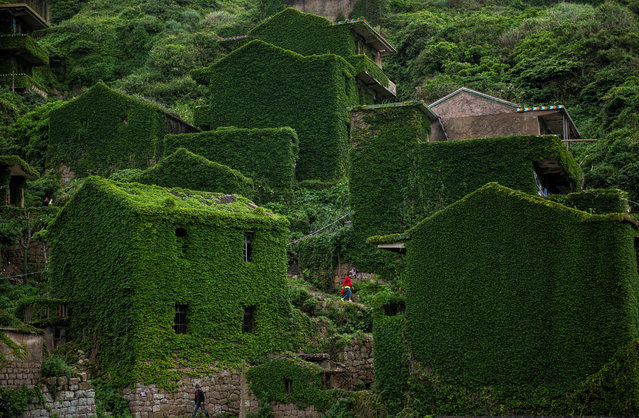
This picture taken on May 31, 2018 shows a villager walking between abandoned houses covered with overgrown vegetation in Houtouwan on Shengshan island, China' s eastern Zhejiang province. Houtouwan was a thriving fishing community of sturdy brick homes that climb up the steeply hilled island of Shenghshan, but is now abandoned, with entire houses completely overgrown as if vacuum- sealed in a lush layer of green. (Photo by Johannes Eisele/AFP Photo)
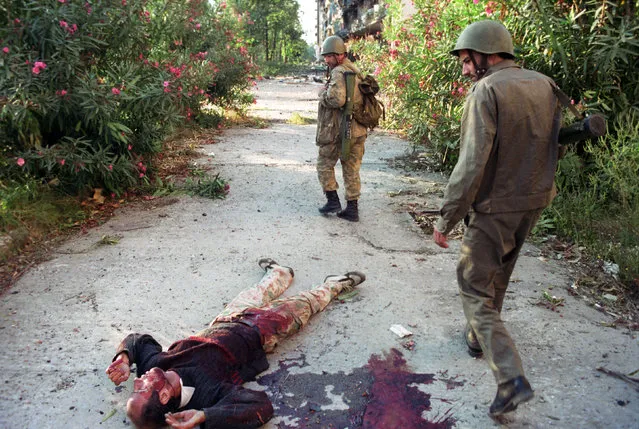
The War in Abkhazia from 1992 to 1993 was fought between Georgian government forces for the most part, and Abkhaz separatist forces, Russian armed forces and North Caucasian militants. Ethnic Georgians who lived in Abkhazia fought largely on the side of Georgian government forces. Ethnic Armenians and Russians within Abkhazia's population largely supported the Abkhazians, and many fought on their side. The separatists received support from thousands of North Caucasus and Cossack militants and from the Russian Federation forces stationed in and near Abkhazia. Here: Abkhazia. Sukhumi, 1993. A house-to-house combat. (Photo by Andrei Solovyov/ITAR-TASS)