Loading...
Done
People sit near a fully loaded in Madama near the border with Lybia on January 1, 2015. French Defence Minister Jean-Yves Le Drian paid a surprise visit to northern Niger on January 1, to visit a base being built to combat the growing flow of weapons and jihadists from neighbouring Libya. Le Drian travelled from Chad to Madama, a desert outpost about 100 kilometres from Libya, where he saw in the New Year with troops at a French base. (Photo by Dominique Faget/AFP Photo)

People sit near a fully loaded in Madama near the border with Lybia on January 1, 2015. French Defence Minister Jean-Yves Le Drian paid a surprise visit to northern Niger on January 1, to visit a base being built to combat the growing flow of weapons and jihadists from neighbouring Libya. Le Drian travelled from Chad to Madama, a desert outpost about 100 kilometres from Libya, where he saw in the New Year with troops at a French base. Madama is situated on the route used by jihadists and arms smugglers in southern Libya to reach northern Mali and Niger. (Photo by Dominique Faget/AFP Photo)
Details
03 Jan 2015 13:27:00
A Summer Activity time Can't Touch By William Holt_Part2

With temperatures soaring and summer well underway, countless Americans will be spending their Independence Day weekend at the beach. Here we revisit some classic images from the turn-of-the-century to the 1930's of vacations by the sea, from Coney Island to Santa Monica.
Details
23 Aug 2013 14:04:00
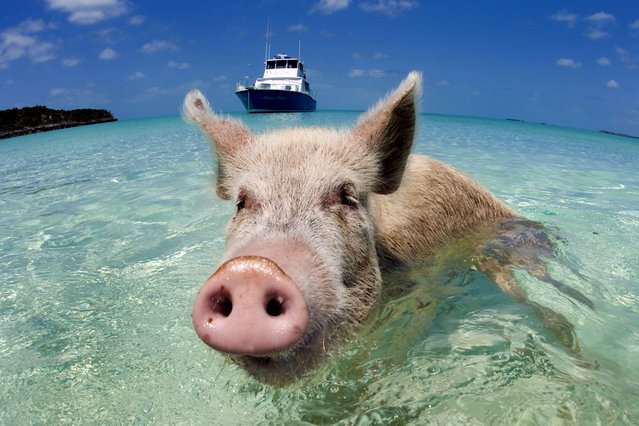
Meet the real beach babes: the herd of pigs that live a life of luxury paddling in the crystal clear waters of the Bahamas, on August 28, 2013. (Photo by Caters News)

Meet the real beach babes: the herd of pigs that live a life of luxury paddling in the crystal clear waters of the Bahamas, on August 28, 2013. (Photo by Caters News)
Details
31 Aug 2013 14:40:00
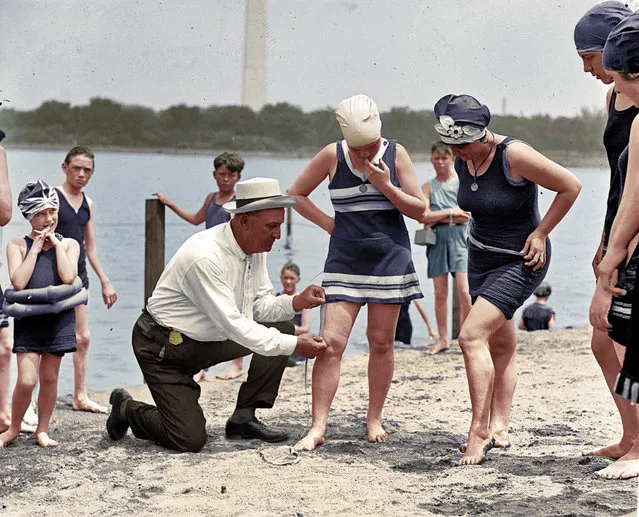
Beach Policeman, Potomac River, 1922.

Beach Policeman, Potomac River, 1922. (Photo by National Photo Company/Colorized by Patty Allison)
Details
16 Sep 2013 10:19:00
“Cassowaries are large, flightless birds related to emus and (more distantly) to ostriches, rheas, and kiwis”, writes Olivia Judson in the September issue of National Geographic magazine. (Photo by Christian Ziegler/National Geographic)

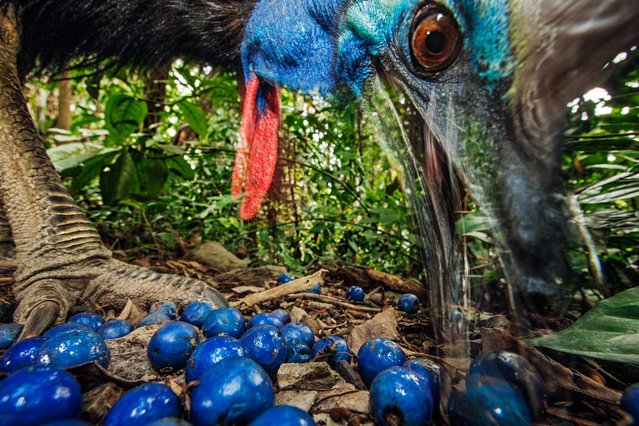
“Cassowaries are large, flightless birds related to emus and (more distantly) to ostriches, rheas, and kiwis”, writes Olivia Judson in the September issue of National Geographic magazine. How large? People-size: Adult males stand well over five foot five and top 110 pounds. Females are even taller, and can weigh more than 160 pounds. Dangerous when roused, they’re shy and peaceable when left alone. But even birds this big and tough are prey to habitat loss. The dense New Guinea and Australia rain forests where they live have dwindled. Today cassowaries might number 1,500 to 2,000. And because they help shape those same forests – by moving seeds from one place to another – “if they vanish”, Judson writes, “the structure of the forest would gradually change” too. (Photo by Christian Ziegler/National Geographic)
Details
06 Jan 2014 12:21:00
A girl sticks out her tongue during snowfalls on a street in Hefei, Anhui province February 13, 2014. (Photo by Reuters/Stringer)

A girl sticks out her tongue during snowfalls on a street in Hefei, Anhui province February 13, 2014. (Photo by Reuters/Stringer)
Details
15 Feb 2014 12:09:00
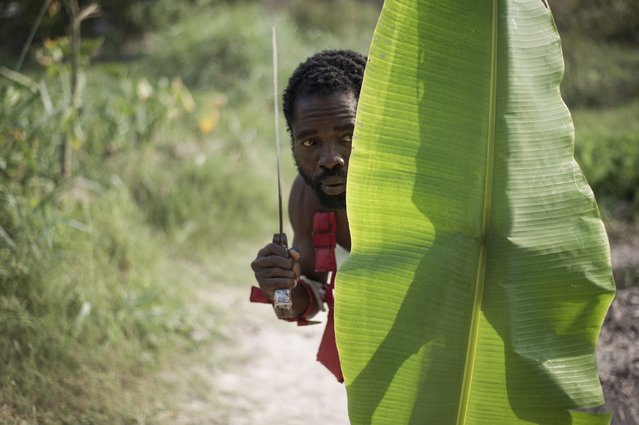
A member of the mainly Christian “anti-balaka” (anti-machete) militia trains in the Boeing neighbourhood of Bangui, Central African Republic, on February 24, 2014. (Photo by Fred Dufour/AFP Photo)

A member of the mainly Christian “anti-balaka” (anti-machete) militia trains in the Boeing neighbourhood of Bangui, Central African Republic, on February 24, 2014. (Photo by Fred Dufour/AFP Photo)
Details
01 Mar 2014 12:48:00
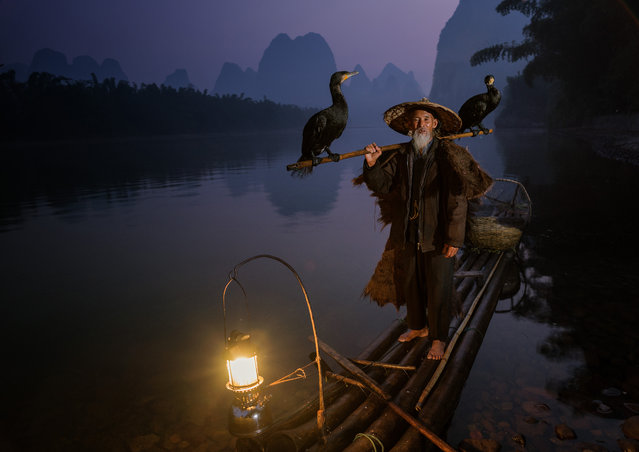
“On the Li River near Xingping in China, Cormorant fishermen work the waterways before dawn amidst the spectacular limestone towers of the Karst landscape.  The birds are trained to fetch fish from the inky depths but not swallow them. The fisherman accepts the fish from the birds who dive back for more. Here, still before dawn, the fisherman and his birds head for home”. (Photo and caption by Neville Jones/2014 Sony World Photography Awards)

“On the Li River near Xingping in China, Cormorant fishermen work the waterways before dawn amidst the spectacular limestone towers of the Karst landscape. The birds are trained to fetch fish from the inky depths but not swallow them. The fisherman accepts the fish from the birds who dive back for more. Here, still before dawn, the fisherman and his birds head for home”. (Photo and caption by Neville Jones/2014 Sony World Photography Awards)
Details
21 Mar 2014 08:44:00