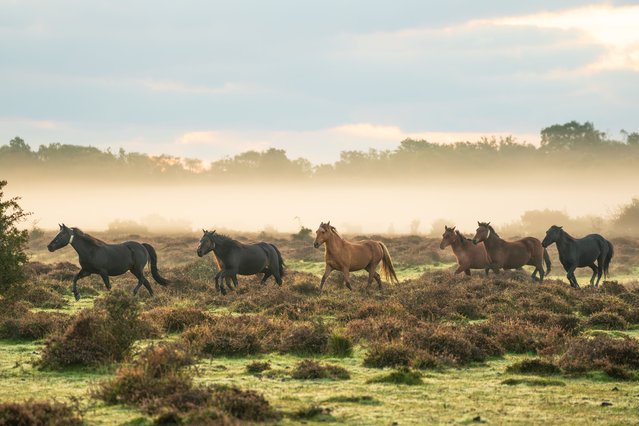
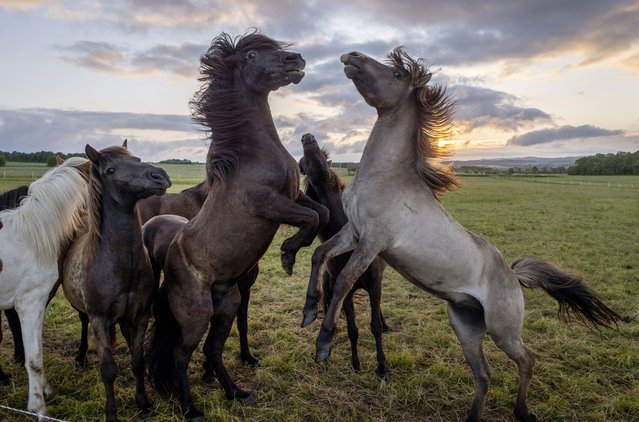
A misty start to the day in the New Forest with ponies running near Ringwood in Hampshire, UK on Saturday, October 6, 2024. (Photo by Steve Hogan/Picture Exclusive)
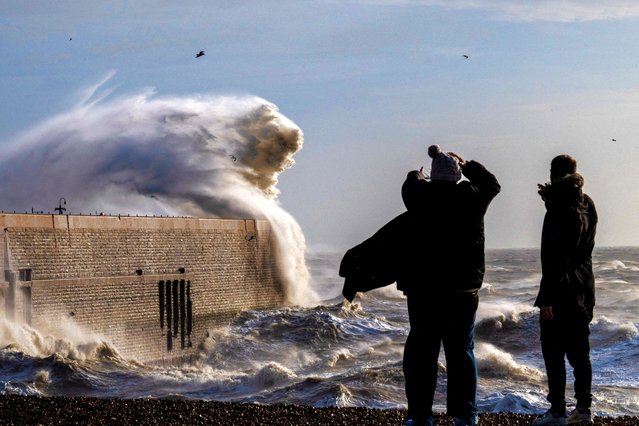
Locals look on as high winds from Storm Bert cause waves to crash over the harbour arm in Folkestone, Britain, on November 24, 2024. (Photo by Chris J. Ratcliffe/Reuters)
Fireplace for children, Trondheim, Norway, by Haugen/Zohar. The children of Trondheim come to sit around the fire and tell stories in this whimsical cone hut, made with materials recycled from a construction site. (Photo by Jason Havneraas/The Guardian)
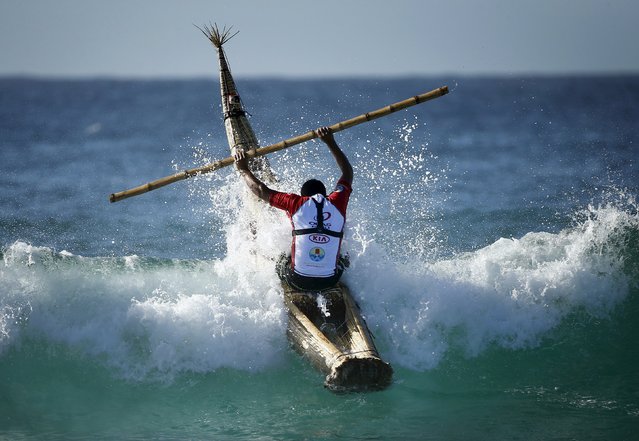
Peruvian surfer Carlos “Huevito” Areola rides a reed board, or “caballito” (little horse), into a wave at Sydney's Bondi Beach, February 24, 2016. Areola is part of a group of Peruvian surfers touring Australia’s east coast to promote the use of the “caballito”. The “caballito” is thought to have been invented around 3,000 BC in northern Peru. (Photo by Jason Reed/Reuters)
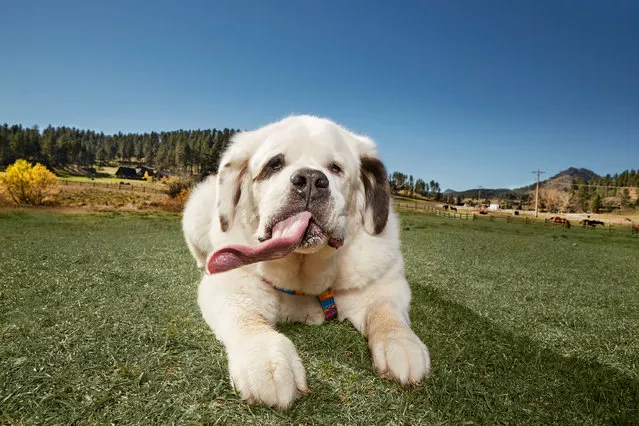
An eight-year-old St Bernard with the longest canine tongue in the world, measuring 18.58cm (7.31in) in length, as recorded by the Guinness World Records: Amazing Animals, in South Dakota, USA. (Photo by Kevin Scott Ramos/GWR/PA Wire)
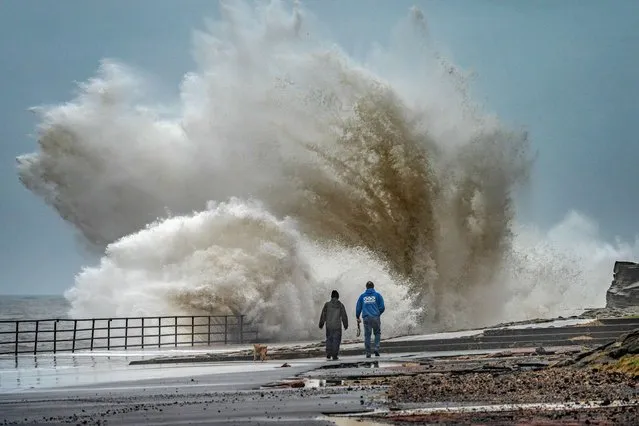
Huge waves hit the promenade at Whitley Bay, North Tyneside, England late Monday afternoon, March 11, 2024, with some people braving a walk along the seafront. (Photo by Ian Sproat/Picture Exclusive)
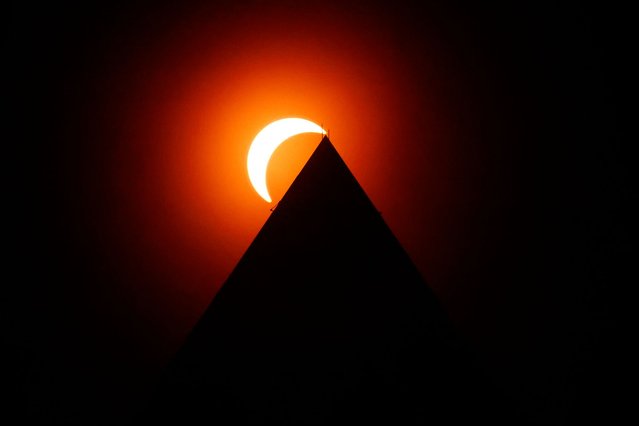
The solar eclipse is seen above the Washington Monument on April 08, 2024 in Washington, DC. People have traveled to areas across North America that are in the “path of totality” in order to experience the eclipse today. The next total solar eclipse that can be seen from a large part of North America won't happen until 2044. (Photo by Chip Somodevilla/Getty Images)