Loading...
Done
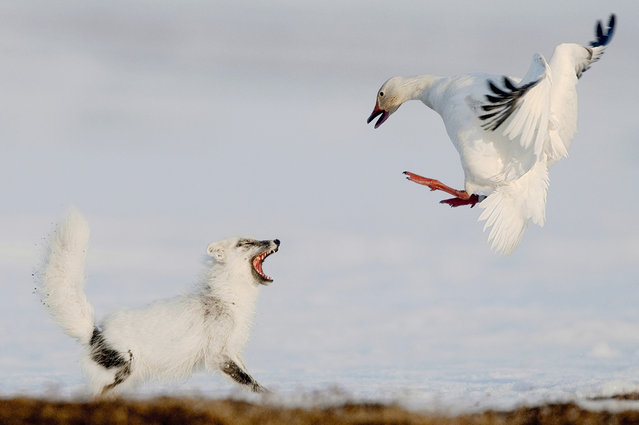
Commended. In late May, about a quarter of a million snow geese arrive from North America to nest on Wrangel Island, in northeastern Russia. They form the world's largest breeding colony of snow geese. Photographer Sergey Gorshkov spent two months on the remote island photographing the unfolding dramas. (Photo by Sergey Gorshkov/Veolia Environnement Wildlife Photographer)

Commended. In late May, about a quarter of a million snow geese arrive from North America to nest on Wrangel Island, in northeastern Russia. They form the world's largest breeding colony of snow geese. Photographer Sergey Gorshkov spent two months on the remote island photographing the unfolding dramas. Arctic foxes take advantage of the abundance of eggs, caching surplus eggs for leaner times. But a goose (here the gander) is easily a match for a fox, which must rely on speed and guile to steal eggs. “The battles were fairly equal”, notes Sergey, “and I only saw a fox succeed in grabbing an egg on a couple of occasions, despite many attempts”. Surprisingly, “the geese lacked any sense of community spirit”, he adds, “and never reacted when a fox harassed a neighboring pair nesting close by”. (Photo by Sergey Gorshkov/Veolia Environnement Wildlife Photographer)
Details
16 Jun 2015 12:30:00
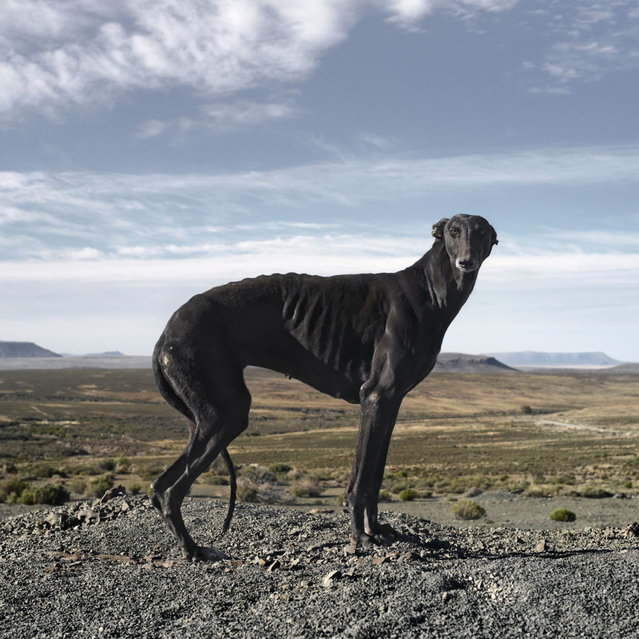
Africanis 18. Murraysburg, Western Cape, May 10, 2010. (Photo by Daniel Naudé)

“The Africanis is a landrace of South African dogs. It is believed to be of ancient origin, directly descended from hounds and pariah dogs of ancient Africa, introduced into the Nile Valley from the Levant. The Swahili name for the breed is umbwa wa ki-shenzi meaning common or mongrel or “traditional dog”. Africanis is also an umbrella name for all the aboriginal dogs in southern Africa”. – Wikipedia. Photo: Africanis 18. Murraysburg, Western Cape, May 10, 2010. (Photo by Daniel Naudé)
Details
19 May 2013 11:51:00
Ebiowei, 48, carries an empty oil container on his head to a place where it would be filled with refined fuel at an illegal refinery site near river Nun in Nigeria's oil state of Bayelsa November 27, 2012. (Photo by Akintunde Akinleye/Reuters)

Ebiowei, 48, carries an empty oil container on his head to a place where it would be filled with refined fuel at an illegal refinery site near river Nun in Nigeria's oil state of Bayelsa November 27, 2012. Locals in the industry say workers can earn $50 to $60 a day. Thousands of people in Nigeria engage in a practice known locally as “oil bunkering” – hacking into pipelines to steal crude then refining it or selling it abroad. The practice, which leaves oil spewing from pipelines for miles around, managed to lift around a fifth of Nigeria's two million barrel a day production last year according to the finance ministry. (Photo by Akintunde Akinleye/Reuters)
Details
18 Jan 2013 14:29:00
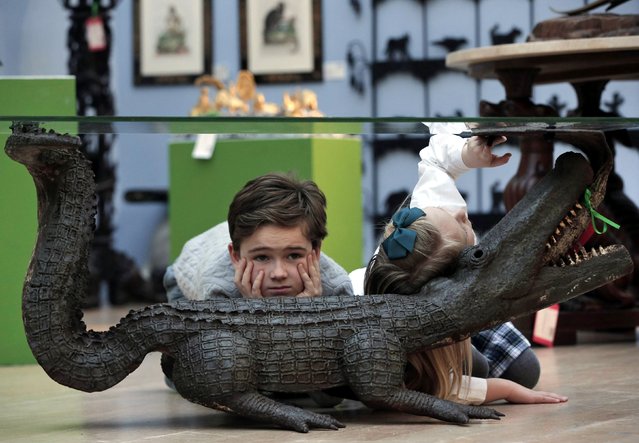
Children sit under a crocodile based table, as they pose for photographers during a press preview of a themed auction that features the animal as artistic inspiration, entitled “Creatures Great and Small”, in London, Monday, December 15, 2014. The sale scheduled for December 17, 2014, explores animals across a diverse range of mediums and styles, from intricate carving details in 19th century furniture through to contemporary sculpture, according to Christie’s auction house. (Photo by Lefteris Pitarakis/AP Photo)

Children sit under a crocodile based table, as they pose for photographers during a press preview of a themed auction that features the animal as artistic inspiration, entitled “Creatures Great and Small”, in London, Monday, December 15, 2014. The sale scheduled for December 17, 2014, explores animals across a diverse range of mediums and styles, from intricate carving details in 19th century furniture through to contemporary sculpture, according to Christie’s auction house. (Photo by Lefteris Pitarakis/AP Photo)
Details
17 Dec 2014 11:18:00
The sun sets behind artist Luke Jerram's “Floating Earth” at Pennington Flash on November 22, 2021 in Wigan, England. The floating Earth will hover over Pennington Flash for 10 days from November 19, as part of a celebration of Wigan and Leigh's watercourses and is the first time one of Jerram's globes has been floated on an open expanse of water. (Photo by Christopher Furlong/Getty Images)

The sun sets behind artist Luke Jerram's “Floating Earth” at Pennington Flash on November 22, 2021 in Wigan, England. The floating Earth will hover over Pennington Flash for 10 days from November 19, as part of a celebration of Wigan and Leigh's watercourses and is the first time one of Jerram's globes has been floated on an open expanse of water. (Photo by Christopher Furlong/Getty Images)
Details
31 Dec 2021 05:57:00
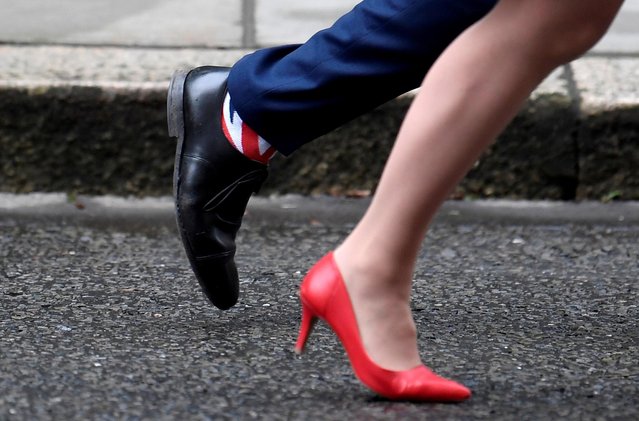
Britain's Health and Social Care Secretary Matt Hancock wears Union Jack socks as he leaves with Britain's Leader of the House of Lords Baroness Evans after a cabinet meeting on Downing Street in London, Britain on January 7, 2020. (Photo by Toby Melville/Reuters)

Britain's Health and Social Care Secretary Matt Hancock wears Union Jack socks as he leaves with Britain's Leader of the House of Lords Baroness Evans after a cabinet meeting on Downing Street in London, Britain on January 7, 2020. (Photo by Toby Melville/Reuters)
Details
09 Jan 2020 00:07:00
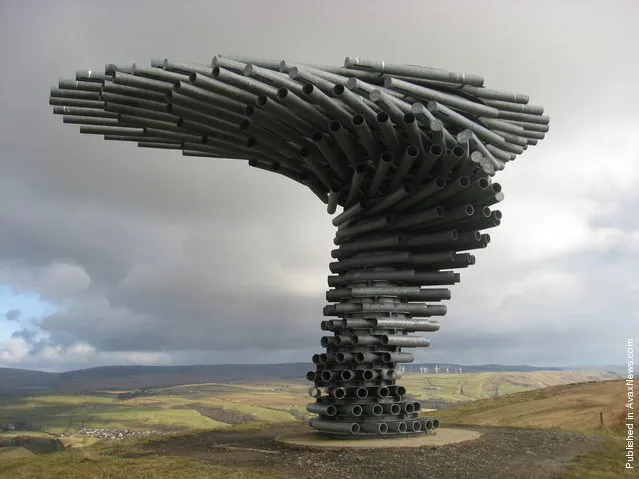
Panopticons: Singing Ringing Tree

“Panopticons is an arts and regeneration project of the East Lancashire Environmental Arts Network managed by Mid Pennine Arts. It involved the construction of series of 21st-century landmarks, or Panopticons (structures providing a comprehensive view), across East Lancashire, England, as symbols of the renaissance of the area”. – Wikipedia

Photo: “Singing Ringing Tree. The Singing Ringing Tree is a musical sculpture overlooking Burnley. It was designed by architects Mike Tonkin and Anna Liu of Tonkin Liu and constructed from pipes of galvanised steel”. (Photos by WandereringSoul/Mark Tighe)
Details
09 Apr 2012 12:18:00
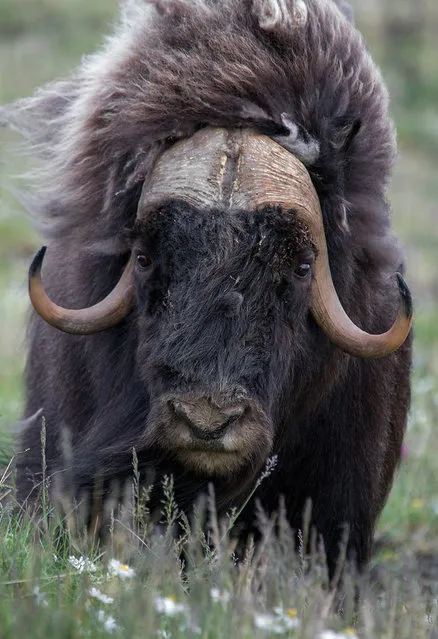
Wild Musk Oxen in Arctic Prairie in Russia

Vitaly Gorshkov, a wildlife photographer, captured these animals in their natural habitat. He says that these animals are so hairy that it is difficult to distinguish the front from the back. The oxen aren’t really afraid of humans that is why it is easy to approach them and take pictures.
Details
25 Apr 2014 12:10:00