Loading...
Done
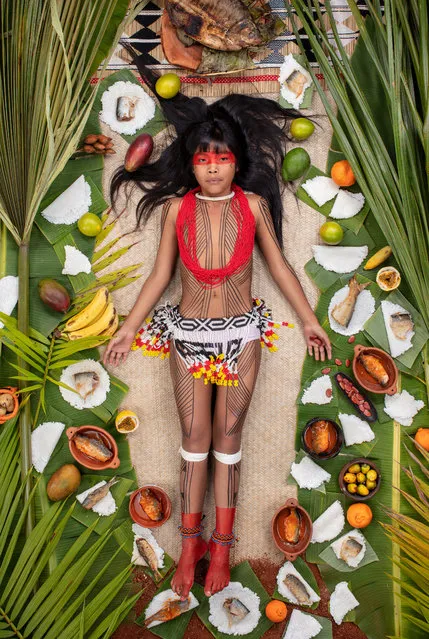
Kawakanih Yawalapiti, 9, Upper Xingu region of Mato Grosso, Brazil, 2018: Kawakanih lives with her tribe, the Yawalapiti, in Xingu national park, a preserve in the Amazon basin of Brazil. The Yawalapiti collect seeds to preserve species unique to their ecosystem, which lies between the rain forest and savannah. Kawakanih’s diet is simple, consisting mainly of fish, cassava, porridge, fruit and nuts. “It takes five minutes to catch dinner”, says Kawakanih. “When you’re hungry, you just go to the river with your net”. (Photo by Gregg Segal/The Guardian)

Photographer Gregg Segal travelled the world to document children and the food they eat in a week. Partly inspired by the increasing problems of childhood obesity, he tracked traditional regional diets as yet unaffected by globalisation, and ironically, found that the healthiest diets were often eaten by the least well off. (Photo by Gregg Segal/The Guardian)
Details
03 Jul 2019 00:03:00
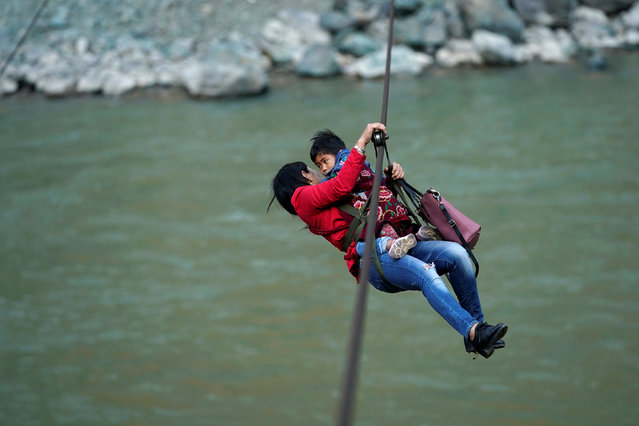
Cha Huilan, a 40-year old Lisu woman, and her daughter leave Lazimi village with a zipline across the Nu River in Nujiang Lisu Autonomous Prefecture in Yunnan province, China, March 24, 2018. (Photo by Aly Song/Reuters)

Cha Huilan, a 40-year old Lisu woman, and her daughter leave Lazimi village with a zipline across the Nu River in Nujiang Lisu Autonomous Prefecture in Yunnan province, China, March 24, 2018. Chinese mountain villagers, cut off from shops and churches by a raging river, use a zipline to cross its violent rapids and jagged rocks. (Photo by Aly Song/Reuters)
Details
28 May 2018 00:05:00
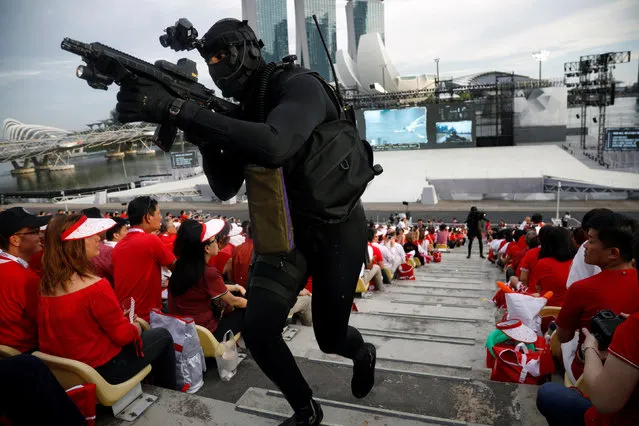
A navy diver storms into the gallery during a military display at Singapore's 52nd National Day celebrations at Marina Bay in Singapore August 9, 2017. (Photo by Edgar Su/Reuters)

A navy diver storms into the gallery during a military display at Singapore's 52nd National Day celebrations at Marina Bay in Singapore August 9, 2017. (Photo by Edgar Su/Reuters)
Details
10 Aug 2017 08:38:00
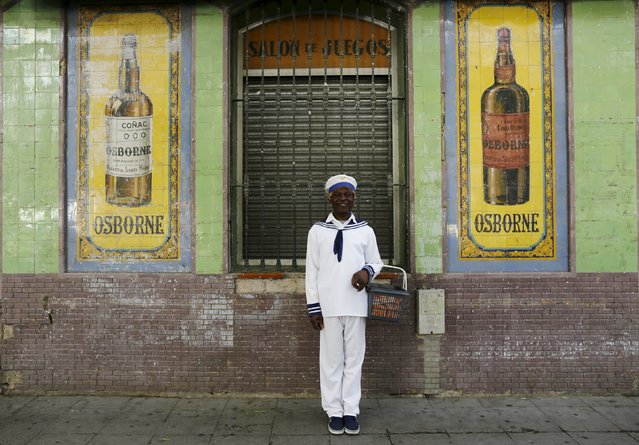
Howard Jackson, a Liberian migrant, poses for a portrait in the Andalusian capital of Seville, southern Spain March 7, 2016. (Photo by Marcelo del Pozo/Reuters)

Howard Jackson, a Liberian migrant, poses for a portrait in the Andalusian capital of Seville, southern Spain March 7, 2016. Jackson escaped civil war and spent three years crossing Africa before reaching Spain. Dressed up in one of his more than 200 costumes, from Peter Pan to Little Red Riding Hood, he is a well-known figure at an intersection entering the Spanish city of Seville where he has sold tissues to motorists for over a decade. Jackson is studying law and wants to become a judge. (Photo by Marcelo del Pozo/Reuters)
Details
24 Mar 2016 12:14:00
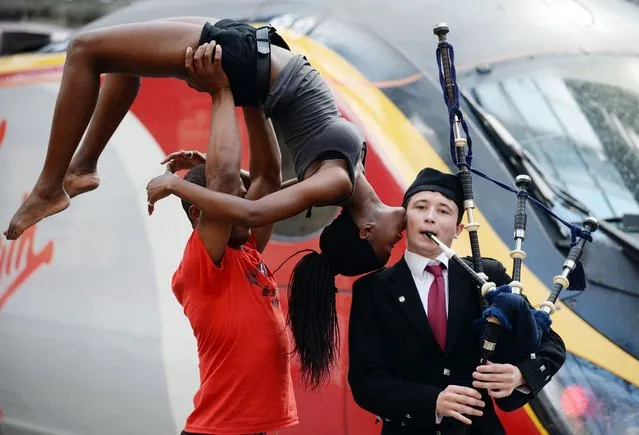
Commonwealth dance group on the right track with Virgin Trains – Photo call at Glasgow Central Station. (Photo by Daily Record)

Commonwealth dance group on the right track with Virgin Trains – Photo call at Glasgow Central Station. (Photo by Daily Record)
Details
14 Jul 2014 13:09:00
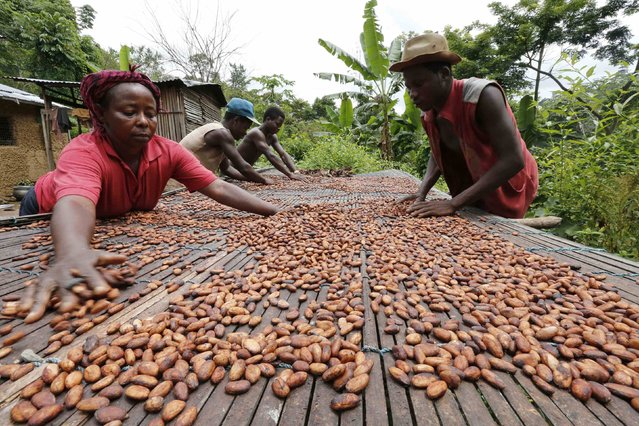
People work with cocoa beans in Enchi June 17, 2014. Picture taken June 17, 2014. Ghana emerged as a success story during the 2000s, when war, political instability and a disastrous liberalization brought Ivory Coast's cocoa sector to its knees. Ghana's output more than tripled from 340,000 tons in the 2001/02 season to a record 1,025,000 tons a decade later. Strict controls cemented its reputation as a producer of top quality beans, establishing a brand that fetches a premium. (Photo by Thierry Gouegnon/Reuters)

People work with cocoa beans in Enchi June 17, 2014. Picture taken June 17, 2014. Ghana emerged as a success story during the 2000s, when war, political instability and a disastrous liberalization brought Ivory Coast's cocoa sector to its knees. Ghana's output more than tripled from 340,000 tons in the 2001/02 season to a record 1,025,000 tons a decade later. Strict controls cemented its reputation as a producer of top quality beans, establishing a brand that fetches a premium. (Photo by Thierry Gouegnon/Reuters)
Details
03 Aug 2014 07:17:00
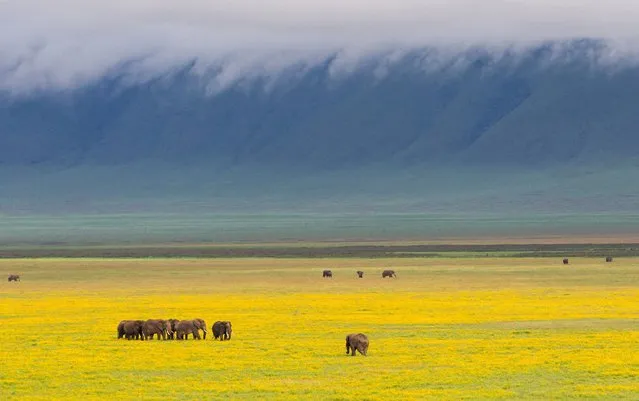
Ngorongoro Crater (Tanzania). At 610m deep and 260 sq km, this is the largest unflooded caldera in the world. A blue-green vision from above it's a haven for engangered wildlife and Maasai livestock. The crater was formed three million years ago when a giant volcano, which could have been as high as Kilimanjaro, exploded and collapsed. The caldera formed the concentric fractures in the crust cracked down to a magma reservoir deep underground. (Photo by John Bryant/Getty Images)

Ngorongoro Crater (Tanzania). At 610m deep and 260 sq km, this is the largest unflooded caldera in the world. A blue-green vision from above it's a haven for engangered wildlife and Maasai livestock. The crater was formed three million years ago when a giant volcano, which could have been as high as Kilimanjaro, exploded and collapsed. The caldera formed the concentric fractures in the crust cracked down to a magma reservoir deep underground. (Photo by John Bryant/Getty Images)
Details
28 Mar 2014 08:08:00
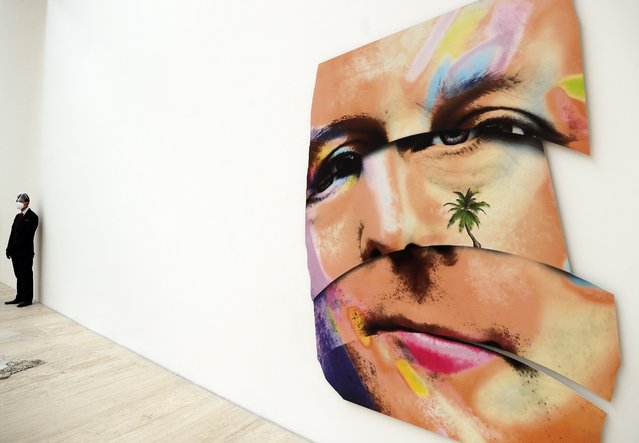
View of the work “Divided” (2016), within the visual artist's exhibition “Urs Fischer: Lovers”, exhibited at the Museo Jumex in Mexico City, Mexico 31 March 2022. The sensations and emotions of love and life, as well as the energy and forces that create and wear it down, inhabit “Urs Fischer: Lovers”, the first solo exhibition in Mexico by Swiss plastics artist Urs Fischer. (Photo by Alex Cruz/EPA/EFE)

View of the work “Divided” (2016), within the visual artist's exhibition “Urs Fischer: Lovers”, exhibited at the Museo Jumex in Mexico City, Mexico 31 March 2022. The sensations and emotions of love and life, as well as the energy and forces that create and wear it down, inhabit “Urs Fischer: Lovers”, the first solo exhibition in Mexico by Swiss plastics artist Urs Fischer. (Photo by Alex Cruz/EPA/EFE)
Details
26 May 2022 04:25:00