Loading...
Done
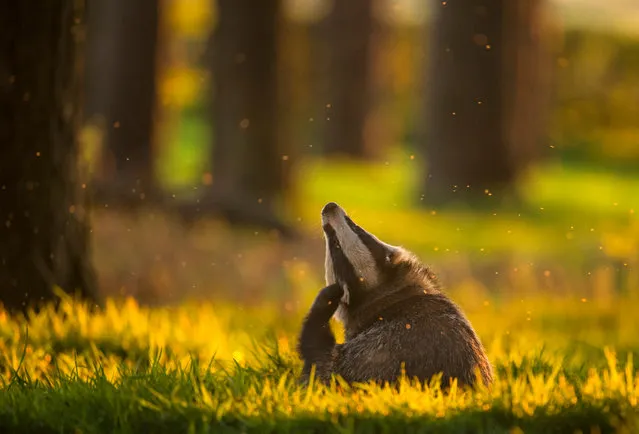
Andrew Parkinson, animal behaviour category winner: Crepuscular Contentment, Derbyshire. “In 15 years of working with badgers I’ve never seen a badger sit out in the open to have a scratch. I was sat concealed behind a tree and downwind so it was especially nice that the badger had his back to me, demonstrating just how inconspicuous and inconsequential my presence was”. (Photo by Andrew Parkinson/British Wildlife Photography Awards 2017)

Andrew Parkinson, animal behaviour category winner: Crepuscular Contentment, Derbyshire. “In 15 years of working with badgers I’ve never seen a badger sit out in the open to have a scratch. I was sat concealed behind a tree and downwind so it was especially nice that the badger had his back to me, demonstrating just how inconspicuous and inconsequential my presence was”. (Photo by Andrew Parkinson/British Wildlife Photography Awards 2017)
Details
10 Nov 2017 09:01:00
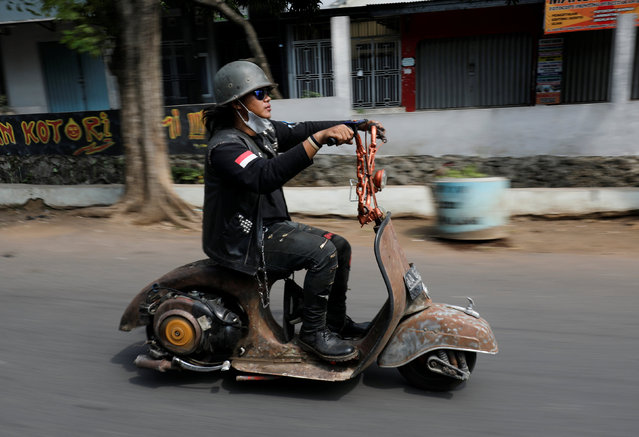
An extreme Vespa enthusiast rides his bike after attending weekend festival for extreme Vespas in Semarang, Central Java, Indonesia, July 22, 2018. (Photo by Darren Whiteside/Reuters)

An extreme Vespa enthusiast rides his bike after attending weekend festival for extreme Vespas in Semarang, Central Java, Indonesia, July 22, 2018. Every year, Indonesians from teens and granddads, to mechanics and students, gather in eastern Java to celebrate their love of the iconic Italian Vespa scooter. (Photo by Darren Whiteside/Reuters)
Details
31 Aug 2018 00:05:00
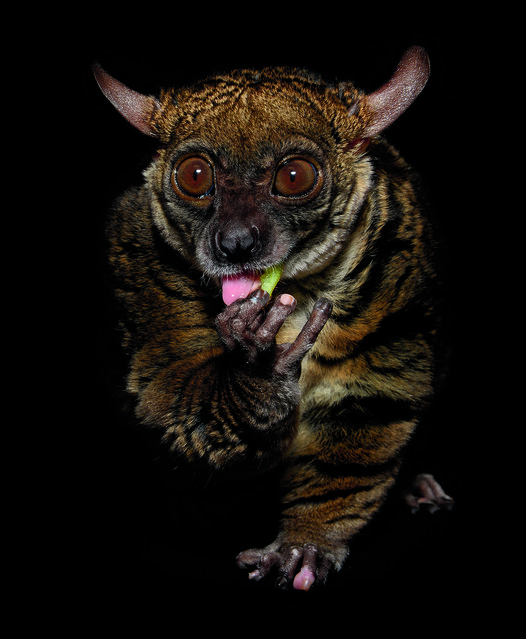
Galagos, more commonly known as bush babies, are tiny African primates with remarkable jumping abilities. Thanks to the elastic energy stored in the tendons of their lower legs, small-eared galagos can jump 6 feet straight up in the air. (Photo by Traer Scott/Chronicle Books)

Galagos, more commonly known as bush babies, are tiny African primates with remarkable jumping abilities. Thanks to the elastic energy stored in the tendons of their lower legs, small-eared galagos can jump 6 feet straight up in the air. (Photo by Traer Scott/Chronicle Books)
Details
07 Sep 2014 12:38:00
A humanoid robot named “Yangyang” shows a facial expression during its demonstration at the Global Mobile Internet Conference (GMIC) 2015 in Beijing, China, April 29, 2015. (Photo by Kim Kyung-Hoon/Reuters)

A humanoid robot named “Yangyang” shows a facial expression during its demonstration at the Global Mobile Internet Conference (GMIC) 2015 in Beijing, China, April 29, 20155. The android was produced jointly by China's Shanghai Yangyang Intellegent Robot Science Service center and Japanese professor Hiroshi Ishiguro, with the aim of popularising robotics among the young. (Photo by Kim Kyung-Hoon/Reuters)
Details
30 Apr 2015 10:50:00
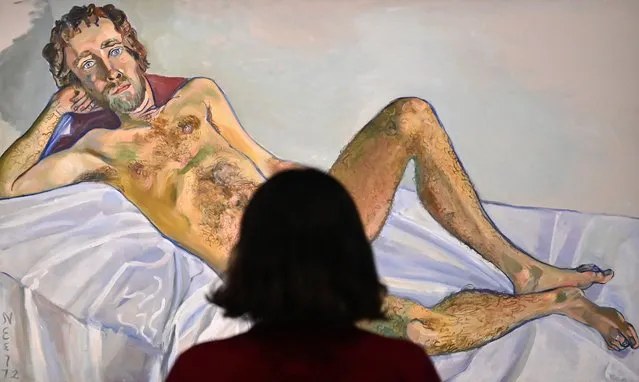
A gallery assistant poses for a photograph with an artwork entitled “John Perreault, 1972” by US artist Alice Neel during a press preview of “Alice Neel: Hot Off The Griddle” at the Barbican Art Gallery in London on February 15, 2023. (Photo by Justin Tallis/AFP Photo)

A gallery assistant poses for a photograph with an artwork entitled “John Perreault, 1972” by US artist Alice Neel during a press preview of “Alice Neel: Hot Off The Griddle” at the Barbican Art Gallery in London on February 15, 2023. (Photo by Justin Tallis/AFP Photo)
Details
16 Mar 2023 05:14:00
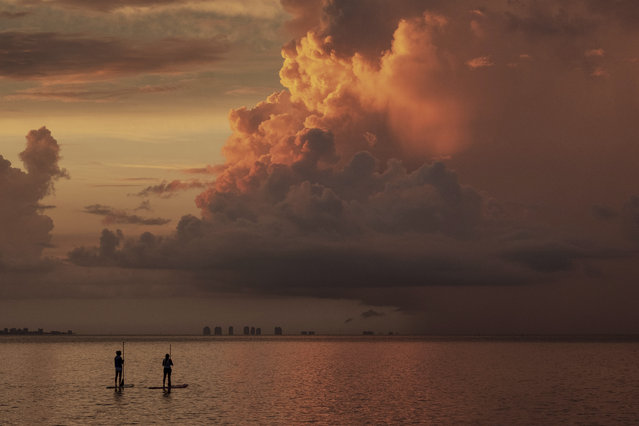
Two paddle boarders stop to watch the sunrise on a stormy morning in Sanibel, Fla., Thursday, August 15, 2019. (Photo by J. David Ake/AP Photo)

Two paddle boarders stop to watch the sunrise on a stormy morning in Sanibel, Fla., Thursday, August 15, 2019. (Photo by J. David Ake/AP Photo)
Details
07 Oct 2019 00:03:00
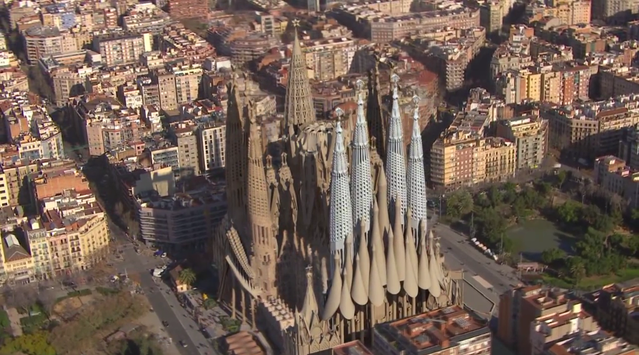
We Build Tomorrow – Sagrada Familia 2026 ( VIDEO )

For more than a century, the Barcelona skyline has been graced (or marred, depending on who’s talking) by the spectacle of the Basilica designed by Anton Gaudi, first started in 1882. If you want to know what it’ll look like when finished, don’t fret — 2026 is right around the corner. Or you can watch this video, released last week on YouTube by Basílica de la Sagrada Família and titled simply “2026 We Build Tomorrow,” a 3-D artists’ rendering of the building stages through completion.
(If 144 years sounds like a long time to finish a cathedral, keep in mind that there were decades that they didn’t work on it — and that Notre Dame de Paris took 182 years, although the 13th century Parisians didn’t have diesel-powered industrial cranes.) Now, if only the video could show us what the admission and hours will be in 2026 (and how to avoid the inevitable long lines).
Details
11 Jan 2014 10:59:00
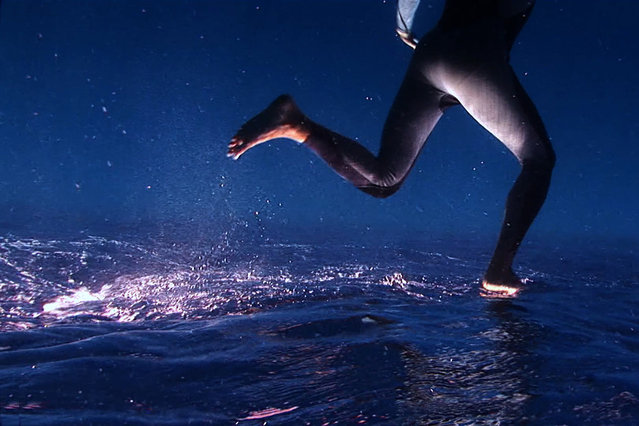
A freediver uses weights, yoga and camera tricks to create the illusion of walking underwater for a film which took three years to shoot and was completed in 2013 in El Hierro, Canary Islands. Like a scene from a Hollywood science-fiction movie, this trick footage shows a man apparently walking on water. The underwater film was shot by biologist Armiche Ramos and brothers Armando and Francisco del Rosario, who used their expertise in freediving to create the illusion. (Photo by Ocean Brothers/Barcroft Media/ABACAPress)

A freediver uses weights, yoga and camera tricks to create the illusion of walking underwater for a film which took three years to shoot and was completed in 2013 in El Hierro, Canary Islands. Like a scene from a Hollywood science-fiction movie, this trick footage shows a man apparently walking on water. The underwater film was shot by biologist Armiche Ramos and brothers Armando and Francisco del Rosario, who used their expertise in freediving to create the illusion. No computer graphics were involved in the production, with the team relying solely on their own skills – and a few hidden secrets. (Photo by Ocean Brothers/Barcroft Media/ABACAPress)
Details
25 Nov 2014 11:05:00