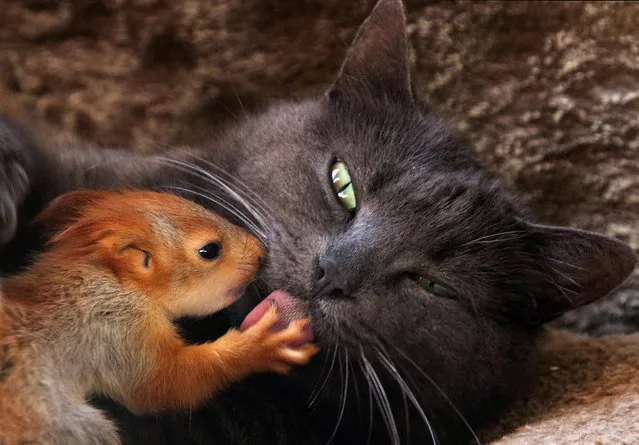
Pusha the cat, which adopted four bereaved baby squirrels and currently feeds and lives with them, lies at a local park of miniatures in Bakhchisaray, Crimea on April 25, 2019. (Photo by Alexey Pavlishak/Reuters)
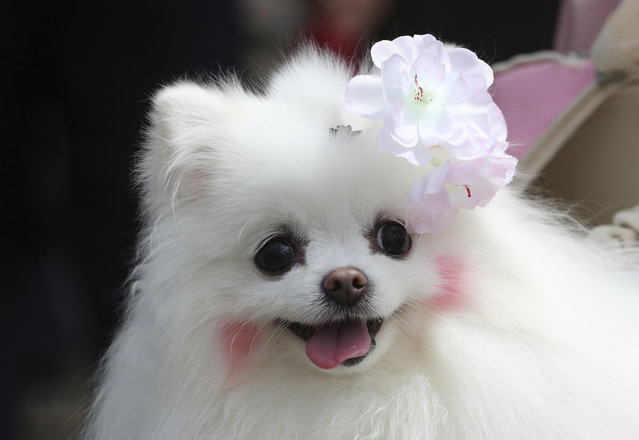
A dog with a cherry blossom-shaped pin, is seen in the cherry blossom festival in Seoul, South Korea, Sunday, April 9, 2017. (Photo by Lee Jin-man/AP Photo)
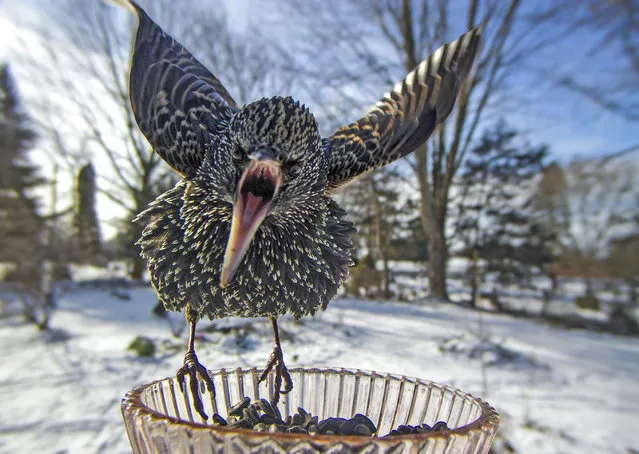
A starling jealously guards a seed station in the back garden of the photographer’s Michigan home in January 2024. (Photo by Lisa Cavanary/Solent News)
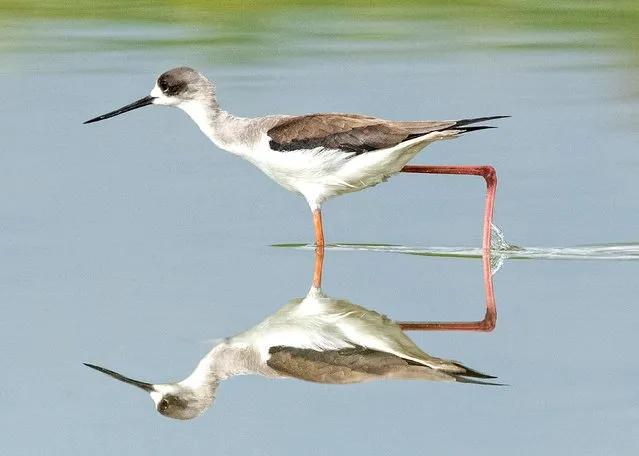
A black-winged stilt patrols a reservoir in Jezreel Valley in Israel early April 2023. Their eggs are a golden colour mottled with brown. (Photo by Itamar Procaccia/Solent News)
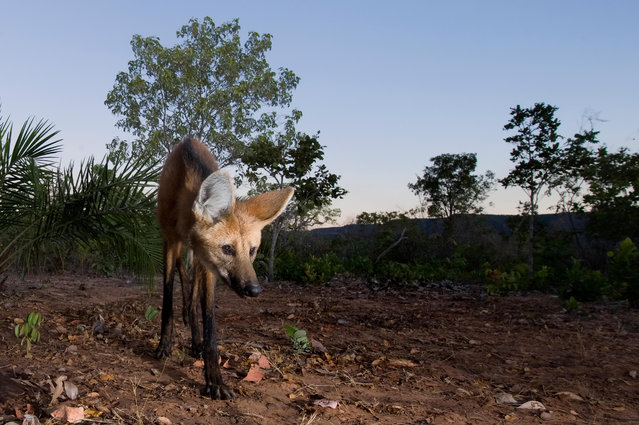
Global wildlife populations will decline by 67% by 2020 unless urgent action is taken to reduce human impact on species and ecosystems, warns the biennial Living Planet Index report from WWF (World Wide Fund for Nature) and ZSL (Zoological Society of London). From elephants to eels, here are some of the wildlife populations most affected by human activity. Here: The maned wolf is among the large mammals in the Brazilian Cerrado that are threatened by the increasing conversion of grasslands into farmland for grazing and growing crops. (Photo by Ben Cranke/Nature Picture Library/Alamy Stock Photo)
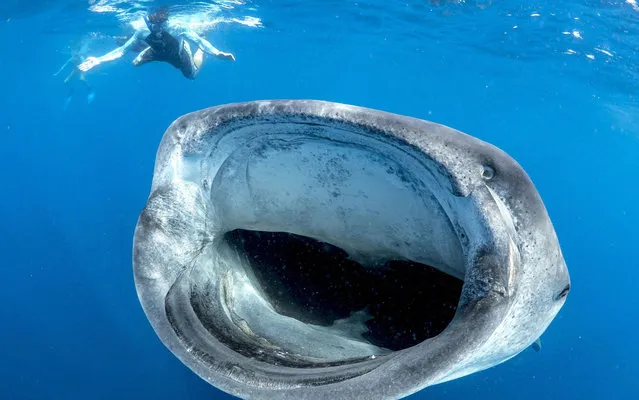
Marine biologist Simon Pierce, who studies whale sharks, happened to be in the right place at the right time to capture amazing photo off Cancun, Mexico. (Photo by Simon Pierce/Mercury Press/Caters News)