Loading...
Done
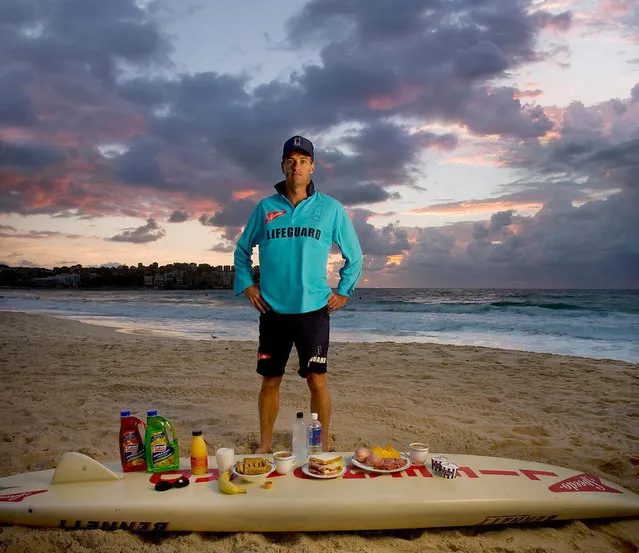
What the World Eats By Peter Menzel And Faith D'Aluisio Part 2

A stunning photographic collection featuring portraits of people from 30 countries and the food they eat in one day. In this fascinating study of people and their diets, 80 profiles are organized by the total number of calories each person puts away in a day. Featuring a Japanese sumo wrestler, a Massai herdswoman, world-renowned Spanish chef Ferran Adria, an American competitive eater, and more, these compulsively readable personal stories also include demographic particulars, including age, activity level, height, and weight. Essays from Harvard primatologist Richard Wrangham, journalist Michael Pollan, and others discuss the implications of our modern diets for our health and for the planet. This compelling blend of photography and investigative reportage expands our understanding of the complex relationships among individuals, culture, and food.
Details
02 May 2014 09:20:00
What 200 Calories Looks Like In Different Foods Part 3

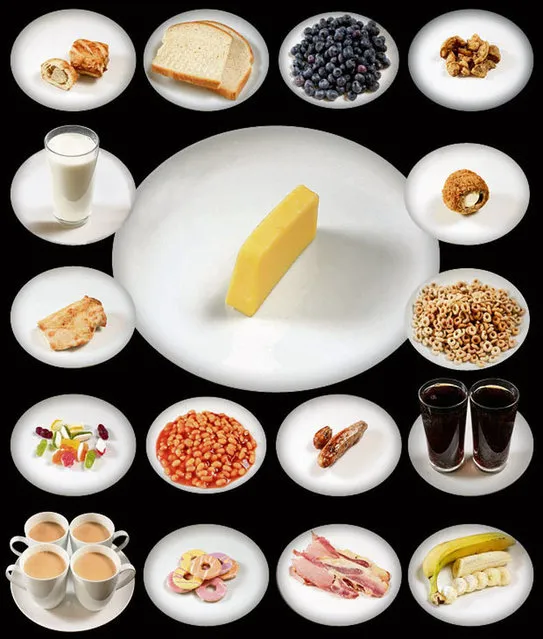
Some foods have significantly more Calories than others but what does the difference actually look like. Each of the photographs below represents 200 Calories of the particular type of food; the images are sorted from low to high calorie density. When you consider that an entire plate of broccoli contains the same number of Calories as a small spoonful of peanut butter, you might think twice the next time you decide what to eat. According to the U.S. Department of Agriculture, the average adult needs to consume about 2000 – 2500 Calories to maintain their weight. In other words, you have a fixed amount of Calories to "spend" each day; based on the following pictures, which would you eat?


See Also: Ppart 1 _ Part 2
Details
02 Aug 2014 09:53:00
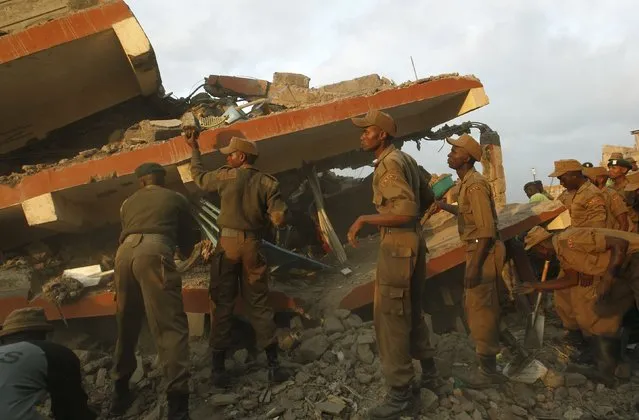
Rescuers search for survivors in the rubble of a collapsed residential building in Makongeni estate in Nairobi December 17, 2014. (Photo by Thomas Mukoya/Reuters)

Rescuers search for survivors in the rubble of a collapsed residential building in Makongeni estate in Nairobi December 17, 2014. Three more bodies were recovered on Wednesday night from the building that collapsed in Makongeni estate in Nairobi, raising the death toll to four, Kenya Red Cross has reported. The residential building whose sixth floor was still under construction had allegedly not been cleared for occupation by the Nairobi City County and its owner has been missing since it collapsed. A search and rescue and rescue operation is ongoing for the unknown number of people still trapped under the rubble, Kenya Red Cross also reported. (Photo by Thomas Mukoya/Reuters)
Details
18 Dec 2014 14:23:00
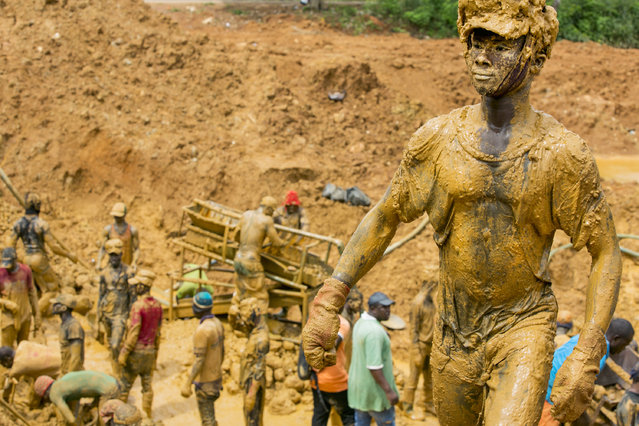
Miners work extremely long days under the hot sun and the hours are often longer in illegal mines in Ghana, West Africa, 2014. An Australian photographer has captured the harsh reality of illegal mining under the unforgiving sun with these Ghanaian miners. Heidi Woodman travelled to Ghana, West Africa to explore the regionís booming mining business, including the growing number of illegal mines. Using Accra as her base, Heidi visited the areas of Tarkwa, Kyebi, East Akim, Kumasi, Obuasi and Takoradi to find areas with a high concentration of galamsey – illegal mining activity. (Photo by Heidi Woodman/Barcroft Images)

Miners work extremely long days under the hot sun and the hours are often longer in illegal mines in Ghana, West Africa, 2014. An Australian photographer has captured the harsh reality of illegal mining under the unforgiving sun with these Ghanaian miners. (Photo by Heidi Woodman/Barcroft Images)
Details
24 Feb 2017 00:02:00
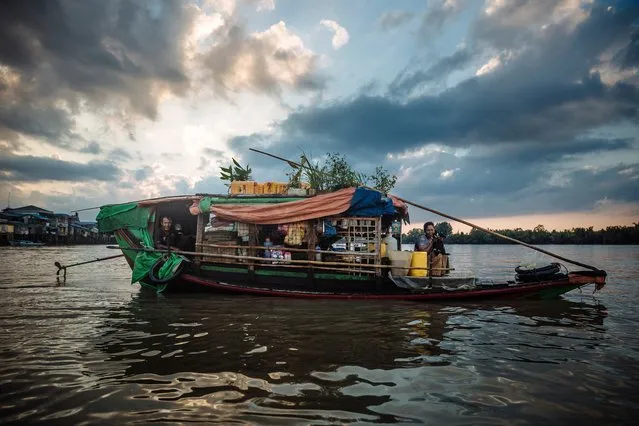
Tin and Naing win live on a small boat which they sail throughout the Delta region in Myanmar. The former gardeners once had a home on land but it was destroyed when a powerful cyclone ravaged the area in 2008. Since then, the couple have not been able to afford to rebuild their home, so they live on the boat from which they sell fish paste to make a living. (Photo by Muse Mohammed/IOM)

The ferocity of crises worldwide is forcing a record number of people to flee their homes, seeking some form of safety within their own country or across international borders. There are 65.3 million displaced people worldwide, including 21.3 million refugees. Most have lost their homes to armed conflict or natural disasters but other factors, such as extreme poverty and climate change, also drive displacement. The International Organisation for Migration commissioned photojournalist Muse Mohammed to document the plight of the displaced. (Photo by Muse Mohammed/IOM)
Details
02 Jan 2017 12:04:00
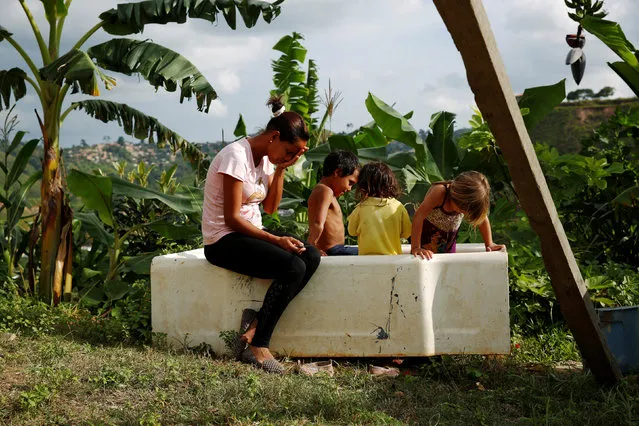
Lisibeht Martinez (L), 30, who was sterilized one year ago, sits next to her children while they play in a bathtub in the backyard of their house in Los Teques, Venezuela July 19, 2016. (Photo by Carlos Garcia Rawlins/Reuters)

Venezuela's food shortages, inflation and crumbling medical sector have become such a source of anguish that a growing number of young women are reluctantly opting for sterilizations rather than face the hardship of pregnancy and child-rearing. Traditional contraceptives like condoms or birth control pills have virtually vanished from store shelves, pushing women towards the hard-to-reverse surgery. While no recent national statistics on sterilizations are available, doctors and health workers say demand for the procedure is growing. (Photo by Carlos Garcia Rawlins/Reuters)
Details
04 Aug 2016 12:22:00
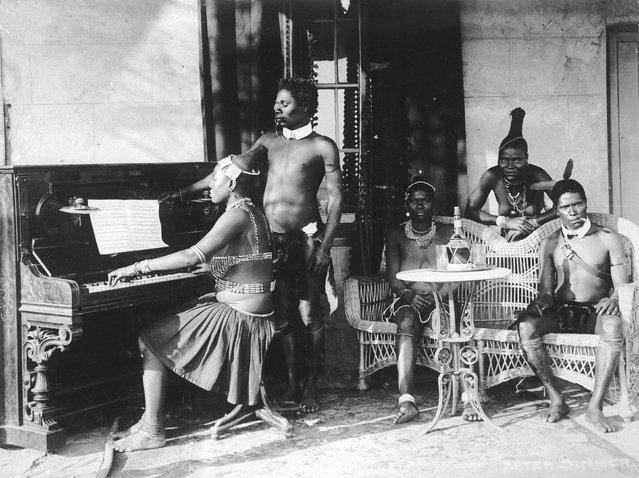
circa 1925:  A Zulu woman playing the piano while a group of others sit and listen.  (Photo by General Photographic Agency/Getty Images)

“The Zulu are the largest South African ethnic group, with an estimated 10–11 million people living mainly in the province of KwaZulu-Natal. Small numbers also live in Zimbabwe, Zambia, and Mozambique. Their language, Zulu, is a Bantu language; more specifically, part of the Nguni subgroup. The Zulu Kingdom played a major role in South African history during the 19th and 20th centuries. Under apartheid, Zulu people were classed as third-class citizens and suffered from state-sanctioned discrimination. They remain today the most numerous ethnic group in South Africa, and now have equal rights along with all other citizens”. – Wikipedia.

Photo: A Zulu woman playing the piano while a group of others sit and listen (to put it briefly, Englishmen scoff over Zulu). South Africa, circa 1925. (Photo by General Photographic Agency)

Details
03 Feb 2014 09:40:00
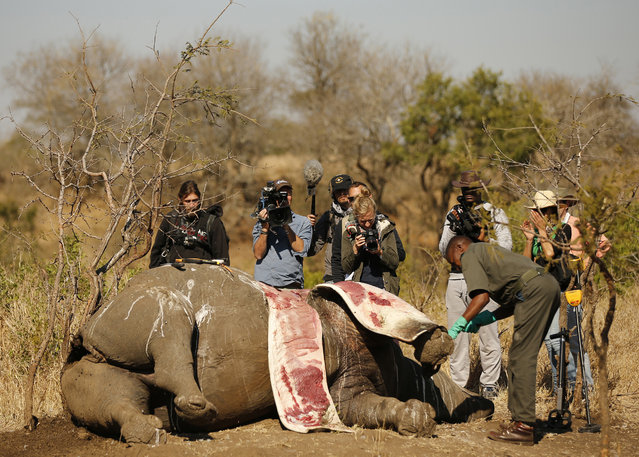
Members of the media film as a ranger performs a post mortem on the carcass of a rhino after it was killed for its horn by poachers at the Kruger national park in Mpumalanga province August 27, 2014. Rhino poachers in South Africa now risk giving themselves away when they shoot thanks to a high-tech, gunfire-detection system being piloted in the country's flagship Kruger National Park. (Photo by Siphiwe Sibeko/Reuters)

Members of the media film as a ranger performs a post mortem on the carcass of a rhino after it was killed for its horn by poachers at the Kruger national park in Mpumalanga province August 27, 2014. Rhino poachers in South Africa now risk giving themselves away when they shoot thanks to a high-tech, gunfire-detection system being piloted in the country's flagship Kruger National Park. The stakes are high, for rhinos are being slain in escalating numbers for their prized horns, alarming both conservationists and the government since wildlife in South Africa is an important tourist draw. (Photo by Siphiwe Sibeko/Reuters)
Details
07 Nov 2015 08:03:00