Kyuta Kumagai, 10, wrestles with a boy the same age as him, during a training session at Buddy acL Ariake's wrestling club in Tokyo, Japan, August 22, 2020. (Photo by Kim Kyung-Hoon/Reuters)
A man, wearing a protective mask following an outbreak of the coronavirus disease (COVID-19), walks in Tokyo, Japan on March 17, 2020. (Photo by Edgard Garrido/Reuters)
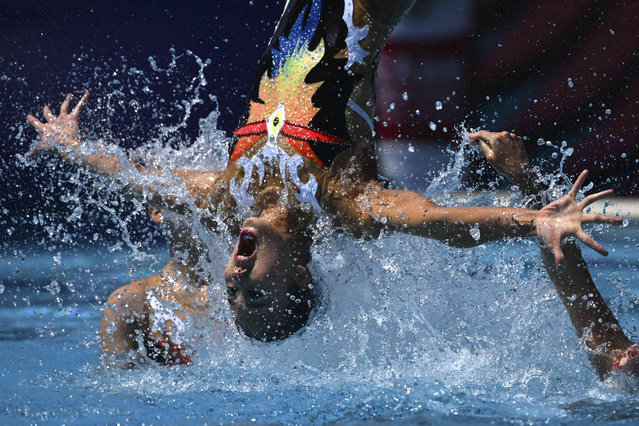
Team Japan competes during the team free preliminaries of artistic swimming at the 19th FINA World Championships in Budapest, Hungary, Wednesday, June 22, 2022. (Photo by Anna Szilagyi/AP Photo)
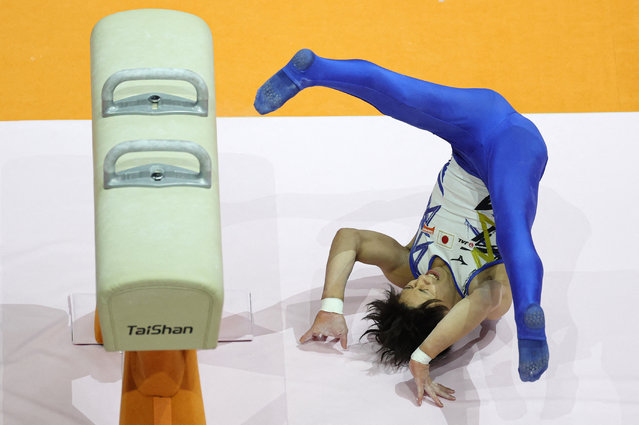
Hiroto Ishizawa of Japan falls while competing on the pommel horse during qualifications at the World Artistic Gymnastics Championships in Jakarta, Indonesia on October 19, 2025. (Photo by Ajeng Dinar Ulfiana/Reuters)
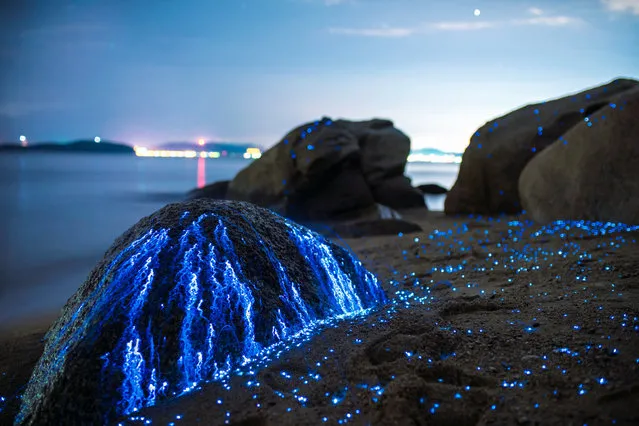
Those lights are actually bioluminescent shrimp, better known as sea fireflies, or, in Japan, as “umibotaru”. Visible every year from May until the end of October, they live in the sand around very shallow sea water and are often seen floating between the extremes of high and low tides. Here: Bioluminescent sea fireflies glittering like diamonds on the rocks and sand. Okayama, Japan. July 2016. (Photo by Trevor Williams/Jonathan Galione/Getty Images)
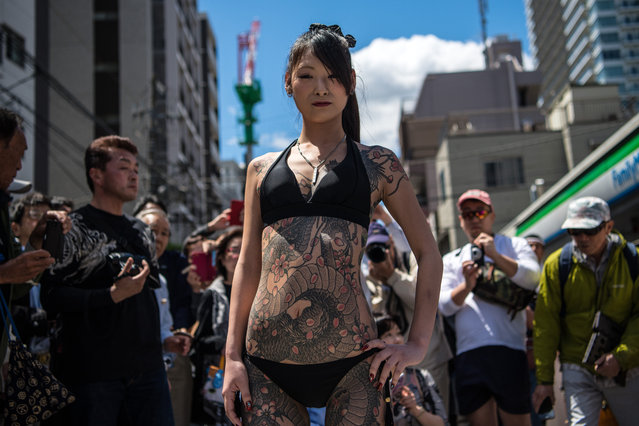
A heavily tattooed Japanese woman poses for photographs near Asakusa Temple during the third and final day of Sanja Festival, on May 20, 2018 in Tokyo, Japan. Sanja Festival is one of Japan's major festivals and is held annually in the Asakusa area of Tokyo. (Photo by Carl Court/Getty Images)
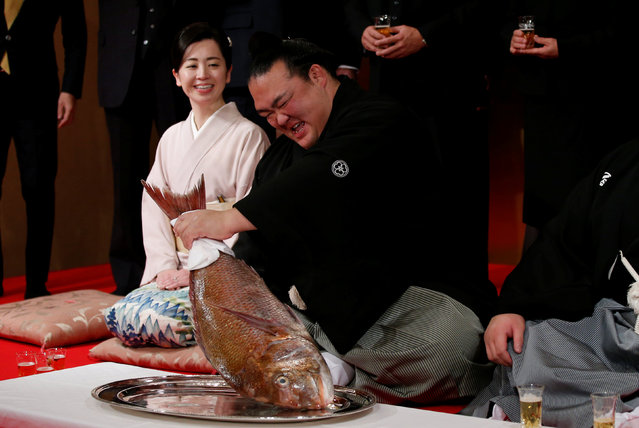
Japanese sumo wrestler Kisenosato (C) holds a red sea bream next to his stablemaster Tagonoura's wife Kotomi as he celebtares after receiving messengers from the Japan Sumo Association bringing official notice of his promotion to Yokozuna, or grand champion, during a ceremony in Tokyo, Japan, January 25, 2017. (Photo by Toru Hanai/Reuters)
For her series “Japanese Whispers”, Belgian photographer Zaza Bertrand headed inside the intimate world of rabuhos – Japanese love hotels. Love hotels became popular in Japan from the 1960s onwards, due to a lack of privacy in many family homes. There are now around 37,000 of these hotels in Japan, allowing short daytime “rests” or overnight stays. (Photo by Zaza Bertrand/The Guardian)