Loading...
Done
Daruma Dolls

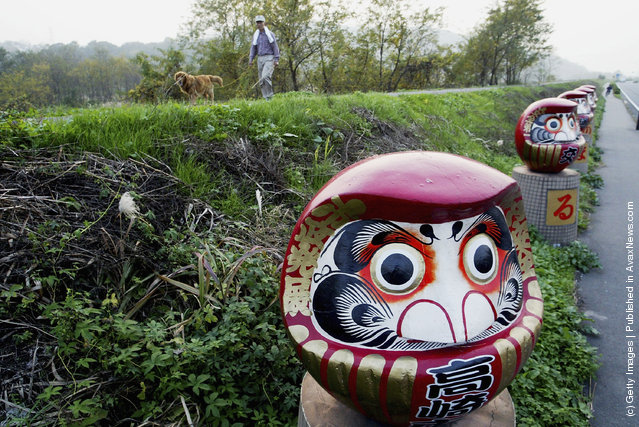
A series of Japanese good luck charms, called “Daruma”, are lined up ahead of the major national elections November 9, 2003 in Takasaki, Japan. The Daruma is said to bring exceptional good luck in all walks of life, but is used especially during election time by all candidates. People think that if they face a difficult situation, as symbolized by the doll that returns to its original position when knocked over, they will always bounce back. (Photo by Koichi Kamoshida/Getty Images)
Details
05 Dec 2011 13:09:00
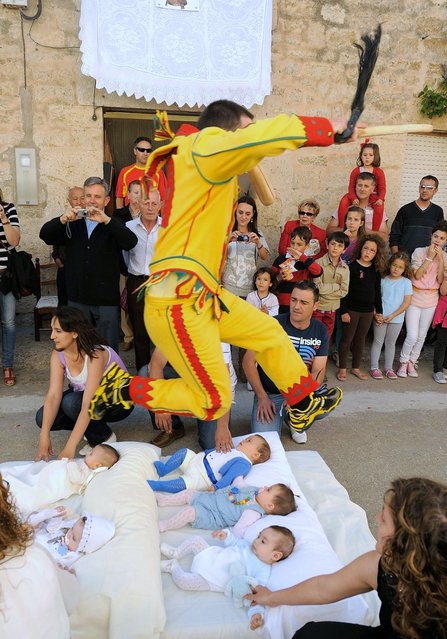
A man representing the devil leaps over babies during the festival of El Colacho in Castrillo de Murcia near Burgos, Spain

A man representing the devil leaps over babies during the festival of El Colacho on June 10, 2012 in Castrillo de Murcia near Burgos, Spain. The festival, held on the first Sunday after Corpus Cristi, represents the devil taking away original sin from the newly born babies by leaping over them. (Photo by Denis Doyle)
Details
11 Jun 2012 10:45:00
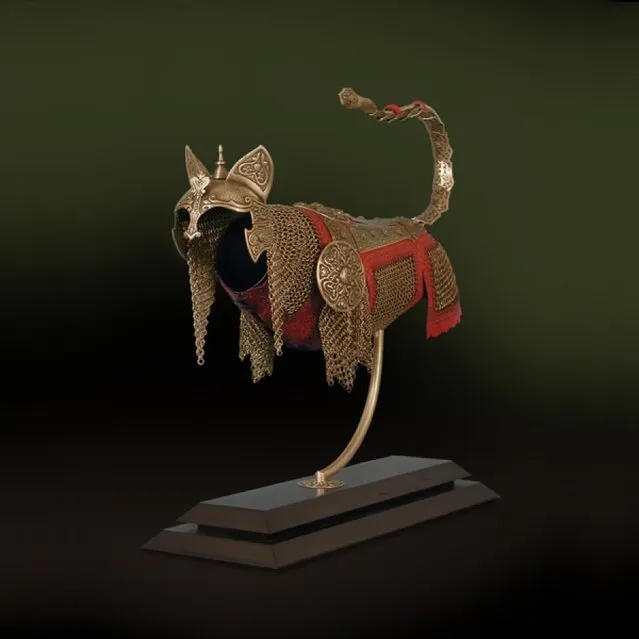
Animal Armour: Cats And Mice By Jeff de Boer

Jeff de Boer is a Calgary-based multi-media artist with an international reputation for producing some of the world's most original and well-crafted works of art. With an emphasis on metal, he is best known for such bodies of work as suits of armour for cats and mice, armour ties and sword-handled briefcases, rocket lamps and pop culture ray guns, and exquisite high art, abstract works called exoforms.
Details
10 Apr 2013 11:50:00
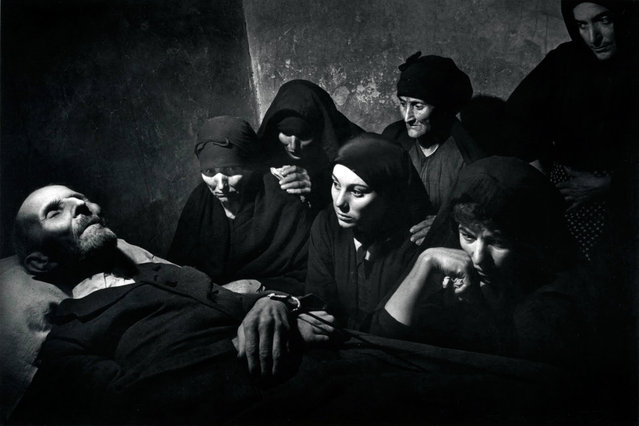
His wife, daughter, granddaughter and friends have their last earthly visit with a villager. (Photo by W. Eugene Smith/Time & Life Pictures)

“Originally published in the April 9, 1951, issue of LIFE magazine, W. Eugene Smith’s photo essay, «Spanish Village», has been lauded for more than six decades as the most moving photographic portrait ever made of daily life in rural Spain during the rule of dictator Francisco Franco”. – Time & Life Pictures. Photo: His wife, daughter, granddaughter and friends have their last earthly visit with a villager. (Photo by W. Eugene Smith/Time & Life Pictures)
Details
30 Apr 2013 10:11:00
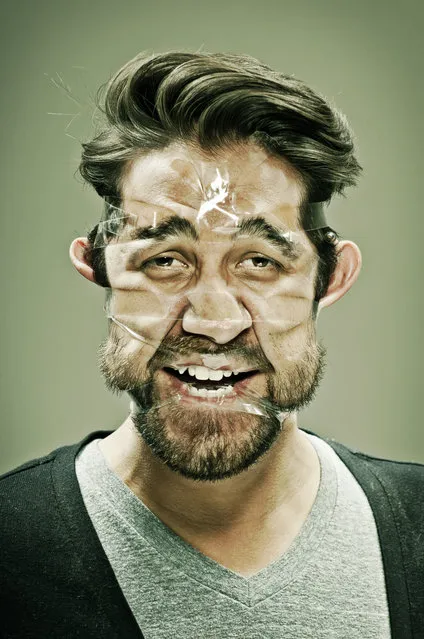
Scotch Tape by Wes Naman

Photographer Wes Naman has created portraits of his friends using Scotch Tape to distort their features. The results are similar to Scottish artist Douglas Gordon's 1997 work, Monster, but Wes says he originally got the idea after applying tape to himself to test a lighting rig set-up. Wes Naman has been a self taught photographer of ten years before graduating from commercial photography in his home in North Carolina. (Photo by Wes Naman/Rex Features)
Details
21 Dec 2012 10:00:00
Maori  People New Zealand

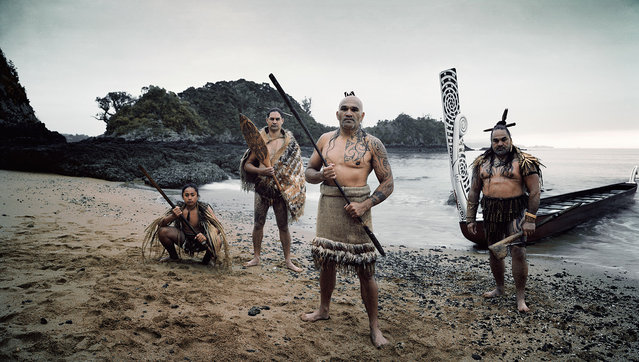
The long and intriguing story of the origine of the indigenous Maori people can be traced back to the 13th century, the mythical homeland Hawaiki, Eastern Polynesia. Due to centuries of isolation, the Maori established a distinct society with characteristic art, a separate language and unique mythology. Defining aspects of Maori traditional culture include art, dance, legends, tattoos and community. While the arrival of European colonists in the 18th centure had a profound impact on the Maori way of life, many aspects of traditional society have survived into the 21th century.
Details
11 Mar 2014 14:40:00
Realistic Hair Art By Roberto Perez Part 2

When Roberto Perez (also known as Rob The Original) gives you a haircut, it’s probably not going to be just a haircut. This San-Antonio-based artist and hair stylist creates amazing works of art using nothing but his clients’ scalp and hair as his canvas. Perez can create just about anything he or his clients can think of – from a photo-realistic portrait or illustration to full-head paintings or graphic designs.


See Also: Part 1
Details
27 Sep 2014 09:50:00
Cordwood Construction - Natural Building

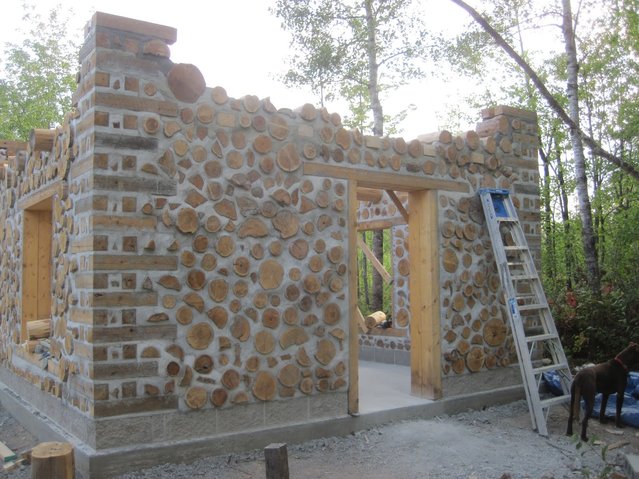
Cordwood construction is a method of natural building that originated roughly one thousand years ago in Greece and Siberia. This method involves using pieces of wood that slightly protrude from the mortar, giving the walls an attractive appearance. Usually, the walls are made 12 to 24 inches thick. However, in some parts of Canada, the walls can be as thick as 36 inches. This method appeals to many people due to its ease of construction economy of resources. Cordwood Construction can be separated into two main types: mortar-insulation-mortar (M-I-M) and Throughwall. M-I-M is a more preferable and widely used choice as it allows for better insulating properties.
Details
27 Nov 2014 15:10:00