Loading...
Done
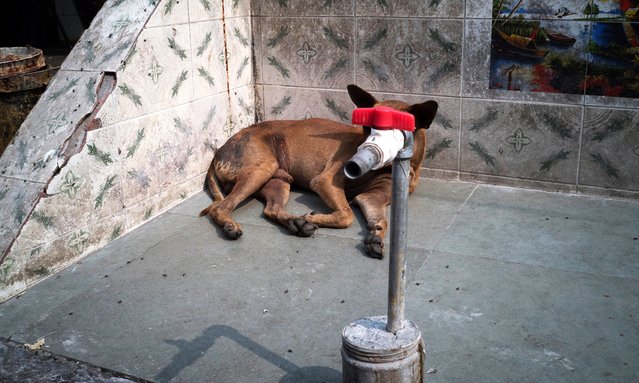
“Unexpected humour”. The Dog and the Faucet, in Kolkata, India on January 2017. (Photo by Pau Buscató/The Guardian)

“Unexpected humour”. The Dog and the Faucet, in Kolkata, India on January 2017. (Photo by Pau Buscató/The Guardian)
Details
13 Oct 2024 03:11:00
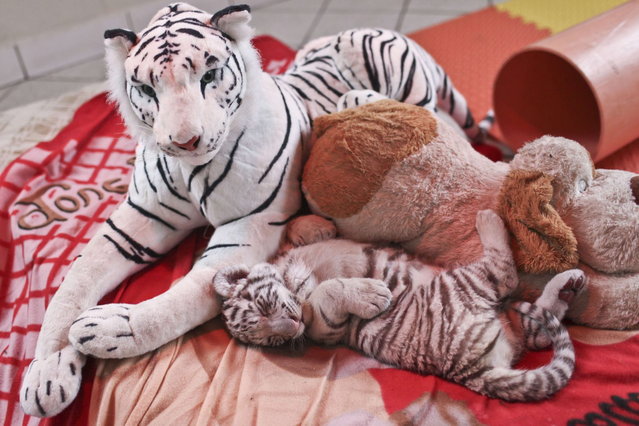
A 42-day-old white bengal tiger cub (bottom), the first of its kind born in Peru, sleeps between toys as he is presented at the Huachipa's zoo in Lima on August 6, 2013. (Photo by Ernesto Benavides/AFP Photo)

A 42-day-old white bengal tiger cub (bottom), the first of its kind born in Peru, sleeps between toys as he is presented at the Huachipa's zoo in Lima on August 6, 2013. (Photo by Ernesto Benavides/AFP Photo)
Details
12 Aug 2013 06:50:00
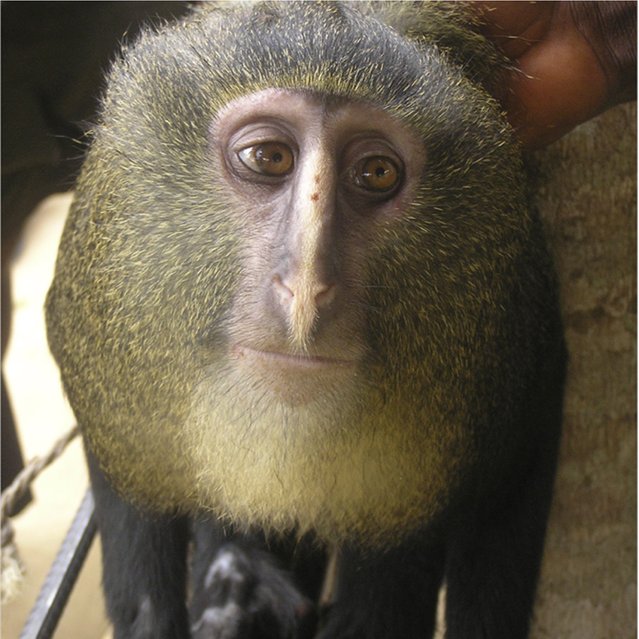
A new species of monkey found in the Democratic Republic of the Congo and identified as Lesula (Cercopithecus lomamiensis) is seen in this undated photograph from an article published September 12, 2012 in the science journal PLOS One. (Photo by Hart J. A., Detwiler K. M., Gilbert C. C./Reuters)

A new species of monkey found in the Democratic Republic of the Congo and identified as Lesula (Cercopithecus lomamiensis) is seen in this undated photograph from an article published September 12, 2012 in the science journal PLOS One. The monkey was first seen in 2007 by researchers John and Terese Hart of the Peabody Museum of Natural History at Yale Research Project. The finding of C. lomamiensis represents only the second new species of African monkey to be discovered in the past 28 years, according to the research article. (Photo by Hart J. A., Detwiler K. M., Gilbert C. C./Reuters)
Details
27 Sep 2012 08:17:00
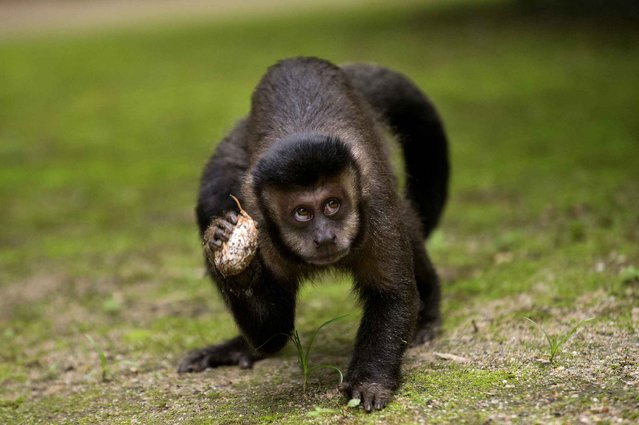
A brown capuchin monkey holds a fruit in the Botanic Garden of Rio de Janeiro, Brazil, on July 5, 2013. (Photo by Pablo Porciuncula/AFP Photo)

A brown capuchin monkey holds a fruit in the Botanic Garden of Rio de Janeiro, Brazil, on July 5, 2013. (Photo by Pablo Porciuncula/AFP Photo)
Details
06 Jul 2013 11:58:00
Passengers travel in an overcrowded train in the eastern Indian city of Patna, February 23, 2010. (Photo by Krishna Murari Kishan/Reuters)

Passengers travel in an overcrowded train in the eastern Indian city of Patna, February 23, 2010. (Photo by Krishna Murari Kishan/Reuters)
Details
26 Feb 2016 10:20:00
In this third of seven sequential photos, Elian Gonzalez is held in a closet by Donato Dalrymple, one of the two men who rescued the boy from the ocean, right, as government officials search the home of Lazaro Gonzalez for the young boy, early morning, April 22, 2000, in Miami, Florida. Armed federal agents seized Elian Gonzalez from the home of his Miami relatives before dawn, firing tear gas into an angry crowd as they left the scene with the weeping 6-year-old boy. This photo won the Prize in 2001. (Photo by Alan Diaz/AP Photo)

In this third of seven sequential photos, Elian Gonzalez is held in a closet by Donato Dalrymple, one of the two men who rescued the boy from the ocean, right, as government officials search the home of Lazaro Gonzalez for the young boy, early morning, April 22, 2000, in Miami, Florida. Armed federal agents seized Elian Gonzalez from the home of his Miami relatives before dawn, firing tear gas into an angry crowd as they left the scene with the weeping 6-year-old boy. This photo won the Prize in 2001. (Photo by Alan Diaz/AP Photo)
Details
22 Aug 2014 12:18:00
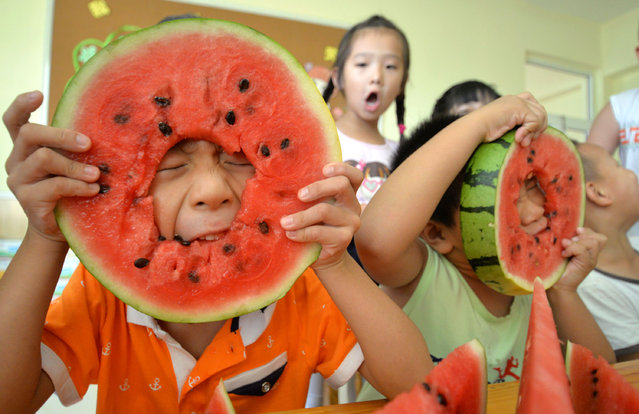
Children eat watermelons to meet the “beginning of autumn” at a kindergarten in Handan, China on August 7, 2015. Chinese tradition to eat watermelons or peaches before that day symbolises “biting away summer”. The solar term ‘beginning of autumn’ falls on 8 August this year. (Photo by Xinhua/REX Shutterstock)

Children eat watermelons to meet the “beginning of autumn” at a kindergarten in Handan, China on August 7, 2015. Chinese tradition to eat watermelons or peaches before that day symbolises “biting away summer”. The solar term ‘beginning of autumn’ falls on 8 August this year. (Photo by Xinhua/REX Shutterstock)
Details
11 Aug 2015 14:29:00
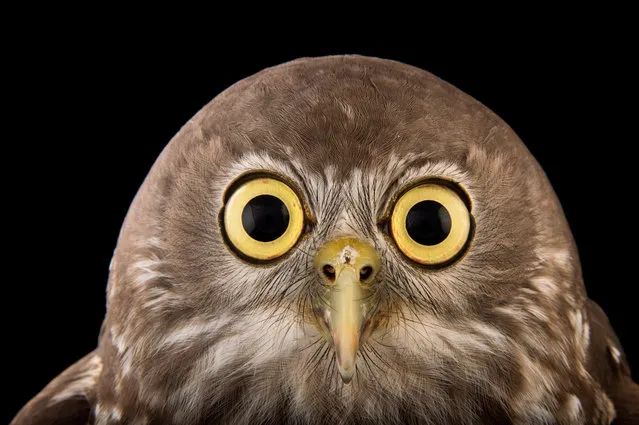
The National Geographic Photo Ark is a travelling exhibition of photographer Joel Sartore’s quest to create a photo archive of biodiversity around the world. So far, Sartore has captured studio portraits of more than 6,000 species – a number that he hopes to double. On 1 July, the ark will open at Melbourne zoo – the first time it has been exhibited in the southern hemisphere. More than 50 portraits will be on display, including many of Australian endangered animals being protected by programs at the zoo itself. These captions have been edited from text supplied by Melbourne zoo. Here: Barking owl. So-named because its call sounds like a barking dog, these birds are native to Australia, Indonesia and Papua New Guinea. In Victoria they are listed as an endangered species, and in 2003 there were estimated to be fewer than 50 breeding pairs. The main threat to the species in Victoria is loss of habitat, especially large trees with hollows in which they can nest and on which many of their prey depend. Apart from a bark, they may utter a chilling scream when they feel threatened. (Photo by Joel Sartore/National Geographic Photo Ark/The Guardian)

The National Geographic Photo Ark is a travelling exhibition of photographer Joel Sartore’s quest to create a photo archive of biodiversity around the world. So far, Sartore has captured studio portraits of more than 6,000 species – a number that he hopes to double. On 1 July, the ark will open at Melbourne zoo – the first time it has been exhibited in the southern hemisphere. More than 50 portraits will be on display, including many of Australian endangered animals being protected by programs at the zoo itself. These captions have been edited from text supplied by Melbourne zoo. Here: Barking owl. (Photo by Joel Sartore/National Geographic Photo Ark/The Guardian)
Details
01 Jul 2017 07:45:00