Loading...
Done
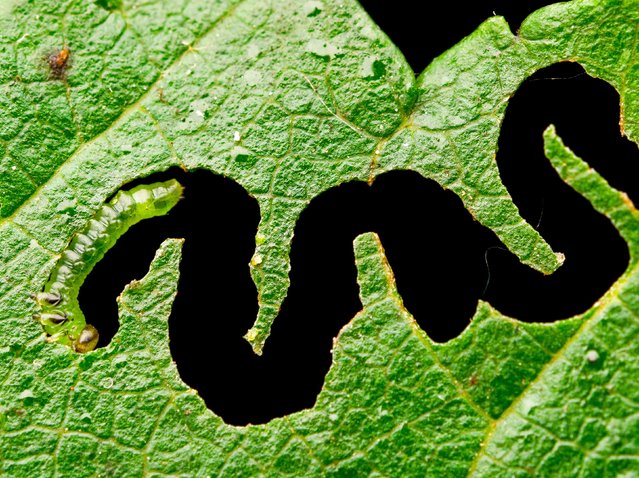
Miniscule larvae carve winding tunnels as they eat through small leaves in a small forest near the town of Velbert in western Germany in July 2022. The hungry green sawfly larvae measure just three millimetres in length and are difficult to spot on the leaves of the beech tree unless up close. (Photo by Christian Brockes/Solent News)

Miniscule larvae carve winding tunnels as they eat through small leaves in a small forest near the town of Velbert in western Germany in July 2022. The hungry green sawfly larvae measure just three millimetres in length and are difficult to spot on the leaves of the beech tree unless up close. (Photo by Christian Brockes/Solent News)
Details
24 Dec 2022 04:05:00
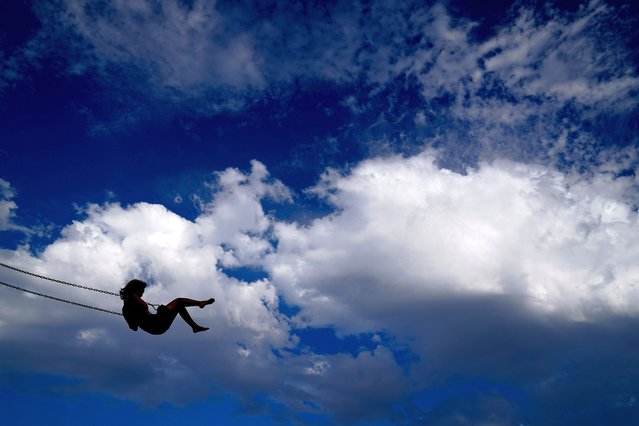
A woman plays on a swing on the beach in Santa Monica, Calif., Wednesday, June 22, 2022. (Photo by Jae C. Hong/AP Photo)

A woman plays on a swing on the beach in Santa Monica, Calif., Wednesday, June 22, 2022. (Photo by Jae C. Hong/AP Photo)
Details
25 Jul 2022 10:09:00
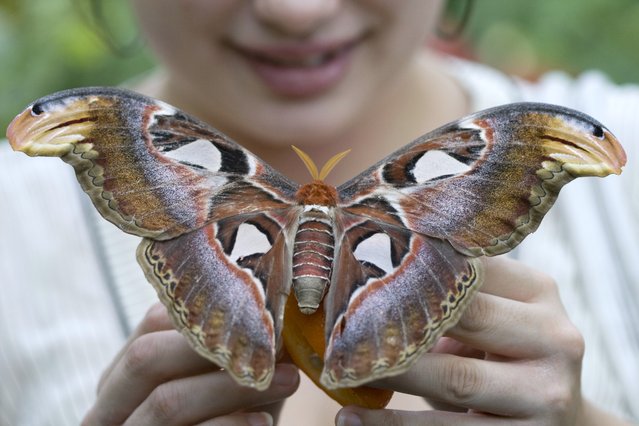
Atlas Moth @ Carleton. (Photo by Terri Oda)

“The Atlas moth (Attacus atlas) is a large saturniid moth found in the tropical and subtropical forests of Southeast Asia, and common across the Malay archipelago. Atlas moths are considered the largest moths in the world in terms of total wing surface area [upwards of c. 400 cm2 (62 sq in)]. Their wingspans are also amongst the largest, reaching over 25 cm (10 in). Females are appreciably larger and heavier”. – Wikipedia. Photo: Atlas Moth. (Photo by Terri Oda)


Details
10 Feb 2013 16:49:00


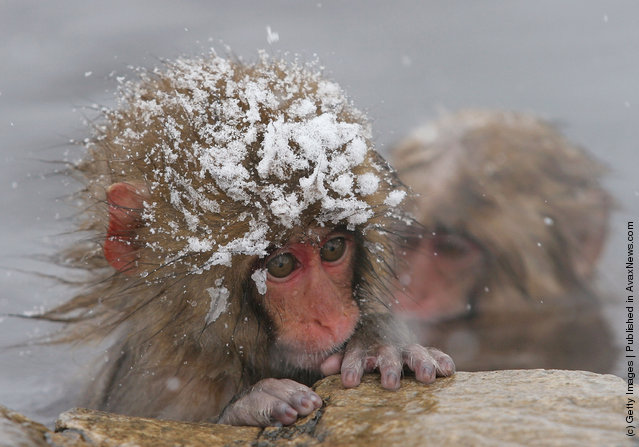
Japanese macaque monkeys enjoy sitting in the hot springs at Jigokudani-Onsen (Hell Valley) on January 23, 2005 in Jigokudani, Nagano-Prefecture, Japan. Japanese Macaques, also known as snow monkeys are the most northerly nonhuman primate in the world. In 1963 a female Macaque ventured into the hot springs to retrieve some soybeans. This behaviour was adopted by other monkeys, and eventually by the entire troop. This Macaque troop regularly visits the Jigokudani-Onsen springs to escape the cold. The hot springs are said to help relieve nerve pain and fatigue. (Photo by Koichi Kamoshida/Getty Images)
Details
20 May 2011 08:04:00
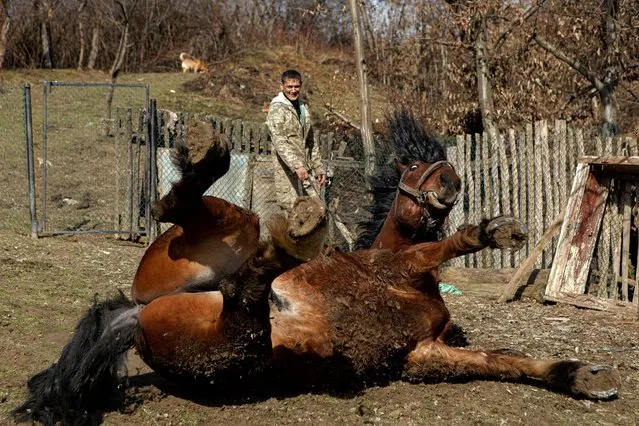
A horse rolls in mud in the Romani camp in Velykyi Bereznyi urban-type settlement, Zakarpattia Region, western Ukraine on February 28, 2021. (Photo by Ukrinform/Rex Features/Shutterstock)

A horse rolls in mud in the Romani camp in Velykyi Bereznyi urban-type settlement, Zakarpattia Region, western Ukraine on February 28, 2021. (Photo by Ukrinform/Rex Features/Shutterstock)
Details
09 Mar 2021 12:06:00
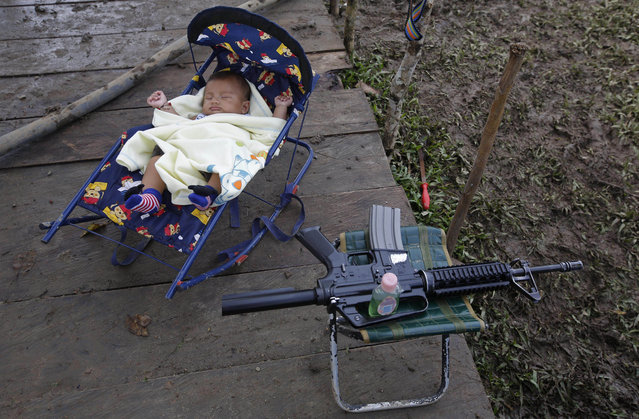
In this Tuesday, February 28, 2017 photo, 3-month-old Junior Alexis Patino, son of FARC rebel Deisy Garcia, sleeps next to his mother's weapon at a rebel camp in a demobilization zone in La Carmelita, in Colombia's southwestern Putumayo state. Amid the makeshift tents and communal kitchens where Colombia's largest rebel army is preparing to lay down its weapons, a new sound is emerging: the cries of babies. (Photo by Fernando Vergara/AP Photo)

In this Tuesday, February 28, 2017 photo, 3-month-old Junior Alexis Patino, son of FARC rebel Deisy Garcia, sleeps next to his mother's weapon at a rebel camp in a demobilization zone in La Carmelita, in Colombia's southwestern Putumayo state. Amid the makeshift tents and communal kitchens where Colombia's largest rebel army is preparing to lay down its weapons, a new sound is emerging: the cries of babies. (Photo by Fernando Vergara/AP Photo)
Details
09 Mar 2017 00:04:00
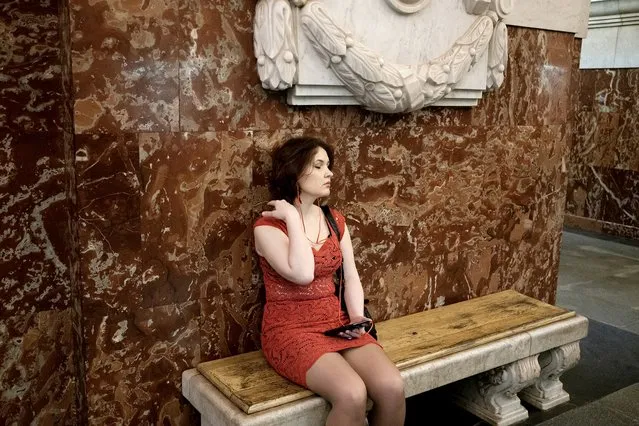
At the Krasnopresnenskaya station, the benches come from the Cathedral of Christ-Sauveur, which was built from 1839 to 1883 in memory of the victory of Russia against the army of Napoleon I. The cathedral was destroyed under Stalin in 1931, but the benches remained intact. Metro architects decided to install them in some stations. (Photo by Didier Bizet/The Washington Post)

At the Krasnopresnenskaya station, the benches come from the Cathedral of Christ-Sauveur, which was built from 1839 to 1883 in memory of the victory of Russia against the army of Napoleon I. The cathedral was destroyed under Stalin in 1931, but the benches remained intact. Metro architects decided to install them in some stations. (Photo by Didier Bizet/The Washington Post)
Details
24 Jan 2018 06:23:00
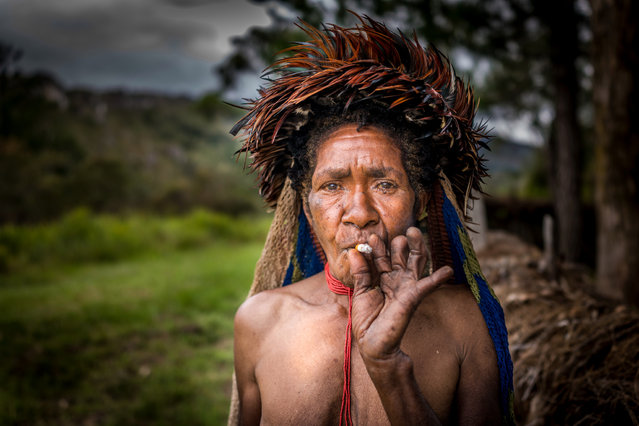
Dani tribeswoman smokes a cigarette and shows her amputated fingers in, Western New Guinea, Indonesia, August 2016. (Photo by Teh Han Lin/Barcroft Images)

Dani tribeswoman smokes a cigarette and shows her amputated fingers in, Western New Guinea, Indonesia, August 2016. Deep in the highlands of Western New Guinea, Indonesia, lives one of the world’s most isolated tribes. Known as the Dani people, the tribe was unwittingly discovered by American philanthropist, Richard Archbold, after an expedition in 1938. (Photo by Teh Han Lin/Barcroft Images)
Details
18 Nov 2016 11:03:00