Loading...
Done
241543903 Heads In Freezer Part 2

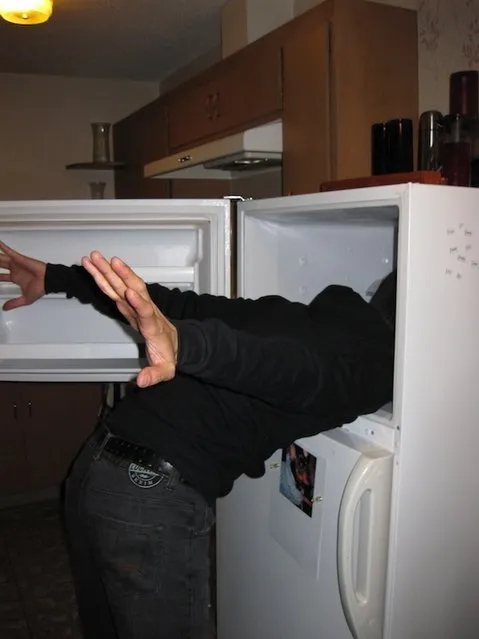
241543903 (a.k.a “Heads in Freezers”) is a numerical keyword associated with a photo meme that involves people taking pictures with their heads in the freezer & sharing them online. By tagging a series of image files with a cryptic number, a high level of search engine optimization can be easily achieved. As a result, typing “241543903” into image search engines like Google Images successfully yields pages after pages of pictures showing people’s heads in freezers.
In 2009, David Horvitz started the “Heads in Freezers” meme. Participants took photos of their heads in freezers, tagged them with “241543903” and uploaded them to social media sites like Tumblr.
Details
12 Mar 2014 10:32:00
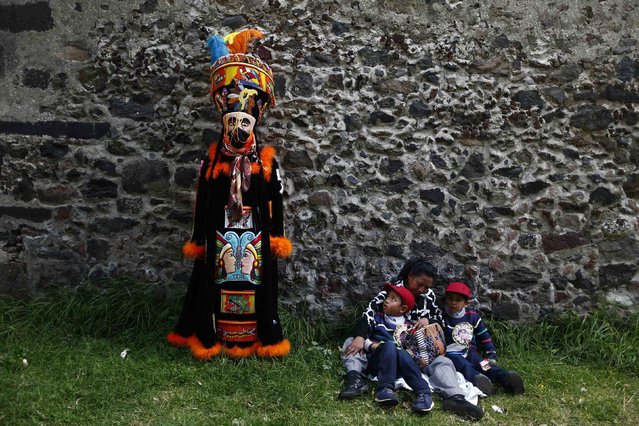
A boy sitting with his family looks up at a traditional Chinelo costumed dancer during a celebration 40 days after the birth of Jesus, in Xochimilco on the outskirts of Mexico City, February 2, 2015. (Photo by Edgard Garrido/Reuters)

A boy sitting with his family looks up at a traditional Chinelo costumed dancer during a celebration 40 days after the birth of Jesus, in Xochimilco on the outskirts of Mexico City, February 2, 2015. The tradition of the Chinelo dates back to colonial times and the outfits and masks, which are supposed to resemble the faces of the Europeans and always sport an uptilted beard, became more elaborate between the 1800s and 1900s to make fun of the upper social classes. (Photo by Edgard Garrido/Reuters)
Details
03 Feb 2015 13:09:00
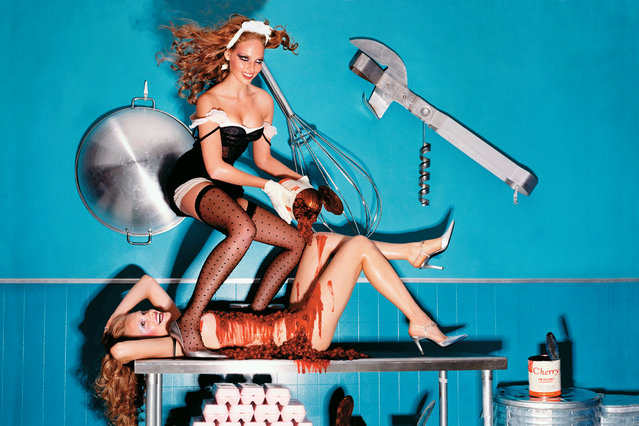
Issues tackled in the show include gender, wealth, consumerism, the environment, protest and identity building. Here: David LaChapelle – October 2004. (Photo by David LaChapelle/The Guardian)

Vogue Italia is hosting a series of shows in Milan exploring how the magazine seeks to engage with hot social and political issues and provoke debate through images by top photographers. The Photo Vogue festival in Milan is hosting three exhibitions. The first, Fashion and Politics in Vogue Italia, looks at the magazine’s ambition to be a catalyst for change – in subtle and playful ways. Here: David LaChapelle – October 2004. (Photo by David LaChapelle/The Guardian)
Details
22 Nov 2017 06:10:00
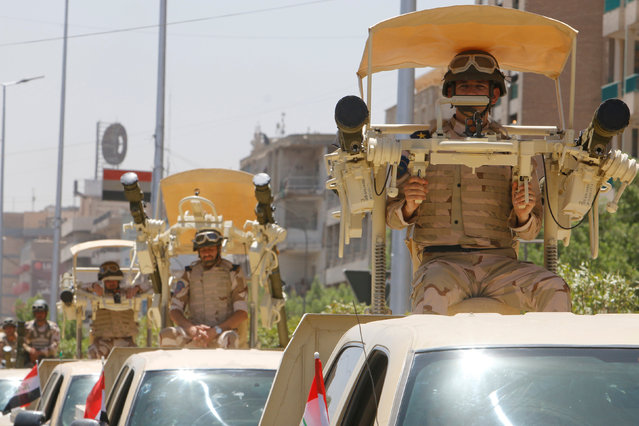
Iraqi security forces vehicles take part in a military parade in the streets of Baghdad, Iraq July 12, 2016. (Photo by Khalid al Mousily/Reuters)

Iraqi security forces vehicles take part in a military parade in the streets of Baghdad, Iraq July 12, 2016. Social media activists posted images of tanks, armored vehicles, cannons, soldiers, police officers, and PMF members in Saadoun Street. The photos spiked a rumor of military coup. Military and security advisor and expert Lt. Diyaa al-Wakil said that it is only normal for such rumors to spread since there were no prior announcements about the training. (Photo by Khalid al Mousily/Reuters)
Details
13 Jul 2016 13:47:00
Beluga Whales Blowing Bubbles in Japan (video)

The talent in bubbles unfurled the white Beluga whales living in Shimane Aquarium in Japan.As shown in the picture, have learned to make bubble rings, indicative of high intelligence.Whales blowing air from the mouth to create a stream and immediately after xanafysoun powerfully in the same place so that the bubbles to form a ring.Beluga whales are organized in groups and are social animals. They live in Arctic and sub​​-Arctic and known as "sea canaries" and mimic a wide range of sounds.
Details
28 Oct 2016 22:52:00
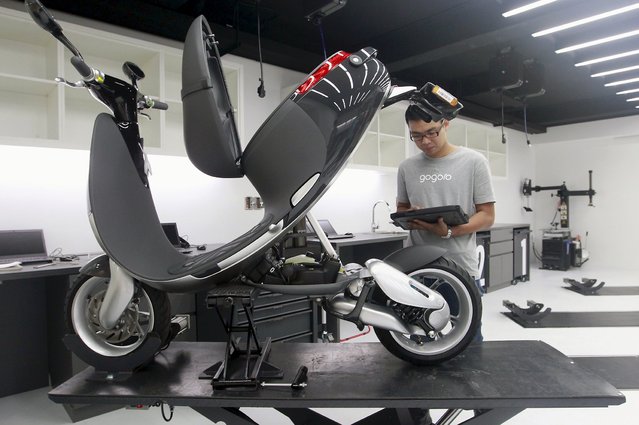
A mechanic examines a Gogoro Smartscooter which is connected to a tablet, in its shop in Taipei, Taiwan, July 6, 2015. (Photo by Pichi Chuang/Reuters)

A mechanic examines a Gogoro Smartscooter which is connected to a tablet, in its shop in Taipei, Taiwan, July 6, 2015. Companies such as electric motor scooter firm Gogoro could hold the key to Taiwan's economic growth. In just three years, the start-up raised $150 million to develop the smartphone-synched bike, and a charging network for it. Gogoro's success in creating a home-grown, innovative product is precisely what Taiwan's government wants to foster as it seeks to reduce the export-driven economy's reliance on the island's world-class tech manufacturing sector. (Photo by Pichi Chuang/Reuters)
Details
13 Jul 2015 11:13:00
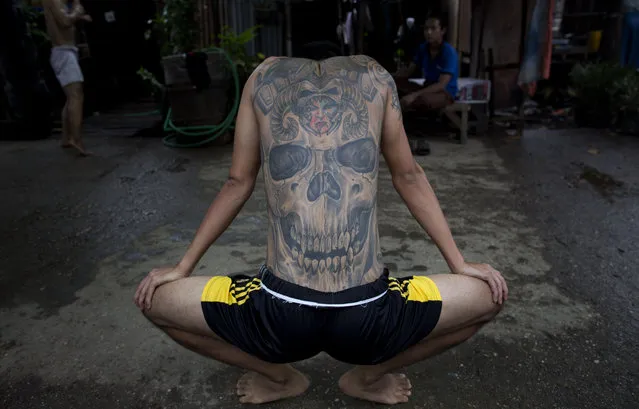
In this Tuesday, July 14, 2015, photo, Phoe Thaw, center, a member of the White New Blood lethwei fighters club, a Myanmar traditional martial-arts club which practices a rough form of kickboxing, stretches during a practice session in their gym on a street in Oakalarpa, north of Yangon, Myanmar. (Photo by Gemunu Amarasinghe/AP Photo)

In this Tuesday, July 14, 2015, photo, Phoe Thaw, center, a member of the White New Blood lethwei fighters club, a Myanmar traditional martial-arts club which practices a rough form of kickboxing, stretches during a practice session in their gym on a street in Oakalarpa, north of Yangon, Myanmar. Three of the club's members competed this summer on a stage a world away from the street gym: a mixed-martial-arts “One Championship” event broadcast globally on cable television networks, where fighters could receive $1,000 for each fight, according to coach Myint Zaw who started the traditional fighters' club 15 years ago. (Photo by Gemunu Amarasinghe/AP Photo)
Details
07 Sep 2015 14:00:00
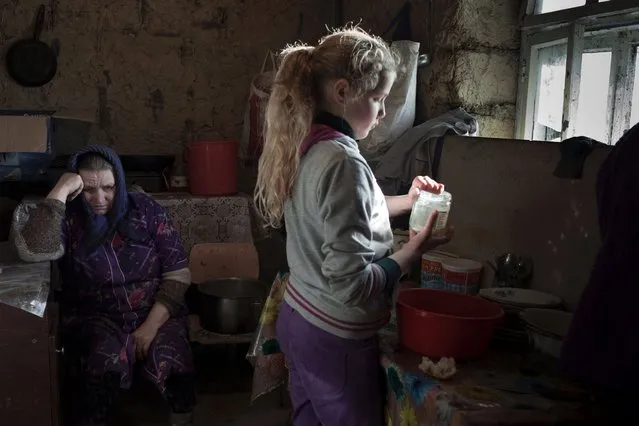
According to the U.S. government, Moldova, one of the poorest countries in Europe, depends on about $1.6 billion annually sent back from the roughly one million Moldovans who left for work in in Europe, Russia, and other former Soviet Bloc countries. Photographer Myriam Meloni went to Moldova to document what she refers to as “social orphans” – children whose parents have emigrated to another country in search of a job and a better future for their families. Here: Lulia is seen washing dishes in her grandmother's house, where she lives. (Photo by Myriam Meloni)

According to the U.S. government, Moldova, one of the poorest countries in Europe, depends on about $1.6 billion annually sent back from the roughly one million Moldovans who left for work in in Europe, Russia, and other former Soviet Bloc countries. Photographer Myriam Meloni went to Moldova to document what she refers to as “social orphans” – children whose parents have emigrated to another country in search of a job and a better future for their families. Here: Lulia is seen washing dishes in her grandmother's house, where she lives. (Photo by Myriam Meloni)
Details
12 Mar 2016 14:57:00