12 Jun 2012 07:10:00,post received
0 comments

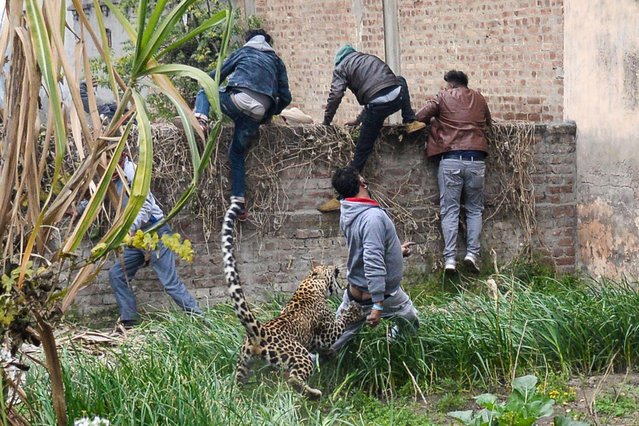
A leopard attacks an Indian man as others climb a wall to get away from the animal in Lamba Pind area in Jalandhar on January 31, 2019. After a leopard was spotted in a house in Lamba Pind area of Jalandhar city, subsequent attempts to capture it led to the animal attacking at least six people, though none was injured seriously, local media said. (Photo by Shammi Mehra/AFP Photo)
04 Feb 2019 00:07:00,post received
0 comments
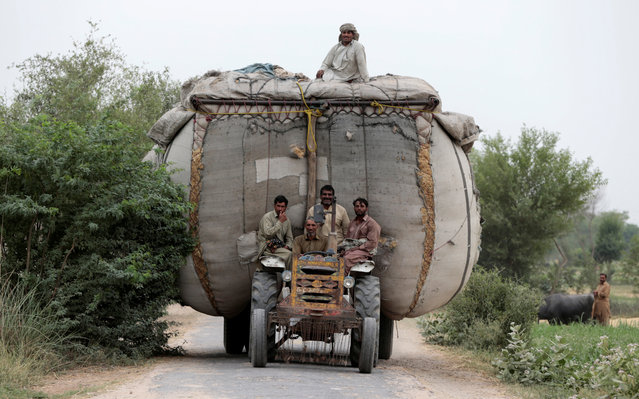
Farmers ride home on a tractor pulling an overloaded trailer full of straw in a village outside Faisalabad, Pakistan May 3, 2017. (Photo by Caren Firouz/Reuters)
11 Jun 2017 07:10:00,post received
0 comments

A child dressed as an Ewok character participates in a Star Wars parade in Mexico City, Saturday, October 15, 2022. (Photo by Marco Ugarte/AP Photo)
20 Nov 2022 06:00:00,post received
0 comments

An Indian Sikh devotee takes a dip in the holy sarover (water tank) at the Golden Temple on the eve of “Ghallughara Diwas”, the 29th Anniversary of Operation Bluestar, in Amritsar on June 5, 2013. The 1984 assault on the Golden Temple complex by the Indian army was conducted in an attempt to arrest separatists Sikh leader Sant Jarnail Singh Bhindranwale and his militant followers who had initiated a movement for a separate Sikh state. (Photo by Narinder Nanu/AFP Photo)
08 Jun 2013 11:00:00,post received
0 comments

Galapagos – Rocking the Cradle: Four major ocean currents converge along the Galapagos archipelago, creating the conditions for an extraordinary diversity of animal life, April 25, 2016. The islands are home to at least 7,000 flora and fauna species, of which 97 percent of the reptiles, 80 percent of the land birds, 50 percent of the insects and 30 percent of the plants are endemic. (Photo by Thomas P. Peschak for National Geographic/World Press Photo)
16 Apr 2018 00:01:00,post received
0 comments

An aerial view shows a sinkhole 3.5 km (2 miles) to the east of Solikamsk-2 mine in Perm region, November 20, 2014. Shares in Russia's Uralkali, the world's top potash producer, fell sharply for a second day on Wednesday after a mine accident that could reduce global supplies and push up prices of the crop nutrient worldwide. Uralkali shares have fallen 28 percent since Tuesday when it suspended work at its Solikamsk-2 mine, which accounts for a fifth of the company's output and 3.5 percent of global capacity, following an inflow of water. A sinkhole, stretching 30 by 40 metres (yards), found at an abandoned mine 3.5 km (2 miles) to the east, increased concern about the future of the mine because an inflow of water and the resulting sinkhole in 2006 forced another Uralkali operation to shut permanently. (Photo by Reuters/Press service of Uralkali company)
22 Nov 2014 13:51:00,post received
0 comments
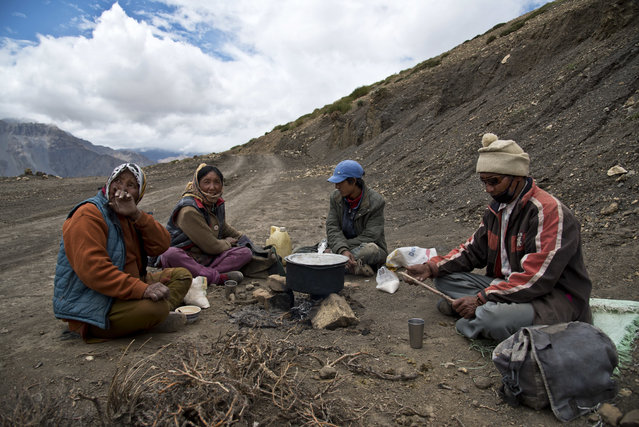
In this August 17, 2016, photo, from left to right, Chhering Chodom, 60, Tashi Yangzom, 50, Lobsang Chhering, 27, and Dorje Tandup, 58, drink milk tea on the side of the road. For centuries, the sleepy valley nestled in the Indian Himalayas remained a hidden Buddhist enclave forbidden to outsiders. Enduring the harsh year-round conditions of the high mountain desert, the people of Spiti Valley lived by a simple communal code – share the Earth's bounty, be hospitable to neighbors, and eschew greed and temptation at all turns. That's all starting to change, for better or worse. (Photo by Thomas Cytrynowicz/AP Photo)
15 Sep 2016 09:22:00,post received
0 comments