Loading...
Done
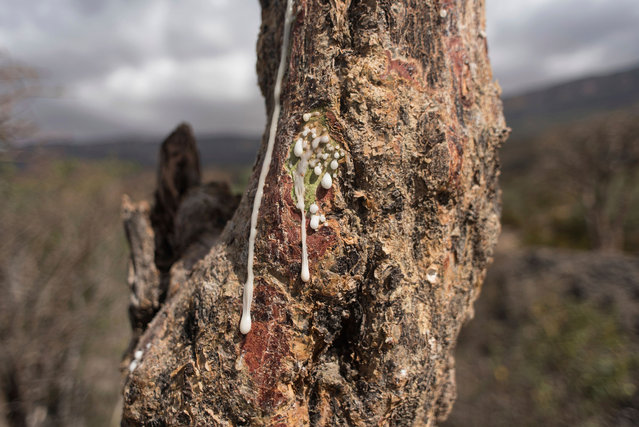
Sap runs out of a frankincense tree near Mader Moge, Somaliland, a breakaway region of Somalia on August 4, 2016. (Photo by Jason Patinkin/AP Photo)

Sap runs out of a frankincense tree near Mader Moge, Somaliland, a breakaway region of Somalia on August 4, 2016In a tradition dating to Biblical times, men rise at dawn in the rugged Cal Madow mountains of Somaliland in the Horn of Africa to scale rocky outcrops in search of the prized sap of wild frankincense trees. (Photo by Jason Patinkin/AP Photo)
Details
27 Dec 2016 08:06:00
The OMG Wall (Groningen, Groningen, NL). (Photo by Wout)

The “OMG Wall” (Groningen, NL). (Photo by Wout)
Details
07 Jun 2013 11:56:00
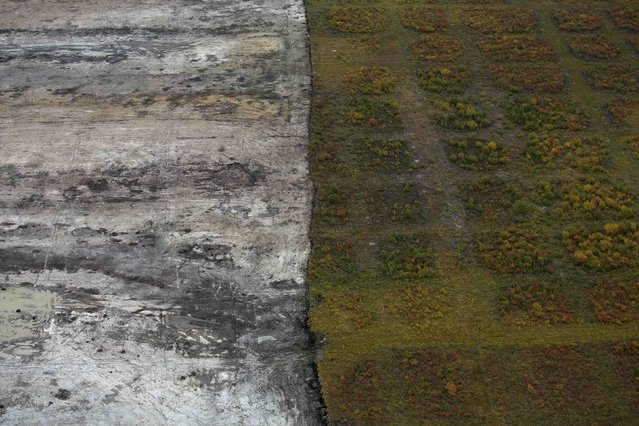
The top layer of muskeg and earth (L) is removed at the Syncrude tar sands operations near Fort McMurray, Alberta, September 17, 2014. Syncrude currently produces 350,000 barrels per day of high quality light, low sulphur crude oil according to company reports. (Photo by Todd Korol/Reuters)

The top layer of muskeg and earth (L) is removed at the Syncrude tar sands operations near Fort McMurray, Alberta, September 17, 2014. Syncrude currently produces 350,000 barrels per day of high quality light, low sulphur crude oil according to company reports. (Photo by Todd Korol/Reuters)
Details
21 Sep 2014 11:06:00
Writing Letter

“Kusakabe Kimbei (1841 – 1934) was a Japanese photographer. He usually went by his given name, Kimbei, because his clientele, mostly non-Japanese-speaking foreign residents and visitors, found it easier to pronounce than his family name. Kusakabe Kimbei worked with Felice Beato and Baron Raimund von Stillfried as a photographic colourist and assistant before opening his own workshop in Yokohama in 1881 in the Benten-dōri quarter, and from 1889 operating in the Honmachi quarter. He also opened a branch in the Ginza quarter of Tokyo”. – Wikipedia

Photo: Writing Letter. (Photo by Kusakabe Kimbei)
Details
21 Apr 2012 13:28:00
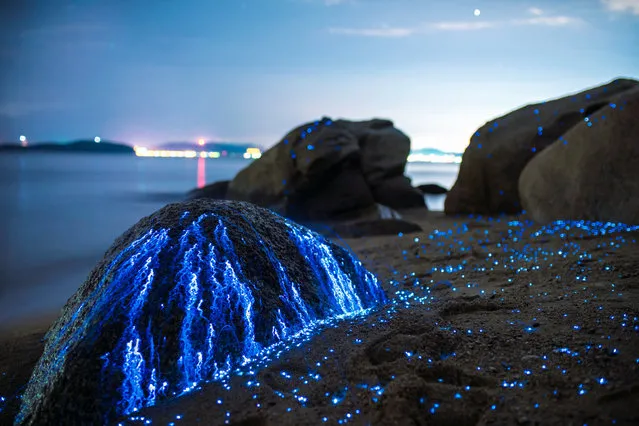
Bioluminescent sea fireflies glittering like diamonds on the rocks and sand. Okayama, Japan. July 2016. (Photo by Trevor Williams/Jonathan Galione/Getty Images)

Those lights are actually bioluminescent shrimp, better known as sea fireflies, or, in Japan, as “umibotaru”. Visible every year from May until the end of October, they live in the sand around very shallow sea water and are often seen floating between the extremes of high and low tides. Here: Bioluminescent sea fireflies glittering like diamonds on the rocks and sand. Okayama, Japan. July 2016. (Photo by Trevor Williams/Jonathan Galione/Getty Images)
Details
23 Aug 2016 10:13:00
A doll forms part of a sculpture as part of an exhibit titled The Sea Isnt Made for Fish at Rio de Janeiro Federal University in Rio de Janeiro, Brazil, Monday, June 1, 2015. Art students have taken advantage of a material they have in endless supply trash to create an exhibition that aims to draw attention to the fetid state of the citys Guanabara Bay, where the Olympic sailing events are to be held next year. (AP Photo/Silvia Izquierdo)

A doll forms part of a sculpture as part of an exhibit titled The Sea Isn't Made for Fish at Rio de Janeiro Federal University in Rio de Janeiro, Brazil, Monday, June 1, 2015. Art students have taken advantage of a material they have in endless supply trash to create an exhibition that aims to draw attention to the fetid state of the citys Guanabara Bay, where the Olympic sailing events are to be held next year. (AP Photo/Silvia Izquierdo)
Details
08 Jun 2015 15:25:00
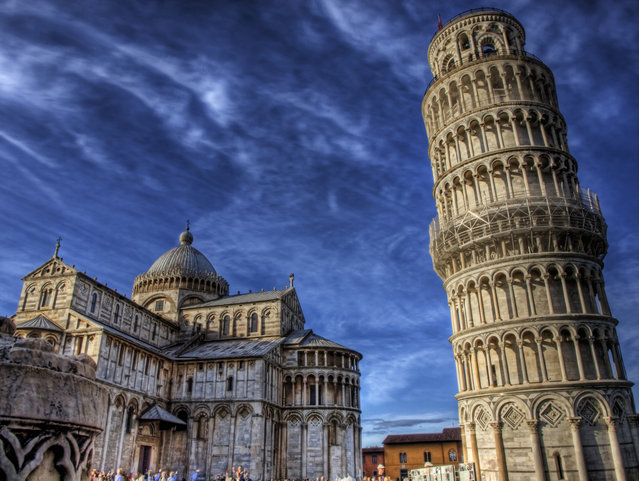
Leaning Tower of Pisa

Leaning Tower of Pisa by Neil Howard
Details
10 Jun 2012 04:24:00
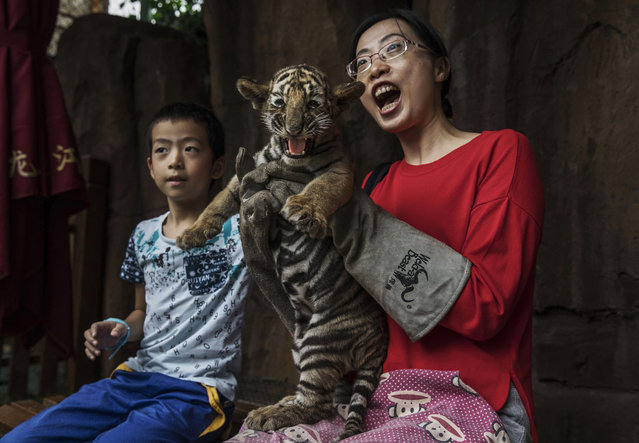
A Chinese tourist wears protective gloves as she holds a baby Siberian tiger as they pose for pictures at the Heilongjiang Siberian Tiger Park on August 16, 2017 in Harbin, northern China. (Photo by Kevin Frayer/Getty Images)

A Chinese tourist wears protective gloves as she holds a baby Siberian tiger as they pose for pictures at the Heilongjiang Siberian Tiger Park on August 16, 2017 in Harbin, northern China. The center is one of two Siberian tiger parks in the Chinese province of Heilongjiang, about 500 kilometers (300 miles) from the border with Russia. It is considered the world's largest for breeding the Siberian, or Amur, tiger which is listed as endangered by the World Wildlife Federation. (Photo by Kevin Frayer/Getty Images)
Details
23 Aug 2017 08:29:00