Loading...
Done
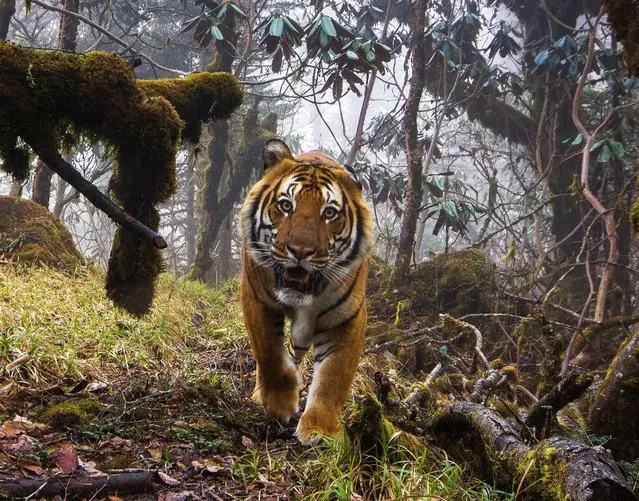
Rare images of wild tigers in Bhutan, captured by camera traps, show tigers and other animals using high-altitude wildlife corridors which are lifelines to isolated tiger populations and critical to genetic diversity, conservation and growth. Here: A wild Bengal tiger (Panthera tigris tigris) captured on a camera trap in corridor eight at an altitude of 3,540 metres in Trongsa, Bhutan. (Photo by Emmanuel Rondeau/WWF UK/The Guardian)

Rare images of wild tigers in Bhutan, captured by camera traps, show tigers and other animals using high-altitude wildlife corridors which are lifelines to isolated tiger populations and critical to genetic diversity, conservation and growth. Here: A wild Bengal tiger (Panthera tigris tigris) captured on a camera trap in corridor eight at an altitude of 3,540 metres in Trongsa, Bhutan. (Photo by Emmanuel Rondeau/WWF UK/The Guardian)


Details
02 Aug 2017 06:49:00
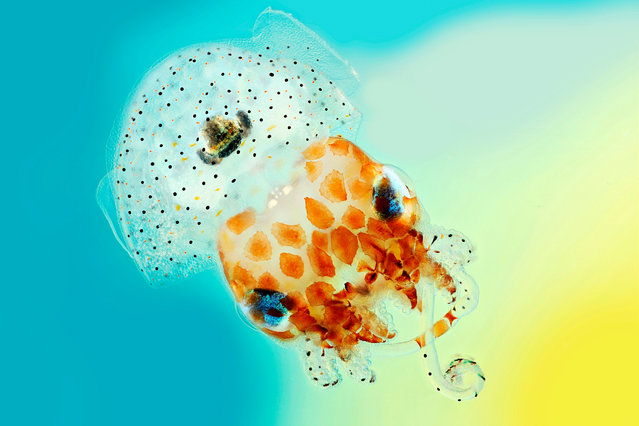
With its huge eyes, comical name and diminutive size, Mark R. Smith’s image of a baby Hawaiian bobtail squid can’t help but raise a smile. A curiously endearing creature, the cephalopod is just 1.5cm across, its mantle cavity bearing more than a passing resemblance to a rather natty shower cap. But it is also a beautiful example of symbiosis – nature’s version of “I’ll scratch your back if you scratch mine” – for on the underside of the squid is a light organ which houses bioluminescent bacteria. The squid offers the bacteria protection and food, while the bacteria emit a glow – a handy trait that the squid uses to offset its silhouette, helping it to evade predators in the depths below. Mark R. Smith’s entry combines several images of a Hawaiian bobtail squid with different focus lengths to create a final picture with greater depth of field than normal. (Photo by Mark R. Smith/Wellcome Images/Macroscopic Solutions)

With its huge eyes, comical name and diminutive size, Mark R. Smith’s image of a baby Hawaiian bobtail squid can’t help but raise a smile. A curiously endearing creature, the cephalopod is just 1.5cm across, its mantle cavity bearing more than a passing resemblance to a rather natty shower cap. But it is also a beautiful example of symbiosis – nature’s version of “I’ll scratch your back if you scratch mine” – for on the underside of the squid is a light organ which houses bioluminescent bacteria. The squid offers the bacteria protection and food, while the bacteria emit a glow – a handy trait that the squid uses to offset its silhouette, helping it to evade predators in the depths below. Mark R. Smith’s entry combines several images of a Hawaiian bobtail squid with different focus lengths to create a final picture with greater depth of field than normal. (Photo by Mark R. Smith/Wellcome Images/Macroscopic Solutions)
Details
08 Mar 2017 00:05:00
Vladimir Putin shows a hold to a young judo wrestler at the Regional Judo Center at the Arena Sports Complex in the Siberian city of Kemerovo on January 24, 2012, during his visit to the region. Putin is known for his passion for judo, in which he has a black belt. (Photo by AFP Photo/STR)

Vladimir Putin shows a hold to a young judo wrestler at the Regional Judo Center at the Arena Sports Complex in the Siberian city of Kemerovo on January 24, 2012, during his visit to the region. Putin is known for his passion for judo, in which he has a black belt. (Photo by AFP Photo/STR)
Details
27 Mar 2014 08:47:00
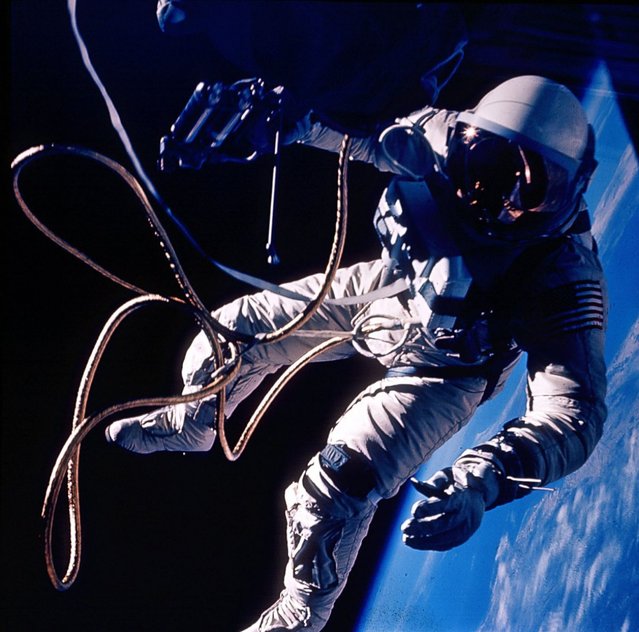
The First U.S. Spacewalk – Gemini 4 Ed White made the United States' first spacewalk on June 3, 1965 during the Gemini 4 mission. The extra-vehicular activity (EVA) started at 19:45 UT (3:45 p.m. EDT) on the third orbit when White opened his hatch and used the hand-held manuevering oxygen-jet gun to push himself out of the capsule. (Photo by NASA)

The First U.S. Spacewalk – Gemini 4 Ed White made the United States' first spacewalk on June 3, 1965 during the Gemini 4 mission. The extra-vehicular activity (EVA) started at 19:45 UT (3:45 p.m. EDT) on the third orbit when White opened his hatch and used the hand-held manuevering oxygen-jet gun to push himself out of the capsule. (Photo by NASA)
Details
11 Apr 2014 08:40:00
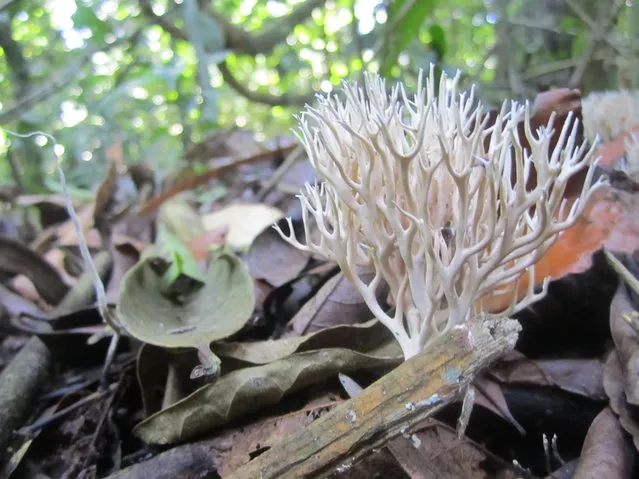
This strange coral-looking specimen is actually a mushroom. The photo, “Beautiful Destroyer”, was taken in the Panamanian tropical rainforest where the mushroom produces nitrogen, an element vital to soil health. (Photo by Sarah A. Batterman)

This strange coral-looking specimen is actually a mushroom. The photo, “Beautiful Destroyer”, was taken in the Panamanian tropical rainforest where the mushroom produces nitrogen, an element vital to soil health. (Photo by Sarah A. Batterman)
Details
13 Aug 2014 09:49:00
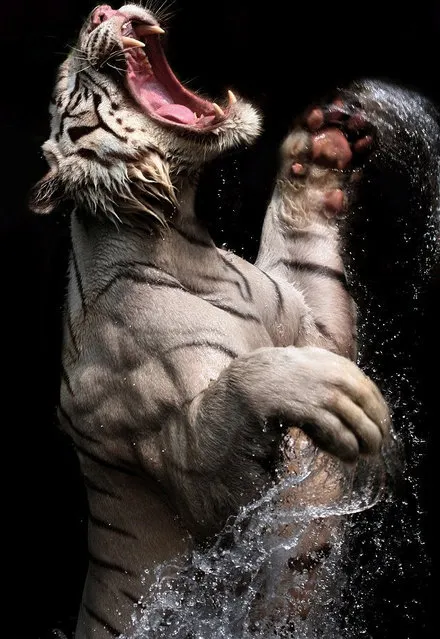
A White Bengal Tiger By Birte Person

Australia-based photographer Birte Person wasn't quite as afraid. With the safety of distance, she was brave enough to capture these stunning shots of the rare animals during feeding time at the Singapore Zoo.
Details
27 May 2013 11:05:00
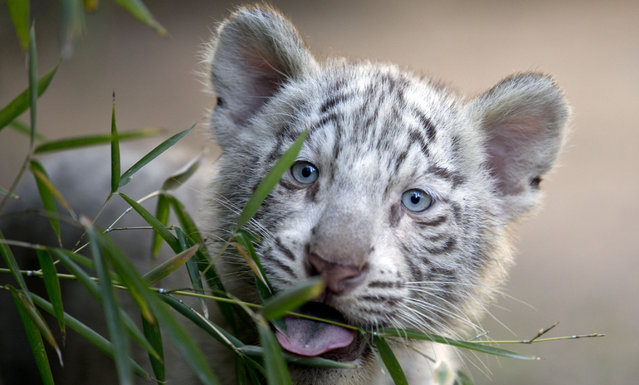
A three month old white Bengal female tiger cub looks around her enclosure at the Buenos Aires Zoo, Argentina, Wednesday, April 16, 2014. Cleo, a captive Bengal white tiger at the zoo, gave birth to two females and one male white tiger cubs on Jan. 16, 2014. (Photo by Natacha Pisarenko/AP Photo)

A three month old white Bengal female tiger cub looks around her enclosure at the Buenos Aires Zoo, Argentina, Wednesday, April 16, 2014. Cleo, a captive Bengal white tiger at the zoo, gave birth to two females and one male white tiger cubs on January 16, 2014. (Photo by Natacha Pisarenko/AP Photo)
Details
17 Apr 2014 11:43:00
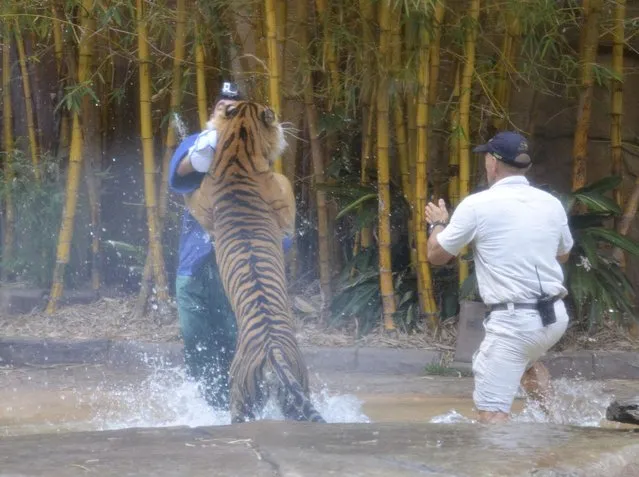
In this photo taken Tuesday, Nov. 26, 2013 and made available Thursday, November 28, a Sumatran tiger leaps on Australia Zoo handler Dave Styles, left, as an unidentified man comes to Styles' aid in an enclosure at the zoo at Sunshine Coast, Australia. Styles who suffered puncture wounds to his head and shoulder was rescued by fellow workers at the zoo. He is recovering following surgery after being airlifted to a hospital. (Photo by Johanna Schehl/AP Photo)

In this photo taken Tuesday, November 26, 2013 and made available Thursday, November 28, a Sumatran tiger leaps on Australia Zoo handler Dave Styles, left, as an unidentified man comes to Styles' aid in an enclosure at the zoo at Sunshine Coast, Australia. Styles who suffered puncture wounds to his head and shoulder was rescued by fellow workers at the zoo. He is recovering following surgery after being airlifted to a hospital. (Photo by Johanna Schehl/AP Photo)
Details
29 Nov 2013 08:58:00