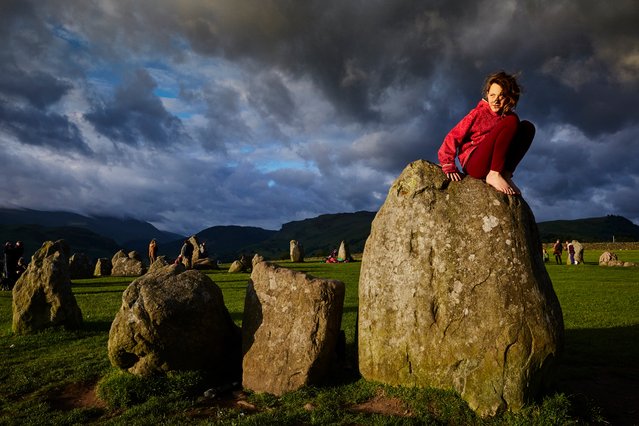
Ada Wood, 10, perches on one of Castlerigg’s 38 stones during the summer solstice at Castlerigg stone circle in Cumbria, Britain, on June 21, 2016. (Photo by Christopher Thomond/The Guardian)
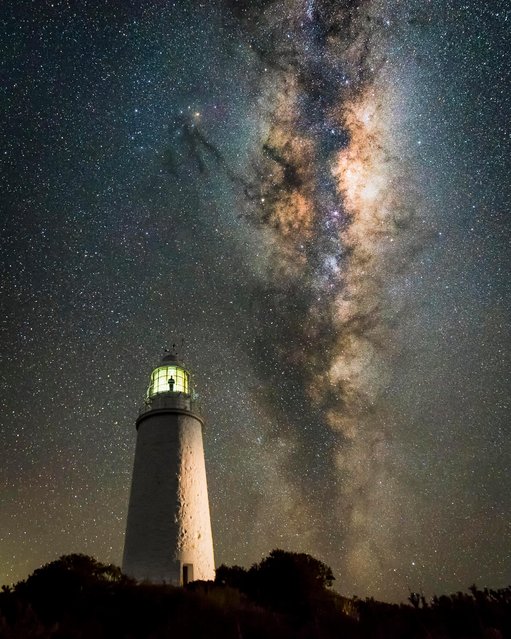
The competition is run by Royal Observatory Greenwich sponsored by Insight Investment and in association with BBC Sky at Night Magazine. This year astrophotographers from 91 countries sent in more than 4,200 spectacular entries. Here: The Milky Way rises above an isolated lighthouse in Tasmania. Shot by James Stone of Australia. (Photo by James Stone/Astronomy Photographer of the Year 2018)
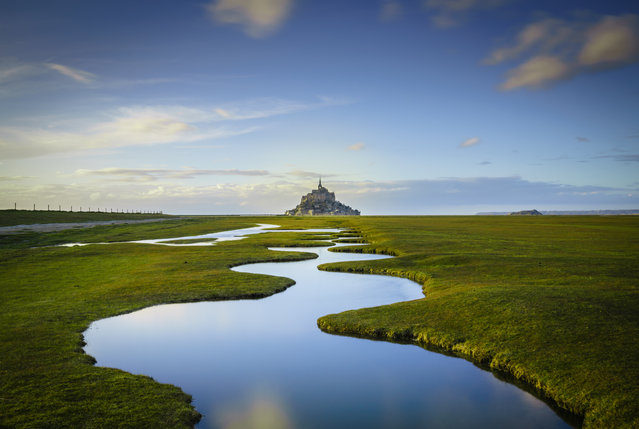
The Historic Photographer of the Year awards celebrate historic places and cultural sites across the globe, from national treasures to hidden gems. Entries were judged on originality, composition and technical proficiency as well as the story that inspired the submission and its historical impact. Here: Overall winner. Mont Saint-Michel by Daniel Burton. (Photo by Daniel Burton/The Guardian)
A woman leans against one of the stones of the Stonehenge monument on the summer solstice near Amesbury, Britain on June 21, 2017. The annual festival attracts hundreds of people to the 5000 year old stone circle to mark the longest day in the northern hemisphere. sunrise was at 4.52am and was celebrated by dancing, music, and ritualistic events around the stones. (Photo by Neil Hall/Reuters)
Racegoers during Ladies Day of the 2018 Cheltenham Festival in Cheltenham, England on March 14, 2018. (Photo by Graham Stone/Rex Features/Shutterstock)
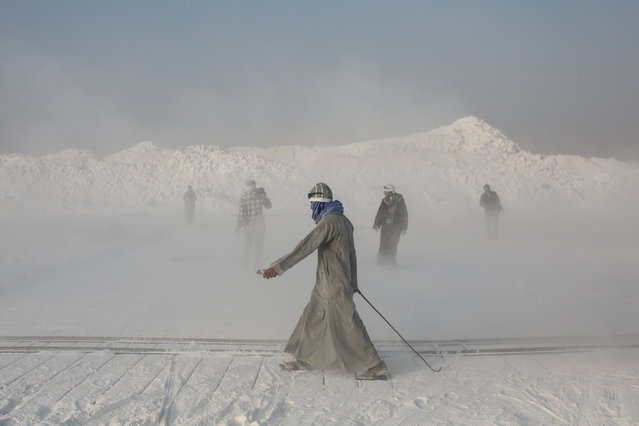
In this Wednesday, March 18, 2015 photo, limestone quarry workers walk through a cloud of dust spewed into the air by rotor blades of the stone-cutting machinery in the desert of Minya, southern Egypt. Around 45,000 people, including children, work in an estimated 1,500 quarries, digging out stones that later will be used in construction or powdered to be used by pharmaceutical and ceramic companies. (Photo by Mosa'ab Elshamy/AP Photo)