Loading...
Done
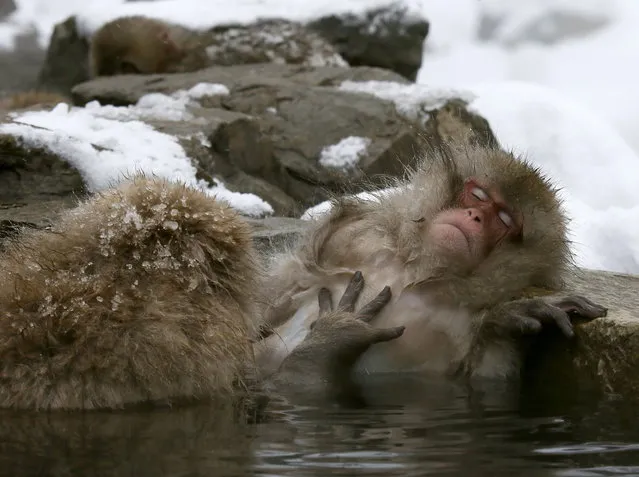
Japanese Macaque monkeys soak in the warmth of mountain hotsprings at Jigokudani Monkey Park, in Yamanouchi, central Japan, 19 January 2014. The Japanese Macaques (Macaca fuscata), also referred to as Snow Monkeys, live freely in this area that is covered by snow one third of the year. (Photo by Kimimasa Mayama/EPA)

Japanese Macaque monkeys soak in the warmth of mountain hotsprings at Jigokudani Monkey Park, in Yamanouchi, central Japan, 19 January 2014. The Japanese Macaques (Macaca fuscata), also referred to as Snow Monkeys, live freely in this area that is covered by snow one third of the year. Jigokudani is the only known place in the world where monkeys bathe in natural hot springs. As a habit, they come down from the mountains where they spend the night and bath during the day. (Photo by Kimimasa Mayama/EPA)
Details
21 Jan 2014 11:36:00
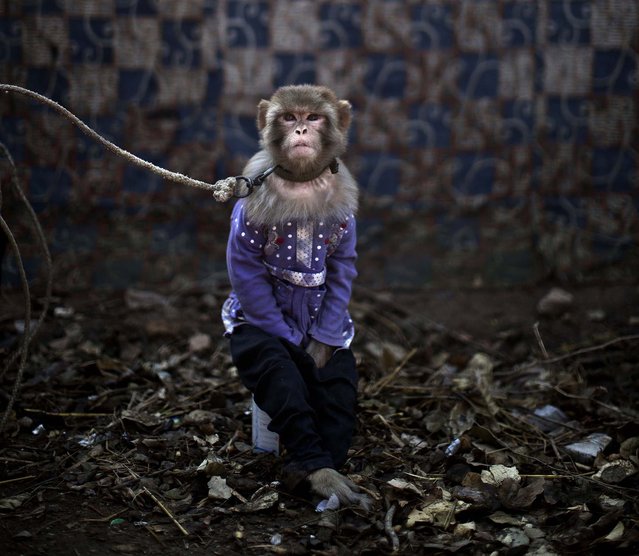
In this Tuesday, February 11, 2014, photo, a trained monkey, that makes a living for her Pakistani owner by performing to a crowd in public and private places, sits held by a leash, in Rawalpindi, Pakistan. For Pakistanis who raise and train the monkeys they are an important source of income in an impoverished country, and they form a strong bond with the animals. The monkeys are usually captured in the wild when they are babies and then trained. A trained monkey can fetch 20,000 to 30,000 rupees ($190 to $285). (Photo by Muhammed Muheisen/Associated Press)

In this Tuesday, February 11, 2014, photo, a trained monkey, that makes a living for her Pakistani owner by performing to a crowd in public and private places, sits held by a leash, in Rawalpindi, Pakistan. For Pakistanis who raise and train the monkeys they are an important source of income in an impoverished country, and they form a strong bond with the animals. The monkeys are usually captured in the wild when they are babies and then trained. A trained monkey can fetch 20,000 to 30,000 rupees ($190 to $285). (Photo by Muhammed Muheisen/Associated Press)
Details
23 Feb 2014 09:50:00
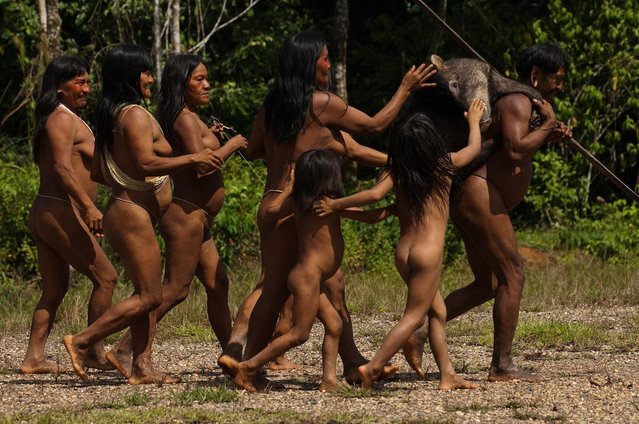
Spectacular images offering insight into the lives of the Huaorani people in the Ecuadorian Amazon have been revealed showing how they use traditional methods to hunt monkeys for food. The stunning pictures were taken by conservation photographer Pete Oxford from Torquay, Devon in the Ecuadorian Amazon. “The Huaorani Indians are a forest people highly in tune with their environment. Many are now totally acculturated since the 1950s by missionaries”, said Pete. “Today they face radical change to their culture to the proximity of oil exploration within their territory and the Yasuni National Park and Biosphere Reserve, they are vastly changed. Some still live very traditionally and for this shoot, through my Huaorani friend, a direct relative of those photographed he wanted to depict them as close to their original culture as possible. They still largely hunt with blow pipes and spears eating a lot of monkeys and peccaries”. The Huaorani are also known as the Waorani, Waodani or the Waos and are native Amerindians. Their lands are located between the Curaray and Napo rivers and speak the Huaorani language. Pete says that during his visit he was welcomed into the group and hopes that ancient cultures can be saved. Here: The tribe were seen celebrating after a hunter returned to camp with a wild pig. (Photo by Pete Oxford/Mediadrumworld.com)

Spectacular images offering insight into the lives of the Huaorani people in the Ecuadorian Amazon have been revealed showing how they use traditional methods to hunt monkeys for food. The stunning pictures were taken by conservation photographer Pete Oxford from Torquay, Devon in the Ecuadorian Amazon. Here: The tribe were seen celebrating after a hunter returned to camp with a wild pig. (Photo by Pete Oxford/Mediadrumworld.com)
Details
20 Jan 2017 07:58:00
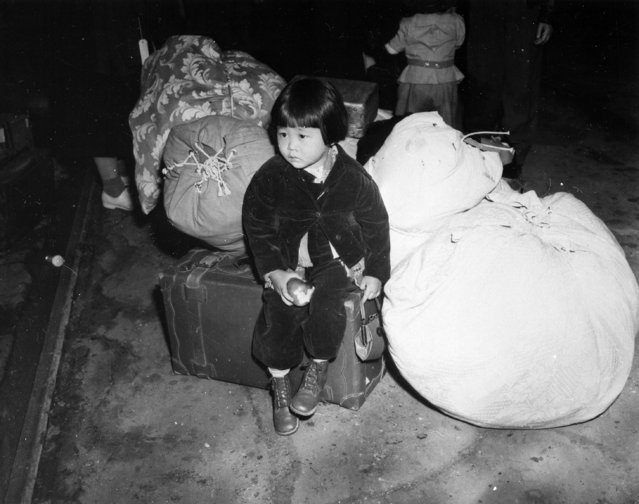
A young evacuee of Japanese ancestry waits with the family baggage before leaving by bus for an assembly center in California, in this April 1942 handout photo. (Photo by Courtesy Clem Albers/Department of the Interior/War Relocation Authority/National Archives/Reuters)

A young evacuee of Japanese ancestry waits with the family baggage before leaving by bus for an assembly center in California, in this April 1942 handout photo. February 19, 2017 marks the 75th anniversary of FDR signing executive order 9066, authorizing the internment of Japanese Americans during World War Two. (Photo by Courtesy Clem Albers/Department of the Interior/War Relocation Authority/National Archives/Reuters)
Details
19 Feb 2017 00:02:00
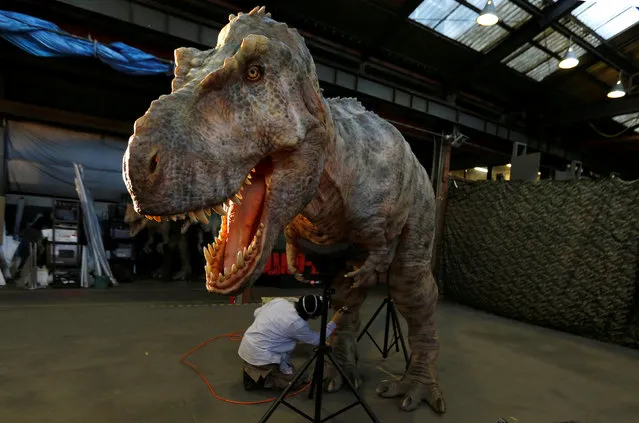
Japan's ON-ART Corp's staff repaints the company's eight metre tall man-operated walking dinosaur robot “TRX03” at the company's studio in Tokorozawa, Japan, December 6, 2016. (Photo by Toru Hanai/Reuters)

Japan's ON-ART Corp's staff repaints the company's eight metre tall man-operated walking dinosaur robot “TRX03” at the company's studio in Tokorozawa, Japan, December 6, 2016. (Photo by Toru Hanai/Reuters)
Details
23 Dec 2016 08:21:00
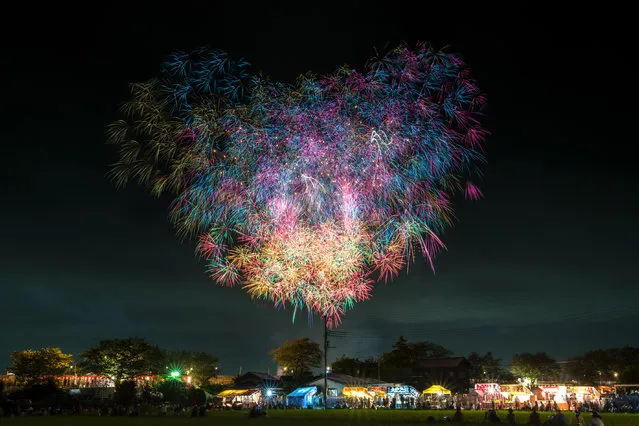
Tsuchiura National Fireworks Competition, Tsuchiura City, Ibaraki Prefecture. (Photo by Makoto Igari/Caters News Agency)

These kaleidoscopic images showcase the sheer beauty of the mammoth firework displays held across Japan every summer. The Japanese word for fireworks, hanabi, means fire flower, and each year, local governments in Japan throw around 7,000 festivals, or hanabi taikai. Here: Tsuchiura National Fireworks Competition, Tsuchiura City, Ibaraki Prefecture. (Photo by Makoto Igari/Caters News Agency)
Details
25 Sep 2018 00:01:00
Guilty Crown ギルティクラウン 罪惡王冠 楪 祈 いのり ゆずりは Inori

Japanese Cosplay Photoshoot, taken on August 2-6, 2012. Photo: Guilty Crown ギルティクラウン 罪惡王冠 楪 祈 いのり ゆずりは Inori. (Photo by EE Fai)
Details
11 Aug 2012 11:37:00
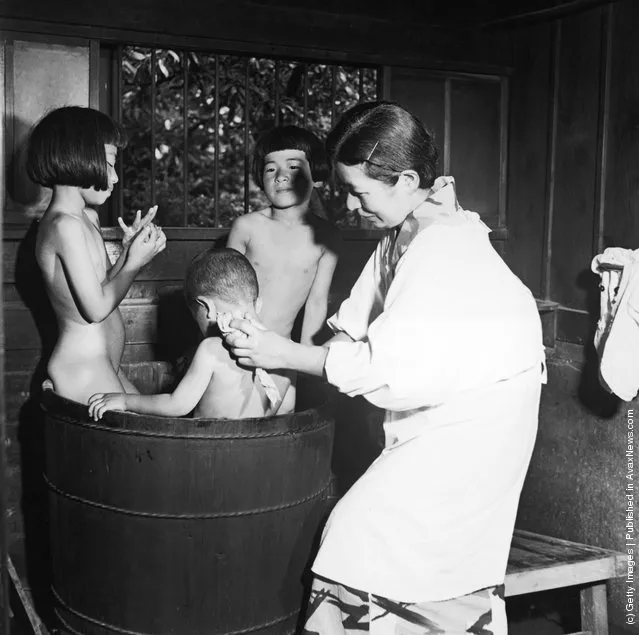
A family of children share a bath in Japan, 1965

A family of children share a bath in Japan, circa 1965. (Photo by Three Lions/Hulton Archive/Getty Images)
Details
09 Aug 2011 11:27:00